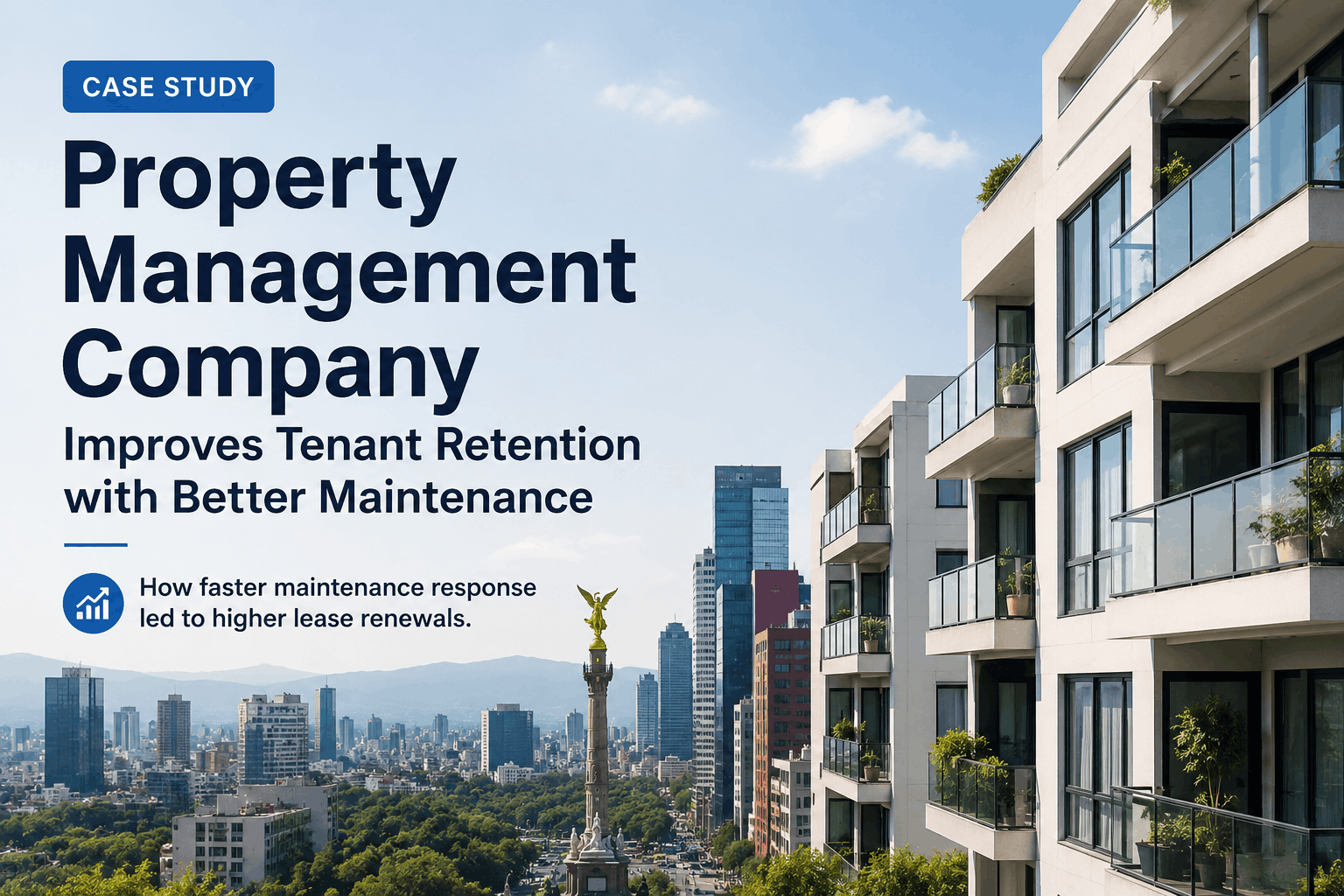
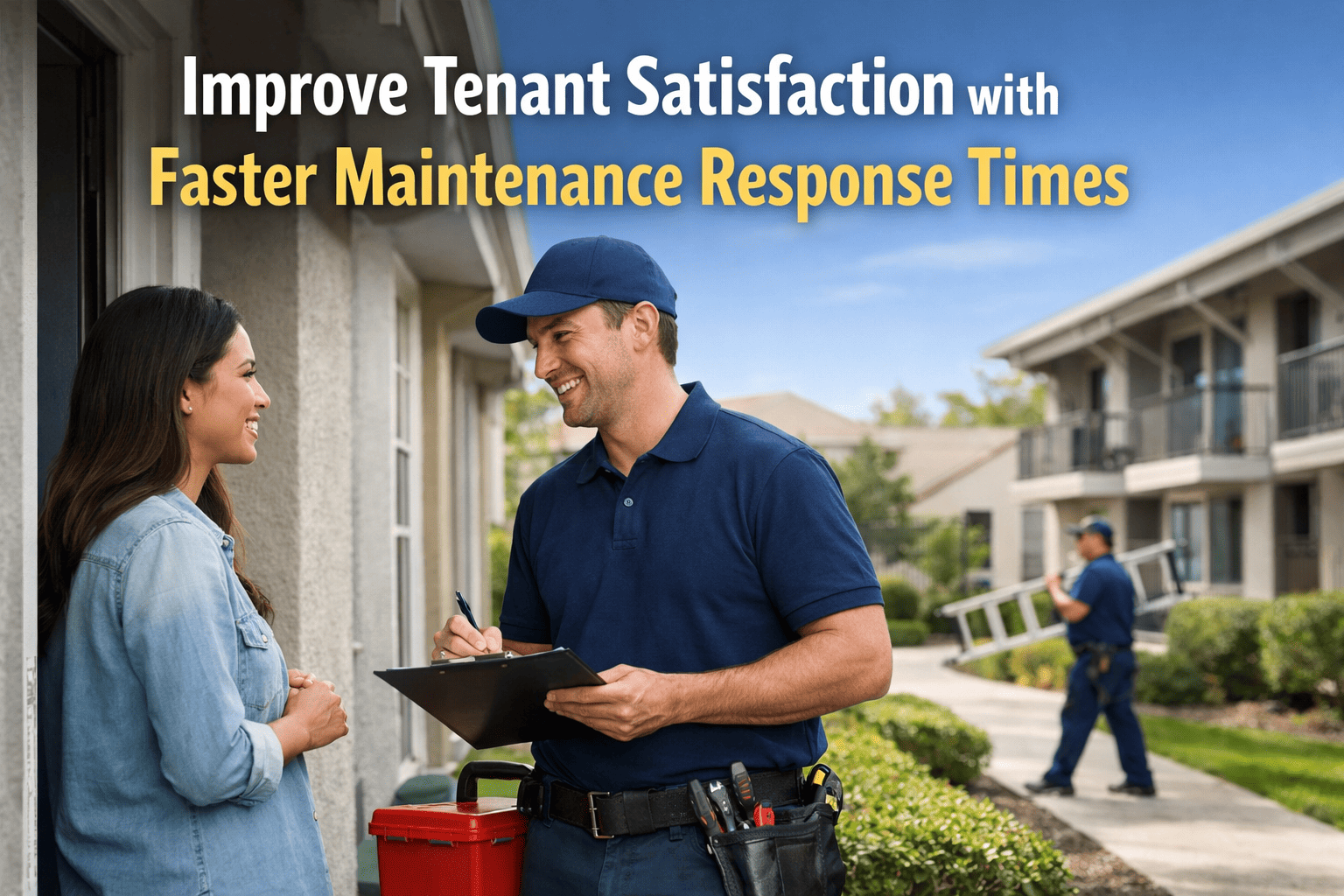
Property Management Company Improves Tenant Retention with Better Maintenance
By Alex Jordan on June 22, 2026
In the multifamily housing industry, tenant retention is the most effective revenue protection strategy. Each lost lease costs 2–3 months of rent in turnover expenses — lost rent, marketing costs, unit preparation, and leasing commissions. For a 500-unit property management company with historically low retention, tenant turnover was a $2.7 million annual drain on revenue. The root cause? Data from exit interviews revealed that 68% of non-renewing tenants cited maintenance response time as the primary reason for leaving. By implementing a CMMS that prioritized maintenance response, automated resident communication, and tracked satisfaction metrics, the company improved tenant retention by 19% in 12 months — adding $2.1 million in retained rental revenue and reducing turnover-related expenses by $620,000 annually. Start a free trial with Oxmaint to improve your tenant retention, or book a demo to see how Oxmaint's resident experience module drives lease renewals.
Case Study: Property Management Company Improves Tenant Retention with Better Maintenance
How faster maintenance response and automated resident communication led to higher lease renewals — a property management success story using CMMS to transform tenant retention.
19%Improvement in tenant retention within 12 months
68%Of non-renewing tenants cited maintenance response as primary reason for leaving
$2.1MAdditional retained rental revenue from improved retention
$620KAnnual turnover cost savings from reduced lease breaks
The Challenge — Retention Erosion from Slow Maintenance Response
A 500-unit property management company with 12 properties was experiencing tenant retention rates below industry averages. Exit interviews revealed a consistent theme — residents were leaving because maintenance issues were not being addressed quickly or communicated clearly.
The Exit Interview Data
Discovery
68% of non-renewing tenants cited slow maintenance response as the primary reason for leaving. 42% said they felt "ignored" because no one updated them on work order status after they submitted a request.
The Financial Impact
Revenue
With 48% annual turnover (vs. industry benchmark of 35%), the company lost $2.7 million annually in turnover costs — lost rent, unit preparation, marketing, and leasing commissions. Each lease break represented 2–3 months of lost rent.
The Communication Gap
Experience
Residents submitted maintenance requests via phone calls, emails, and sticky notes left at the leasing office. Status updates were inconsistent — 73% of residents said they had to call to follow up on work orders, with an average of 4 follow-up calls per request.
The Solution — CMMS-Driven Tenant Experience Improvement
The company deployed a CMMS with a resident experience module that transformed maintenance into a driver of tenant satisfaction rather than a source of frustration. The system enabled four core capabilities that directly improved tenant retention.
Capability 1: Resident Maintenance Portal
Self-Service Request Submission
Residents submitted maintenance requests through a branded mobile app and web portal — no phone calls, no voicemails, no lost requests. The portal automatically captured unit details and prioritized requests by urgency.
Residents could upload photos of the issue, increasing first-visit completion rates by eliminating diagnostic visits. The photos helped technicians bring the right parts and tools the first time.
Capability 2: Automated Status Updates
Proactive Communication
The CMMS automatically sent residents status updates at every stage — request received, technician assigned, technician en route, work completed. This eliminated the "feeling ignored" that drove 42% of non-renewals.
Automated communication reduced resident follow-up calls by 85%, freeing on-site staff to focus on resident experience instead of answering status questions.
Capability 3: Response Time Tracking & SLA Compliance
Accountability
The CMMS tracked response times for every work order against service level agreements (SLAs) — urgent requests in <2 hours, routine requests in <24 hours. SLA breaches triggered manager alerts and root cause analysis.
SLA compliance improved from 62% to 94% within 6 months, with emergency repairs completed in an average of 3.7 hours.
Capability 4: Resident Satisfaction Surveys
Measure What Matters
Automated post-repair surveys were sent to residents after each work order completion, collecting satisfaction data at the individual work order level. This allowed the company to identify service gaps before they led to non-renewals.
Survey data was correlated with lease renewal data, enabling proactive outreach to residents who expressed dissatisfaction with maintenance service.
The Results — 19% Retention Improvement, $2.1M Added Revenue
Within 12 months of implementing the CMMS-based tenant experience program, the company achieved documented improvements across every key retention metric.
Tenant Retention Rate
19% Improvement
52% → 71% retained
Retention improved from 52% to 71% within 12 months. The company moved from below industry average to above industry average (70%).
Retained Rental Revenue
$2.1M Added
From reduced turnover
The 19% retention improvement reduced turnover from 48% to 29%, adding $2.1 million in annual rental revenue retained from residents who would have otherwise left.
Turnover Cost Savings
$620K Annual
Reduced lease breaks
Reduced turnover from 240 to 145 lease breaks annually, saving $620,000 in turnover costs — unit preparation, marketing, lost rent, and leasing commissions.
Resident Follow-Up Calls
85% Reduction
Eliminated phone tag
Automated status updates eliminated resident follow-up calls, reducing staff time spent on communication and improving resident satisfaction simultaneously.
The Connection — Why Maintenance Drives Tenant Retention
The 19% retention improvement in this case study reflects a well-documented connection between maintenance service quality and resident lease renewal decisions. The CMMS program addressed three key satisfaction drivers that directly influence retention.
Three Maintenance Drivers That Influence Tenant Retention
How better maintenance service translates to lease renewals
1
Response Time & Reliability
Residents expect maintenance requests to be acknowledged immediately and completed within a reasonable timeframe. The CMMS reduced emergency response time to 3.7 hours and routine requests to 21 hours. Residents who experienced fast, reliable service were 2.8x more likely to renew their lease.
2
Communication & Transparency
Residents who receive status updates during the maintenance process feel valued and respected. The CMMS automated communication eliminated the "feeling ignored" that drove 42% of non-renewals. Residents who received automated status updates were 3.4x more likely to renew their lease.
3
First-Call Resolution & Quality
Residents who experience repeat maintenance issues are less likely to renew. The CMMS tracked first-call resolution rates and flag vendors who required return visits. Improved first-call resolution from 58% to 82% significantly improved resident confidence in the management team.
"
We had a retention problem but we didn't know it was a maintenance problem until we analyzed our exit interviews. 68% of our non-renewing tenants cited maintenance response as the primary reason they were leaving. That's not a leasing problem — that's a service delivery problem. We implemented the CMMS resident portal and automated communication system, and we saw the impact almost immediately. Residents started telling us they felt more valued because they knew what was happening with their maintenance requests. In the first year, our retention jumped from 52% to 71%. We added $2.1 million in retained rental revenue and saved $620,000 in turnover costs. The CMMS paid for itself in the first 60 days.
VP of Operations — 500-unit Multifamily Portfolio, US Southeast
Tenant Retention Benchmarks — The Maintenance Connection
The 19% retention improvement achieved in this case study is consistent with documented benchmarks from the multifamily housing industry. The National Multifamily Housing Council (NMHC) has found that properties with CMMS-based maintenance communication systems report 15–22% higher retention rates than properties using manual maintenance coordination.
Maintenance is a primary driver of tenant retention. Residents who experience fast, reliable maintenance service are significantly more likely to renew their leases than residents who experience slow or poor-quality service. In this case study, 68% of non-renewing tenants cited maintenance response as the primary reason for leaving. Properties with CMMS-based maintenance communication systems typically report 15–22% higher retention rates than properties using manual maintenance coordination. Start a free trial to see how maintenance impacts your retention.
What maintenance features matter most for tenant retention?
The three maintenance features that matter most for tenant retention are: (1) Response time — residents expect urgent repairs in <2 hours and routine repairs in <24 hours, (2) Communication — residents want status updates at every stage of the repair process to avoid feeling ignored, and (3) Quality — residents who experience repeat maintenance issues lose confidence in property management. A CMMS that enables all three features delivered the 19% retention improvement in this case study. Book a demo to see Oxmaint's resident experience features.
How much does a CMMS improve tenant retention?
In this case study, the CMMS improved tenant retention from 52% to 71% — a 19% improvement. Industry benchmarks suggest properties with CMMS-based maintenance programs typically see 15–22% higher retention rates than comparable properties without CMMS. The improvement comes from faster response times, better communication, and higher repair quality — all factors that directly influence tenant satisfaction and renewal decisions. Use Oxmaint's retention calculator to estimate your potential improvement.
What ROI can I expect from CMMS-driven retention improvement?
The ROI from CMMS-driven retention improvement is substantial. In this case study, the company added $2.1 million in retained rental revenue and saved $620,000 in turnover costs — a total annual benefit of $2.72 million. The CMMS paid for itself within the first 60 days through reduced resident follow-up calls and administrative efficiency alone, with the retention benefits providing ongoing annual value. Start free to calculate your potential ROI.
Retain More Tenants with Better Maintenance — Start Your CMMS Program Today.
Oxmaint's resident experience module improves maintenance response, automates communication, and drives tenant satisfaction — the proven path to higher retention and lower turnover costs. Free to start.