.png)
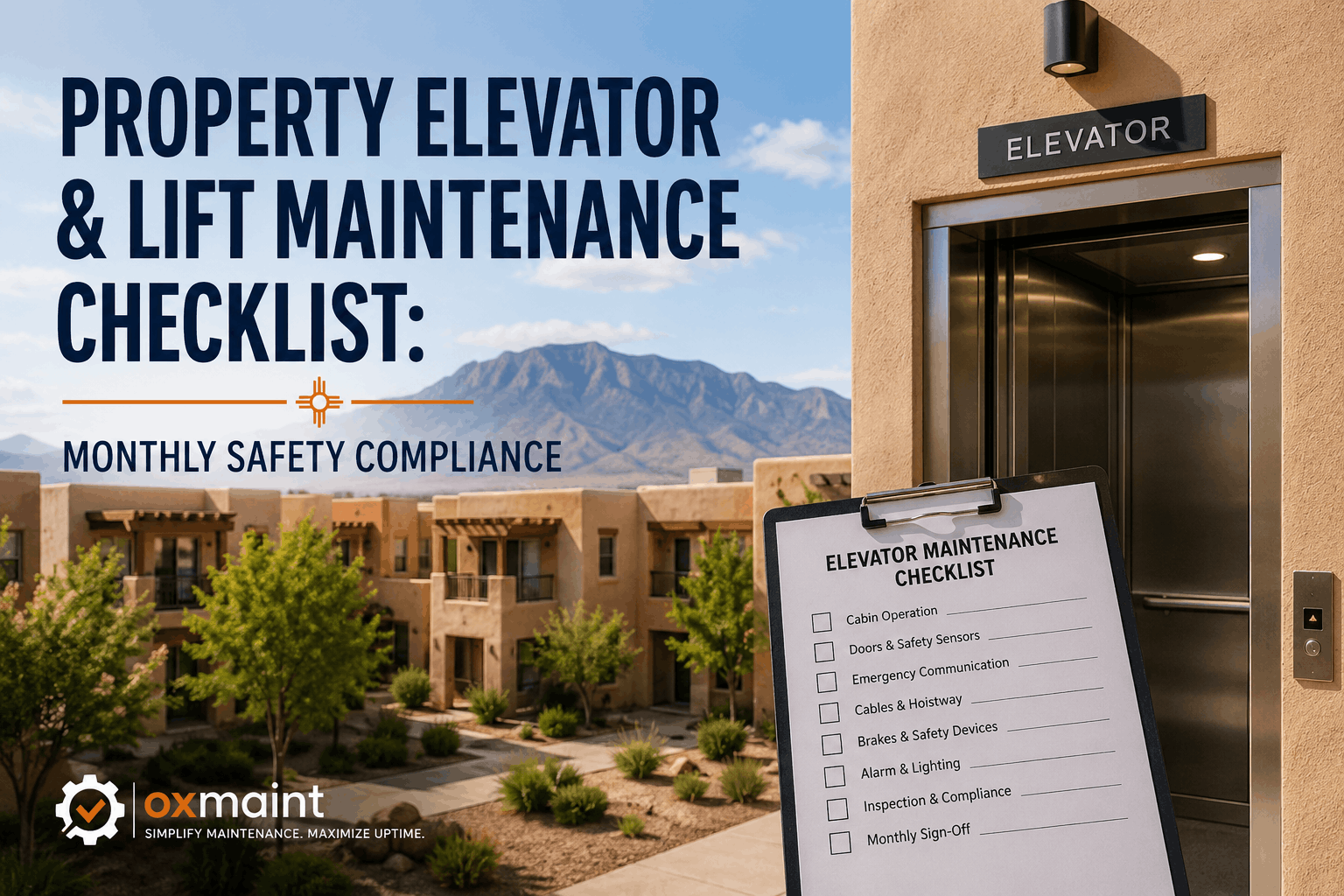
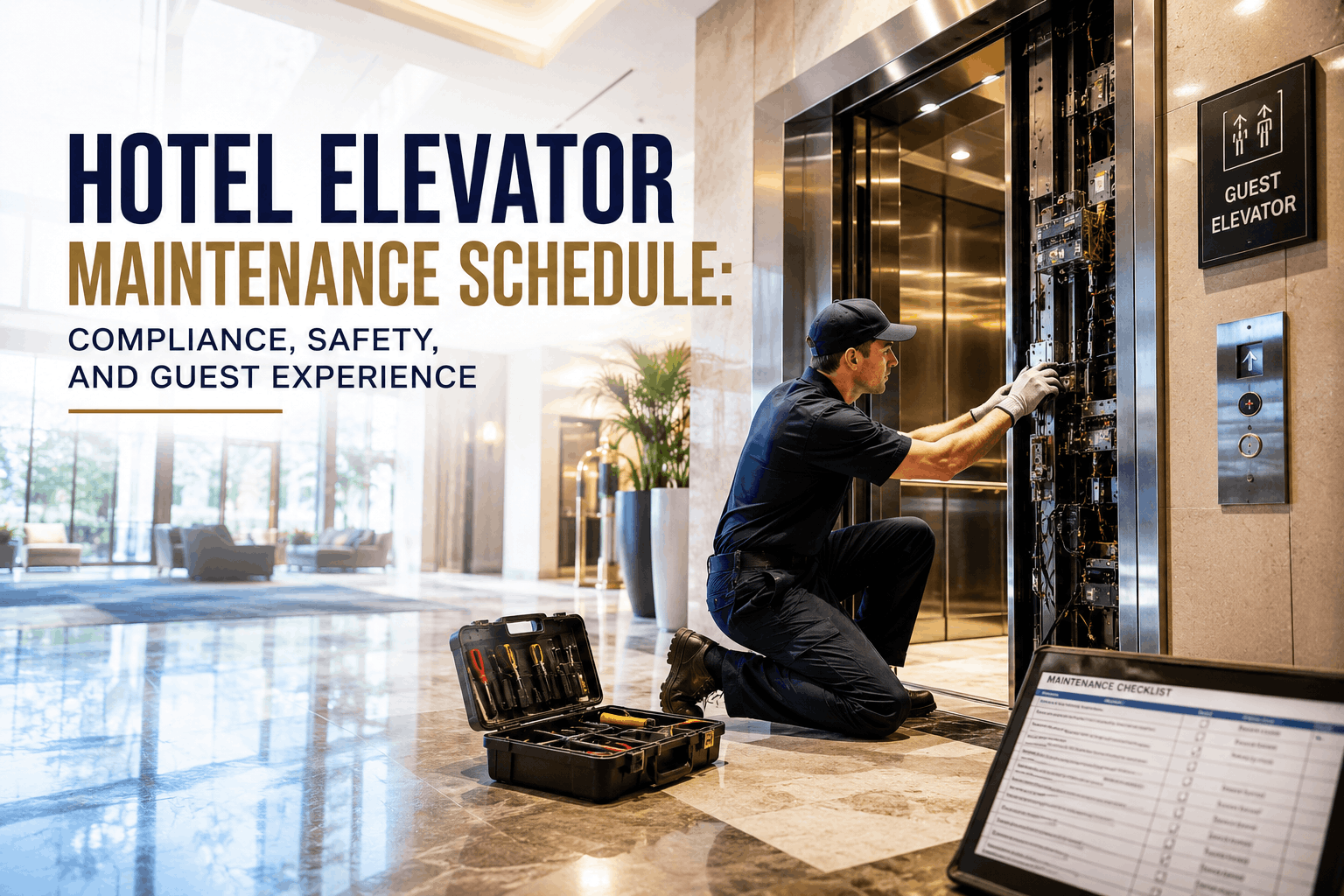
Elevator code compliance is not optional — it is a legal requirement that carries real consequences. Missed inspections result in violations, fines ranging from $500 to $10,000 per occurrence, forced shutdowns, and liability exposure that no building insurance policy fully covers. The challenge is not understanding what the codes require — it is tracking dozens of inspection intervals, testing schedules, and documentation requirements across every elevator in your portfolio without anything falling through the cracks. A CMMS like OxMaint automates compliance scheduling, generates code-aligned inspection checklists, and maintains audit-ready records so your elevators pass every inspection the first time.
Core Elevator Safety Codes
Every jurisdiction enforces elevator safety through national codes, local amendments, and ADA accessibility requirements. OxMaint maps your PM schedules to the specific codes applicable in each building's jurisdiction.
ASME A17.1 / CSA B44
The foundational safety code for elevators in the US and Canada — covers design, installation, inspection, testing, maintenance, and repair requirements for all elevator types.
ADA / ICC A117.1
Americans with Disabilities Act requires specific cab dimensions, door timing, control placement, audible signals, and Braille markings. Non-compliance triggers DOJ enforcement and civil liability.
ASME A17.4 / NFPA 72
Emergency operations including firefighter service (Phase I recall and Phase II operation), smoke detector integration, and emergency power transfer. Fire service testing required annually.
Inspection and Testing Schedule
| Inspection / Test | Frequency | Code Reference | Key Requirements |
|---|---|---|---|
| Category 1 Inspection | Annual | ASME A17.1 8.11 | Visual and functional check of all safety devices, doors, controls, machine room |
| Category 5 Test | Every 5 years | ASME A17.1 8.11 | Full-load safety test, governor trip, buffer test, car and counterweight safeties |
| Firefighter Service Test | Annual | ASME A17.4 | Phase I recall from every floor, Phase II in-car operation, smoke detector integration |
| Door Force Test | Annual | ASME A17.1 2.13 | Max 2.5 ft-lbs kinetic energy, reopening device verification, nudging operation |
| Emergency Power Test | Monthly / Annual | NFPA 110 | Automatic transfer, car lowering, emergency lighting and communication |
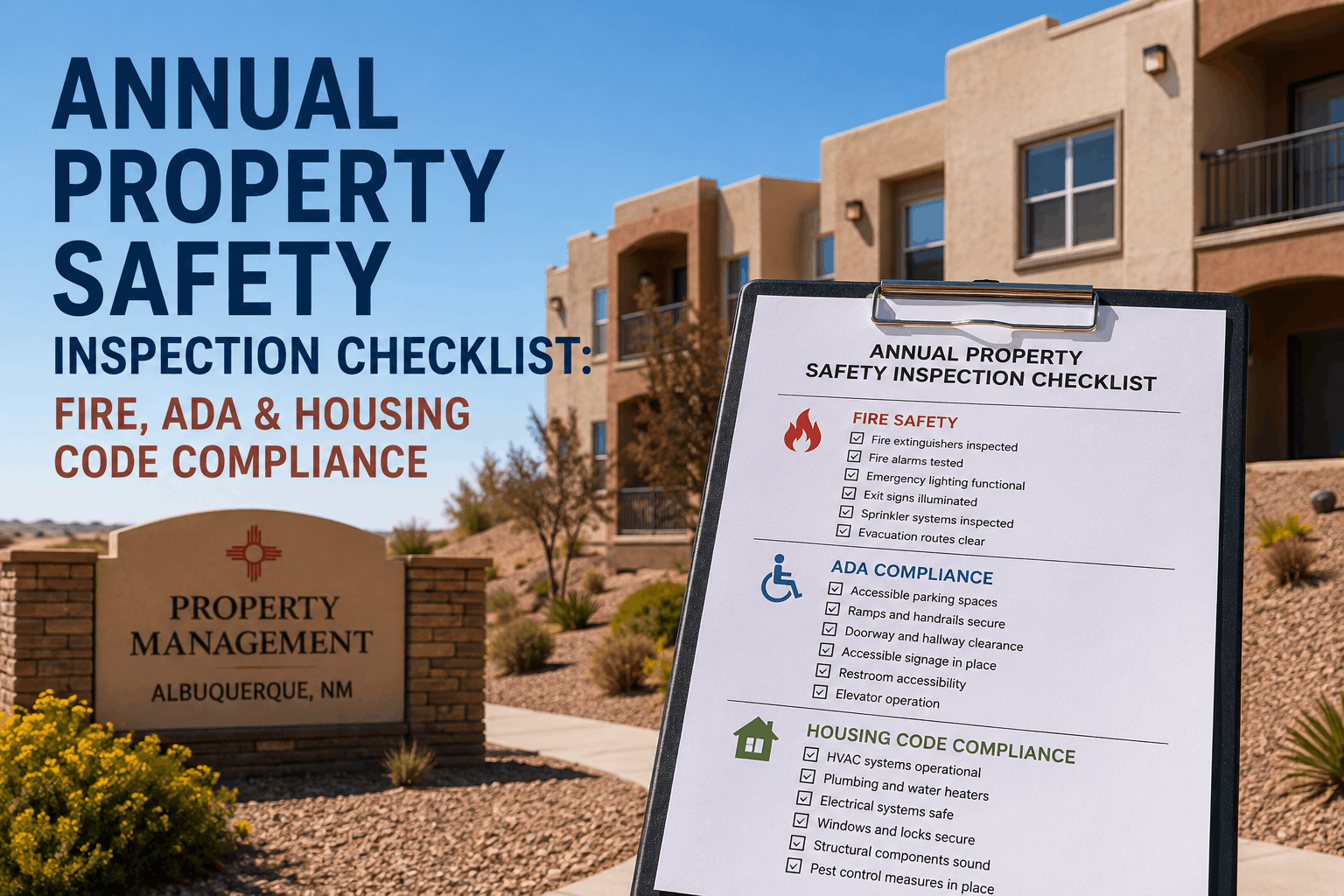
| ADA Compliance Audit | Annual | ADA / ICC A117.1 | Door timing, control placement, Braille, audible signals, cab dimensions |
Global Compliance: Every Jurisdiction Covered
Common Violations and How OxMaint Prevents Them
| Violation | Typical Fine | Root Cause | OxMaint Prevention |
|---|---|---|---|
| Expired inspection certificate | $1,000 – $5,000 | Missed scheduling | Auto-scheduled 90 days before expiration with escalation |
| Missing maintenance records | $500 – $2,500 | Paper-based or lost docs | Timestamped digital records auto-generated per work order |
| Failed door force test | $1,000 – $3,000 | No scheduled testing | Annual door force PM with gauge readings logged per unit |
| Firefighter service failure | $2,000 – $10,000 | Phase I/II never tested | Annual fire service test auto-scheduled with full checklist |
| ADA non-compliance | DOJ enforcement | Door timing or signage out of spec | Annual ADA audit checklist with measurement fields |
| Overdue Category 5 test | $2,500 – $10,000 | Five-year cycle missed | Multi-year cycle tracking with 180-day advance notice |
OxMaint vs. Competitors
| Capability | OxMaint | MaintainX | UpKeep | Fiix | Limble | IBM Maximo | Hippo (Eptura) |
|---|---|---|---|---|---|---|---|
| Code-aligned templates | Yes | No | No | No | No | Custom | No |
| Multi-year cycle tracking | Yes | No | Limited | Limited | No | Yes | No |
| Multi-code compliance | Yes | No | No | Limited | No | Yes | No |
| Audit-ready export | Yes | Limited | Limited | Yes | Limited | Yes | Limited |
| ADA checklists | Yes | No | No | No | No | Custom | No |
| Setup | Minutes | Hours | Hours | Days | Hours | Months | Days |
| Pricing | Free tier | Mid-range | Mid-range | Enterprise | Mid-range | Enterprise | Mid-range |
Implementation Roadmap
Results
Data Security
Frequently Asked Questions
How often do elevators need to be inspected?
ASME A17.1 requires annual Category 1 inspections and five-year Category 5 full-load tests. Some jurisdictions require semi-annual inspections. OxMaint tracks your specific jurisdiction's requirements and auto-schedules accordingly. Book a demo to see how.
What happens if an elevator fails inspection?
The inspector issues violations that must be corrected within 30 to 90 days. Failure to correct results in fines, permit revocation, and mandatory shutdown. OxMaint converts violations into tracked work orders with deadline alerts.
What documentation do I need for an elevator audit?
Maintenance logs, inspection reports, test certificates, repair records, and proof of monthly MCP compliance. OxMaint generates all of this automatically — exportable as a complete audit package in 14 minutes.
Does OxMaint handle ADA elevator compliance?
Yes. ADA-specific audit checklists cover door timing, control placement, Braille markings, audible signals, and cab dimension verification — with measurement fields and photo evidence. Start free.
Can OxMaint manage compliance across multiple buildings?
Yes. Multi-site portfolio view shows compliance status for every elevator across every building — overdue inspections, upcoming deadlines, and violation status on a single dashboard with building-level permissions.
Continue Reading
Elevator Door Problems: Troubleshooting and Repair
Fix door sensor faults, alignment issues, and safety edge failures with structured CMMS workflows.
Read Article Elevator MaintenanceElevator Controller Faults: Troubleshooting Guide
Diagnose drive errors, relay failures, and encoder faults with systematic CMMS diagnostic workflows.
Read Article InnovationElevator Inspection Robots and AI Shaft Scanning
Robotic inspection and AI-powered shaft scanning for predictive elevator maintenance programs.
Read Article Vertical TransportationEscalator Maintenance Checklist and Inspection Guide
Complete escalator PM checklists, step chain inspection, and handrail maintenance programs.
Read Article