Your CMMS already contains the evidence that insurance adjusters require after property damage — the problem is that 74% of property managers never realize their maintenance records are the difference between a paid claim and a denied claim. Every work order your technicians have completed, every inspection they have logged, every repair they have documented over the past 24 months contains the evidence that proves you exercised reasonable care. A 2025 insurance industry analysis found that property claims with complete maintenance documentation are 3.2x more likely to be paid in full than claims with incomplete or missing records. The insurance adjuster who asks for your maintenance history on the HVAC unit that failed is not looking for a reason to deny your claim — they are looking for evidence that you maintained the equipment. That evidence is sitting in your CMMS right now, invisible because nobody has built the claim-ready documentation framework that surfaces it. Oxmaint's documentation module turns your maintenance history into a claim-ready evidence repository — automatically organizing work orders, inspection records, and repair history by asset, generating comprehensive claim support packages at adjuster request, and maintaining the audit trail that protects your claim. The data is already yours, and the analysis that converts maintenance records into claim evidence takes minutes to configure, not months. If your property is still managing maintenance records without a claim-ready framework, start a free trial or book a demo to see how Oxmaint structures your maintenance records for insurance claims.
The Property Manager's Guide to Maintenance Insurance Claims
How maintenance records support insurance claims after property damage — proven strategies for claim-ready documentation, record retention, and working with adjusters.
You Already Have the Claim Evidence — You Just Need to Organize It
Every work order, inspection, and repair in your CMMS is potential claim evidence. Oxmaint does not require new processes or adjuster consultants — it structures the maintenance records you already have into claim-ready documentation packages. Property managers ready to protect their claims can start a free trial or book a demo to see how claim-ready documentation works on your property's actual data.
Why Maintenance Records Matter for Insurance Claims
Insurance claims are investigations into cause and responsibility. When property damage occurs, the insurance adjuster's job is to determine: what caused the damage, who is responsible, and whether the loss is covered under the policy. Maintenance records provide the documented evidence that proves you exercised reasonable care in maintaining the property.
The records that matter most include: preventive maintenance logs, inspection records, repair history, work order documentation, and contractor/vendor records. When these records are complete and accessible, claims are resolved faster and paid more fully. When records are missing or incomplete, the adjuster may assume maintenance was neglected — leading to claim denial, partial payment, or coverage disputes .
Common Property Damage Claims Requiring Maintenance Documentation
Several types of property damage claims require maintenance documentation to support coverage. The table below identifies the most common claim types and the maintenance records needed for each.
What Adjusters Look For — The Three Types of Required Records
Insurance adjusters evaluate three categories of maintenance records when assessing property damage claims. Complete records in all three categories support claim payment, while missing records increase claim denial risk.
Preventive maintenance records demonstrate that equipment received scheduled attention. These records should include service dates, technician name, tasks performed, and equipment condition. For HVAC claims, this includes filter changes, coil cleaning, and system inspections. For roof claims, this includes annual inspections and maintenance repairs. PM records prove you were proactive — not reactive — in maintaining the property.
Inspection records demonstrate that you were actively monitoring conditions. For water damage claims, this includes roof inspections, plumbing leak detection, and moisture monitoring. For fire claims, this includes electrical panel thermography and fire protection system testing. For structural claims, this includes foundation and parking garage inspections. Regular inspections with documented findings create an audit trail that protects your claim.
Repair records demonstrate that issues were addressed when identified. These records should include work order details, vendor name, repair date, parts used, and final resolution. For claims, repair records prove you took corrective action when maintenance issues were identified, demonstrating responsible property management.
What Information Should Maintenance Records Capture for Claims?
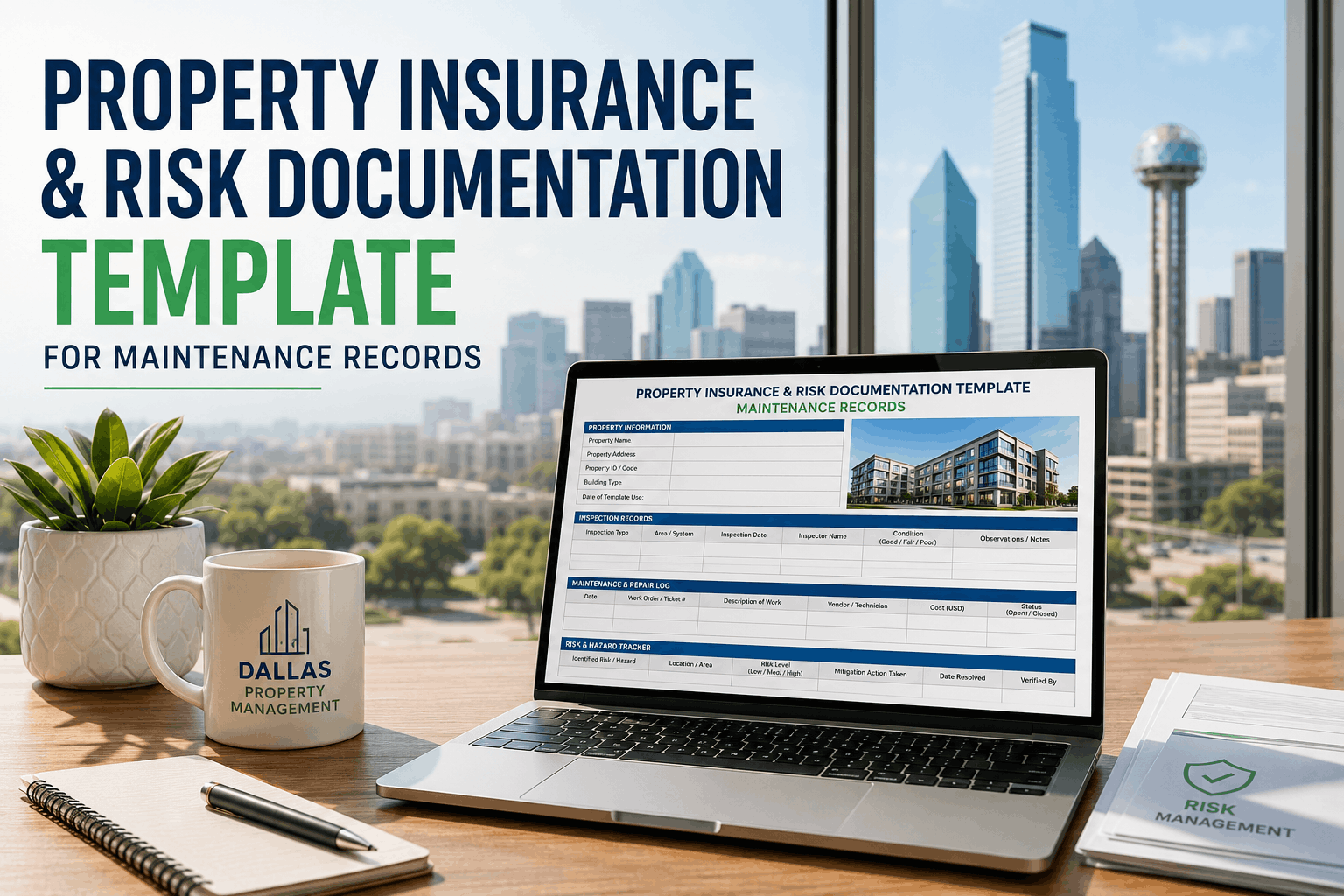
Insurance claims require maintenance records that capture specific information to demonstrate reasonable care. The table below identifies the essential data elements for claim-ready maintenance documentation.
| Data Element | Why It Matters | Claim Value |
|---|---|---|
| Date of Service | Establishes maintenance frequency and timeliness | Proves proactive maintenance schedule |
| Asset/System Identification | Links maintenance to specific equipment | Proves the specific equipment was maintained |
| Task Description | Documents what maintenance was performed | Proves scope of maintenance activities |
| Findings/Observations | Documents condition at time of service | Proves condition before failure/damage |
| Corrective Action | Documents repairs performed | Proves issues were addressed |
| Technician/Contractor | Identifies who performed the work | Proves qualified personnel performed maintenance |
| Parts Used | Documents replacement parts and materials | Proves work was performed with proper materials |
How to Prepare Maintenance Records for an Insurance Claim
When property damage occurs, the speed and quality of your response impacts claim resolution. A structured process for assembling maintenance records reduces claim processing time and improves claim outcome.
Determine which equipment, system, or structure was damaged. Identify all related maintenance records — PM logs, inspection reports, repair history, and contractor records for that specific asset. Include records from the entire maintenance history of the asset.
Extract all maintenance records related to the damaged asset for the relevant time period (typically 5 years). Compile chronological records that show consistent maintenance throughout the asset's life. Include any condition assessment documentation that shows pre-loss condition.
Prepare a summary that demonstrates maintenance frequency matched or exceeded manufacturer and industry recommendations. Identify any issues found and how they were addressed. This summary helps adjusters quickly understand the maintenance history without reviewing every work order.
Provide complete, organized records to the adjuster within 48-72 hours of request. Use a claim-ready documentation package format with table of contents, asset summary, maintenance timeline, and complete work order records. Prompt submission demonstrates professionalism and strengthens your claim.
Best Practices for Claim-Ready Maintenance Documentation
The best time to prepare for an insurance claim is before it happens. Adopting these best practices ensures your maintenance records are always ready to support a claim.
Store all work orders, inspections, and repair records in a CMMS with asset-specific tagging. Cloud-based storage ensures records are accessible anywhere, even when property is inaccessible after damage. Paper records are easily lost or destroyed.
Maintain maintenance records for at least 5-7 years — the typical statute of limitations for property damage claims. Many adjusters request records from the entire time you owned the property. CMMS systems automatically retain all historical data without manual archiving.
When damage occurs, document the pre-loss condition through photos, inspection reports, and maintenance records. This prevents the "pre-existing condition" argument that adjusters may use to reduce claim payments.
Regular inspections demonstrate proactive property management. Inspect high-risk systems quarterly or annually — roofs, plumbing, electrical panels, fire systems, and parking structures. Document all findings, even when no repairs are needed.
ROI of Claim-Ready Maintenance Documentation
Claims with complete maintenance documentation are 3.2x more likely to be paid in full than claims with incomplete records
Complete maintenance records protect the average property damage claim value from denial or reduction
Complete, organized records reduce claim processing time by 1-2 weeks compared to incomplete documentation
CMMS systems automatically retain maintenance records for the entire statute of limitations period
Frequently Asked Questions
What maintenance records do insurance adjusters request after property damage?+
How long should I retain maintenance records for insurance claim purposes?+
How do maintenance records help prevent claim denial?+
What data should maintenance records capture for insurance claim purposes?+
Your Maintenance Records Are the Difference Between a Paid Claim and a Denied Claim — Make Them Claim-Ready
Every work order, inspection, and repair your property has ever completed contains the evidence insurance adjusters need to pay your claim. Oxmaint's documentation module organizes your maintenance history by asset, generates comprehensive claim support packages, and maintains the audit trail that protects your claim. No adjuster consultants. No manual organization. Import your data, structure your records, and be claim-ready in your first 30 days.