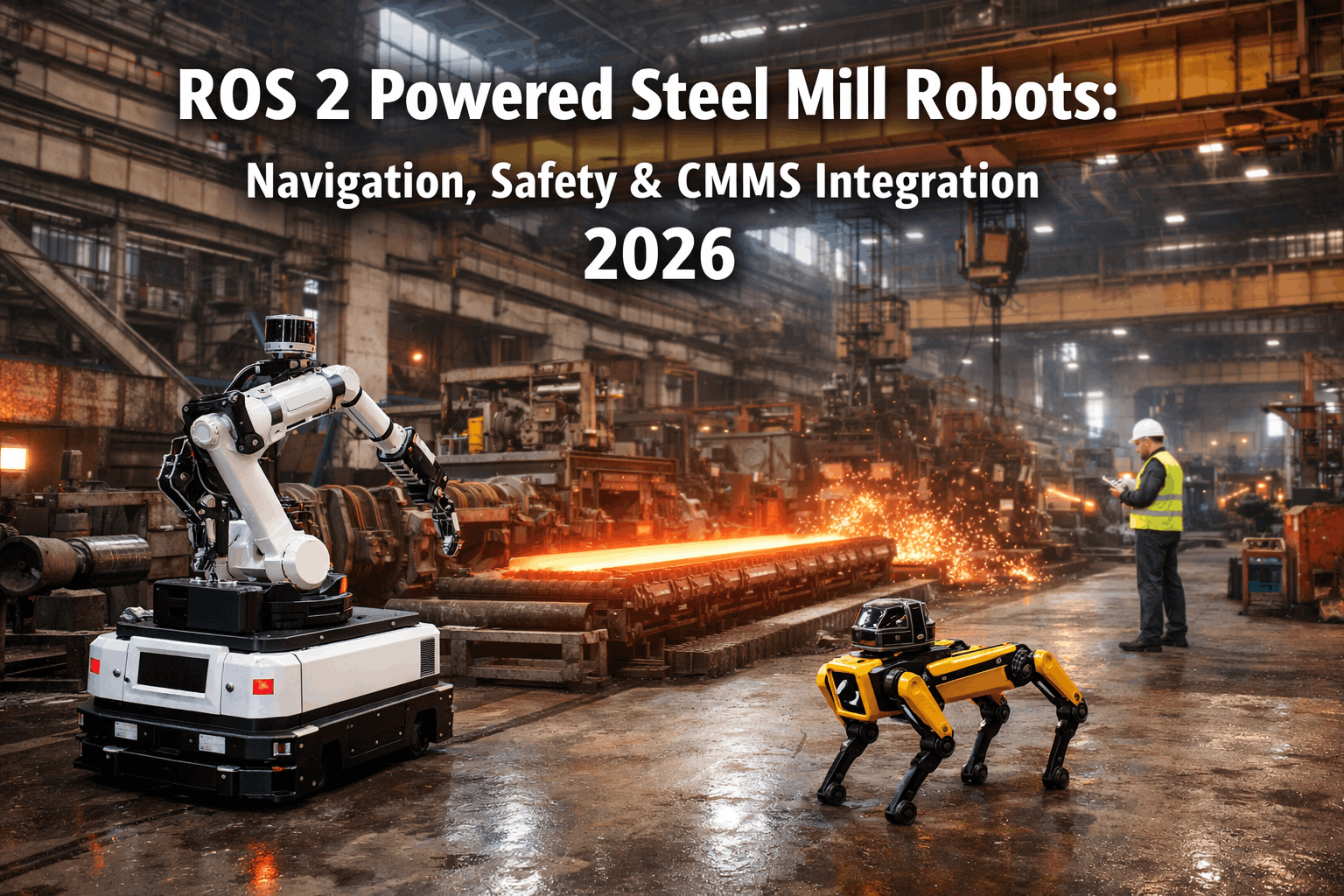
.png)
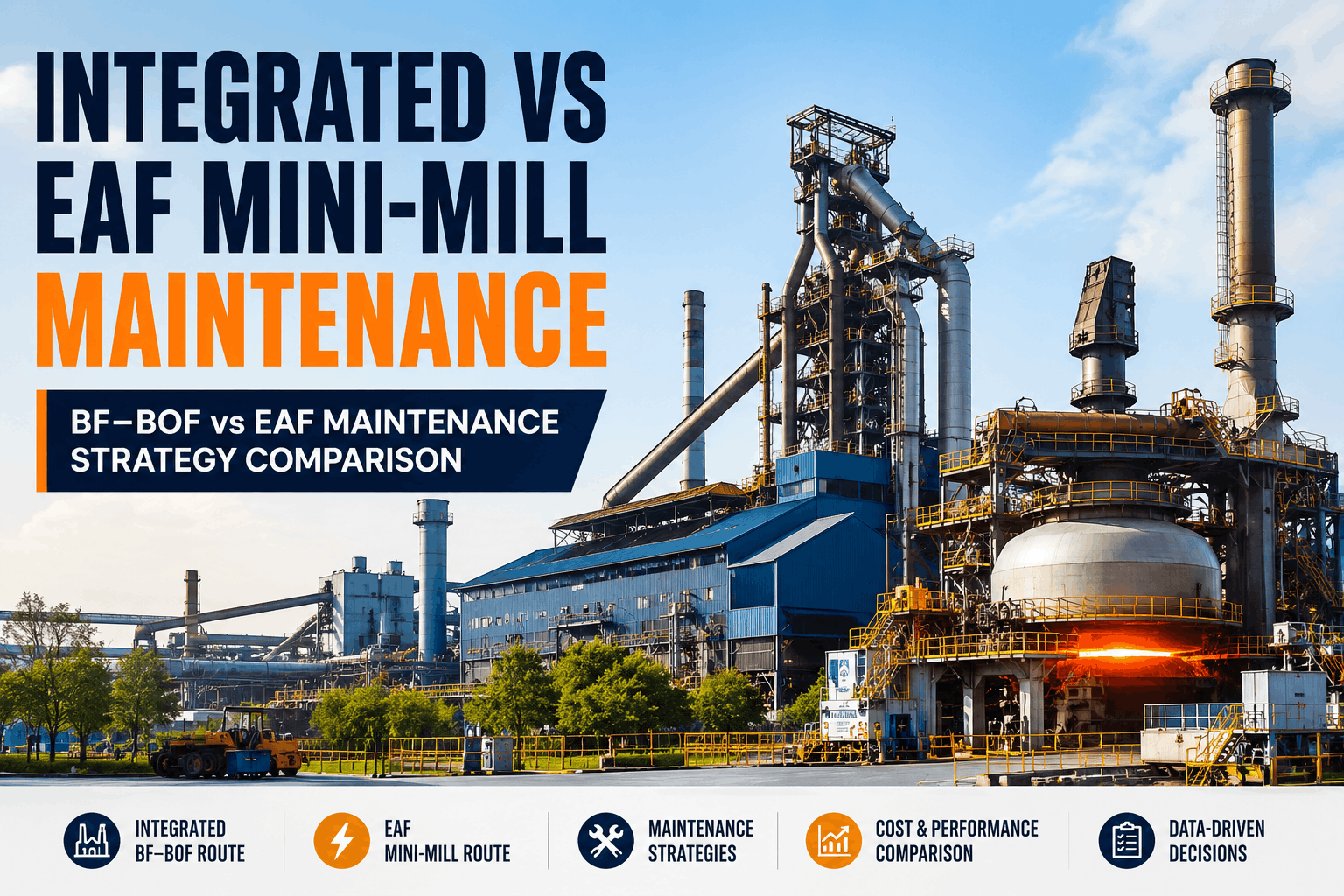
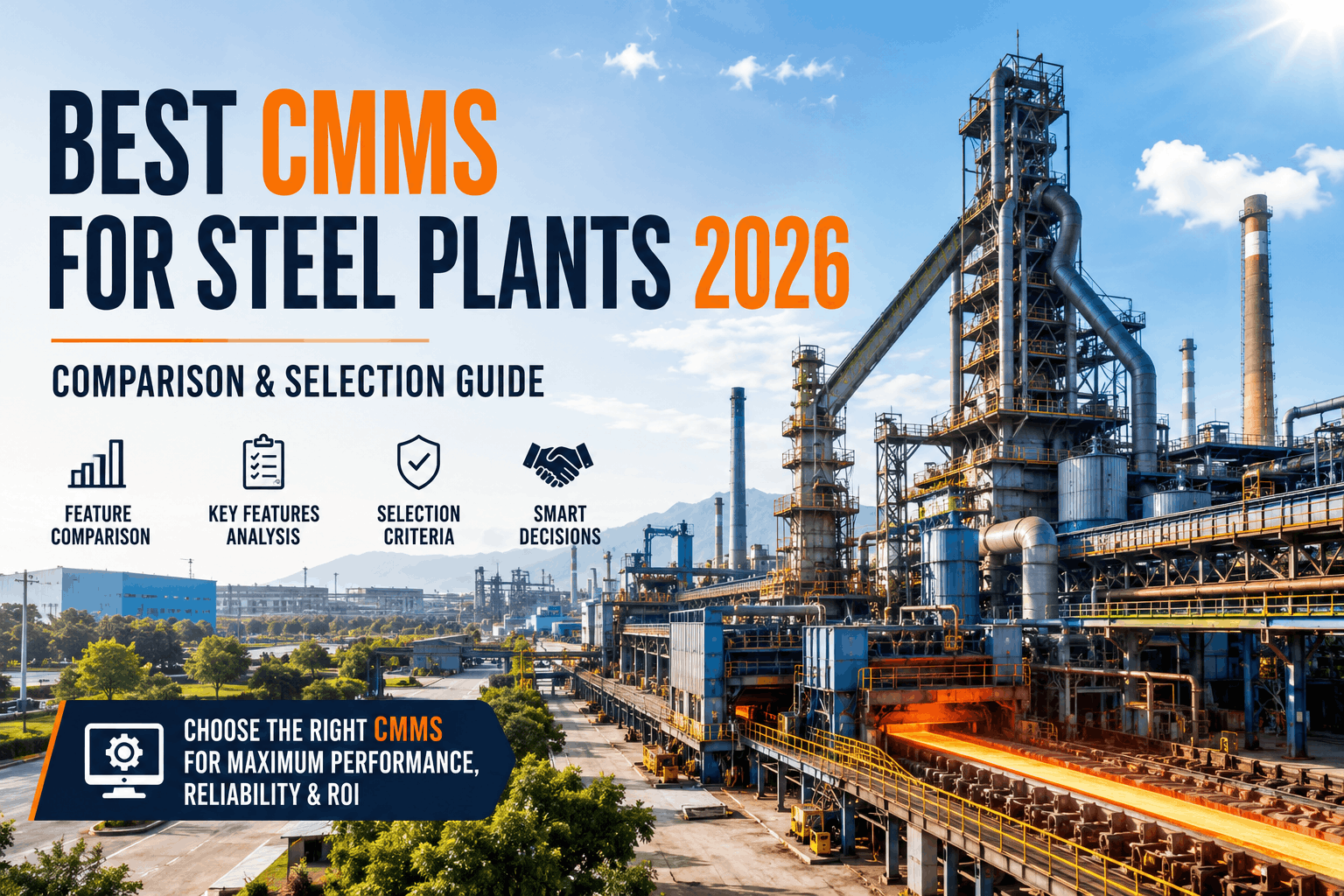
An integrated steel mill running the blast furnace–basic oxygen furnace (BF-BOF) route is the most asset-intensive, highest-consequence maintenance environment in American heavy industry. A single unplanned blast furnace failure event carries a direct cost of $2 million or more — and when the downstream continuous caster goes idle because the hot metal supply is interrupted, every idle hour multiplies that cost across the full production cascade. The maintenance challenge is proportionally complex: refractory lining campaigns tracked heat-by-heat, ladle fleets managed across preheat cycles and metallurgical duty, crane systems carrying 300-tonne liquid steel loads over personnel areas, and rotating equipment running continuously at extreme thermal loads. Most CMMS platforms were built for facilities management or light manufacturing — they fail the moment maintenance planners try to model a blast furnace tuyere replacement schedule, a BOF vessel refractory campaign, or a ladle fleet availability matrix. This guide ranks the best CMMS platforms for integrated steel mills in 2026, evaluates them against the specific BF-BOF workflow requirements that separate adequate from exceptional, and gives U.S. integrated steel operations directors the evaluation framework they need to select the right platform. For teams already using a steel plant maintenance schedule, this guide shows you how to automate those schedules into a CMMS that actually understands the production route.
What Makes BF-BOF Maintenance Different From Every Other Industry
The blast furnace–basic oxygen furnace route is not a linear production process — it is a cascade of interdependent, high-consequence zones where failure at any point shuts down every zone downstream. Hot metal from the blast furnace feeds the BOF steelmaking vessel. Liquid steel from the BOF transfers via ladle to the ladle metallurgy furnace and then to the continuous caster. Slabs from the caster feed the reheat furnace and rolling mill. If the caster goes down for an unplanned repair, the BOF cannot cast its heat. If the BOF cannot cast, the blast furnace must be held or tapped to a torpedo car. The cascading consequence of any single failure event is magnified 4–8× relative to standalone manufacturing operations.
The CMMS requirements that follow from this production cascade are fundamentally different from what general-purpose platforms deliver. Refractory tracking must operate on heat-count triggers rather than calendar intervals — a BOF vessel lining doesn't wear by calendar day, it wears by heat processed. Ladle fleet management must track each vessel individually through preheat, steelmaking duty, metallurgical treatment, and cool-down cycles. Crane inspection records must comply with OSHA 29 CFR 1910.179 and be exportable on-demand for MSHA regulatory inspections. ERP integration must be bidirectional with SAP PM or Oracle EAM — not one-way data export. And the mobile interface used by floor crews must function offline in the signal-dead zones that characterize blast furnace and BOF bay environments.
2026 CMMS Rankings for Integrated Steel Mills
Oxmaint delivers the strongest combination of integrated steel mill CMMS capability and deployment speed available to U.S. operations in 2026. Pre-built asset templates for blast furnace, BOF vessel, continuous caster, ladle fleet, and rolling mill compress the configuration work that other platforms require months to build. Heat-count triggered PM scheduling for BOF and ladle refractory replaces the calendar-based intervals that miss the actual duty-cycle wear pattern in steelmaking environments. Bidirectional SAP PM and Oracle EAM integration eliminates the double data entry that plagues manual maintenance-to-ERP workflows. Offline-first mobile with Zebra rugged device certification covers every signal-dead zone from BF casthouse to rolling mill pit. Starts free, paid from $99/month — no implementation fee, no consultant requirement, live in 3–5 days.
IBM Maximo is deployed at several major U.S. integrated steel producers and carries genuine depth in asset hierarchy modelling, statutory compliance record management, and ERP integration with SAP and Oracle. Its limitations are structural: implementation costs of $500K–$2M+ and 12–24 month deployment timelines mean most U.S. integrated mills that go Maximo are locked into a configuration and consulting commitment that inhibits agile adaptation. Mobile usability in BF and BOF environments is retrofitted rather than native. For operations with existing Maximo infrastructure and dedicated platform administrators, it remains a defensible choice. For operations starting fresh, the cost and timeline gap versus Oxmaint is difficult to justify.
Infor EAM carries strong process industry lineage and integrates well with Infor LN and M3 ERP environments common in U.S. metals manufacturing. For integrated BF-BOF operations, its gaps are in steel-native workflow templates — blast furnace campaign tracking, per-ladle heat counting, and BOF refractory management require custom configuration rather than pre-built logic. Deployment timelines of 6–18 months and per-user pricing structures that scale expensively for large floor crew teams make it a difficult ROI proposition against Oxmaint's portfolio pricing model.
Refractory Campaign Management: What Your CMMS Must Do
Refractory lining management is the most steel-specific maintenance workflow that separates purpose-built platforms from generic CMMS solutions. BOF vessel linings, blast furnace hearths and staves, ladle barrel linings, and tundish linings all share the same characteristic: they wear by production throughput — heats processed, tonnes tapped, temperatures sustained — not by calendar time. A BOF vessel lining scheduled for reline at 3,500 heats on a low-throughput week versus a high-throughput week carries completely different remaining life. Oxmaint's heat-count triggered PM scheduling tracks throughput against lining wear curves, automatically generating the reline work order when accumulated heats approach the campaign limit — adjusted for grade mix, slag chemistry exposure, and splash maintenance program effectiveness.
Ladle Fleet Management: Per-Vessel Heat Count Tracking
A U.S. integrated steel mill running two BOF vessels typically operates a ladle fleet of 18–28 vessels — each cycling through steelmaking, ladle metallurgy, casting, cooling, inspection, preheat, and return to service. The CMMS must track not just heat count but the specific duty cycle each ladle experiences: treatment time, gas stirring duration, steel grades processed, and slag chemistry exposure — because two ladles at the same nominal heat count can carry vastly different remaining lining life based on their specific service history. Oxmaint tracks all of these parameters per individual ladle, generates the reline work order when accumulated duty approaches the predicted wear limit, manages preheat cycle scheduling to ensure thermal preparation before steelmaking assignment, and tracks slide gate component life independently of barrel lining — because these wear at different rates and require separate maintenance interventions.
"We operate a 2.1 MTPA BOF-based steel complex in the Midwest with a fleet of 24 ladles. Before Oxmaint, we had chronic ladle availability problems and two refractory safety incidents in three years. After 18 months on Oxmaint with full heat-count tracking and automated reline scheduling, ladle availability improved from 76% to 94%, and we have had zero refractory-related safety events. The ROI was evident within the first quarter."

.png)