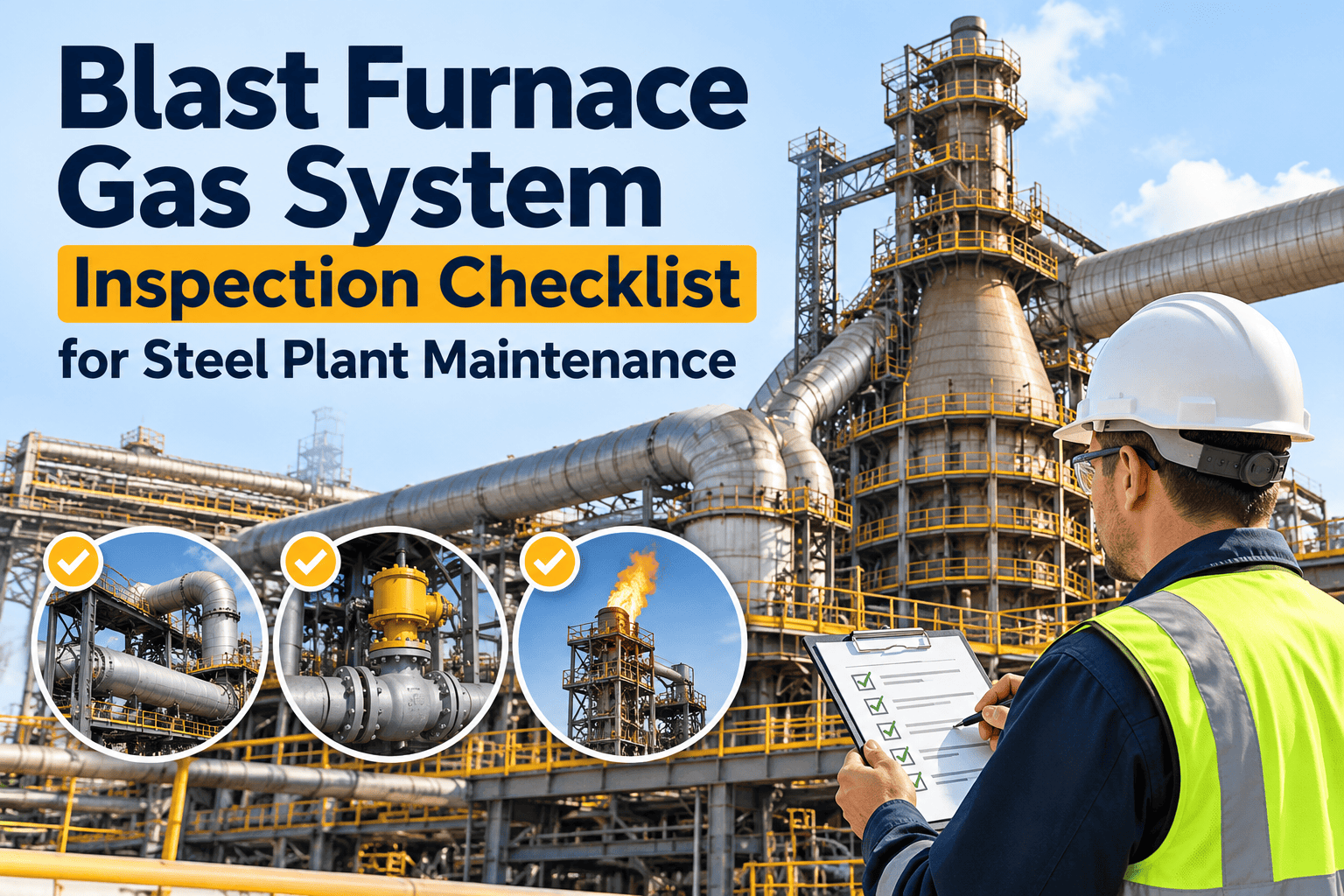
Blast furnace gas contains 20–28% carbon monoxide at operating concentrations lethal within minutes of exposure. The gas cleaning plant — scrubbers, electrostatic precipitators, gas holders, and the distribution network — sits between that gas and your workforce. When cleaning plant maintenance is deferred or tracked informally, CO leaks, scrubber failures, and ESP fires don't give warning. They give incidents. Start managing BF gas safety compliance with Oxmaint before the next inspection cycle.
Blast Furnace Gas Cleaning Plant Maintenance: Scrubber, ESP & Gas Network Safety
A complete maintenance guide covering venturi scrubbers, electrostatic precipitators, gas holders, flare stacks, CO detection networks, and BFG distribution system inspection — with CMMS-driven compliance tracking.
The Maintenance Gap That Turns Process Gas Into a Liability
Blast furnace gas is an economically valuable byproduct — BFG powers hot blast stoves, boilers, and power generation across integrated steel sites. But between the furnace throat and the burner tip, that gas travels through a system that must be continuously maintained to be safe: a venturi scrubber or annular gap scrubber to remove dust, an electrostatic precipitator for fine particle collection, a gas holder for volume buffering, and kilometres of pressurised distribution piping with isolation valves, expansion joints, and condensate drains.
The failure mode is predictable. Gas cleaning plant maintenance is managed reactively — scrubber wear goes unmeasured, ESP electrode spacing drifts without correction, condensate traps block without anyone noticing the water hammer, and CO detectors that need annual calibration run for 18 months on the last reading. When the system finally signals distress, it is not with a maintenance alert. It is with a gas leak, an ESP fire, or a workforce evacuation.
In most jurisdictions — UK HSE, OSHA PSM (US), ATEX (EU), and ISO 45001 — the gas cleaning plant is classified as a major hazard installation. Inspection records are not advisory. They are a legal requirement, and their absence following an incident constitutes criminal negligence for the responsible person. Oxmaint generates audit-ready inspection records automatically — every task, timestamped, with photo evidence.
Gas Cleaning Plant: Inspection Requirements by System
Each subsystem of the gas cleaning plant has distinct failure modes, inspection intervals, and safety consequences. The sections below cover all major components. Deploy these as digital inspection schedules in Oxmaint with automated task creation, threshold alerts, and escalation routing.
The scrubber is the first stage of gas cleaning — removing coarse dust and lowering gas temperature using high-pressure water injection. Scrubber performance directly determines the dust load entering the ESP. A degraded scrubber forces the ESP to operate beyond its design envelope.
Daily Inspection Tasks
- Scrubbing water pressure and flow — verify inlet pressure within design range; flow loss above 5% triggers inspection of nozzle condition
- Scrubber outlet gas temperature — outlet above 80°C indicates scrubbing water flow deficiency or nozzle blockage
- Scrubber sump level and turbidity — excessive turbidity signals refractory or nozzle erosion; log trend for rate-of-change
- Differential pressure across scrubber — rising DP indicates partial blockage of the venturi throat or nozzle bank
Weekly Inspection Tasks
- Nozzle spray pattern visual check — uneven or missing spray patterns reduce scrubbing efficiency and indicate nozzle wear or blockage
- Inspection of scrubber casing for CO leakage — use calibrated portable CO detector at all flanged joints and access doors
- Sludge handling system operation — verify sludge pump capacity and discharge line condition; blocked lines overflow into gas stream
Monthly / Outage Inspection Tasks
- Internal inspection of venturi throat — measure wear at throat; replace when erosion exceeds 3mm on critical dimension
- Nozzle bank removal and inspection — check orifice diameter against commissioning spec; replace worn nozzles in sets
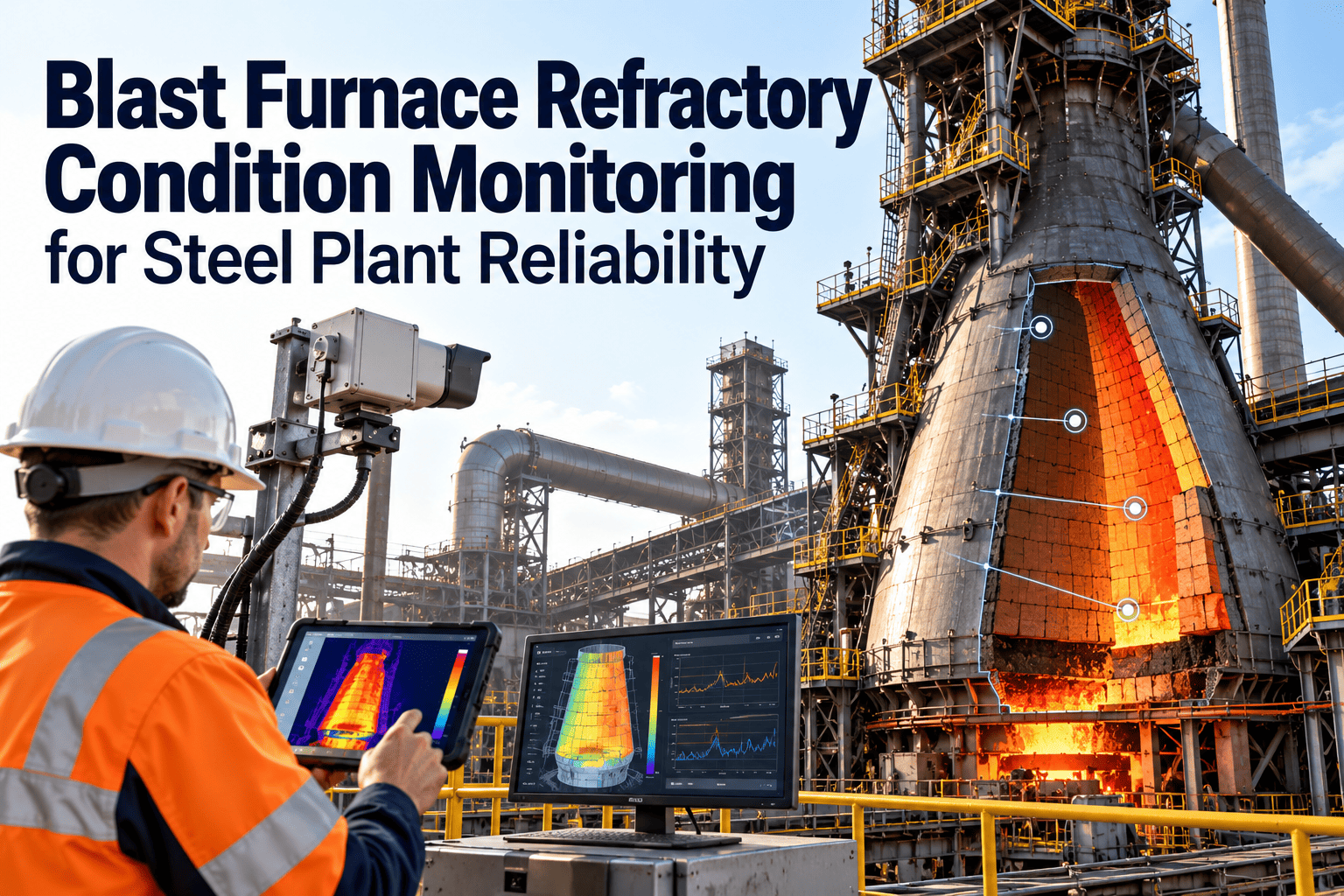
- Refractory lining condition assessment — inspect for spalling, cracking, or erosion using borescope where physical access is restricted
The ESP removes fine particles from the gas stream through electrostatic charging. ESP performance is measured by outlet dust concentration — typically required below 5 mg/Nm³ for downstream equipment protection. ESP fires, caused by combustible dust accumulation on electrodes, are a known major hazard in BF gas cleaning.
Daily Inspection Tasks
- High voltage rectifier output (kV and mA) — voltage below design setpoint reduces collection efficiency; current spikes indicate electrical short to electrode frame
- Rapper system operation verification — all rapper circuits must fire on schedule; missed rapper cycles allow electrode plate buildup leading to short-circuit
- Outlet dust concentration (continuous monitor) — trend against baseline; step-change increase indicates electrode damage or rapper failure
- ESP casing exterior temperature scan — hot spots on casing indicate internal smouldering or active fire initiation
Weekly Inspection Tasks
- Hopper level and dust discharge — full hoppers short-circuit the electric field and route uncleaned gas; verify rotary valve operation
- Insulator heating systems — insulator heaters prevent condensation on high-voltage insulators; failure leads to electrical tracking and arc damage
- Gas seal integrity at hopper discharge valves — failed seals allow air ingress creating explosive atmosphere inside the ESP
Outage Inspection Tasks
- Electrode alignment and spacing check — measure electrode-to-plate spacing at multiple heights; misalignment above 5mm causes sparking and collection loss
- Discharge electrode condition — inspect for corrosion, erosion, or breakage; replace any electrode showing >15% cross-section loss
- Internal refractory and casing weld inspection — check for cracking, corrosion, or hot-spot damage from previous fire events
The gas holder buffers volume fluctuations between furnace output and consumption demand, maintaining stable network pressure. Gas holder failures — seal failures, roof mechanism binding, or overpressure — are categorised as major hazard events in all regulatory frameworks.
Daily Inspection Tasks
- Gas holder level and travel position — log piston or bell position; erratic movement indicates seal friction, cable system issues, or guide rail binding
- Seal oil level and pressure (for oil-sealed holders) — oil level below minimum allows gas bypass through seal; check for oil contamination indicators
- Gas pressure at holder inlet and outlet — abnormal pressure differential indicates valve issue or internal obstruction
Weekly Inspection Tasks
- External structure inspection — corrosion survey — focus on water trap areas at base, stairways, and guide column connections; record corrosion grade per ICorr standards
- Overpressure relief valve function test — verify free movement; stuck relief valves are a single point of failure in overpressure scenarios
- CO detection at seal access points — use calibrated detector at all potential seal bypass locations
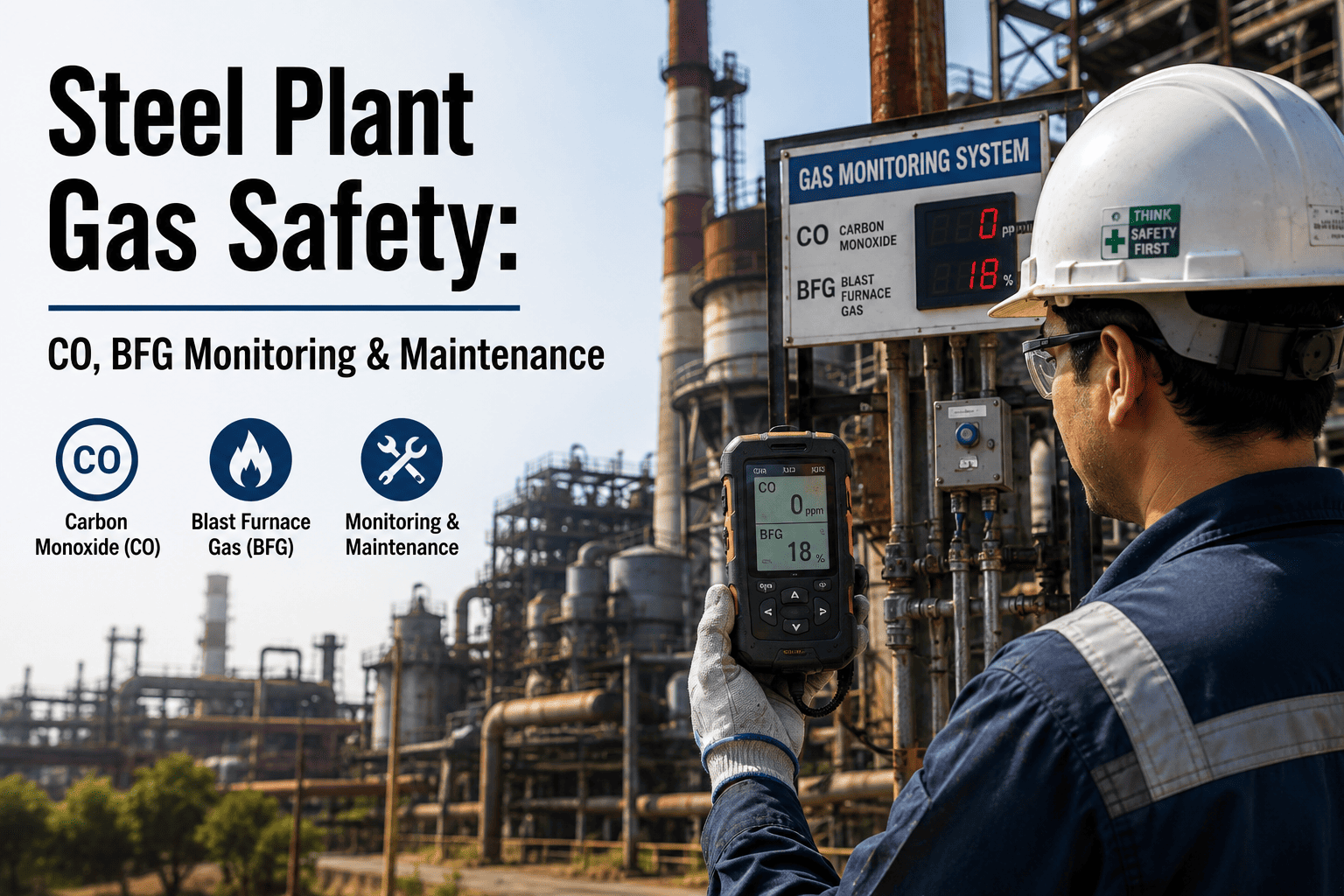
CO detection is the last line of defence when equipment fails. A CO monitoring system that is out of calibration, has dead sensor channels, or has suppressed alarms is functionally worse than no system — it provides false assurance. CO monitoring maintenance is not optional and must be traceable to a calibration record.
Daily Inspection Tasks
- Verify all CO detector channels active on SCADA/DCS — no channel should be in bypass, inhibit, or fault status without documented authorisation and compensating measures
- Portable CO monitor pre-use check for all gas area workers — bump test required before each entry into gas hazard zone; log result per worker
- Alarm annunciation test on one detector per zone — rotate through all detectors on a weekly cycle to verify alarm routing to control room
Monthly / Annual Calibration
- Full calibration of all fixed CO detectors — use certified calibration gas (250 ppm CO balance N₂); document before and after readings; record calibration certificate number
- Electrochemical sensor replacement schedule — electrochemical cells degrade; maximum service life is 24 months regardless of apparent function; log serial numbers
- Emergency isolation valve function test — actuate all gas isolation valves in emergency mode; verify full travel within specified time (typically 30 seconds)
- Breathing apparatus stock verification — count and inspect all BA sets assigned to gas area; verify cylinder pressure and service date
The flare stack is the emergency relief pathway for BF gas — it safely combusts excess gas during furnace upsets, blows-in, and blows-out. A flare stack that cannot ignite reliably, or a bleeder that is stuck closed, removes the controlled pressure relief route and forces gas release at grade level.
Daily Inspection Tasks
- Pilot flame status verification — confirm pilot burner flame present on all flare tips; extinguished pilot means unlit gas venting to atmosphere
- Flare gas flow meter reading — abnormal continuous flow indicates a process upset or isolation valve leak; investigate any unexplained baseline flow
- Bleeder valve position indication — all bleeders should show confirmed closed position; verify position feedback is not in fault state
Monthly Inspection Tasks
- Ignition system test — test auto-ignition on flare tip independently of pilot; confirm spark igniter fires and flame detection sensor responds
- Bleeder valve full-stroke exercise — operate each bleeder through full travel; record open/close time; flag any valve requiring more than 120% of design actuation time
- Flare stack structural inspection — inspect for corrosion at base flanges, guy wire tension, and tip condition; use binoculars or drone for elevated inspection points
The BFG distribution network carries cleaned gas at low pressure across the site to stoves, boilers, and power plant. Network maintenance covers piping integrity, condensate management, expansion joints, and isolation valve operation. Condensate traps that fail closed cause water hammer; those that fail open allow gas loss and liquid carry-over to burners.
Daily Inspection Tasks
- Network pressure balance check — verify pressure at all supply headers is within operating envelope; pressure loss in a section indicates an open bleed point or pipe failure
- Condensate trap discharge verification — spot-check condensate traps in low-point locations; blocked traps show as elevated pressure drop across trap body
- Gas leak survey at high-risk points — use portable CO detector at all flanged joints, expansion joints, and valve packing areas in gas zones
Monthly Inspection Tasks
- Expansion joint visual inspection — inspect bellows for corrosion, cracking, or visible distortion; any visible damage requires immediate isolation and replacement planning
- Isolation valve exercise program — exercise all network isolation valves through full travel on a rotating monthly schedule; record torque readings
- Piping thickness survey (ultrasonic) — UT measurement at known corrosion hotspots (low-point bends, condensate accumulation zones); trend against design minimum
Gas Cleaning Plant — Inspection Schedule at a Glance
All inspection tasks mapped by system, frequency, and safety criticality. Oxmaint auto-creates and assigns these tasks on schedule — no manual dispatch required.
| System | Task | Frequency | Responsible | Criticality |
|---|---|---|---|---|
| SCR — Scrubber | Scrubbing water pressure and flow | Daily | BF Operator | Safety Critical |
| SCR — Scrubber | CO leak check at all flanged joints | Weekly | Gas Safety Tech | Safety Critical |
| ESP | HV rectifier output (kV / mA) | Daily | E&I Technician | Safety Critical |
| ESP | Rapper system operation | Daily | E&I Technician | Safety Critical |
| ESP | Hopper level and dust discharge | Weekly | Mechanical Tech | High |
| GHD — Gas Holder | Holder level and travel position | Daily | BF Operator | Safety Critical |
| GHD — Gas Holder | Overpressure relief valve function test | Weekly | Mechanical Tech | Safety Critical |
| COM — CO Detection | All CO detector channels active on DCS | Daily (Shift) | Control Room | Safety Critical |
| COM — CO Detection | Portable CO monitor bump test per worker | Daily pre-entry | Each gas worker | Safety Critical |
| COM — CO Detection | Full fixed detector calibration | Monthly | Instrument Tech | Safety Critical |
| FLR — Flare | Pilot flame status verification | Daily | BF Operator | Safety Critical |
| FLR — Flare | Bleeder valve full-stroke exercise | Monthly | Mechanical Tech | Safety Critical |
| NET — Network | Network pressure balance check | Daily | Control Room | High |
| NET — Network | Piping UT thickness survey | Monthly | Inspection Engineer | High |
→ Swipe to view all columns on mobile
Why CMMS is Non-Negotiable for Gas Cleaning Plant Compliance
Gas cleaning plant maintenance is a regulatory obligation, not just an operational one. In jurisdictions where BFG systems are classified under major hazard facility legislation, paper-based maintenance records are frequently cited as inadequate during post-incident investigations. Digital CMMS tracking creates the evidence trail that demonstrates the duty of care was met — and identifies precisely when it was not.
Compliance-Grade Audit Trail
Every inspection generates a timestamped, photo-verified record against a named responsible person. CO calibration certificates, bleeder valve test results, and ESP electrode records are stored against the asset and retrievable for any regulatory request within seconds.
Real-Time Threshold Alerts
Configure numeric alert limits for any measured parameter — scrubber DP, ESP outlet concentration, holder pressure, CO detector readings. When a field entry breaches the threshold, the escalation workflow routes instantly to the designated safety officer — not the next morning meeting.
Calibration Expiry Tracking
Every CO detector, portable gas monitor, and pressure safety device is tracked as an asset with a calibration due date. Oxmaint alerts the responsible person 30 days before calibration expiry — preventing the most common compliance failure in gas plant maintenance: instruments running past their calibration certificate.
Mobile Gas Safety Checklists
Gas safety inspection forms are completed on smartphone or tablet in the field — including photo capture for CO detector readings, bleeder valve positions, and ESP HV readings. Offline capability ensures data capture in areas where network connectivity is unavailable inside the gas plant.
Is Your Gas Cleaning Plant Inspection Trail Audit-Ready?
Most steel plants discover their gas safety records are inadequate during an incident investigation — not before. Start building compliance-grade gas inspection records with Oxmaint today.
Gas Cleaning Plant Maintenance: Common Questions
What CO concentration level is immediately dangerous in a BF gas plant?
IDLH (Immediately Dangerous to Life or Health) for CO is 1,200 ppm per NIOSH and OSHA standards. However, at BF gas plant concentrations — up to 280,000 ppm (28%) in raw gas — incapacitation occurs within 1–2 breaths and death within minutes. This is why gas area entry without a calibrated personal CO monitor and a standby person is prohibited under all major safety frameworks. Fixed detector alarm setpoints are typically set at 25 ppm (time-weighted average) and 50 ppm (short-term action level) in occupied areas. Oxmaint tracks detector calibration status and alarm inhibit records to maintain continuous compliance visibility.
How often must CO detectors in a gas cleaning plant be calibrated?
Most regulatory frameworks and instrument manufacturer specifications require full calibration at maximum 12-month intervals for fixed electrochemical CO detectors, with bump testing (functional response verification) before each entry into a gas hazard zone. Sensors should be replaced regardless of apparent function at the manufacturer's stated service life — typically 24 months. In high-humidity environments near scrubbers, sensor degradation is accelerated and 12-month replacement cycles are recommended. All calibration must be documented with calibration gas lot number, certificate reference, and technician identity. Book a demo to see how Oxmaint manages calibration schedules and certificate storage.
What causes ESP fires in BF gas cleaning plants?
ESP fires in blast furnace gas systems are caused by accumulation of finely divided carbonaceous dust on electrode plates when rappers fail to dislodge it on schedule. The accumulated dust can smoulder and ignite, particularly during gas composition changes that introduce higher hydrocarbon content. The prevention protocol is rapper system daily verification, hopper level monitoring to prevent dust backup onto the electrode field, and outage inspection of electrode plate coating condition. Any evidence of previous smouldering (discolouration, fused deposits) on electrode plates during outage inspection must be investigated before the ESP returns to service.
Can a CMMS system meet the documentation requirements for a BFG major hazard facility?
A properly configured CMMS can meet and exceed the documentation requirements in most jurisdictions for major hazard facilities managing BFG systems. The key requirements are: timestamped inspection records with responsible person identification, calibration certificate management with expiry tracking, work order closure documentation, and deviation / corrective action records. Oxmaint provides all of these natively, with configurable retention periods and exportable reports in PDF format suitable for regulatory submission. The critical condition is that the CMMS is actually used consistently — paper supplementation defeats the audit trail integrity. Sign up free and configure your gas plant asset register with full calibration tracking from day one.
How do we manage gas cleaning plant maintenance during a furnace blow-down or reline?
During blow-down and reline, the gas cleaning plant transitions from active gas service to purging, isolation, and physical inspection mode. This requires a specific maintenance programme covering: full gas purge verification with CO monitoring, blanking and blinding of all gas connections before entry, internal inspection of scrubber internals, ESP electrode refurbishment, gas holder seal inspection, and calibration of all CO detection equipment before recommissioning. Oxmaint supports this through outage work order packages — all reline inspection tasks grouped as a single campaign, with sequential dependencies and sign-off requirements enforced before return-to-service authorisation.
Build a Gas Cleaning Plant Compliance Record That Protects Your Team and Your Licence
CO fatalities and ESP fires are preventable. They happen when maintenance inspection records are incomplete, when CO detectors run past calibration expiry, and when gas isolation valve tests are not documented. Oxmaint closes every one of those gaps — automatically, with a full audit trail.