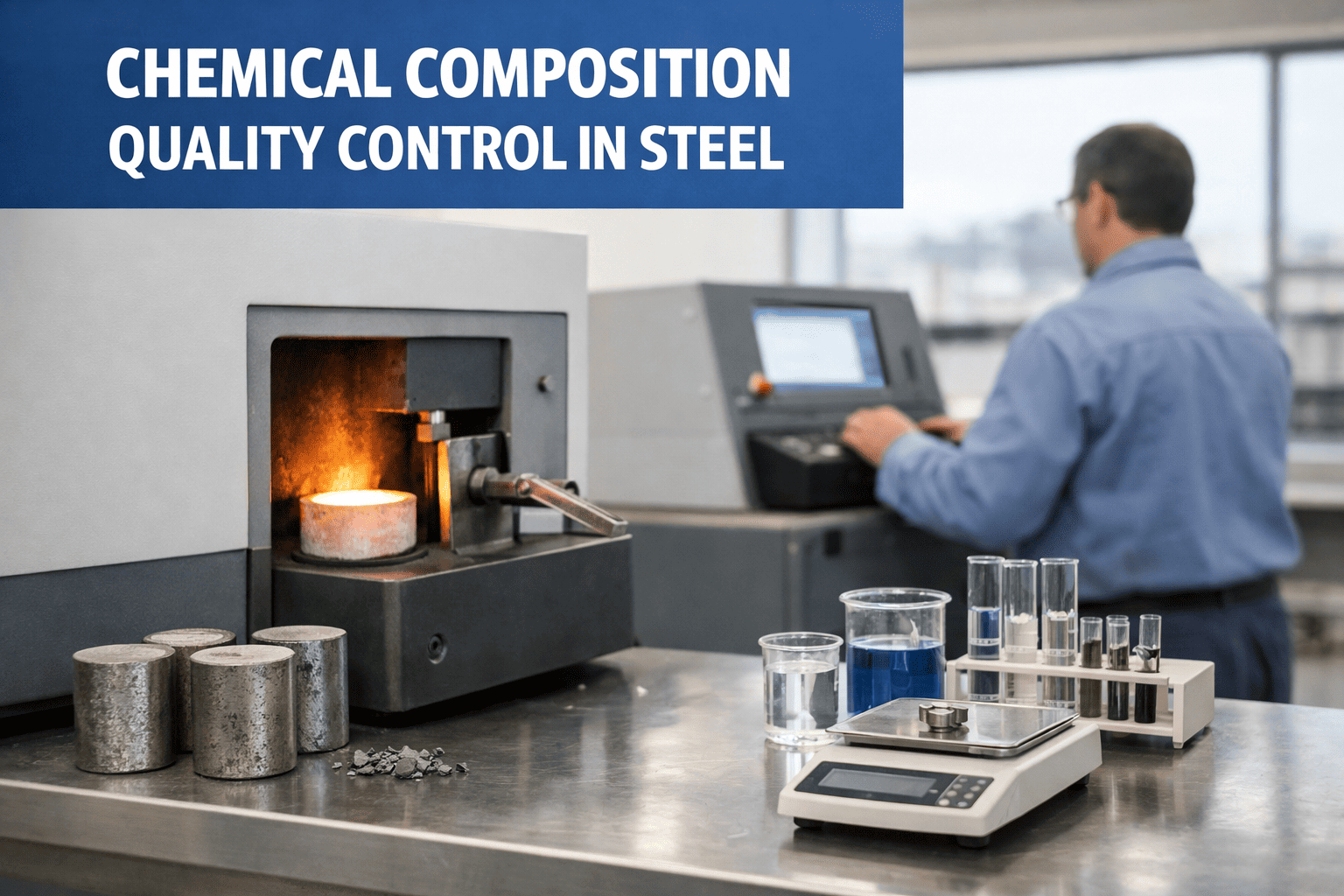
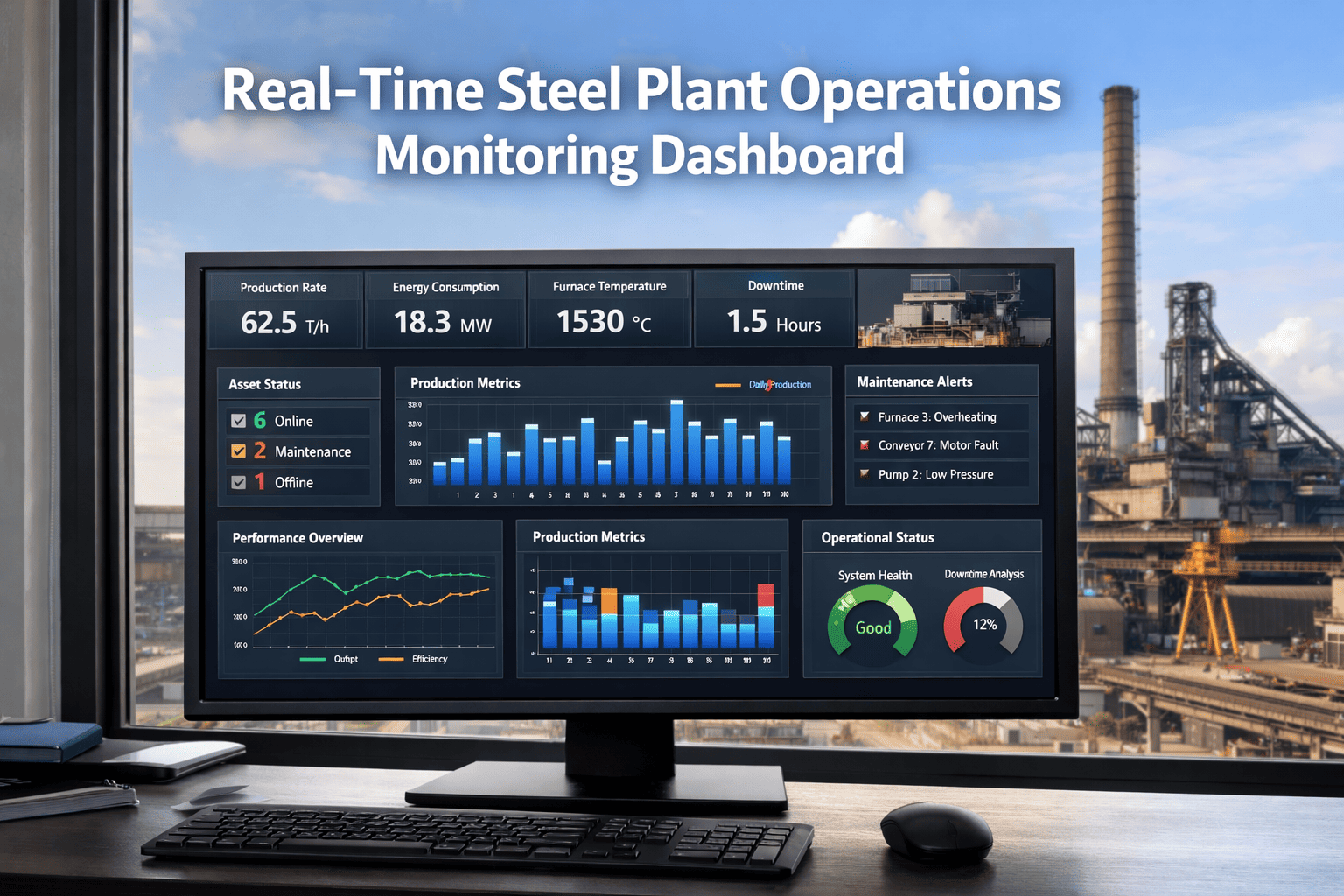
In the high-stakes world of steel manufacturing, the difference between a premium grade alloy and a scrapped heat is measured in parts per million. Precise chemical composition control is the backbone of metallurgical integrity. Without rigorous real-time analysis of elements like Carbon, Manganese, Sulfur, and Phosphorus, steel producers risk catastrophic structural failures, costly re-melts, and rejected shipments. Advanced Quality Control (QC) systems transform the melt shop from a guessing game into a precision science. Schedule a consultation to discover how automated chemistry control eliminates off-grade heats at your foundry.
The Precision Imperative for Steel Quality
Steel mills and foundries operating with outdated optical emission spectrometers (OES) or manual data entry face mounting commercial risks. Alloy recipes are becoming tighter, and client specifications are becoming more unforgiving. When chemical analysis data is siloed or delayed, the furnace operator cannot adjust the heat in time. Integrated Chemical QC platforms eliminate these vulnerabilities by centralizing spectrometer data, furnace inputs, and grade specifications into one real-time decision engine.
35%
Reduction in scrapped heats due to off-chemistry composition
99.8%
Grade compliance rate achieved with automated verification
2min
Reduction in tap-to-tap time by optimizing alloy additions
Ready to perfect your alloy chemistry? Join metallurgical leaders using integrated QC systems to reduce alloy consumption costs and ensure ASTM compliance.
A Chemical Composition Quality Control system serves as the metallurgical brain for the melt shop—tracking every sample from the furnace, ladle, and tundish. Modern QC platforms connect directly to spectrometers (OES, XRF) and combustion analyzers to capture raw intensity data, convert it to concentration percentages, and instantly compare it against the target grade specifications to calculate the precise ferroalloy additions needed.
Tracking of "lollipops" and coupons from the melt floor to the lab. Ensures every sample is associated with the correct Heat Number and sampling stage (Melt-in, Tap, Ladle, Tundish) to maintain a perfect audit trail.
02
Spectrometer Integration
Direct interface with Optical Emission Spectrometers and XRF units. Automates data capture to prevent transcription errors. Handles calibration curves, drift correction, and type standardization to ensure analytical accuracy.
03
Alloy Calculator
Real-time charge calculation logic. Based on the current chemistry and the target grade (e.g., SS316, 4140), the system calculates exactly how much Ferro-Manganese, Silicon, or Carbon must be added to hit the spec at the lowest cost.
04
Grade Database
A centralized library of international standards (ASTM, DIN, JIS) and custom internal grades. Defines min/max limits for every element, including trace elements crucial for micro-alloyed steels (Vanadium, Niobium, Titanium).
05
Heat Certification
Automated generation of Mill Test Reports (MTRs). Compiles final chemistry, mechanical properties, and heat treatment data into a certified document for the customer. Sign up for AlloyMaster to streamline certification.
Essential Analytical Capabilities
Industrial-grade Chemical QC platforms deliver specialized capabilities designed for the harsh environment of steelmaking—from rapid carbon equivalent calculations to nitrogen control. These features distinguish professional LIMS (Laboratory Information Management Systems) from basic spreadsheets.
01
Real-Time Grade Matching
As soon as the spectrometer finishes the burn, the system identifies the closest matching grade or flags deviations. It instantly alerts the operator if "tramp elements" (Cu, Sn) exceed limits, preventing the pouring of off-spec steel.
02
Least-Cost Charge Optimization
Algorithms analyze the current scrap mix and ferroalloy prices to recommend the most cost-effective combination of materials to reach the target chemistry. This saves thousands of dollars per day in raw material costs.
03
Ladle Trim Station Sync
Bidirectional connection with the wire feeders and bin systems at the Ladle Furnace. The lab sends the required addition weights directly to the PLC, ensuring the exact amount of alloy is added to the melt.
04
Statistical Process Control (SPC)
Tracks the stability of the analytical equipment and the manufacturing process. Control charts monitor instrument drift on check samples, ensuring that the spectrometer remains calibrated and accurate within acceptable tolerances.
Transform Your Lab from Data Recorder to Quality Guardian
AlloyMaster delivers enterprise-grade metallurgy capabilities with the speed your melt shop needs. Centralized spectral analysis, automated alloy calculations, and instant compliance checks—all accessible from the furnace pulpit.
See the difference precision makes. Schedule a personalized demo showing exactly how AlloyMaster optimizes chemical composition control for your steel grades.
Chemical control is critical at every step of the steelmaking process—from the initial scrap charge to the final product verification. Modern QC platforms adapt to the specific needs of different production units while maintaining a unified heat record.
EAF & BOF Furnaces
Rapid oxidation and unknown scrap composition create chemistry volatility
Final verification of product before shipping to customer
Positive Material Identification (PMI), automated MTR generation, lot tracking
Measurable QC Benefits and ROI
Implementing a digital Chemical QC system delivers quantifiable returns—from direct alloy cost savings to preserved reputation. Understanding these benefits helps justify the investment in lab automation.
Cost Reduction
5-10%
Lower ferroalloy consumption by targeting the low-end of specification ranges
40-60%
Reduction in downgraded heats that must be sold as cheaper, non-prime product
15%
Decrease in energy costs by reducing tap-to-tap times (waiting for lab results)
Operational Improvement
30-60s
Faster communication of results from Lab to Pulpit, enabling rapid decision making
100%
Traceability of every heat, ensuring full accountability for chemical analysis
Zero
Elimination of manual transcription errors between spectrometer and report
Strategic Value
ISO
Streamlined ISO 9001 and ISO 17025 compliance audits with digital logs
Risk
Mitigation of liability claims through undeniable, timestamped chemical records
Client
Enhanced customer trust through consistent delivery of precise, high-quality steel
Calculate your Alloy Savings. Create a free AlloyMaster account and our team will help project the financial impact of optimized charge calculations.
Deploying a Chemistry QC system involves instrument interfacing, database population, and operator training. A phased approach ensures accuracy is verified before the system controls furnace additions.
QC System Implementation Timeline
Phase 1
Weeks 1-2
Grade & Asset Mapping
Populate database with all steel grades and customer specifications
Define raw material and ferroalloy inventory chemistries
Map workflow from furnace to lab to caster
Establish user roles for Lab Techs, Melters, and QA Managers
Phase 2
Weeks 3-4
Instrument Integration
Connect OES, XRF, and C/S Combustion analyzers to the network
Configure parsing logic for raw instrument data strings
Validate data transmission vs. instrument screen displays
Set up drift correction and standardization protocols
Phase 3
Weeks 5-6
Calculation Validation
Run "Shadow Mode": Compare system recommendations vs. melter intuition
Tune recovery rates for different elements (Mn yield, Si yield)
Train operators on the new dashboard interface
Verify MTR generation accuracy
Phase 4
Week 7+
Live Control & Optimization
Go-Live: System drives alloy addition instructions
Activate automated alerts for out-of-spec trends
Integrate with Level 2 Automation (SCADA/PLC)
Begin long-term statistical analysis of heat data
Integration Ecosystem
Modern Chemical QC platforms function as the central hub of the laboratory—connecting with enterprise systems to ensure chemistry data drives production decisions. Understanding these connections helps maximize value.
Common Laboratory Integration Points
System Type
Integration Purpose
Data Exchange
Business Value
ERP Systems
Order fulfillment & Inventory
Final heat chemistry, inventory usage, grade definitions
Auto-release of heats for shipping, accurate material costing
Level 2 / SCADA
Furnace Process Control
Alloy weights required, temperature data, heat status
Automated bin weighing, closed-loop process control
Scrap Management
Charge Optimization
Scrap bucket chemistry estimates, recipe loading
Better initial melt chemistry, reduced correction time
LIMS (External)
Third-party validation
Sample IDs, analysis requests, certified results
Seamless Mechanical & Chemical data consolidation
Visual Displays
Shop floor communication
Real-time analysis results, "Hold/Tap" status signals
Immediate feedback to furnace operators without radio calls
Automated NCR generation, continuous improvement data
Deploy the QC System that Secures Your Steel Quality
Stop managing complex alloy chemistry with whiteboards and Excel. AlloyMaster delivers enterprise QC capabilities designed for the melt shop—spectrometer integration, least-cost charge calculation, and automated certification. Your lab gets the precision it needs with the speed production demands.
Why is Carbon Equivalent (CE) calculation critical?
Carbon Equivalent is a critical empirical value used to evaluate the weldability and hardenability of steel. Since different alloying elements affect hardness similarly to carbon, the CE formula (e.g., IIW or PCM) combines them into a single number. Our system calculates this automatically in real-time, alerting operators if the CE exceeds the specification, which helps prevent cold cracking during welding and ensures the mechanical properties of the final product.
What is the difference between OES and XRF analysis?
Optical Emission Spectroscopy (OES) is the standard for analyzing Light Elements (C, S, P, N) and is essential for steel composition control. X-Ray Fluorescence (XRF) is excellent for high-alloy steels and slags but cannot effectively detect Carbon or Boron. A robust QC system integrates data from both: OES for the metal sample and XRF for the slag analysis to optimize refining efficiency.
How does the system handle element recovery rates (Yield)?
Not all alloy added to the furnace ends up in the steel; some is lost to the slag or oxidation. Recovery rates vary by element (e.g., Manganese might be 90%, Silicon 85%) and by process conditions. Our system tracks historical recovery data to dynamically adjust the requested addition weights. If the system notices recovery is dropping, it increases the recommended addition to ensure you still hit the target grade.
Can the software manage standards and calibration drift?
Yes. The system tracks the results of Standardization (Type Standards) and Control Samples. If a control sample deviates beyond a set statistical limit (e.g., 2 Sigma), the system locks the result entry screen and forces the technician to perform a drift correction or recalibration. This prevents bad data from ever reaching the furnace operator.
How are "Intermix" or "Transition" slabs handled?
In continuous casting, when grades change within the tundish, a section of steel is a mixture of the two grades. The system tracks the volume and flow to calculate the chemistry of the transition zone. It automatically assigns these slabs a specific "Transition" grade or downgrades them based on the chemical analysis of the intersection, ensuring mixed steel isn't shipped as prime product.
Does the system support automatic MTR generation?
Absolutely. Once a heat is finalized and all chemical (and optionally mechanical) tests pass the grade requirements, the system generates a Mill Test Report (MTR) or Inspection Certificate (EN 10204 3.1). These are digitally signed and stored, ready to be emailed to the customer or uploaded to the ERP system for shipping documentation.