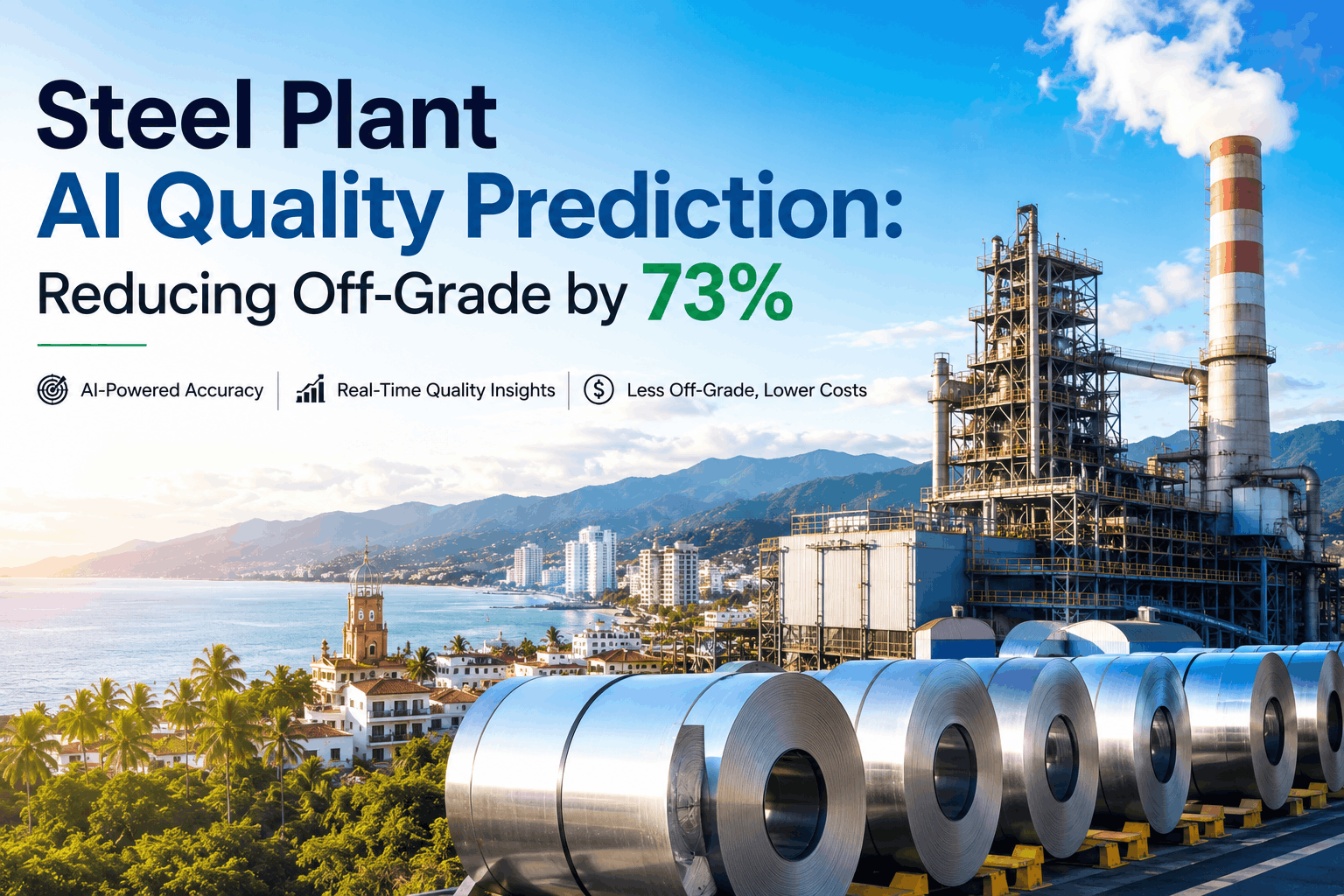
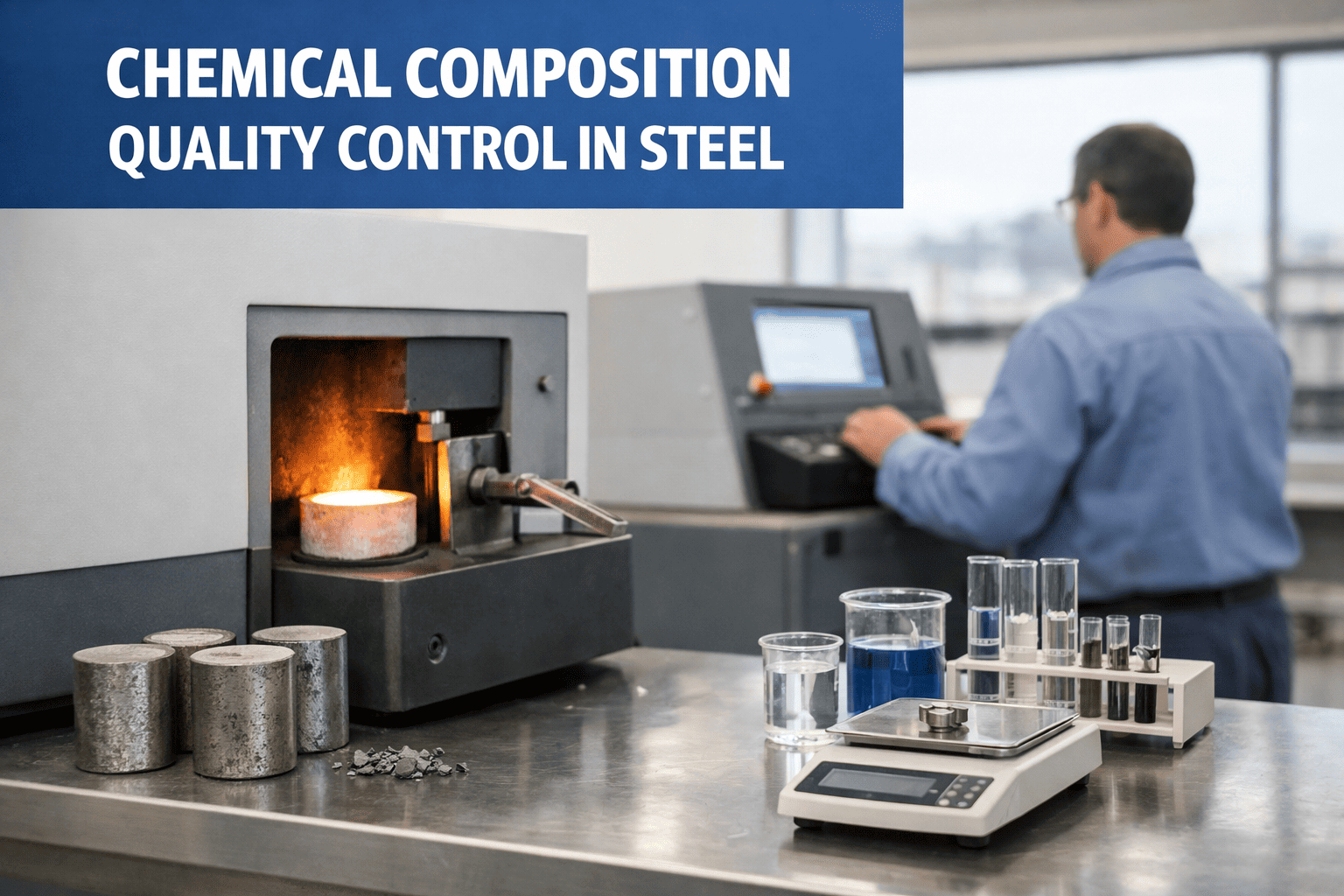
A European flat steel producer running a 120-tonne BOF converter was generating a 4.3% non-conformance rate on a high-strength automotive grade specification — a rate that had been stable for eighteen months and was therefore treated as normal. When the quality team loaded twelve months of heat records into OxMaint's Quality Intelligence Hub, the AI model identified in 48 hours what eighteen months of manual review had missed: 71% of out-of-specification heats were associated with a specific combination of scrap charge composition and tap temperature window that appeared harmless when each variable was reviewed independently but became reliably predictive of manganese segregation when the two occurred together. The corrective action was a target tap temperature adjustment of 14°C on heats with that scrap mix. The non-conformance rate dropped to 0.8% within six weeks. Sign in to OxMaint to connect your steel plant's spectrometer data, heat records, and quality logs to the AI quality prediction engine. Book a demo to see how OxMaint's Quality Intelligence Hub surfaces the variable combinations your SPC system cannot detect.
OxMaint's AI quality prediction engine processes steel production data through a five-stage pipeline — from raw spectrometer input through to real-time corrective action recommendation — in the time between tapping and the next charge. Every stage of the pipeline is visible to quality engineers in the Quality Intelligence Hub dashboard. Sign in to OxMaint to configure the AI quality prediction pipeline for your converter or EAF route.
The Quality Intelligence Hub is not a reporting tool — it is a real-time prediction engine that converts historical heat data into forward-looking quality intelligence. These six capabilities work simultaneously on every heat your steelmaking route produces. Book a demo to see all six capabilities running on live or simulated heat data for your grade portfolio.
| Quality Management Dimension | Traditional SPC | OxMaint AI Quality Intelligence |
|---|---|---|
| Variable monitoring scope | Individual variables — one chart per parameter | Multi-variable interaction space — all parameters simultaneously |
| Non-conformance detection timing | After spectrometer result — heat already tapped | Pre-tap prediction — corrective action window open |
| Grade specification matching | Manual review — metallurgist checks per element | Automated compliance score per heat per grade |
| Root cause analysis | Manual investigation — hours to days | Automatic attribution — ranked by statistical significance |
| Scrap mix optimisation | Experience-based — no data-driven guidance | AI-recommended charge mix per grade and campaign |
| First-pass yield visibility | Monthly report — lagging by weeks | Real-time yield tracking by heat, shift, grade |
| Defect pattern detection | Statistical sampling — systematic patterns missed | Heat-level AI correlation — systemic patterns surfaced |
| Model improvement over time | Static control limits — require manual recalibration | Continuous learning — accuracy increases with heat history |
OxMaint connects to OES spectrometer systems via direct data export or API, ingesting chemical analysis results for each heat automatically without manual transcription. Heat records include the full spectrometer result, target grade specification, deviation flags, associated process parameters, and downstream quality outcomes — creating the complete heat history that AI quality prediction models require to deliver useful predictions. All spectrometer data is stored against the heat record and accessible for retrospective analysis, customer complaint investigation, and grade development work. Sign in to OxMaint to configure spectrometer integration for your steelmaking route.
When a non-conformance is detected — whether by AI prediction, spectrometer result, or customer complaint — OxMaint's quality finding workflow initiates automatically: the finding is logged with its heat reference, contributing variable analysis, severity classification, and responsible metallurgist assignment. Corrective action tasks are generated and tracked to closure, with root cause documentation required before the finding is closed. Quality finding trends are reviewed in the Quality Intelligence Hub to identify systemic issues versus isolated events. Book a demo to see the quality finding workflow for a steel plant quality management scenario.
OxMaint's grade library holds the full specification for every steel grade your plant produces — international standard grades (EN 10025, ASTM A36, API 5L, automotive dual-phase families) and customer-specific proprietary specifications. Grade compliance scoring draws directly from the grade library, and the AI model is trained separately for each grade family to account for the specific interaction patterns that affect each grade's quality outcomes. Customer complaint history is linked to the relevant grade and heat records for pattern analysis. Sign in to OxMaint to configure your plant's grade library and customer specification database.
OxMaint's Quality Intelligence Hub generates automated daily, weekly, and monthly quality performance reports — first-pass yield by grade and shift, non-conformance rate trends, AI model accuracy metrics, corrective action closure rates, and grade compliance statistics — without manual compilation. Quality managers review a dashboard that shows in real time which grades are performing within target, which heats are currently at risk, and which corrective actions are overdue. Customer audit and certification body documentation packages are generated directly from the quality intelligence database. Book a demo to see the Quality Intelligence Hub reporting dashboard for steel plant management.
We had been running SPC on our converter for eleven years. Good system, well-managed, properly maintained. Our non-conformance rate was 3.8% and everyone considered it a fact of life for the grade mix we produced. We loaded two years of heat records into OxMaint and within six weeks the AI had identified three specific process variable combinations that together explained 68% of our non-conformances — none of which showed up on any individual SPC chart because each variable was within limits when you looked at it alone. We made two process adjustments based on the model's recommendations. The non-conformance rate dropped to 1.1% in the following quarter. We had been leaving that improvement on the table for eleven years because we were looking at variables instead of interactions.
Frequently Asked Questions — AI Steel Quality Prediction
The interaction pattern that is generating your plant's non-conformances is already present in your heat history. OxMaint's AI quality prediction engine finds it, flags it in real time, and tells your metallurgist what to do before the next heat is tapped.
Chemical composition prediction. Grade compliance real-time scoring. Multi-variable SPC enhancement. Scrap mix optimisation. Defect root cause attribution. First-pass yield tracking. All powered by AI trained on your plant's heat history.