Two workers die every week in confined space incidents across American industries. In steel plants, the risk multiplies: blast furnace interiors at 2,000°C, coke oven batteries filled with carbon monoxide, oxygen-depleted vessels, and ladle interiors coated with residual molten slag. Between 2011 and 2018, over 1,030 workers died from occupational injuries involving confined spaces in the U.S. alone. The atmospheric hazards that cause 82% of these fatalities, oxygen deficiency and toxic gas exposure, are invisible and can incapacitate a worker in seconds.
The difference between a safe confined space entry and a fatal one comes down to systems. Paper permits get lost, atmospheric readings go unrecorded, and attendant logs disappear between shifts. Digital confined space management replaces guesswork with verified, documented, enforceable protocols at every step. See how Oxmaint manages confined space entry for steel plants.
Confined Spaces Inside a Steel Plant
A typical steel plant contains dozens of permit-required confined spaces across every stage of production. Unlike office buildings or warehouses, these spaces combine extreme temperatures, toxic atmospheres, mechanical hazards, and limited visibility into single entry points. OSHA standard 29 CFR 1910.146 defines a permit-required confined space as one that contains or may contain a hazardous atmosphere, has engulfment potential, has converging walls, or contains any other serious hazard. Here are the most dangerous confined spaces found in steel manufacturing:
Blast Furnace Interior
Entered during relining and repair shutdowns. Residual CO gas, extreme heat from refractory, and risk of falling brick and slag. Requires full atmospheric monitoring and cooling protocols before entry.
Coke Oven Batteries
Multiple toxic gases including hydrogen sulfide, carbon monoxide, and methane. Extremely confined access through oven doors. Entry only permitted after extended cooling and continuous multi-gas monitoring.
Ladles & Vessels
Steel ladles, torpedo cars, and BOF vessels require entry for refractory repair. Residual heat can exceed 200°C even after cooling. Oxygen displacement from argon or nitrogen purge lines is a silent killer.
Storage Tanks & Hoppers
Coal hoppers, flux bins, and chemical storage tanks. Risk of engulfment from bridged material, toxic residue from stored chemicals, and structural collapse. Converging walls create entrapment hazards.
Gas Ductwork & Flues
Blast furnace gas ducts, waste gas flues, and exhaust systems. Contain lethal concentrations of CO even when "cold." Extremely limited access with long distances to exits. Requires continuous monitoring and rescue standby.
Pits & Sumps
Scale pits, cooling water sumps, and slag pits beneath rolling mills. Heavier-than-air gases accumulate in low points. Water and oil create drowning and slip hazards. Often overlooked as confined spaces.
Critical Fact: According to research data, 90% of confined space fatalities involve contractors rather than regular employees. In steel plants, contractor crews performing refractory work, welding, and cleaning are at highest risk because they are less familiar with plant-specific hazards and permit protocols.
Anatomy of a Safe Confined Space Entry
OSHA's permit-required confined space standard (29 CFR 1910.146) mandates a specific sequence of actions before, during, and after every entry. Each step exists because workers have died when it was skipped. In steel plants, the complexity of these steps increases dramatically due to multiple energy sources, extreme temperatures, and toxic atmospheres. Here is the complete entry protocol and how digital CMMS enforces each step:
Entry supervisor issues a written permit identifying the space, purpose, duration, authorized entrants, attendants, hazards, and required equipment.
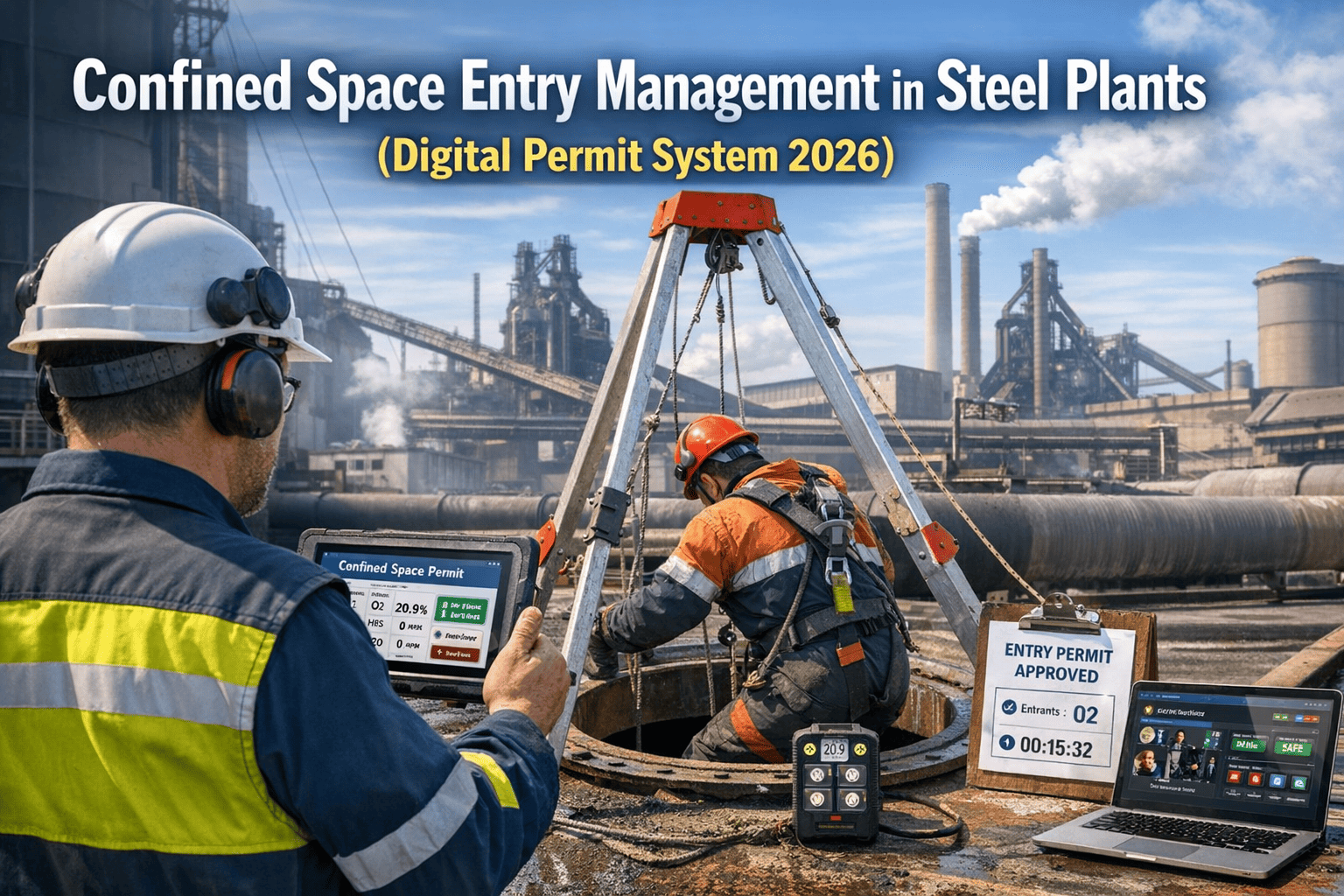
Oxmaint: Digital permit with mandatory fields, auto-populated hazard data from asset recordsTest for oxygen (19.5-23.5%), flammable gases (<10% LEL), and toxic gases (CO, H₂S, SO₂) before any person enters. Test in sequence: O₂ first, then combustibles, then toxics.
Oxmaint: Mandatory gas reading fields with pass/fail thresholds, no permit activation without acceptable readingsIsolate all energy sources: electrical, hydraulic, pneumatic, thermal, gas lines. Apply lockout devices. Verify zero energy state. Blank and bleed all piping.
Oxmaint: Integrated LOTO module links confined space permits to energy isolation verificationEstablish continuous forced-air ventilation. Purge toxic atmospheres. Maintain airflow throughout entry duration. Monitor downstream effects on connected spaces.
Oxmaint: Ventilation verification checklist with sign-off before permit activationContinuous atmospheric monitoring while workers are inside. Attendant stationed at entry point at all times. Communication maintained between entrants and attendant. Alarm triggers immediate evacuation.
Oxmaint: Time-stamped attendant check-ins, gas reading log intervals, automatic permit expirationMaintain accurate count of all personnel inside the space at all times. Each entrant signs in and out. Attendant verifies identities. No unauthorized entry permitted.
Oxmaint: Digital sign-in/out with real-time entrant count visible to supervisors and rescue teamsVerify all entrants have exited. Close and file the entry permit. Document any problems, near-misses, or deviations. Review for continuous improvement.
Oxmaint: Permit cannot close until all entrants signed out, auto-archived for OSHA audit readinessDigitize Every Confined Space Entry
Oxmaint's confined space management module ensures no step is skipped, no permit is lost, and no worker enters without verified safe conditions. From atmospheric testing to rescue planning, every action is documented.
Why Confined Space Fatalities Keep Happening
Research into confined space accidents reveals consistent patterns of failure. Understanding these root causes is essential to building a system that prevents them. A study analyzing 36 confined space accidents found the following causal breakdown:
Key Finding: OSHA estimates that proper training could prevent 85% of confined space fatalities, yet only 30% of workers receive confined space training annually. Digital CMMS systems with automated training tracking close this gap by ensuring no worker enters a confined space without current, verified training.
What OSHA Requires: 29 CFR 1910.146 Compliance Checklist
The permit-required confined space standard is one of the most detailed OSHA regulations. Here is every major requirement, what OSHA inspectors look for, and how Oxmaint ensures compliance:
Workplace Evaluation
§1910.146(c)(1)Requirement: Identify all confined spaces and determine which are permit-required. Post danger signs at each permit space.
Oxmaint Solution: Digital asset registry tags every confined space with location, classification (permit/non-permit), associated hazards, and required entry protocols. QR codes at entry points link directly to space-specific procedures.
Written Permit Space Program
§1910.146(c)(4)Requirement: Develop and implement practices for safe entry operations including hazard prevention, atmospheric testing, ventilation, barriers, and verification of acceptable conditions.
Oxmaint Solution: Centralized digital program with space-specific entry procedures, mandatory checklist workflows, and automatic enforcement of entry prerequisites before any permit is activated.
Entry Permit System
§1910.146(e)-(f)Requirement: Issue permits before entry that document the space, purpose, date, duration, hazards, atmospheric readings, equipment, communication methods, rescue provisions, and authorized personnel.
Oxmaint Solution: Digital permits with all mandatory fields. Cannot be issued without atmospheric readings, LOTO verification, and rescue plan. Auto-expires at set duration. Archived for one year per OSHA requirement.
Attendant & Entrant Duties
§1910.146(h)-(i)Requirement: Maintain an attendant outside each permit space during entry. Track entrants by name. Monitor conditions continuously. Order evacuation if conditions deteriorate.
Oxmaint Solution: Digital entrant sign-in/out with attendant acknowledgment. Timed check-in prompts ensure continuous monitoring. Supervisor alerts if attendant misses a check-in.
Rescue & Emergency Services
§1910.146(k)Requirement: Provide rescue service capable of reaching victims within appropriate timeframe. Rescue teams must practice making permit-space rescues at least annually.
Oxmaint Solution: Rescue plan linked to each permit. Emergency contact auto-notification. Rescue team training and drill records tracked with automatic scheduling of annual practice sessions.
Training Requirements
§1910.146(g)Requirement: Train entrants, attendants, and entry supervisors before initial assignment, when duties change, and when new hazards are identified. Retrain when deficiencies are found.
Oxmaint Solution: Role-based training records for every employee. Automatic expiry alerts. System blocks permit issuance if any assigned personnel have expired or missing training.
Atmospheric Testing Quick Reference for Steel Plants
Atmospheric hazards cause the majority of confined space deaths. Steel plant atmospheres are uniquely dangerous due to blast furnace gas, coke oven emissions, and inert gas purging systems. Here are the critical thresholds every entry supervisor and attendant must know:
5 Steps to Implement Digital Confined Space Management
Transitioning from paper permits to a digital system can be done in phases without disrupting production. Oxmaint's onboarding team guides steel plants through each step:
Inventory All Confined Spaces
Walk every area of the plant: melt shop, coke plant, rolling mills, utilities. Identify and classify every confined space. Tag each with unique ID. Photograph entry points. Document known hazards and historical incidents.
Build Digital Permit Templates
Create space-specific permit templates in Oxmaint. Define mandatory fields: atmospheric readings, LOTO verification, ventilation status, rescue plan, PPE checklist, authorized entrant list, and attendant assignment. Set permit duration limits.
Configure Training & Roles
Assign employees to roles: authorized entrant, attendant, entry supervisor. Link training records. Set automatic retraining schedules. Configure system to block permits when training is expired for any assigned person.
Train & Go Live
Hands-on training for entry supervisors on digital permit issuance. Train attendants on mobile check-in workflows. Train entrants on digital sign-in/out. Run parallel paper and digital for one week, then switch fully to digital.
Monitor, Audit & Improve
Review permit data weekly. Track compliance rates. Identify spaces with most frequent entries. Audit rescue plan readiness. Use data to drive continuous improvement in confined space safety programs.
Every Entry. Every Worker. Every Time.
Confined space fatalities are preventable. Oxmaint ensures no worker enters without a verified permit, tested atmosphere, assigned attendant, and documented rescue plan. Protect your steel plant workforce today.
Frequently Asked Questions
What qualifies as a confined space in a steel plant?
Under OSHA 29 CFR 1910.146, a confined space is any area that is large enough for a worker to enter, has limited or restricted entry/exit, and is not designed for continuous occupancy. In steel plants, this includes blast furnace interiors, coke oven batteries, ladles, torpedo cars, BOF vessels, gas ductwork, storage tanks, hoppers, pits, sumps, and boiler interiors. A space becomes permit-required if it contains or may contain hazardous atmosphere, has engulfment potential, has converging walls, or contains any other serious hazard.
What atmospheric testing is required before entry?
OSHA requires testing in a specific sequence: oxygen first (must be 19.5-23.5%), then combustible gases (must be below 10% LEL), then toxic gases specific to the space (CO, H₂S, SO₂, etc.). Testing must be performed before entry and continuously during occupancy. In steel plants, multi-gas monitors calibrated for CO, H₂S, O₂, and LEL are standard. Oxmaint requires atmospheric readings to be entered into the digital permit before it can be activated.
How does Oxmaint handle contractor confined space entry?
Since 90% of confined space fatalities involve contractors, Oxmaint includes contractor management within its permit system. Host employers can verify contractor training records, issue permits that require contractor acknowledgment of hazards, track contractor entrants separately, and ensure contractors follow the same digital workflows as plant employees. The system maintains a complete audit trail of every contractor entry for compliance documentation.
What rescue provisions does OSHA require for steel plant confined spaces?
OSHA requires employers to either maintain an on-site rescue team or arrange for off-site rescue services capable of responding in a timely manner. Rescue teams must practice permit-space rescues at least annually and have appropriate equipment including retrieval systems, breathing apparatus, and first aid capabilities. For steel plant spaces with vertical entry, a mechanical retrieval system (tripod and winch) is typically required. Oxmaint tracks rescue team training, drill completion, and equipment inspection schedules.
How long must confined space entry permits be retained?
OSHA requires that cancelled entry permits be retained for at least one year to facilitate review of the permit space program per 29 CFR 1910.146(e)(6). However, best practice for steel plants is to retain permits for a minimum of 3-5 years given the frequency of OSHA inspections and potential litigation timelines. Oxmaint automatically archives all permits digitally with unlimited retention, making them instantly searchable for audits or investigations.