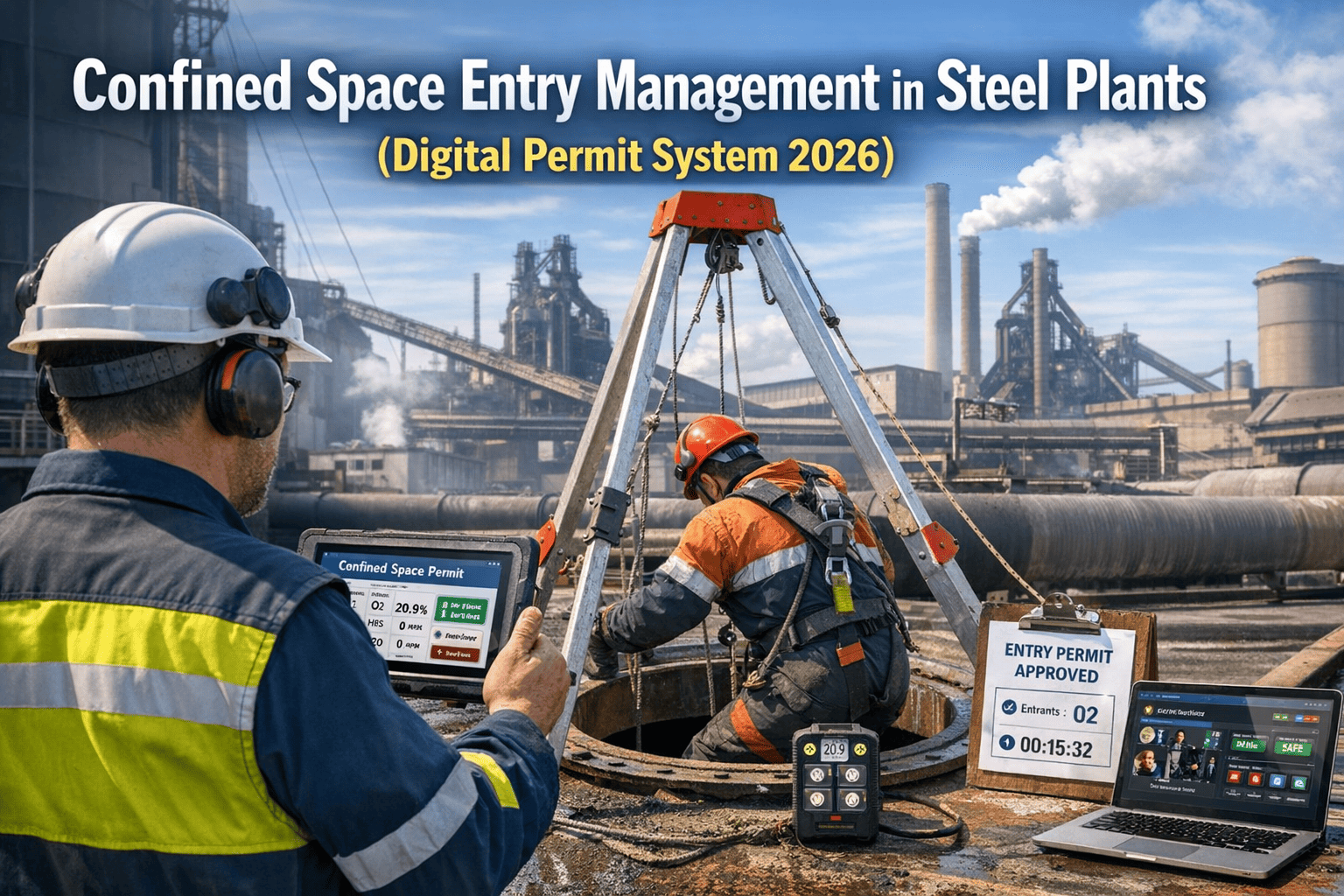
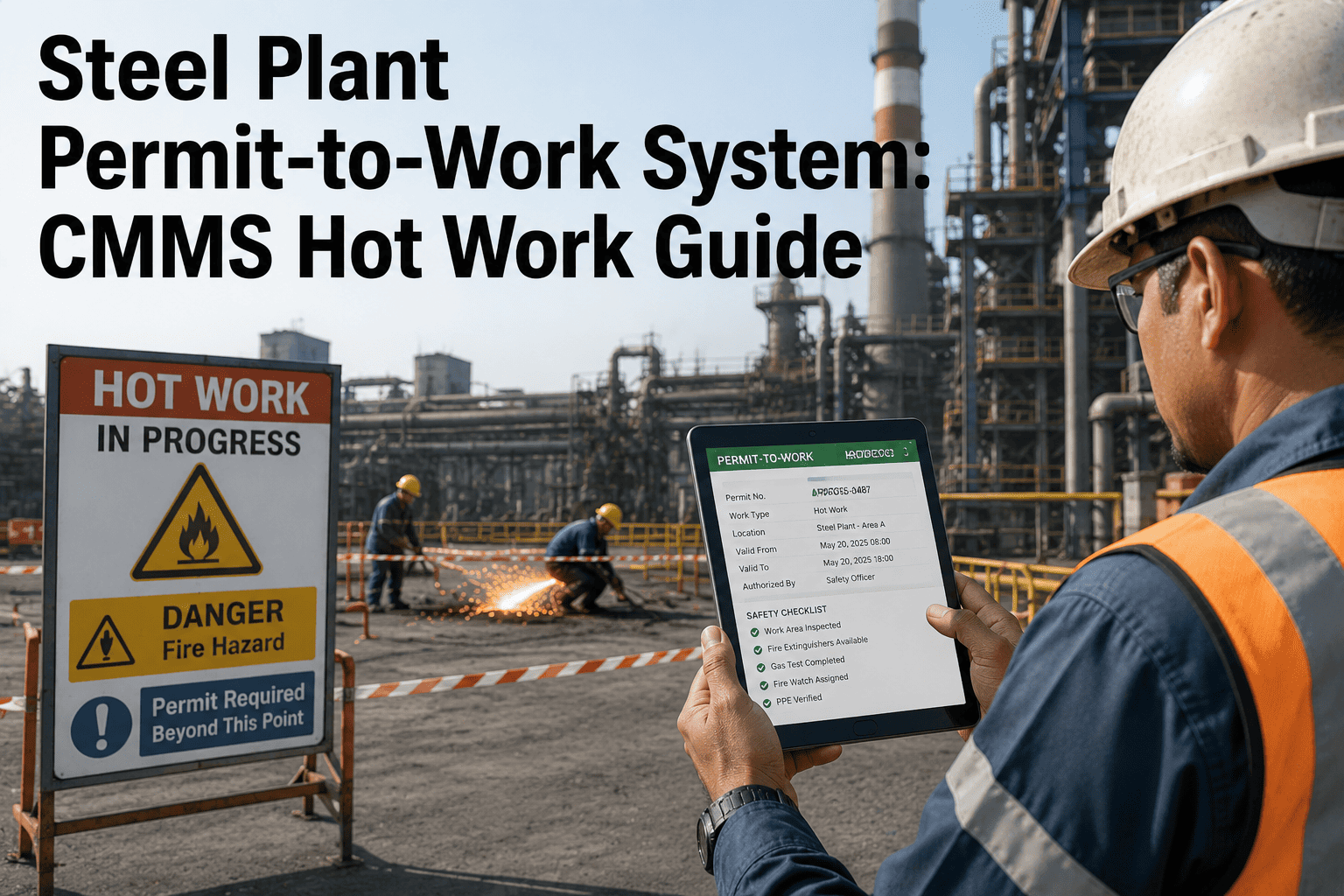
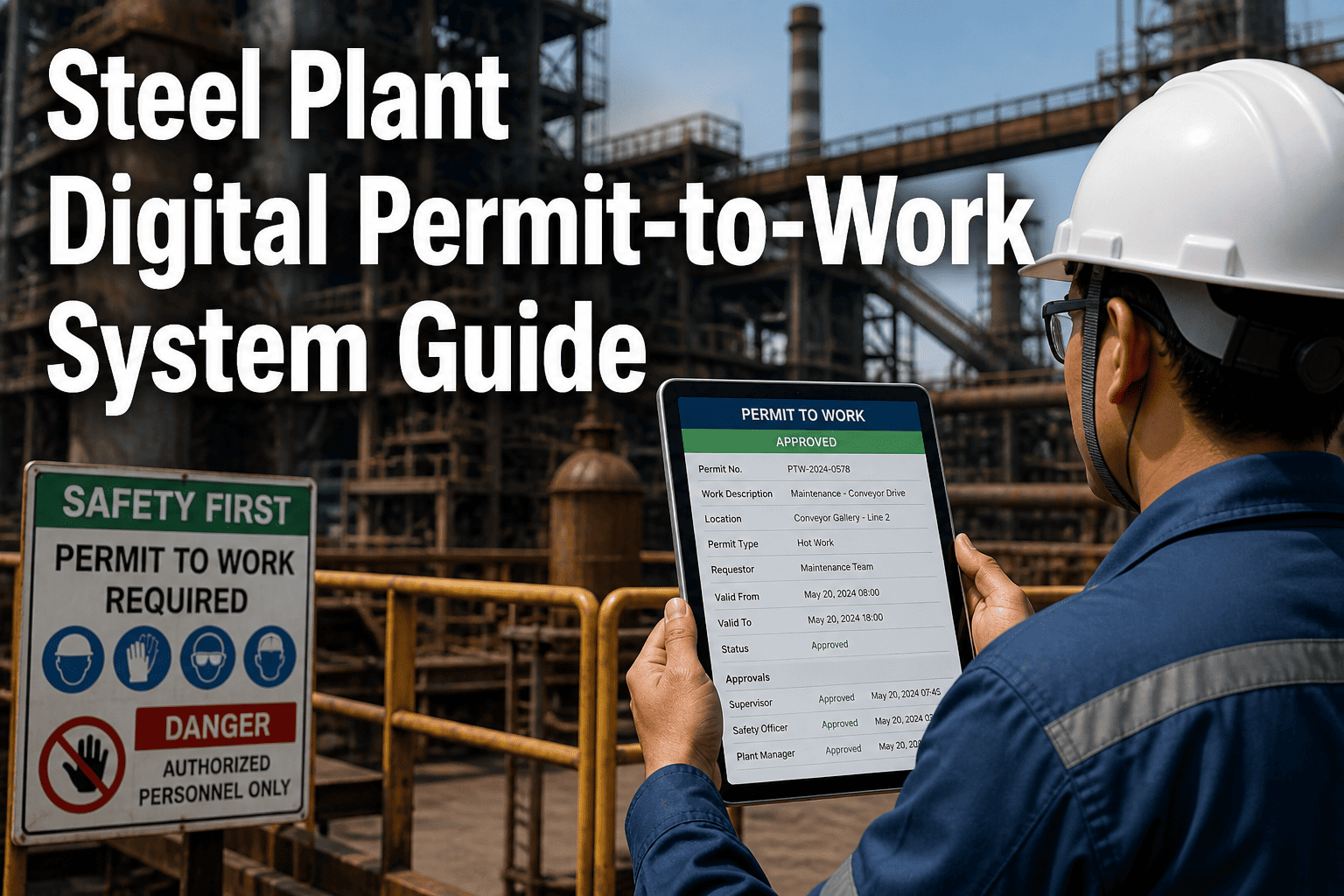
A blast furnace pit, ladle preparation bay, converter vessel, or coke oven flue is not a space that forgives a skipped step. In steel plants, confined space entry involves CO concentrations from blast furnace gas, H₂S near coke operations, oxygen displacement from nitrogen purging, and radiant heat that accelerates physiological impairment before a gas alarm sounds. Between 2011 and 2018, 1,030 workers died in confined space incidents across US industry — and 60% of those fatalities were attempted rescuers who entered without a valid permit. OxMaint's digital permit workflow enforces every pre-entry check, gates every authorisation on verified gas readings, and blocks entry until all conditions are confirmed — creating the audit trail that paper permits structurally cannot.
Steel Industry · Safety Compliance · Digital Permit System 2026
Confined Space Entry Management in Steel Plants — Digital Permit System 2026
How steel plant maintenance and safety teams replace paper permit books with digital workflows that enforce atmospheric testing, entrant tracking, and rescue verification — before a single worker enters a confined space.
Steel Plant Confined Space — Gas Thresholds
O₂ Level
Safe: 19.5–23.5%
≤19.5% / ≥23.5%
CO (ppm)
TWA: 35 ppm
IDLH: 1,200 ppm
LEL %
Safe: <10% LEL
≥10% = Stop entry
OSHA 29 CFR 1910.146 · NIOSH IDLH values · Steel plant BFG/COG exposure limits
Why Paper Permit Systems Fail in Steel Plant Confined Spaces
The failure pattern in confined space fatalities is consistent across industries and decades — not a rogue worker ignoring safety, but a system that could not enforce its own requirements. Steel plant safety management at scale demands that every entry is gated by verified conditions, not assumed ones.
01
Atmospheric Testing Not Re-Verified
A confined space tested at 08:00 may have a lethal CO concentration by 09:30 if a blast furnace gas valve is cracked or nitrogen purging begins in an adjacent vessel. Paper permits record one reading. Digital systems require continuous or interval re-verification — and block re-entry if readings drift above threshold between tests.
02
Rescue Team Not Confirmed Before Entry
60% of confined space fatalities are rescuers — workers who entered without a permit after a colleague collapsed. OSHA 1910.146 requires a rescue service to be identified and on-standby before any entry begins. Paper systems record the rescue plan on the permit. Digital systems block permit issuance until rescue team confirmation is logged and timestamped.
03
LOTO Not Verified Before Gas Test
In a steel plant converter vessel or ladle pit, residual energy from hydraulic systems, steam lines, and mechanical equipment must be locked out before atmospheric testing begins — not after. Paper permits rely on the worker's word that isolation is complete. Digital workflows enforce sequential steps: LOTO confirmation is a gated prerequisite to atmospheric testing, which is a gated prerequisite to entry authorisation.
04
Expired Certifications Not Caught at Entry
A contractor whose confined space entry certification lapsed 3 weeks ago is indistinguishable from a current entrant in a paper system. In one OxMaint steel plant deployment, two contractors were flagged in the first week with lapsed confined space qualifications — both had been working on paper permits without challenge. Digital permit systems gate entry on real-time certification status.
The Digital Confined Space Permit Workflow — Step by Step
1
Work Order Raised — Hazard Category Auto-Identified
Technician or supervisor raises a work request on mobile. OxMaint identifies the equipment asset, checks it against the confined space register, and automatically generates the required permit type — confined space entry, LOTO, or combined. The permit template pre-populates space classification, known atmospheric hazards, and required PPE from the asset record.
↓
2
LOTO Completion Verified — Gated Before Gas Testing
All energy isolation points must be confirmed complete with digital sign-off before the atmospheric testing step unlocks. No worker can proceed to gas testing with an incomplete isolation record.
LOTO procedures are linked to each asset in OxMaint — the correct isolation sequence for that specific vessel or pit is pre-loaded, not recalled from memory.
↓
3
Atmospheric Test Results Entered — Entry Blocked if Thresholds Exceeded
Gas detection readings for O₂, CO, H₂S, and LEL are entered directly into the permit on mobile. If any reading exceeds the configured threshold — O₂ below 19.5%, CO above 35 ppm TWA, H₂S above 1 ppm TWA, LEL above 10% — the permit is automatically blocked and an alert is sent to the area safety officer. Entry cannot proceed until a re-test clears all thresholds.
↓
4
Entrant and Attendant Certification Verified
Each named entrant and standby attendant is checked against training records in real time. Expired 1910.146 certification, lapsed site-specific confined space training, or missing CPR/rescue credentials block the permit before it reaches the authorising supervisor. The system cannot be overridden by the permit requester — only a certified training administrator can update records.
↓
5
Supervisor Authorisation — Timestamped Digital Sign-Off
The authorising supervisor reviews all pre-entry conditions on their mobile device and approves with a timestamped, identity-verified digital signature. If simultaneous operations (SIMOPS) with adjacent hot work or electrical work create a conflict, the system flags it before authorisation is possible. Live permit status is visible to the safety manager dashboard in real time.
↓
6
Permit Closed — Audit Record Archived Automatically
On work completion, the attendant closes the permit with a final entrant count confirmation and space-clear record. The complete permit record — every gas reading, every certification check, every authorisation timestamp — is archived against the asset. OSHA requires cancelled permits retained for minimum 1 year; OxMaint retains all records indefinitely with instant search retrieval.
Your next confined space entry should start with a digital permit, not a paper form and a hope.
What Changes When Steel Plants Go Digital
| Process Step | Paper Permit System | OxMaint Digital Permit |
| Gas threshold enforcement |
Recorded but not enforced — entry continues regardless |
Automated block if any threshold exceeded |
| LOTO verification before entry |
Assumed complete — attestation only |
Sequential step gating — cannot skip |
| Certification check at entry |
Manual — often not checked |
Real-time automated — blocks expired certs |
| SIMOPS conflict detection |
None — parallel permits issued independently |
Active permit cross-check at issuance |
| Audit record retrieval |
Hours or days — paper binder search |
Under 2 minutes — filtered by date, asset, worker |
| PM compliance rate (case data) |
54% — typical paper-based steel plant |
74% within 8 weeks of deployment |
"
During our ISO 45001 recertification audit, the external auditor asked to see evidence of permit-to-work compliance for confined space entries over the past 12 months. With our previous paper system, that would have been three days of searching through permit books across three departments. With OxMaint, I filtered by permit type and date range and showed the auditor 247 complete confined space entry records in under five minutes. Every gas reading, every authorisation signature, every entrant name, timestamped and retrievable. The auditor's comment was that it was the most complete confined space compliance record she had reviewed at a steel facility of our size.
Head of EHS, Integrated Steel Plant
1,400 workers · 3 operating shifts · OxMaint deployed across blast furnace, BOF, and rolling mill operations · ISO 45001 certified
Frequently Asked Questions
How does OxMaint handle continuous atmospheric monitoring during a confined space entry — not just the pre-entry test?
OxMaint supports interval re-testing requirements during extended confined space entries. The permit template can be configured to require gas readings logged at defined intervals — every 30 or 60 minutes depending on space classification and hazard profile. If interval readings are not submitted within the required window, the system sends an alert to the attendant and area safety officer. For spaces with continuous gas detection equipment, sensor data can be integrated via API to log readings automatically without manual entry.
See how digital safety management drove zero LTI at a steel plant over 365 days.
Can OxMaint manage confined space permits for contractor workers as well as direct employees?
Yes. Contractor worker profiles are registered in OxMaint with their training certifications, confined space qualifications, and site induction records. Permit issuance checks contractor credentials against the same real-time database as direct employees — if a contractor's certification is expired, the permit is blocked regardless of who submitted the request. The first week of deployment at one steel plant identified two contractors with lapsed qualifications who had been entering confined spaces on paper permits without challenge.
See how OxMaint manages contractor safety compliance across steel plant operations.
What OSHA and international standards does OxMaint's confined space permit system support?
OxMaint's confined space permit templates are configured for OSHA 29 CFR 1910.146 (General Industry permit-required confined spaces), which requires written permits, atmospheric testing records, attendant assignment, rescue service confirmation, and one-year minimum permit retention. For steel plants operating under ISO 45001, the digital permit records serve as documented evidence of hazard control procedures within the safety management system. European operations can configure templates for EN 15493 and local national standards.
See the full OSHA and ISO 45001 compliance framework for steel plants.
60% of Confined Space Fatalities Are Rescuers Who Entered Without a Valid Permit.
OxMaint's digital permit workflow gates every confined space entry on verified atmospheric conditions, confirmed LOTO, certified entrants, and authorised rescue standby — creating the compliance record that protects your workers and survives an OSHA inspection.