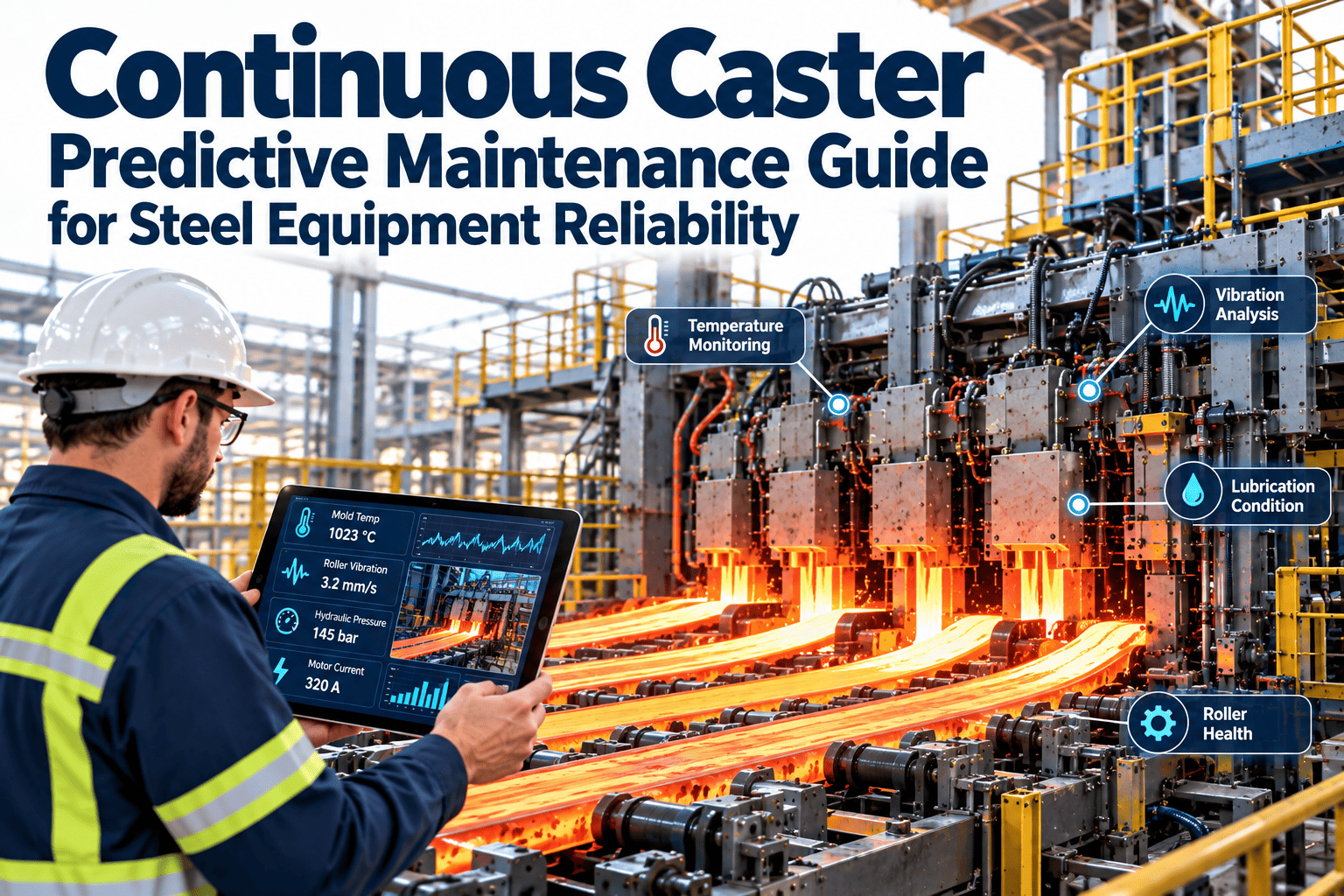
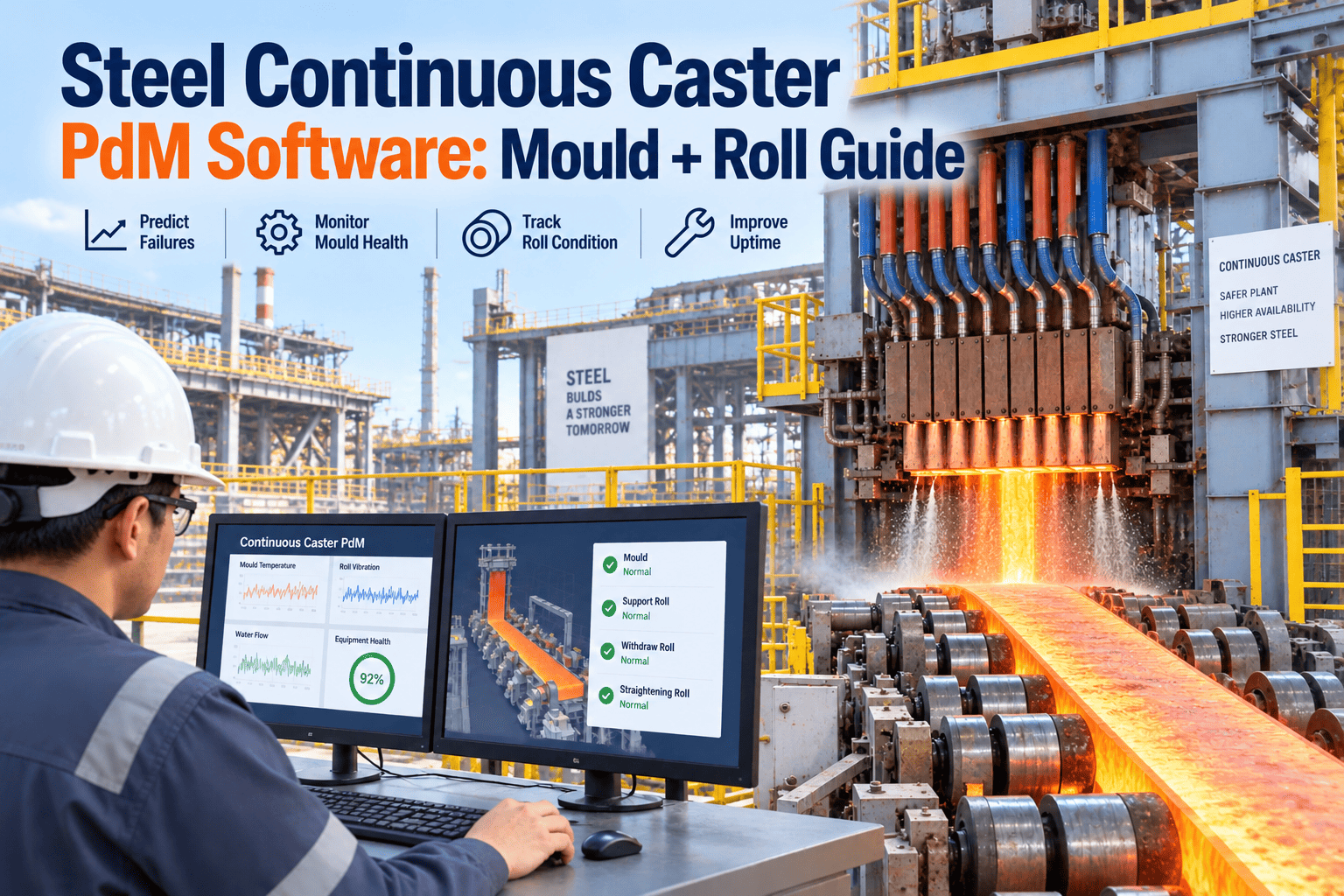
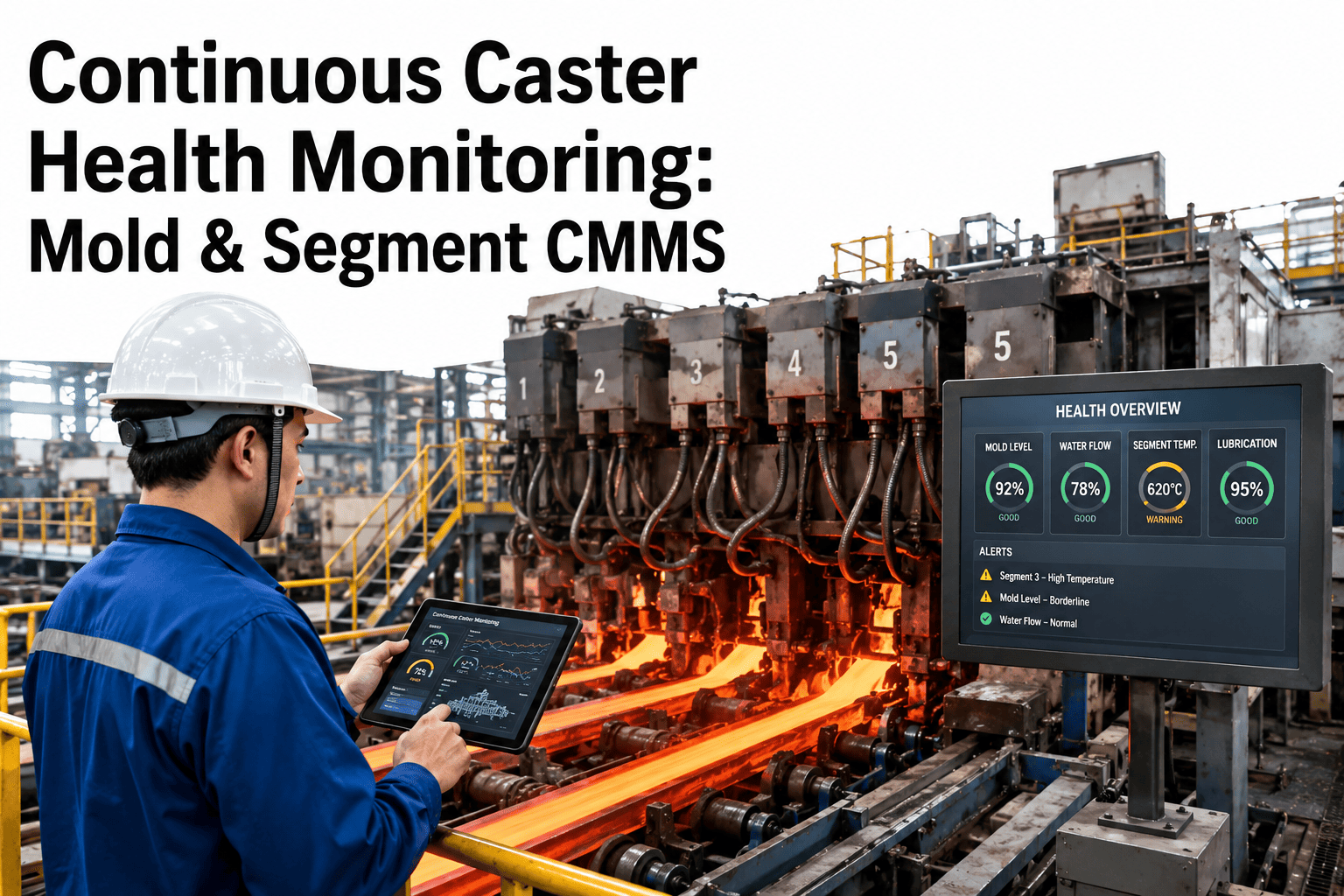
Continuous casting machines are the bridge between liquid steel and finished product — and the maintenance decisions made across every campaign determine whether that bridge holds at full production speed or fails mid-pour. OxMaint's preventive maintenance platform gives casting teams structured inspection routines, digital task tracking, and condition history for every component that stands between a smooth heat and a catastrophic breakout. This guide covers the essential maintenance tasks, common failure points, and digital tracking practices that define a reliable CCM operation.
Continuous Casting Machine Maintenance Guide
Inspection routines, failure modes, maintenance tasks, and digital tracking for steel plant CCM operations — from mold to withdrawal and straightening.
The Cost of Untracked Casting Equipment
Integrated mills running two-strand slab casters experience 5–25 breakout events annually when maintenance is reactive. Combined direct damage, production loss, and downstream quality impact on surrounding heats reaches $5M–$30M per year. The components responsible — mold copper plates, segment rollers, tundish refractories, oscillation systems — all degrade on predictable curves that structured inspection and digital tracking convert into scheduled interventions.
5 Maintenance Zones of a Continuous Caster
Mold & Oscillation
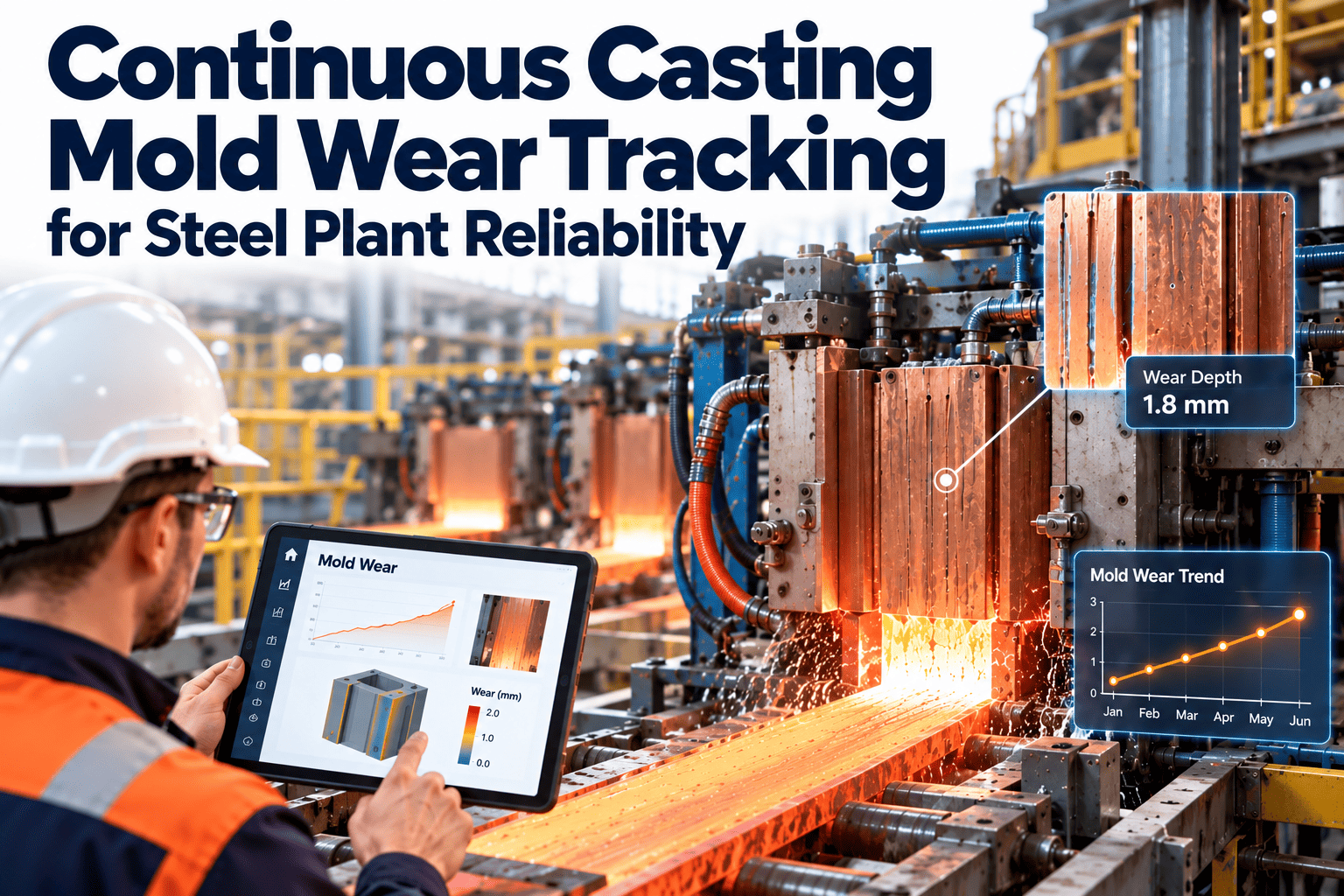
Copper plate wear, taper setting, oscillation force amplitude, cooling water uniformity. Highest breakout risk zone.
Secondary Cooling
Spray nozzle flow, water chemistry, header pressure, zone-by-zone coverage uniformity. Shell solidification quality.
Strand Guide Segments
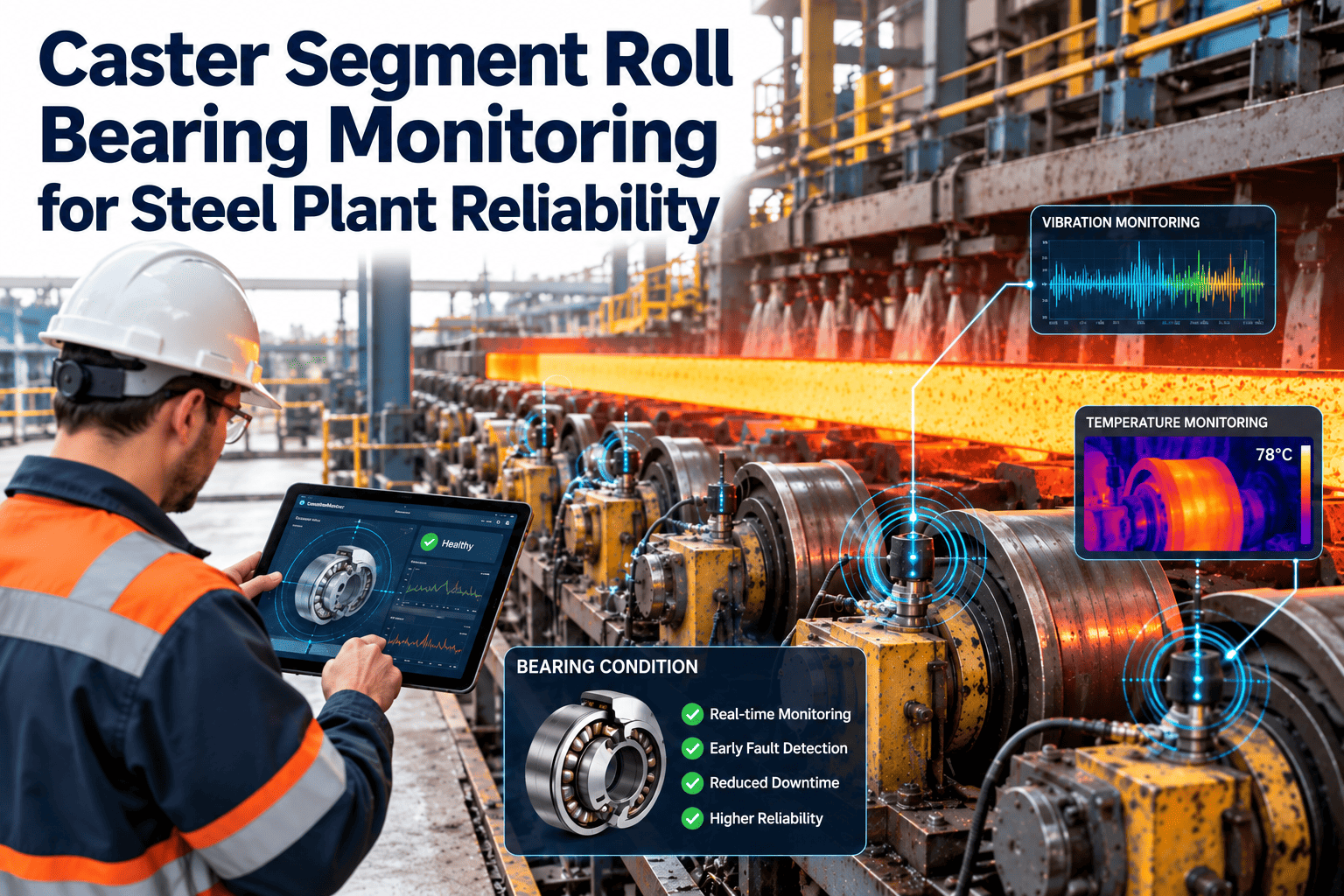
Roller bearing condition, segment alignment, roll gap measurement, drive motor current. Shell containment integrity.
Withdrawal & Straightening
Pinch roll gap and bearing condition, drive chain elongation, straightening force calibration. Surface and shape quality.
Tundish & Ladle Systems
Refractory lining heat count tracking, flow control nozzle condition, preheat burner performance. Inclusion and temperature control.
CCM Maintenance Task Reference
| Component | Task | Frequency | Failure Risk If Skipped |
|---|---|---|---|
| Mold Copper Plate | Thickness measurement + taper check | Per campaign | Breakout |
| Thermocouple Array | Completeness check + zone response test | Before each campaign | Breakout |
| Mold Oscillation | Stroke, frequency, and force calibration | Weekly | Sticker risk |
| Secondary Spray Nozzles | Flow rate test, blockage inspection | Per campaign | Surface quality |
| Segment Roller Bearings | Vibration measurement + thermal scan | Per segment change | Breakout / misalignment |
| Segment Roll Gap | Gauge measurement vs. nominal per position | Per segment change | Internal crack |
| Tundish Refractory | Heat count tracking + visual inspection | Per campaign / heat limit | Flow disruption |
| Pinch Roll Drives | Gap setting + motor current baseline | Weekly | Shape defects |
Why Paper Logs Fail CCM Maintenance
- Mold copper wear untracked across campaigns — replacement delayed until failure
- Thermocouple gaps discovered mid-cast, not before campaign start
- Segment roller bearing history lost at shift handover
- No alert when heat count limits on tundish refractory approach
- Emergency repairs at $3–5x planned intervention cost
- Copper plate thickness trend visible across every campaign per mold ID
- Pre-campaign checklist flags incomplete thermocouple arrays before casting starts
- Bearing condition history follows the segment through every maintenance cycle
- Heat count PM triggers auto-generate tundish inspection work orders
- Planned interventions scheduled in roll change windows — zero emergency rate
Structure Your CCM Maintenance in OxMaint
Configure inspection routes, PM schedules, and condition tracking for every zone of your continuous caster — in one platform built for steel operations.
Integrated mills running two-strand slab casters at 1.5–3M tons per year can experience 5–25 breakout events annually when maintenance is reactive. Total annual breakout costs of $5M–$30M are not uncommon when direct damage, production loss, and quality impact on surrounding heats are combined. Every breakout is preventable — but only if caster equipment condition is tracked on a centralized maintenance platform that detects degradation before it reaches the shell-thinning threshold.
Frequently Asked Questions
Structure Your CCM Maintenance in OxMaint
Configure inspection routes, PM schedules, and condition tracking for every zone of your continuous caster — in one platform built for steel operations.