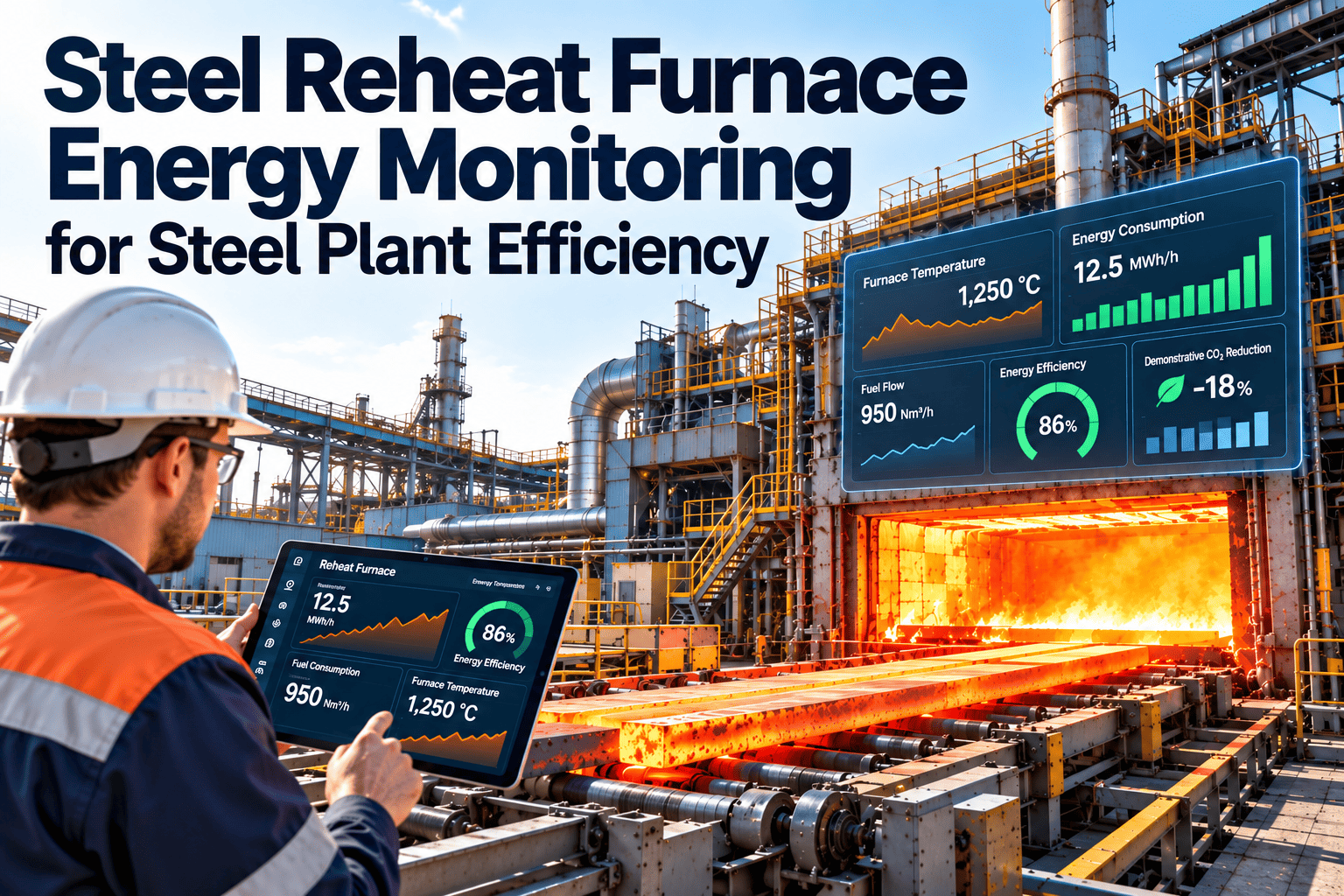
Discover how OxMaint's AI-powered energy monitoring helped a mid-size steel plant cut furnace fuel costs by 22% and prevent $1.4M in heat cycle losses — without replacing existing equipment. This case study breaks down the exact anomaly patterns detected, maintenance workflows triggered, and ESG outcomes reported.
AI Furnace Energy Optimization System for Steel Plants
How connected AI analytics and CMMS workflows are eliminating hidden furnace energy losses — one heat cycle at a time.
The Problem: Furnaces Burning Money Silently
Steel plant furnaces operate at 1,100–1,350°C and consume up to 60% of total plant energy. Yet most facilities rely on monthly fuel invoices and manual temperature logs to manage these assets. By the time a billing anomaly is noticed, weeks of inefficient combustion have already occurred. Refractory degradation, burner misalignment, and heat soak irregularities compound silently — each adding fuel waste and shortening furnace life with no alert, no work order, and no corrective action triggered.
Refractory cracks and worn seals cause unmeasured heat escape. Manual inspections catch these weeks after damage escalates.
Air-fuel ratio drift of just 3–5% can increase gas consumption by 8–12% per heat cycle. No paper-based system detects this in real time.
Furnace maintenance triggered only by breakdowns costs 3–5x more than condition-based interventions and forces unplanned production halts.
Energy regulators now require granular furnace emissions data. Manual records cannot produce the audit trails required for ISO 50001 compliance.
The Plant: Before OxMaint
A 1.2 MTPA integrated steel plant with four pusher-type reheating furnaces running three shifts. Fuel management was handled through weekly meter readings logged on paper. Maintenance was reactive — technicians were dispatched only when production supervisors reported visible problems.
How OxMaint AI Furnace Monitoring Works
OxMaint connects to existing furnace instrumentation — temperature sensors, flow meters, pressure transmitters — without requiring a full DCS replacement. The AI layer sits above existing data streams and applies pattern detection trained on steel furnace operating profiles.
OxMaint connects to furnace PLCs and historians via OPC-UA or MQTT. Historical data loads within 48 hours for baseline calibration.
The AI engine monitors 40+ furnace parameters simultaneously — flagging combustion inefficiency, temperature uniformity drops, and fuel consumption spikes before operators notice.
Confirmed anomalies auto-generate prioritized maintenance work orders in OxMaint CMMS — routed to the right technician with asset history and repair guidance attached.
Every corrective and preventive action is timestamped and linked to energy consumption data — producing ISO 50001 and scope 1 emissions reports automatically on demand.
Measured Results: 12-Month Summary
Results tracked across four furnaces over 12 months post-implementation, compared to the prior 12-month baseline from the same plant.
| Metric | Baseline (Paper) | Post-OxMaint | Improvement |
|---|---|---|---|
| Specific fuel consumption (GJ/t) | 1.42 | 1.11 | −22% |
| Unplanned furnace downtime (hrs/yr) | 152 | 24 | −84% |
| PM compliance rate | 41% | 94% | +53 pts |
| Mean time to detect anomaly | 72 hrs (manual) | 18 min (AI) | 240x faster |
| CO2 emissions intensity (t CO2/t steel) | 0.38 | 0.29 | −24% |
| Refractory lining replacement cycles | Every 14 months | Every 22 months | +57% lifespan |
Book a 30-minute walkthrough and see how OxMaint connects to your furnace instrumentation, auto-generates work orders, and delivers ESG reports — without replacing your existing control systems.
Expert Review
The integration of AI anomaly detection with CMMS work order generation is exactly what the steel industry has been missing. Most energy losses in reheating furnaces are not catastrophic events — they are slow drifts in combustion efficiency, refractory performance, and sealing integrity that compound over weeks. A system that catches these in minutes and routes a work order automatically closes a gap that manual operations simply cannot fill. The ESG reporting linkage is equally important as scope 1 emissions scrutiny intensifies globally. Platforms like OxMaint are making condition-based furnace maintenance commercially viable for mid-size plants that cannot afford bespoke sensor networks.
Frequently Asked Questions
Your Furnace Is Losing Energy Right Now
Every heat cycle without AI monitoring is a cycle where burner drift, refractory wear, and combustion inefficiency go uncorrected. OxMaint gives steel plants the real-time intelligence to stop that — and the maintenance workflows to fix it. See a live plant walkthrough and get a custom ROI estimate for your furnace configuration.