
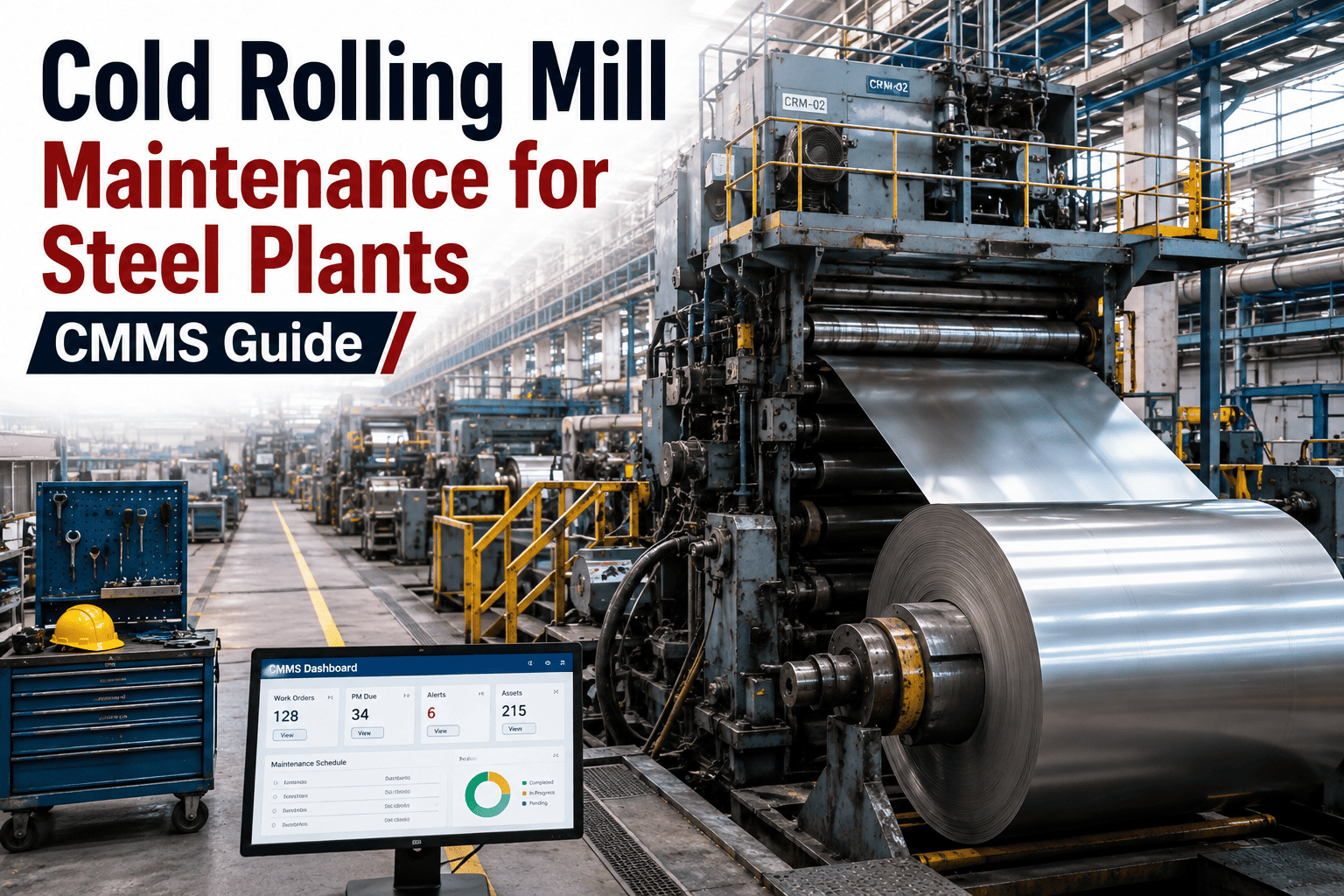
Rolling mills are among the most mechanically demanding assets in any steel plant — operating under extreme load, heat, and speed. When a rolling mill goes down unexpectedly, the cost is not just the repair: it is every ton of steel not rolled, every delivery commitment missed, and every downstream process stalled. This guide covers the maintenance practices that high-uptime steel plants use to keep rolling mills running reliably — and how OxMaint's preventive maintenance platform helps operations teams execute them consistently.
Rolling Mill Maintenance Best Practices Guide
Lubrication schedules, vibration thresholds, alignment routines, and inspection checklists — the complete maintenance playbook for steel rolling mill uptime.
Why Rolling Mills Fail — and When
Rolling mill failures cluster around five failure modes. Understanding each one lets maintenance teams prioritize the right inspection routines and catch degradation before it becomes a breakdown.
| Failure Mode | Primary Cause | Typical Warning Signs | Avg. Downtime Cost |
|---|---|---|---|
| Bearing failure | Contaminated or insufficient lubrication | Elevated temperature, vibration amplitude rise | $85,000–$220,000 |
| Roll pass misalignment | Thermal expansion, wear in chocks | Product dimensional variance, uneven edge | $40,000–$110,000 |
| Coupling failure | Fatigue from torque spikes, poor alignment | Abnormal noise, drive vibration signature change | $60,000–$180,000 |
| Cooling system blockage | Scale buildup, water treatment failure | Roll temperature rise, surface defects on product | $30,000–$80,000 |
| Hydraulic system failure | Contaminated fluid, seal degradation | Pressure fluctuation, position control loss | $50,000–$140,000 |
OxMaint auto-schedules every inspection in this guide — with mobile notifications, technician signoff, and asset history tracked automatically. Book a demo to see it live or start free today.
01 — Lubrication Best Practices
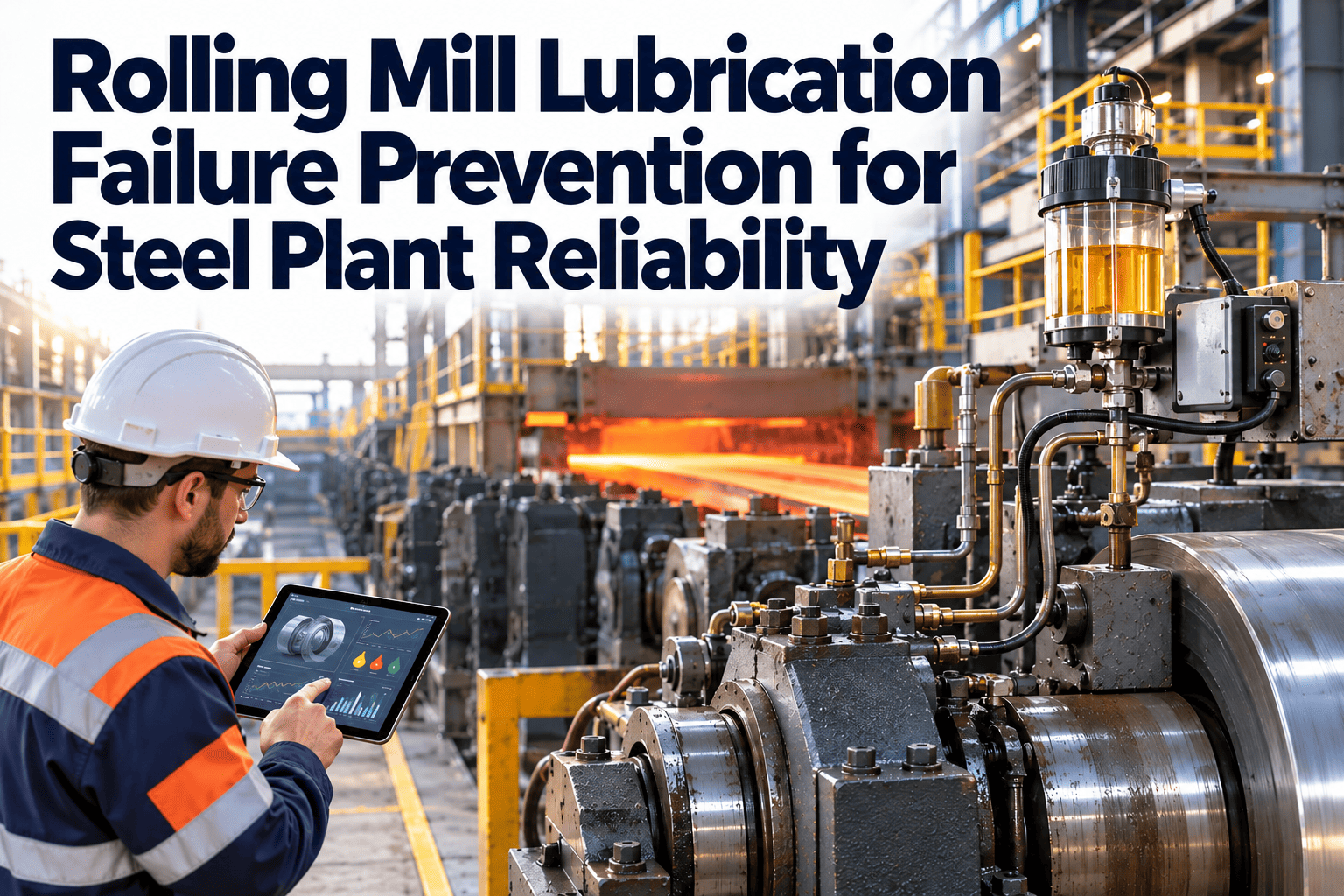
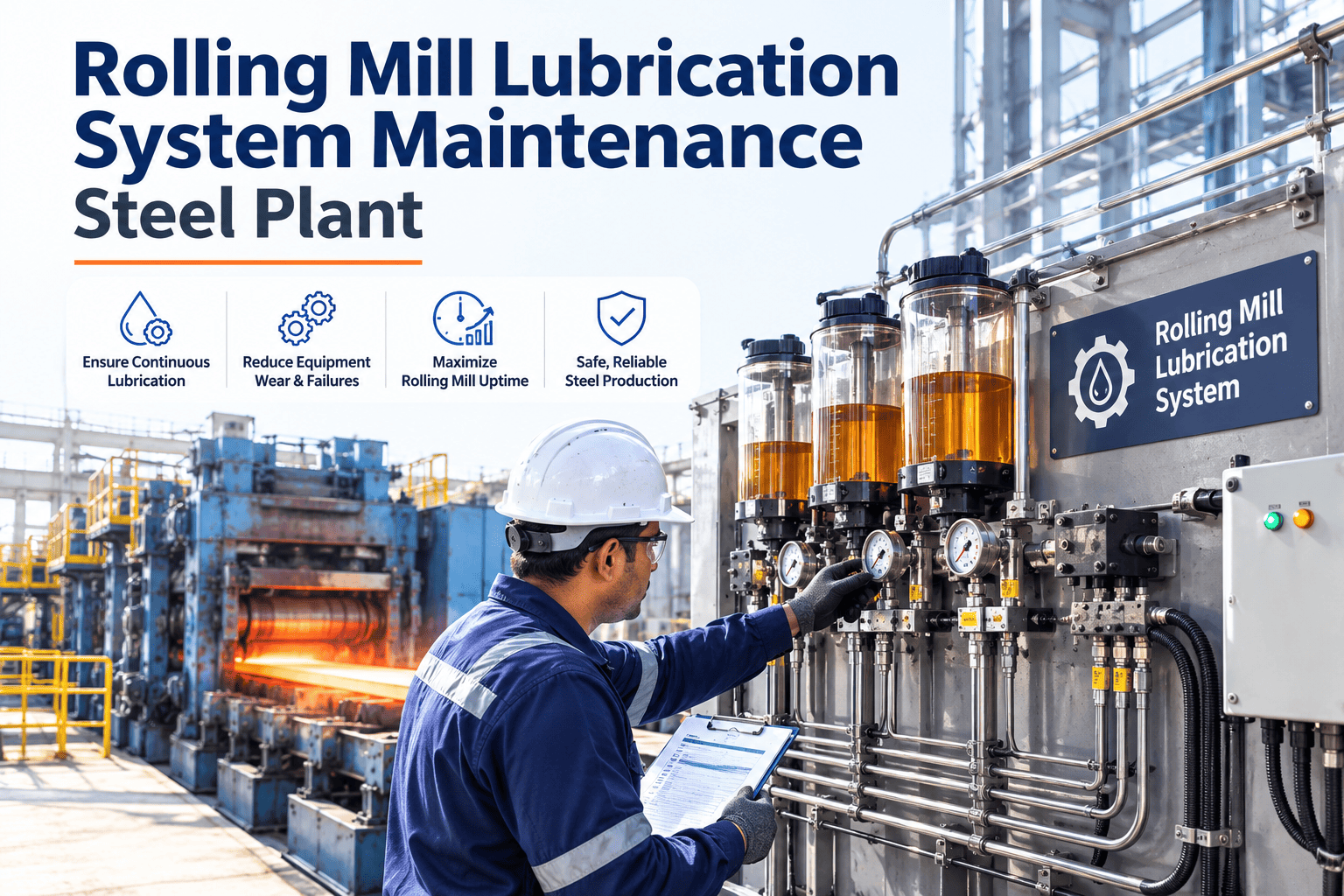
Lubrication failure is the single largest preventable cause of rolling mill bearing and coupling degradation. Most plants under-lubricate during high-production periods and over-lubricate after a failure event — neither approach is correct. The discipline required is frequency precision and lubricant condition monitoring, not just volume management.
02 — Vibration Monitoring Thresholds
Vibration analysis is the most reliable early warning system for rolling mill mechanical degradation. The industry standard reference is ISO 10816-3 for rotating machinery. The table below provides alert and action thresholds for the primary rolling mill components, with typical frequencies to watch for each failure mode.
| Component | Alert Level (mm/s RMS) | Action Level (mm/s RMS) | Key Frequency Band | Likely Fault |
|---|---|---|---|---|
| Roll neck bearings | 4.5 | 7.1 | BPFI / BPFO spectrum | Inner/outer race fatigue |
| Drive motor bearing | 3.5 | 5.6 | 1× and 2× running speed | Imbalance, looseness |
| Gear reducer housing | 5.0 | 8.0 | Gear mesh frequency | Tooth wear, scuffing |
| Coupling assembly | 3.0 | 5.0 | 2× running speed | Angular misalignment |
| Hydraulic pump | 4.0 | 6.3 | Vane/piston pass frequency | Cavitation, wear |
03 — Alignment and Roll Pass Discipline
Roll pass misalignment is responsible for nearly 30% of product quality rejections and significant premature bearing wear in hot rolling mills. Alignment checks must be scheduled as a discrete PM task — not folded into general inspections where they are routinely skipped under production pressure.
Measure roll gap parallelism using feeler gauges or laser alignment tools at both operator and drive sides. Acceptable parallelism deviation for hot strip mills is typically ±0.05 mm. Document in CMMS with before/after readings and technician signature.
Chock-to-housing clearance exceeding OEM specifications allows roll float under load, causing edge wave and dimensional drift. Measure with dial indicators and compare against the approved tolerance range logged in the asset record.
Use laser alignment tools to verify coupling angular and offset alignment against OEM limits. Misalignment of 0.1 mm at coupling can reduce coupling service life by 60% and increase bearing load by 15–25%.
04 — Roll Cooling System Maintenance
Cooling water quality and header condition directly govern roll surface temperature, roll wear rate, and descaling effectiveness. A cooling system running on degraded water treatment produces scale deposits that progressively block nozzles — reducing cooling effectiveness and driving up roll surface temperatures that shorten roll campaign life.
Rolling Mill Inspection Checklist
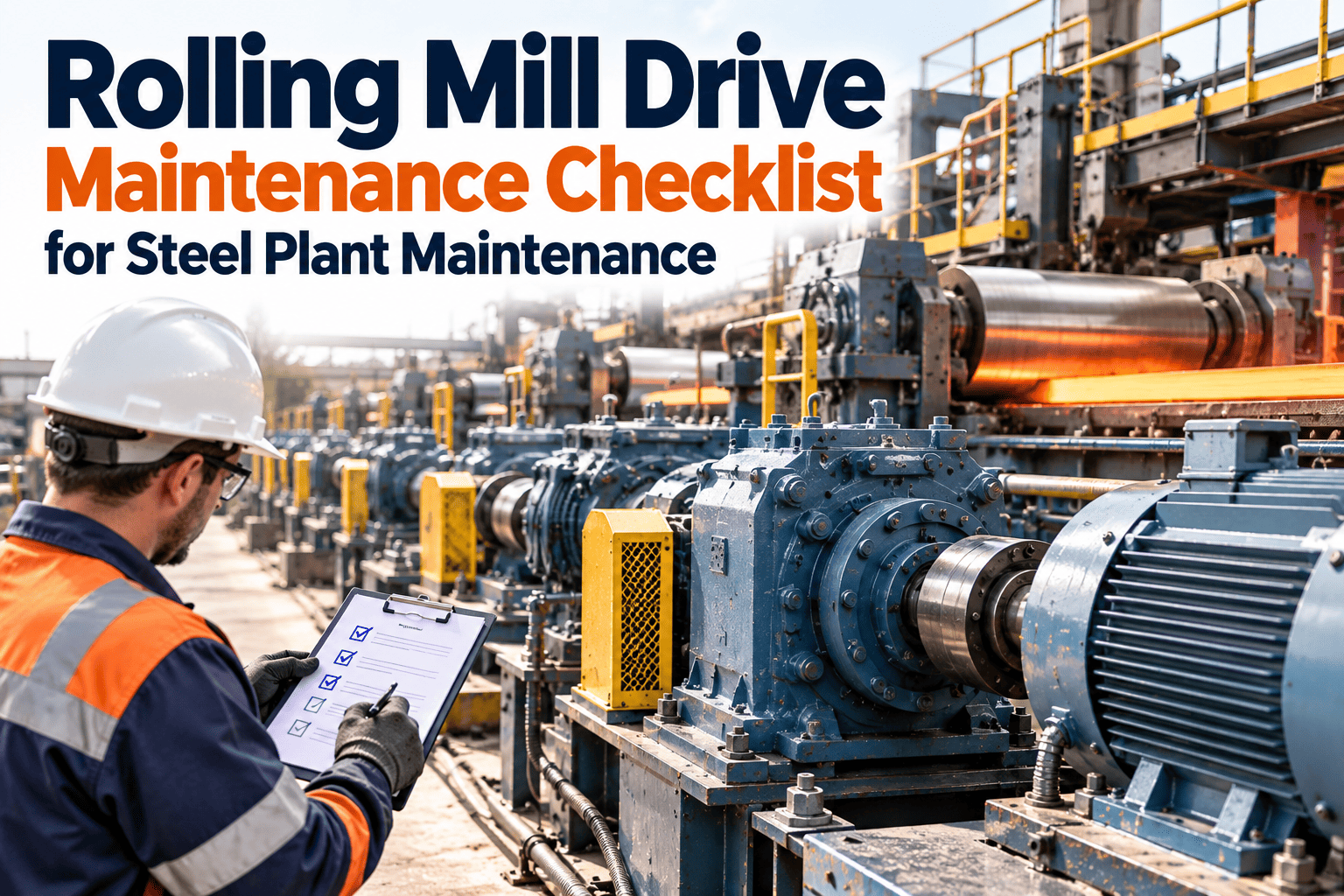
This checklist covers the minimum inspection touchpoints for a hot rolling mill stand. Each item should be recorded as a completed task in your CMMS with the technician name, reading, and timestamp. OxMaint digitizes this entire checklist into mobile-accessible work orders.
Run This Checklist Digitally — No Paper, No Missed Tasks
OxMaint converts this entire inspection routine into scheduled mobile work orders — with auto-escalation for overdue items and a full audit trail for compliance. Most rolling mill teams are live within one week.
Expert Review
The practices outlined here reflect what separates a rolling mill operation that runs at 91–93% availability from one that accepts 78–82% as normal. The critical thing most plants get wrong is treating vibration monitoring and lubrication as independent programs. In reality, an under-lubricated chock bearing shows up in the vibration spectrum weeks before it fails thermally — the programs must be cross-referenced. Equally, alignment checks after every roll change sound like overhead, but the cost of running a misaligned pass for two shifts far exceeds the 45 minutes it takes to verify. Digitizing these routines in a CMMS removes the scheduling ambiguity that causes them to slip. Platforms like OxMaint make this achievable for plants of any size, not just those with large dedicated reliability engineering teams.
Frequently Asked Questions
Your Rolling Mill Maintenance Program Starts Here
The practices in this guide only work when they are executed consistently — every shift, every inspection, every roll change. OxMaint gives your team the digital infrastructure to run this program without paper, without missed tasks, and with full visibility into what was done, when, and by whom. Start with a free account or book a 30-minute walkthrough tailored to your mill configuration.
.png)
