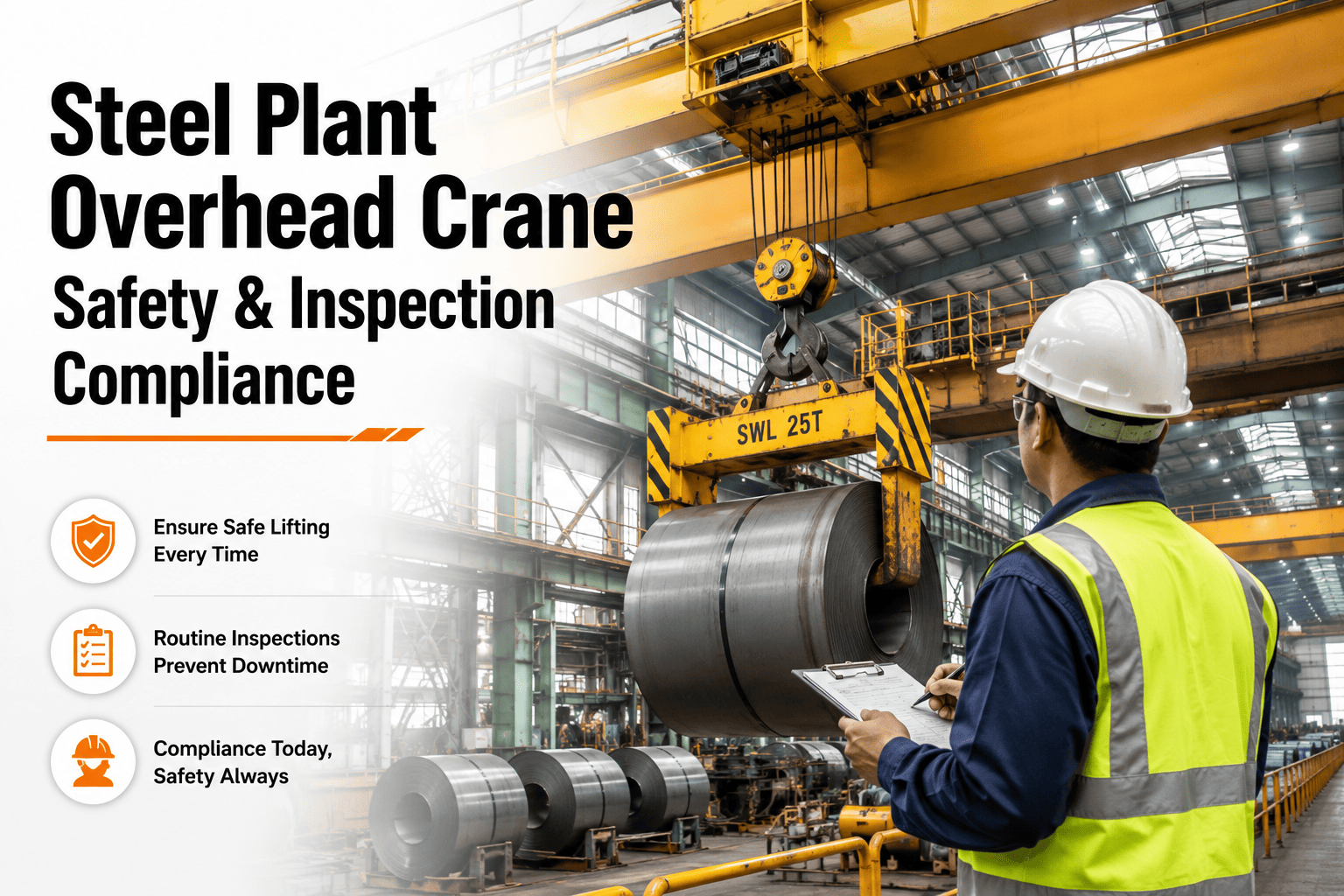
Crane and hoist maintenance management in steel mills represents one of the most safety-critical and operationally essential disciplines in heavy industrial maintenance. Overhead cranes, gantry systems, and specialized hoisting equipment move millions of tons of molten steel, slabs, coils, and finished products annually—often in environments characterized by extreme heat, heavy dust, and continuous operation. A single catastrophic crane failure can halt production for days, endanger worker safety, damage expensive equipment, and trigger regulatory investigations that extend far beyond the immediate incident. Proactive, systematic maintenance management transforms these high-risk assets from potential liabilities into reliable production enablers. This comprehensive guide explores the essential strategies, technologies, and best practices for preventing catastrophic crane and hoist failures in steel mill environments. Schedule a consultation to explore how intelligent maintenance management can protect your critical lifting assets.
The Critical Importance of Crane Maintenance in Steel Production
Steel mills rely on dozens of specialized cranes and hoists to move materials through every stage of production—from ladle cranes transporting molten metal at 1600°C to coil handling systems managing finished product. These assets operate under uniquely demanding conditions: thermal cycling that stresses structural components, abrasive dust that accelerates wear, electromagnetic interference that challenges control systems, and continuous duty cycles that leave minimal time for maintenance. When crane maintenance is neglected or reactive, the consequences cascade through the entire production chain: equipment damage, production delays, safety incidents, and regulatory penalties. World-class steel producers treat crane maintenance not as a cost center but as a strategic investment in operational continuity and workforce protection.
Crane Types & Failure Modes in Steel Mills
Steel mills deploy diverse crane configurations, each with unique failure mechanisms and maintenance requirements. Understanding these asset-specific risks enables targeted maintenance strategies that address the most critical vulnerabilities before they escalate into catastrophic events.
Preventive Maintenance Strategies
Effective crane maintenance requires a layered approach that combines time-based preventive tasks with condition-based interventions and predictive analytics. This multi-strategy framework ensures comprehensive coverage while optimizing resource allocation and minimizing production disruption.
| Strategy Type | Application | Key Activities | Frequency |
|---|---|---|---|
| Time-Based Preventive | Wear components with predictable life | Wire rope replacement, brake lining changes, lubrication schedules, bolt torque verification | Monthly to annual based on component |
| Condition-Based | Components with variable wear rates | Vibration analysis, oil analysis, thermal imaging, dimensional inspections, NDT testing | Quarterly or triggered by condition thresholds |
| Predictive Analytics | Critical systems with failure consequences | AI-powered trend analysis, remaining useful life prediction, anomaly detection, failure mode forecasting | Continuous monitoring with weekly analysis |
| Operational Checks | Daily safety and functionality verification | Pre-shift inspections, functional tests, limit switch verification, emergency stop testing | Daily before operation |
| Regulatory Compliance | Mandatory inspections and certifications | Annual load testing, third-party certifications, documentation audits, operator recertification | Annual or per regulatory requirements |
Critical Inspection Points & KPIs
Systematic inspection of crane components prevents catastrophic failures by identifying degradation before it reaches critical thresholds. Steel mill crane inspections must address both mechanical integrity and operational safety across dozens of potential failure points.
Condition Monitoring Technologies
Modern crane maintenance leverages IoT sensors, wireless monitoring, and AI analytics to detect emerging issues before they cause failures. These technologies transform maintenance from scheduled interventions to condition-driven actions that maximize asset availability while minimizing risk.
| Technology | Monitored Parameter | Failure Detection Capability | Implementation Considerations |
|---|---|---|---|
| Vibration Sensors | Bearing health, gear mesh, imbalance, misalignment | Early detection of bearing wear, gear tooth damage, shaft misalignment | Wireless sensors reduce installation complexity; AI analytics distinguish normal vs. abnormal patterns |
| Thermal Imaging | Electrical connections, motor windings, brake surfaces | Loose connections, overloaded circuits, brake drag, bearing overheating | Periodic scans or continuous monitoring; integrate with maintenance scheduling for proactive intervention |
| Load Monitoring | Actual vs. rated loads, overload events, duty cycle analysis | Overloading incidents, fatigue accumulation, operational misuse | Real-time alerts prevent immediate damage; historical data informs maintenance planning |
| Wire Rope Monitoring | Broken wire count, diameter reduction, corrosion progression | Rope degradation before discard criteria are reached | Electromagnetic or optical sensors; critical for ladle cranes where rope failure is catastrophic |
| Position & Travel Sensors | Crane positioning accuracy, travel smoothness, limit switch function | Drive system wear, control system drift, mechanical binding | Prevents collisions and positioning errors; essential for automated crane operations |
Safety Management & Regulatory Compliance
Crane maintenance in steel mills operates within a complex regulatory framework designed to protect workers and ensure operational safety. Compliance with OSHA, ANSI, CMAA, and local regulations is non-negotiable—and effective maintenance programs exceed minimum requirements to create genuine safety cultures.
- Inspections performed only when required
- Documentation completed after incidents
- Training focused on regulatory minimums
- Safety treated as cost center
- Incident investigation after failures occur
- Condition-based inspections exceeding requirements
- Digital documentation with real-time accessibility
- Continuous training with competency verification
- Safety integrated into operational KPIs
- Predictive analytics preventing incidents
ROI of Proactive Crane Maintenance
Investing in comprehensive crane maintenance delivers measurable returns through reduced downtime, extended asset life, lower repair costs, and avoided safety incidents. Steel mills that prioritize crane reliability consistently outperform peers on operational and financial metrics.
Implementation Best Practices
Successful crane maintenance program implementation requires careful planning, stakeholder engagement, and phased rollout. A structured approach builds confidence, ensures data quality, and delivers quick wins that sustain momentum for long-term improvement.
Common Challenges & Solutions
Crane maintenance programs face unique challenges from harsh environments, operational pressures, and organizational dynamics. Understanding these challenges and proven solutions accelerates successful implementation and sustained performance.
| Challenge | Impact | Solution |
|---|---|---|
| Harsh environment degradation | Accelerated wear on mechanical and electrical components | Enhanced sealing, corrosion-resistant materials, frequent cleaning protocols, environmental monitoring |
| Production pressure vs. maintenance time | Deferred maintenance leading to increased failure risk | Condition-based scheduling, predictive analytics to optimize timing, executive sponsorship for maintenance windows |
| Skills gap in crane maintenance | Inconsistent inspection quality and repair effectiveness | Structured training programs, competency verification, knowledge capture systems, vendor partnerships |
| Data fragmentation | Incomplete visibility into crane health and maintenance history | Digital maintenance platform integration, standardized data collection, mobile inspection tools |
| Regulatory complexity | Compliance burden and audit risk | Automated documentation, compliance tracking dashboards, regular internal audits, regulatory update monitoring |
Advanced Analytics & AI Integration
Modern crane maintenance leverages artificial intelligence to move beyond simple tracking into predictive analytics and prescriptive recommendations. Advanced analytics identify hidden patterns, predict remaining useful life, and recommend optimal maintenance actions based on actual equipment condition and operational context.