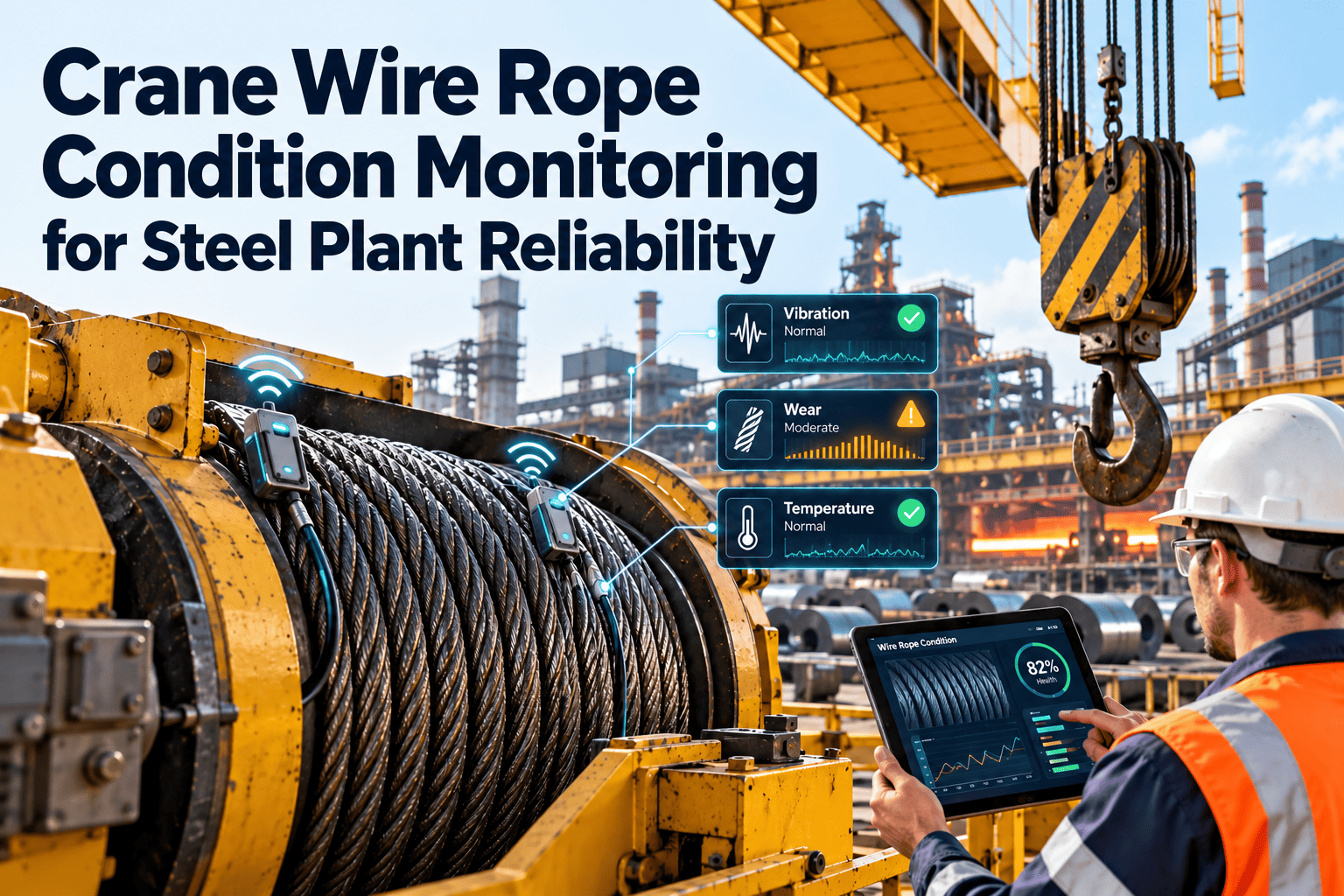
Overhead cranes carry ladles, slabs, coils and scrap through a steel plant, and every lift depends on the condition of the wire rope. Heat, dust, scale, shock loading and constant duty cycles wear ropes faster than in light industry, while inspection records often sit on paper or in separate spreadsheets. Reliable wire rope management needs consistent inspection criteria, trend data on wear and a clear link from each finding to a work order. Teams can keep those records together in Oxmaint maintenance management software and act on them before a rope becomes a safety or production problem.
Steel Plant Crane Wire Rope Wear Tracking and Inspection Management
Catch rope wear, broken wires and inspection gaps early on ladle, charging, process and yard cranes
Why Wire Rope Is a High-Consequence Item in Steel Plants
A hoist rope is a safety-critical component. Failure can drop a load, damage the crane and stop a production bay.
- Radiant heatLadle and furnace bays expose ropes to heat that dries lubricant and weakens rope structure.
- Dust and scaleAbrasive particles work into the rope and accelerate internal and external wear.
- Duty cycleCharging and process cranes run many lifts per shift with frequent starts and stops.
- Bending fatigueRepeated passes over sheaves and drums cause wire breaks, often first in the same short section.
- MisalignmentWorn sheaves or poor drum grooving damage ropes even when the rope is correct.
Common Wire Rope Damage Modes
Inspectors need to recognize damage types and record them consistently so that trends can be compared.
| Damage mode | What the inspector sees | Typical cause |
|---|---|---|
| Broken wires | Wire ends protruding in a localized section or distributed along the rope | Fatigue, abrasion, corrosion |
| Diameter reduction | Rope measures smaller than nominal in a worn zone | Core deterioration, outer wire wear |
| Corrosion | Rust, pitting or loss of lubricant, often inside the rope | Moisture, chemicals, poor lubrication |
| Kinking or bird caging | Distorted strands or an expanded rope structure | Shock load, slack rope, poor reeving |
| Heat damage | Discoloration, dry or brittle rope | Proximity to molten metal or hot surfaces |
| Flattening or crushing | Deformed rope on drum or sheave | Poor spooling, overloading, wrong groove |
Use the rope manufacturer's guidance and the standard that applies to your site and crane type for the exact discard limits.
Paper Records or Tracked Records: The Operational Difference
Paper or scattered files
- Findings written in different formats by each inspector
- No trend for broken wires or diameter loss
- Rope age and hours in service unknown
- Overdue inspections discovered during audits
- Rope replacement decided under pressure
Tracked inspection records
- Standard checklist for every crane and hoist
- Measurements stored against each rope
- Installation date and service history visible
- Overdue tasks flagged before they lapse
- Replacement planned into a maintenance window
Put Every Rope Inspection on One Record
Link each crane, hoist and rope to inspection tasks, measurements and corrective work.
Inspection Layers: Daily, Frequent and Periodic
Good programs combine operator observations with scheduled technical inspections. Intervals should follow the applicable regulation, the crane standard, the manufacturer and your own duty and environment.
- Operator pre-shift checkLook for obvious damage, unusual noise, loose rope, spooling faults and lubricant loss before the first lift.
- Frequent inspectionA competent person checks rope condition, end fittings, sheaves, drums and hooks on a defined interval, and records the result.
- Periodic inspectionA deeper examination with measurements, access to all rope sections and review of the full inspection history.
- Event-driven inspectionAfter overload, shock, a twisted rope, a heat exposure event or maintenance work on the hoist.
The most important point is consistency. The same criteria and the same measurement points should be used each time.
What to Record for Every Rope
A useful rope record is more than a pass or fail line. It supports wear trending, root-cause analysis and audit evidence.
From Wear Data to a Replacement Decision
Trending turns isolated observations into a maintenance forecast.
- MeasureTake diameter and broken-wire readings at the same locations.
- ComparePlot results against previous inspections and the discard criteria.
- ProjectEstimate how quickly the condition is moving toward the limit.
- PlanSchedule replacement in a suitable window with rope and crew ready.
- VerifyInspect the new rope after installation and record the baseline.
Do not extend rope life based on a trend alone. A discard criterion that is met takes priority over any projection.
Crane Types and Their Rope Risks
Ladle cranes
Very high consequence. Heat exposure and critical lifts require stricter inspection and clear removal criteria.Charging and process cranes
High duty with frequent cycles, so fatigue and wear develop quickly.Scrap yard cranes
Grab or magnet operation with shock, abrasion and uneven spooling.Mill and coil handling cranes
Precise positioning, many lifts and tight reeving that stresses rope at sheaves.Maintenance and shop cranes
Lower duty but irregular use can hide corrosion and dried lubricant.
The Components Around the Rope
A rope that is wearing too quickly may point to a different problem. Inspect the full rope system.
- Sheave grooves for wear, roughness and correct profile.
- Drum grooves and rope spooling pattern.
- End terminations, wedge sockets, clips and anchor points.
- Equalizer sheaves and rope guards.
- Hook block, swivel and rope entry points.
- Hoist brake condition and limit switches.
- Load testing and overload protection records.
Compliance and Audit Readiness
Crane inspection requirements vary by country and by crane type. Common references include ISO 4309 for rope examination and discard, ASME B30.2 or other crane standards, OSHA requirements in the United States, and manufacturer instructions. Confirm what applies at your site.
- Documented intervalsShow that inspections occur at the interval your program requires.
- Competent personnelKeep inspector qualifications on record.
- Corrective action trailLink each deficiency to a work order and closure date.
- RetentionStore inspection history for the period your regulator or policy requires.
KPIs for a Rope Inspection Program
How Oxmaint Supports Rope Inspection Management
Oxmaint helps maintenance teams structure and record crane inspections within the broader maintenance workflow. Capabilities relevant to this use case include:
- Asset management for cranes, hoists and rope components.
- Inspection checklists with consistent criteria for each crane type.
- Preventive maintenance scheduling for frequent and periodic inspections.
- Work orders raised directly from inspection findings.
- Mobile access so inspectors record results at the crane.
- Inventory tracking for spare rope, sheaves and end fittings.
- Reports showing overdue tasks and repeating failures.
Review the specific inspection fields you need in a demo against your own procedures.
Rope Inspection Program Checklist
- Every crane and hoist is registered as an asset with its rope details.
- Inspection criteria match the standard, manufacturer guidance and site procedure.
- Intervals reflect duty, heat exposure and operating environment.
- Measurement points are defined and repeated each inspection.
- Findings create work orders with priority and due date.
- Replacement rope and fittings are available before planned changeout.
- Lessons from retired ropes feed back into specification and lubrication.
Lubrication and Environmental Protection
Lubricant protects the inner wires and core, where much of the hidden damage develops. In hot and dusty bays, it breaks down or washes away sooner than many teams expect.
- Select for the temperatureUse a lubricant specified for the operating heat and approved by the rope manufacturer.
- Clean before applyingRemove packed dust and scale first, so new lubricant can reach the rope structure.
- Apply on a scheduleCreate recurring tasks by crane and record the date, product and quantity.
- Inspect after lubricationFresh lubricant can hide surface condition, so plan inspection before or after as the procedure requires.
A missing lubrication record is a warning sign. Ropes that went months without lubricant often show internal corrosion or wire breaks inside the lay.
Sheaves, Drums and Spooling: Fixing the Cause of Rope Wear
Replacing a rope without checking its contact surfaces repeats the same damage on the new rope. Include these checks in every rope change.
| Component | Symptom on the rope | Inspection action |
|---|---|---|
| Worn sheave groove | Flattened outer wires, accelerated wear at the same section | Check groove profile with a gauge and compare with the specified size |
| Seized or rough sheave | Scuffing, uneven wear, noise | Rotate by hand, check bearing condition and surface |
| Poor drum grooving | Crushing, cross-winding, rope damage in the lower layers | Examine groove pitch and wear along the drum |
| Misaligned fleet angle | Rope rubs on flange or neighboring wraps | Verify alignment and rope lead during lift travel |
| Faulty end termination | Broken wires at the fitting, rope slippage | Inspect wedge, socket and clip condition and torque |
Technology and Practice Trends in Rope Condition Monitoring
Visual examination remains the base of every program, but several practices improve how evidence is captured and reviewed.
- Non-destructive rope testingElectromagnetic testing can reveal loss of metallic area and internal broken wires that are not visible from outside. Use it as a supplement, and follow the qualified method and standard.
- Photo recordsDated pictures of the same rope section help compare condition between inspections and support audit reviews.
- Mobile inspection formsChecklists on a phone or tablet make required fields consistent and reduce lost paperwork.
- Usage-based intervalsLift counts or operating hours can inform interval changes when the crane control system provides reliable data.
- Failure pattern analysisReports by rope type, crane and bay show where service life is shortest and where specification changes may help.
Operator Practices That Extend Rope Life
Operators influence rope wear more than any other group. Training and feedback should address the following points.
- Avoid shock loading from sudden starts, stops or slack rope snatching.
- Keep side pulls and angled lifts within the permitted limits.
- Report noise, twisted rope, birdcaging or unusual drum behavior immediately.
- Do not lift loads that exceed rated capacity or use the hoist outside its design duty.
- Keep the rope off hot surfaces and away from sharp edges during travel.
- Complete the pre-shift check every shift and record any defect found.
Rope Specification and Procurement Controls
The wrong rope in the right crane creates problems that no inspection can solve. Rope specification belongs in the asset record.
Common Rope Management Mistakes
- Recording only that the rope passed, with no measurements to compare next time.
- Inspecting only the visible parts of the rope and skipping sections that pass over sheaves or sit on the drum.
- Using the same inspection interval for every crane regardless of duty and heat exposure.
- Reusing a rope on a different hoist without checking its history and construction.
- Ordering a replacement rope only after a defect is found, which extends downtime.
- Treating inspection findings as notes instead of work orders with owners and dates.
Planning Rope Replacement Into the Maintenance Calendar
A planned replacement takes a fraction of the disruption of an emergency one, and it can be combined with other crane work.
Emergency replacement
- Rope ordered after the defect is found
- Crane stopped without warning to production
- Crew assembled in a hurry
- Higher chance of fitting or reeving errors
Planned replacement
- Rope ordered based on the wear trend
- Window agreed with production in advance
- Job plan with tools, permits and sequence
- Sheave, drum and brake checks done together
Frequently Asked Questions
How often should steel plant crane ropes be inspected?
It depends on the applicable standard, duty and environment. Follow your regulation and manufacturer guidance.
What should be tracked for rope wear?
Broken wires, diameter, corrosion, deformation and lubrication state, recorded at consistent locations each time.
Can a CMMS replace the inspector's judgment?
No. It records and schedules the work. Try Oxmaint to organize inspections.
How do records help avoid unplanned crane downtime?
Trends allow planned replacement in a window. Book a demo to see the workflow.
Should ladle cranes have special rules?
They usually warrant stricter criteria and shorter intervals because of heat and consequence.
Keep Steel Plant Cranes Inspected, Documented and Available
Move rope inspections, findings and replacements into one maintenance workflow.