Digital Twin Technology for Steel Plants: From Concept to Implementation
By Lebron on March 12, 2026
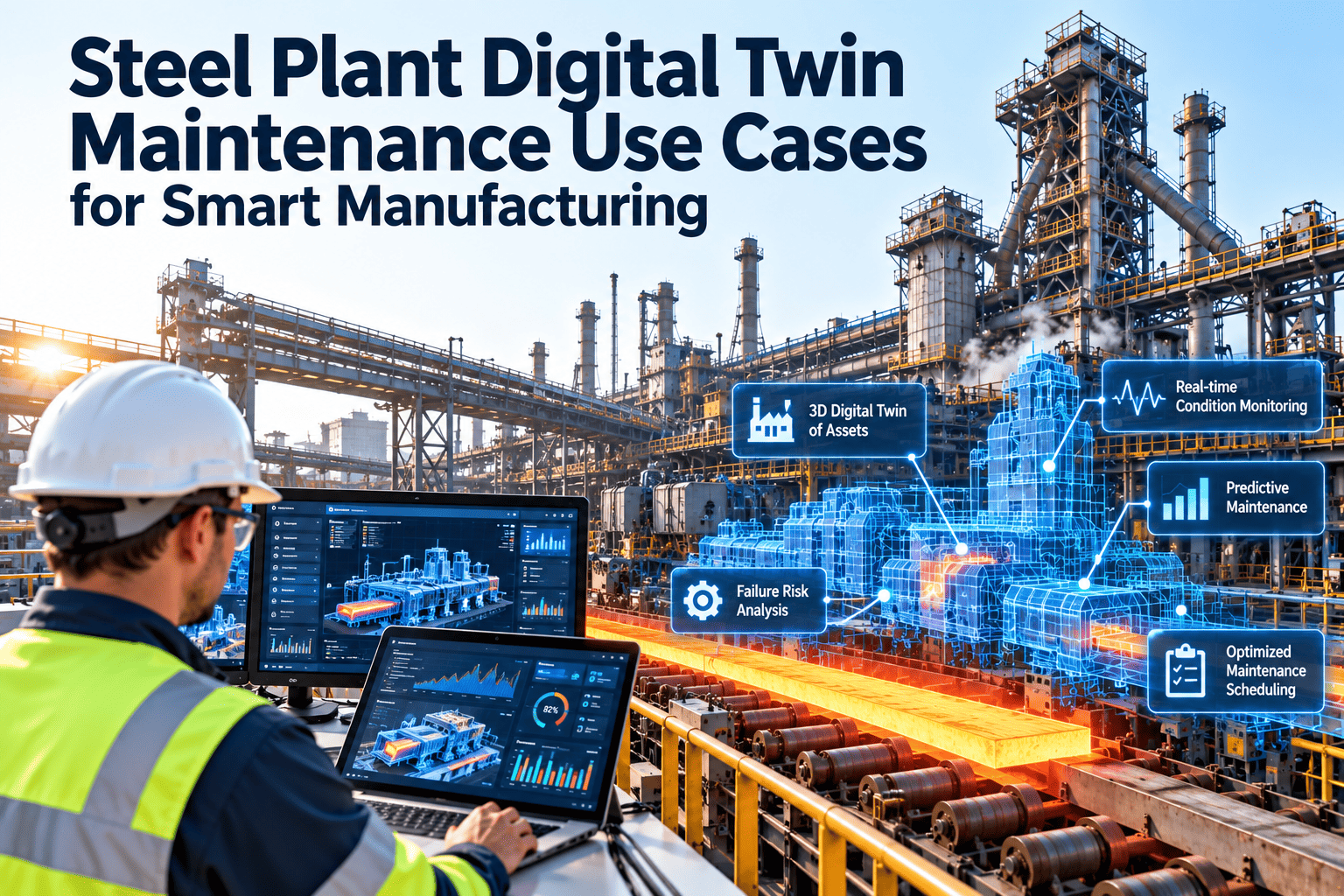
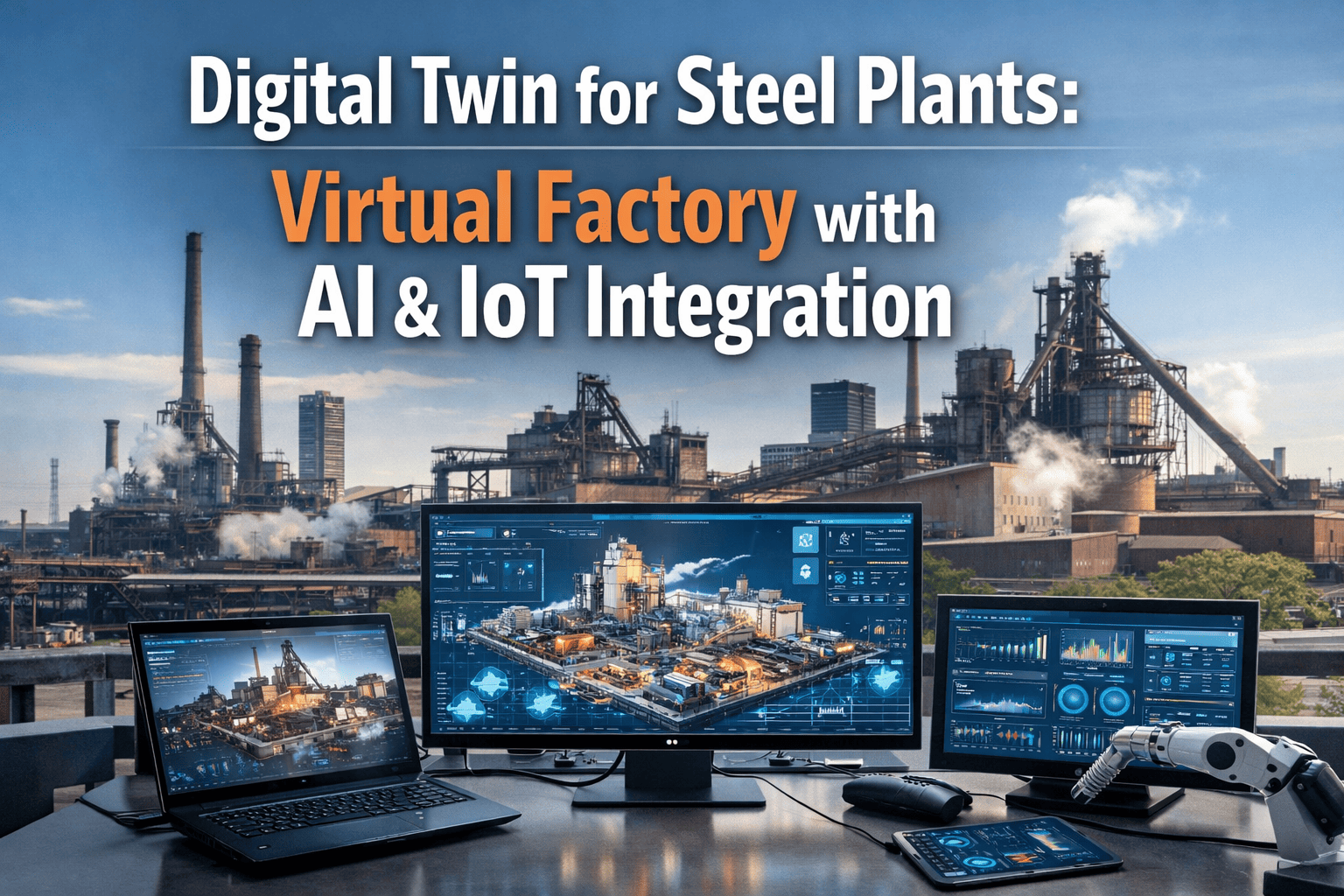
Digital twin technology represents a paradigm shift in how steel plants operate, maintain equipment, and optimize production. By creating virtual replicas of physical assets, processes, and entire production lines, steel manufacturers can simulate scenarios, predict failures, and optimize performance without disrupting actual operations. From blast furnaces to rolling mills, digital twins enable real-time monitoring, predictive analytics, and data-driven decision-making that transforms reactive maintenance into proactive optimization. This comprehensive guide explores how steel enterprises are moving from digital twin concepts to practical implementation—delivering measurable improvements in equipment reliability, production efficiency, and operational safety. Schedule a consultation to explore how digital twin technology can transform your steel plant operations.
Why Digital Twins Matter for Steel Production
Steel manufacturing involves complex, interconnected systems operating under extreme conditions. Traditional monitoring and maintenance approaches struggle to capture the dynamic interactions between equipment, processes, and environmental factors. Digital twins bridge this gap by creating living, breathing virtual models that evolve with their physical counterparts—enabling unprecedented visibility into plant operations and predictive capabilities that prevent costly failures before they occur.
35%
Reduction in Unplanned Downtime
Through predictive failure detection and proactive maintenance scheduling
28%
Improvement in OEE
Through real-time optimization and bottleneck elimination
45%
Faster Root Cause Analysis
Through simulation and scenario testing in virtual environment
$6M+
Annual Savings
Typical for integrated steel mills with comprehensive digital twin deployment
Ready to build your digital twin? Join steel producers using virtual models to predict failures, optimize processes, and maximize equipment performance.
Effective digital twin implementation requires a layered architecture that connects physical assets to virtual models through sensors, data platforms, and analytics engines. This architecture must handle the unique challenges of steel production—extreme temperatures, harsh environments, and continuous operations—while providing real-time insights and predictive capabilities.
Digital Twin Technology StackFrom physical assets to intelligent insights
Physical Layer
Sensors & IoT DevicesPLC & Control SystemsEquipment & MachineryProduction Lines
Data Integration Layer
Real-time Data StreamingHistorical Data StorageData Quality ManagementEdge Computing
Digital Twin Models
3D Asset ModelsProcess SimulationPhysics-based ModelsAI/ML Predictive Models
Digital twins deliver value across multiple dimensions of steel plant operations—from individual equipment monitoring to entire production line optimization. Understanding these use cases helps prioritize implementation efforts and maximize ROI.
Predictive Maintenance
Monitor equipment health in real-time, predict failures before they occur, and optimize maintenance schedules. Digital twins analyze vibration, temperature, and performance data to identify degradation patterns.
40-60% reduction in unplanned downtime
Process Optimization
Simulate production scenarios, optimize parameters, and identify bottlenecks. Test changes in the virtual environment before implementing on the production floor to minimize risk.
15-25% improvement in throughput
Quality Control
Track product quality throughout the production process. Correlate process parameters with final product characteristics to identify root causes of quality issues.
30-45% reduction in quality defects
Energy Management
Optimize energy consumption across furnaces, rolling mills, and auxiliary equipment. Identify energy waste and implement efficiency improvements through simulation.
20-30% reduction in energy costs
Operator Training
Train operators in safe, virtual environments. Simulate emergency scenarios, startup/shutdown procedures, and abnormal conditions without risking equipment or safety.
50% faster operator competency
Safety Management
Monitor safety-critical parameters, predict hazardous conditions, and simulate emergency response scenarios. Ensure compliance with safety regulations through continuous monitoring.
Enhanced safety compliance & risk reduction
See digital twins in action. Book a demo and we'll show you how Oxmaint builds and deploys digital twin models for your critical steel plant assets.
Successful digital twin deployment follows a structured approach that builds capability incrementally while delivering quick wins. This roadmap balances ambition with practicality—ensuring each phase delivers value while laying the foundation for expansion.
Phase 1
Foundation (Months 1-3)
Select pilot assets and define success metrics
Deploy sensors and data collection infrastructure
Establish data integration and storage
Build basic 3D models and dashboards
Outcome: Real-time visibility into pilot asset performance
Phase 2
Intelligence (Months 4-9)
Develop predictive models for failure detection
Implement anomaly detection algorithms
Create what-if simulation capabilities
Integrate with maintenance planning systems
Outcome: Predictive capabilities and proactive maintenance
Phase 3
Optimization (Months 10-18)
Expand to production line digital twins
Implement prescriptive analytics
Optimize process parameters automatically
Deploy across multiple facilities
Outcome: Enterprise-wide optimization and continuous improvement
Phase 4
Transformation (Ongoing)
AI-driven autonomous optimization
Closed-loop control integration
Digital thread across value chain
Continuous model refinement
Outcome: Self-optimizing production systems
Technology Requirements
Building effective digital twins requires careful selection of technologies that can handle the unique demands of steel production environments. From sensor selection to analytics platforms, each component must meet stringent requirements for reliability, accuracy, and performance.
Sensor & IoT Infrastructure
Industrial-grade sensors capable of withstanding extreme temperatures, vibration, and electromagnetic interference. Wireless and wired connectivity options with edge computing capabilities for real-time data processing.
Data Platform
Scalable cloud or on-premise infrastructure capable of handling high-volume, high-velocity data streams. Time-series databases optimized for industrial telemetry data with robust security and compliance features.
Modeling & Simulation
3D modeling tools for asset visualization, physics-based simulation engines for process modeling, and machine learning frameworks for predictive analytics. Integration capabilities with existing engineering tools.
Analytics & Visualization
Real-time dashboards with customizable KPIs, advanced analytics for pattern recognition and anomaly detection, and intuitive visualization tools that enable operators and engineers to extract actionable insights quickly.
Not sure which technologies fit your needs? Our engineers will assess your current infrastructure and recommend the optimal technology stack for your digital twin implementation.
Digital twin deployments face unique challenges from data quality issues, organizational resistance, and technology integration complexity. Understanding these challenges and proven solutions accelerates successful implementation and maximizes adoption.
Data Quality & Integration
Challenge: Inconsistent data formats, sensor calibration issues, and legacy system integration
Solution: Implement data governance framework, automated data validation, and middleware for legacy system integration. Start with high-quality data sources and expand gradually.
Organizational Change
Challenge: Resistance from operators and maintenance teams accustomed to traditional methods
Solution: Involve end-users from the start, provide comprehensive training, demonstrate quick wins, and show how digital twins make their jobs easier rather than replacing them.
Model Accuracy
Challenge: Digital twins that don't accurately reflect physical reality lose credibility
Solution: Start with simple models and validate against actual performance. Continuously refine models with real-world data. Use hybrid approaches combining physics-based and data-driven models.
ROI Justification
Challenge: Difficulty quantifying benefits and justifying investment to leadership
Solution: Start with pilot projects targeting high-value use cases with clear ROI. Track baseline metrics before implementation. Document both tangible (downtime reduction) and intangible (improved decision-making) benefits.
ROI & Business Case
Digital twin investments deliver returns through multiple value streams—reduced downtime, improved quality, optimized energy consumption, and enhanced safety. Building a compelling business case requires understanding these value drivers and quantifying their impact.
Value Creation BreakdownTypical ROI distribution for comprehensive digital twin deployment
Typical Payback Period: 12-18 months for comprehensive digital twin implementation
Calculate your digital twin ROI. Create a free Oxmaint account and our team will model the potential returns for your specific steel plant configuration and operational challenges.
Digital twin technology continues to evolve, with emerging capabilities that will further transform steel production. From AI-driven autonomous optimization to digital threads connecting the entire value chain, the future promises even greater levels of efficiency, quality, and sustainability.
Autonomous Optimization
AI-driven digital twins that automatically adjust process parameters in real-time, continuously learning and improving without human intervention.
Digital Thread Integration
End-to-end connectivity from raw materials to finished products, enabling traceability, quality optimization, and supply chain coordination.
Sustainability Optimization
Digital twins focused on carbon footprint reduction, energy efficiency, and circular economy principles to meet environmental goals.
Collaborative Ecosystems
Shared digital twins across suppliers, customers, and partners enabling collaborative optimization and innovation across the value chain.
Build Your Digital Twin Today
Your steel plant can't afford to operate blindly in an era of digital transformation. Oxmaint helps you deploy digital twin technology that provides real-time visibility, predicts failures before they occur, and optimizes performance across your entire operation—transforming maintenance from a cost center into a strategic competitive advantage.
How long does it take to implement a digital twin for a steel plant?
Initial pilot deployments typically take 3-6 months, delivering basic monitoring and visualization capabilities. Full-scale implementation with predictive analytics and optimization takes 12-18 months. The phased approach allows you to demonstrate value early while building toward comprehensive digital twin capabilities. Schedule a consultation to develop a timeline for your facility.
What's the typical investment required for digital twin implementation?
Investment varies significantly based on scope, number of assets, and complexity. Pilot projects typically range $200K-$500K, while enterprise-wide implementations can range $2M-$10M+. However, typical ROI payback periods of 12-18 months make the business case compelling for most steel producers.
Can digital twins integrate with our existing systems?
Yes. Modern digital twin platforms are designed to integrate with existing ERP, MES, CMMS, and control systems through standard APIs and protocols. The key is selecting a platform with robust integration capabilities and working with experienced implementation partners. Sign up for a free account to explore integration options.
Do we need to replace our existing sensors and equipment?
Not necessarily. Digital twins can work with existing sensors and infrastructure. However, you may need to add sensors for critical parameters not currently monitored. The key is conducting a thorough assessment of current capabilities and identifying gaps that need to be filled for your specific use cases.
How do we measure the success of our digital twin implementation?
Track both leading and lagging indicators: equipment uptime, mean time between failures, maintenance costs, energy consumption, quality metrics, and operator productivity. Establish baselines before implementation and review progress monthly with executive sponsorship. Book a demo to see digital twin dashboards and KPI tracking.
What skills do we need to develop for digital twin success?
Key skills include data analytics, IoT infrastructure management, 3D modeling, and change management. However, you don't need to develop all capabilities in-house. Partner with experienced vendors who can provide expertise while you build internal capabilities gradually through training and knowledge transfer. Schedule a consultation to discuss skills development strategies.