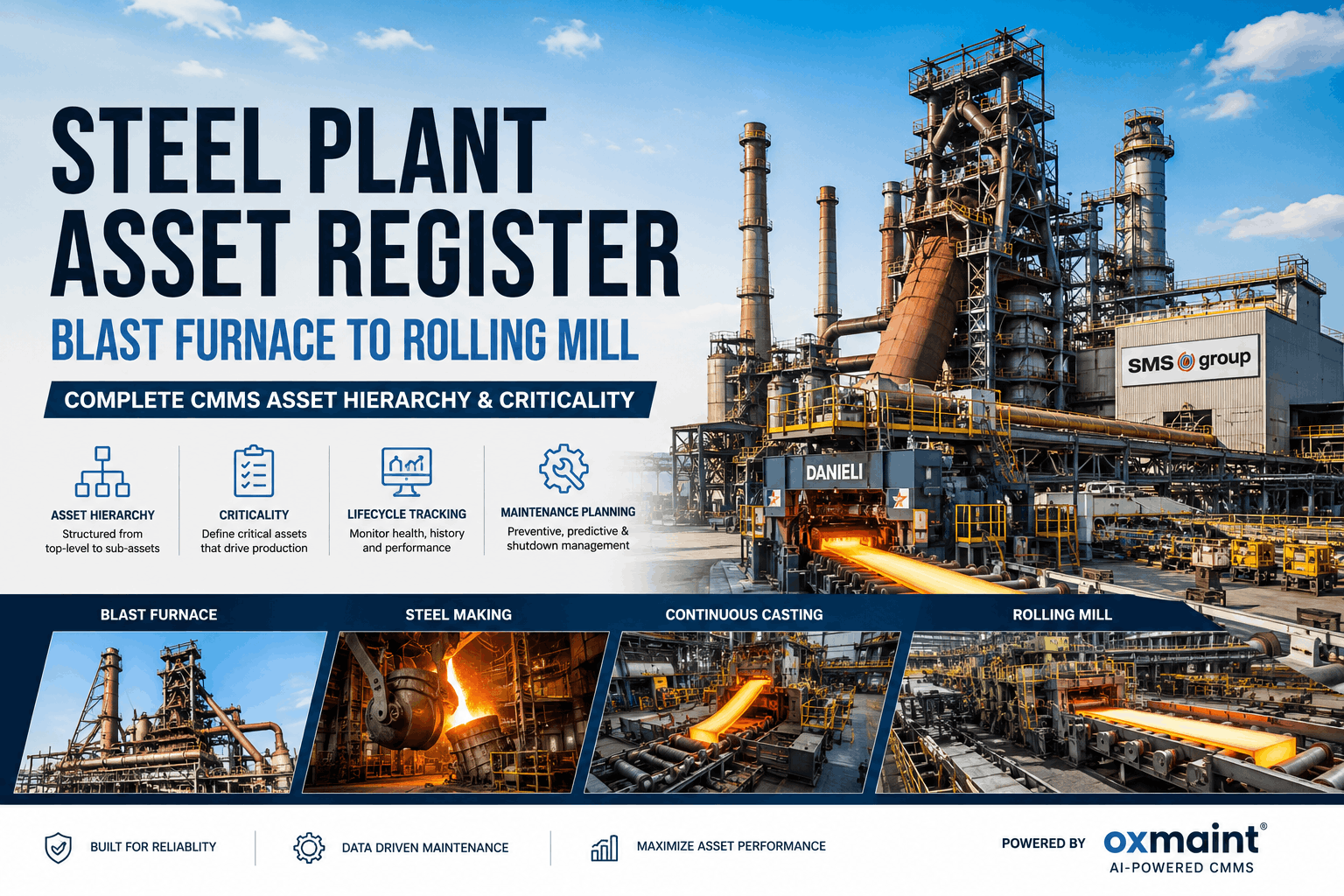
A blast furnace at a European steel producer began showing a 2.3°C upward drift in its cooling water return temperature — 38 days before any physical symptom appeared. The plant's digital twin flagged it. The maintenance team scheduled a planned shutdown, replaced the cooling circuit component, and avoided an emergency shutdown that would have cost an estimated $4.2M in lost production. That is what a steel plant digital twin actually does — not simulate the plant for display, but run continuous what-if analysis against live sensor data to catch what human operators and traditional CMMS alerts cannot. See how Oxmaint's digital twin integration works.
Digital Twin for Steel Plants: Building a Virtual Factory with AI & IoT
A complete guide to digital twin architecture for steel production — covering sensor data pipelines, AI simulation layers, CMMS integration, and the specific use cases where virtual modeling delivers measurable results on blast furnaces, rolling mills, and casting lines.
What a Steel Plant Digital Twin Actually Is
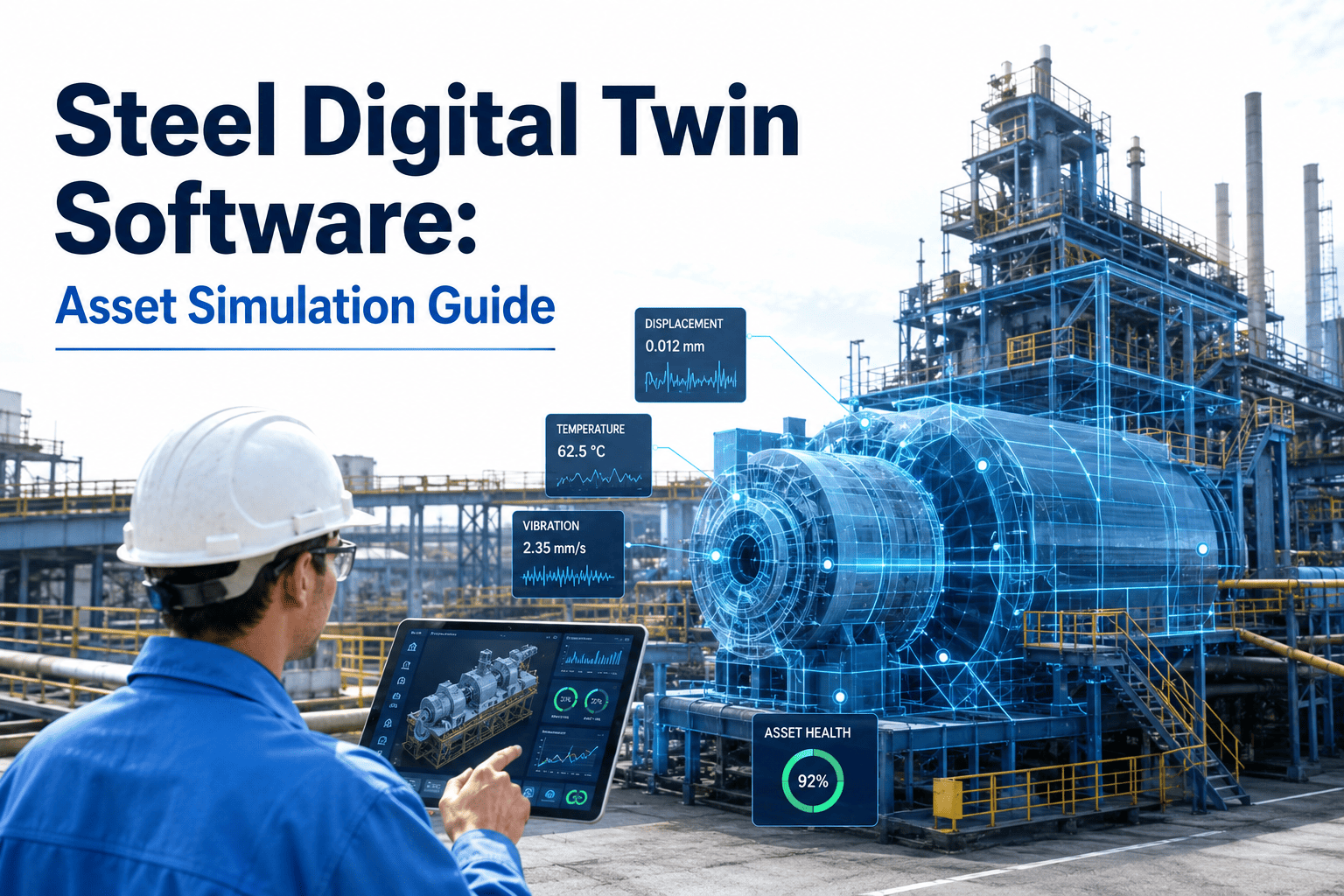
A digital twin is a continuously updated virtual model of a physical asset, process, or facility — fed by real-time sensor data, enriched by maintenance history from your CMMS, and powered by AI simulation to project future states. It is not a 3D visualization tool. It is not a dashboard. It is a living computational model that answers operational questions your physical instruments cannot: What will this bearing's condition be in 12 days if current load continues? What happens to casting quality if caster withdrawal speed increases by 3%? At what point does this heat exchanger's fouling rate exceed safe operating limits?
The Four Data Layers That Power a Steel Plant Digital Twin
A digital twin is only as accurate as the data feeding it. Steel plant digital twins require four distinct data layers working in concert — each providing a different dimension of asset knowledge that the others cannot supply alone. Sign into Oxmaint to see how your existing CMMS data maps to the digital twin data model.
Continuous streams from hundreds of sensors across furnaces, mills, and casting lines. Sampled at rates from 1Hz to 10kHz depending on asset criticality. Provides the current state of the physical asset at millisecond resolution. Without this layer, the twin is static — useful for documentation but not prediction.
Every repair, inspection finding, and parts replacement recorded in your CMMS teaches the twin how this specific asset responds to stress over time. A blast furnace that has been repaired at the same refractory zone three times in four years tells a different story than one with a clean history — and the twin's failure prediction model must know the difference. Connect your CMMS history to Oxmaint's twin model.
Production conditions determine how fast equipment degrades. A rolling mill running at 95% of rated capacity accumulates fatigue stress at a fundamentally different rate than one running at 70%. The twin's degradation model must be conditioned on operating envelope data — not just vibration amplitude in isolation.
First-principles engineering models encode the laws governing how steel plant equipment physically degrades — Arrhenius equations for thermal degradation, Miner's rule for fatigue accumulation, Moody friction factors for pipe wear. These models provide the physics backbone that data-only ML models lack, especially for rare failure modes with insufficient training data.
Digital Twin Use Cases by Steel Plant Asset
The return on digital twin investment varies dramatically by asset type and failure mode. These four asset classes deliver the highest and most documented ROI in steel production environments — each for different reasons driven by their failure physics and downtime cost profiles.
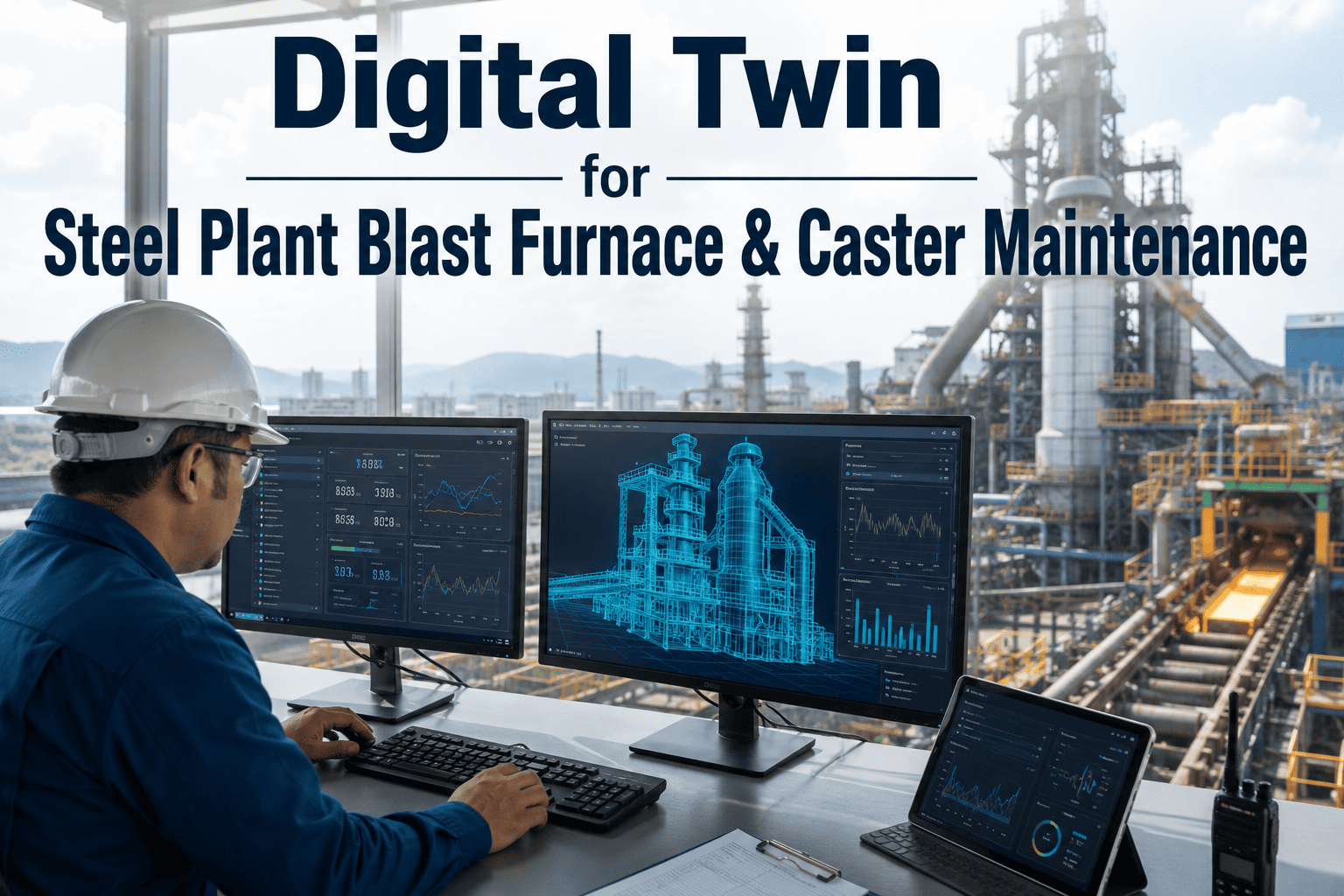
Blast furnace failures are catastrophic and extremely costly — a major lining failure can take 6–18 months and $50M–$200M to repair. The digital twin runs continuous thermal modeling of the refractory lining, tracking heat flux evolution across cooling stave zones to detect accelerated wear 30–90 days before critical degradation. Tuyere erosion models predict replacement intervals with 85%+ accuracy, eliminating both premature replacement and catastrophic tuyere burnouts.
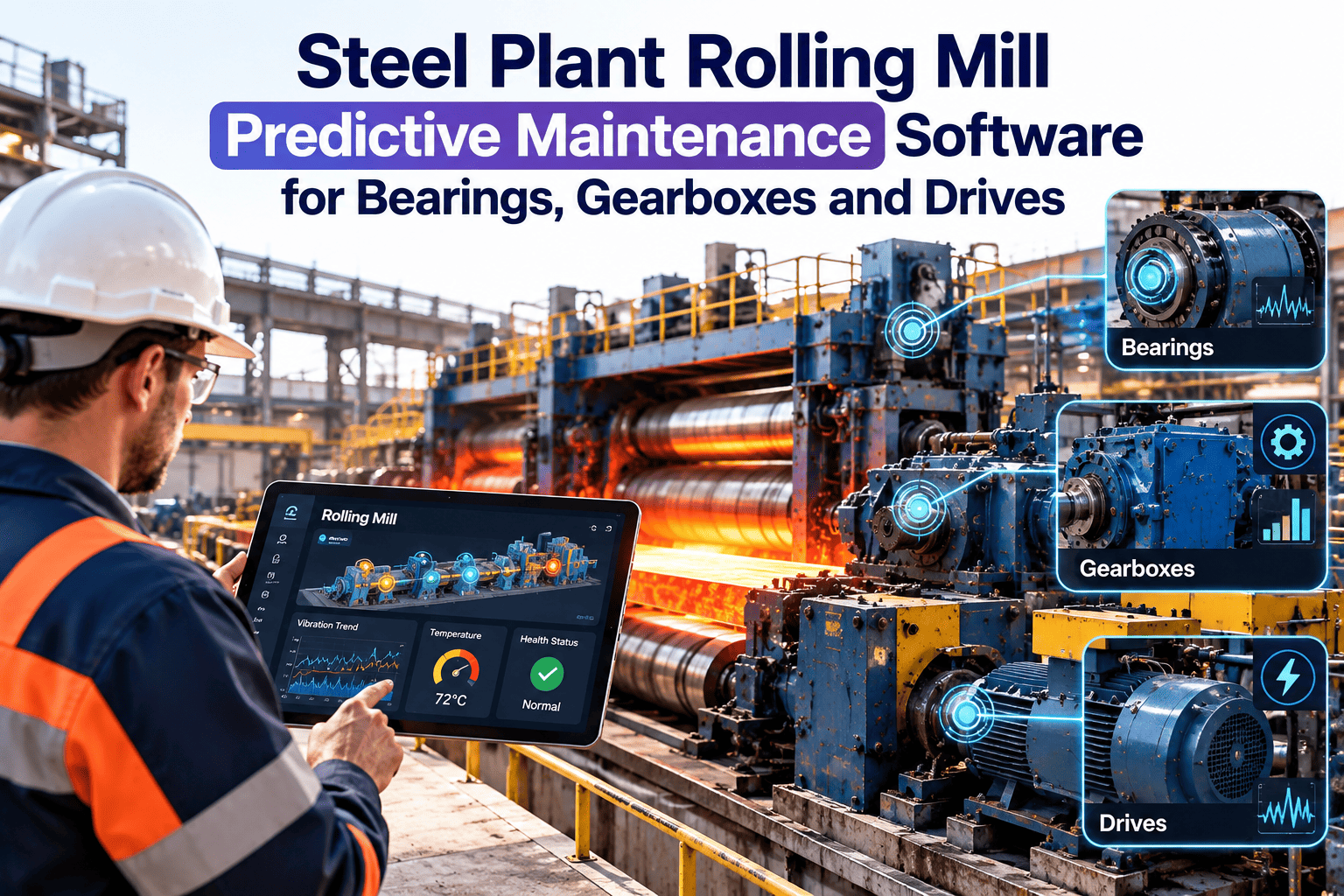
Rolling mill bearing failures cause production stops averaging 4–12 hours and frequently damage adjacent components when they fail catastrophically. The digital twin builds real-time fatigue accumulation models for each bearing based on actual load cycles — not just vibration amplitude. As tonnage accumulates, the model projects the remaining useful life curve and recommends replacement within a scheduled maintenance window rather than at unplanned failure.
Caster breakouts — where liquid steel breaks through the solidified shell — are dangerous events that cause hours of downtime, equipment damage, and safety hazards. The digital twin monitors thermal asymmetry in the mold and friction patterns in the oscillation system simultaneously to detect breakout precursors 3–8 minutes before the event, triggering controlled casting speed reduction or emergency stop.
EAF electrode consumption is both the largest variable cost and the hardest to optimize without real-time modeling. The digital twin builds a heat-by-heat electrode consumption model based on scrap chemistry, power profile, and bath geometry — predicting optimal electrode positioning and power curves to reduce specific energy consumption while minimizing electrode breakage events.
From Physical Plant to Virtual Model: The Data Flow
Building a steel plant digital twin requires a specific data architecture connecting field devices through integration layers to the simulation engine. This is how sensor data from a blast furnace tuyere becomes a 90-day remaining useful life projection in your CMMS. Book a demo to walk through the architecture for your specific plant configuration.
Before and After: Digital Twin Transformation
The operational difference between a plant running traditional condition monitoring and one running a full digital twin is not incremental — it is a fundamental change in how decisions get made. Every row below represents a decision that plant managers make every week.
| Decision / Scenario | Traditional Monitoring | With Digital Twin |
|---|---|---|
| Bearing replacement timing | Fixed interval schedule or vibration alarm threshold | RUL projection per bearing based on actual load accumulation |
| Blast furnace campaign end | Based on historical averages + periodic inspection | Continuous lining wear model with 90-day forward projection |
| Caster breakout prevention | Single-parameter thermocouple alarm | Multi-sensor fusion model with 3–8 minute advance warning |
| Rolling schedule optimization | Static schedule based on production demand | Dynamic scheduling considering real-time asset health margin |
| Energy optimization | Manual adjustment based on shift experience | AI-recommended EAF power curves per heat composition |
| Spare parts inventory | Safety stock based on historical consumption | RUL-driven parts pre-ordering 30–60 days before predicted need |
| Maintenance work order timing | PM calendar + reactive breakdown work | Auto-generated work orders from twin failure probability alerts |
We had been doing vibration monitoring on those rolling mill bearings for six years. The digital twin looked at the same vibration data — combined with our actual rolling tonnage and the maintenance history from our CMMS — and predicted the failure 23 days before any traditional alarm would have triggered. That is not a better alarm. That is a different category of insight.
How Oxmaint Delivers Digital Twin Capabilities for Steel Plants
Oxmaint's digital twin integration connects your CMMS maintenance history to IoT sensor data and AI simulation — giving maintenance teams the predictions they need without requiring a separate digital twin platform. Start your free trial to connect your first asset to the twin model.
Connect asset sensor streams directly to Oxmaint via OPC-UA, REST API, or MQTT. The platform builds asset health models from combined IoT data and CMMS maintenance history automatically.
Physics-informed ML models project failure probability curves for each monitored asset. Predictions update continuously as new sensor readings arrive — not in daily batches.
Bidirectional data sync between field sensors and CMMS maintains a synchronized timeline of physical events and sensor readings — the foundational requirement for accurate twin modeling.
When the twin model's failure probability exceeds configured thresholds, Oxmaint automatically generates prioritized work orders with predicted failure dates, recommended actions, and required parts — routed to the right technician.
Start Building Your Steel Plant Digital Twin with Oxmaint
Connect your first asset's sensor feed to Oxmaint's digital twin engine in your free trial. The platform begins building the health model from your existing CMMS maintenance history immediately — no data science team required.