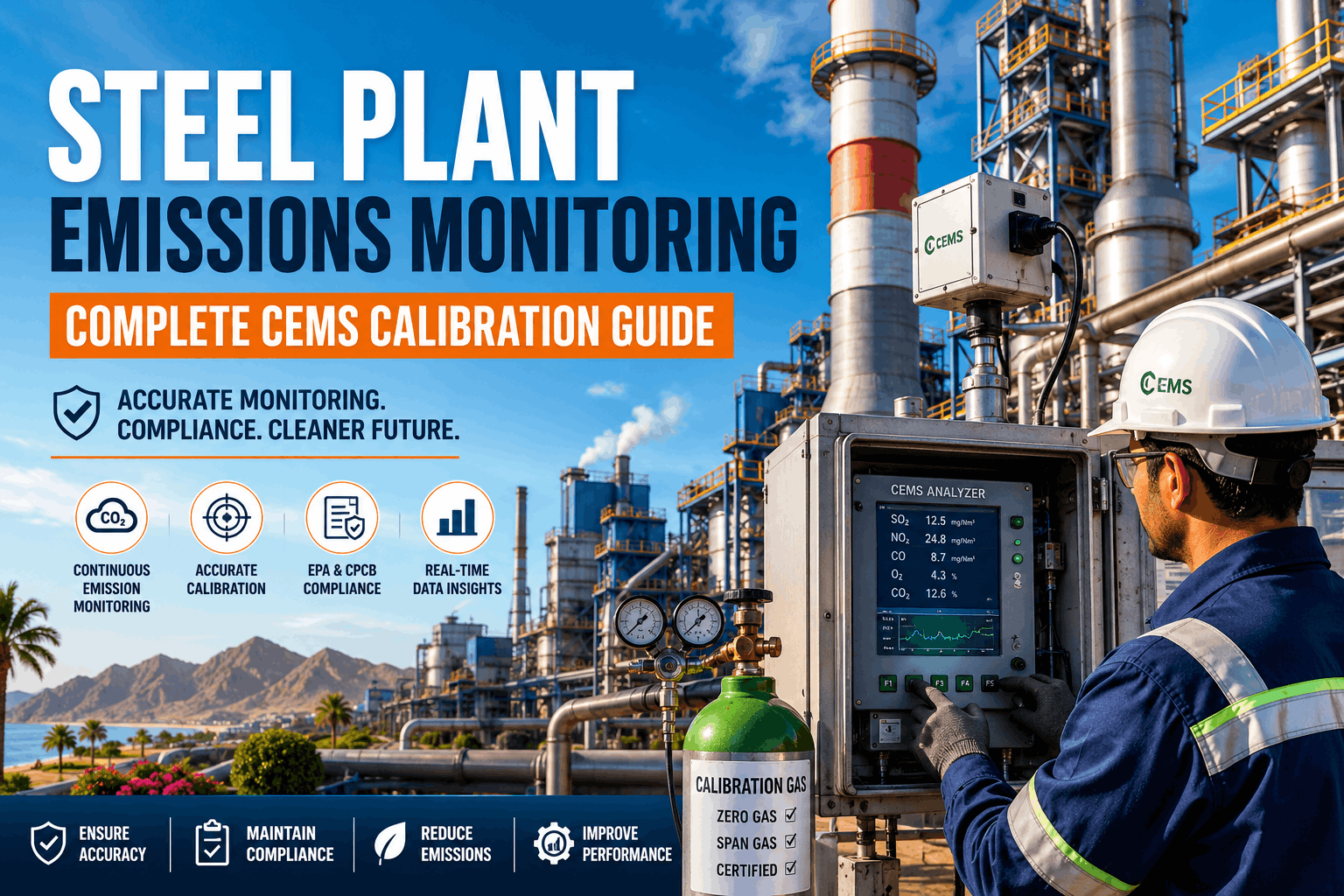
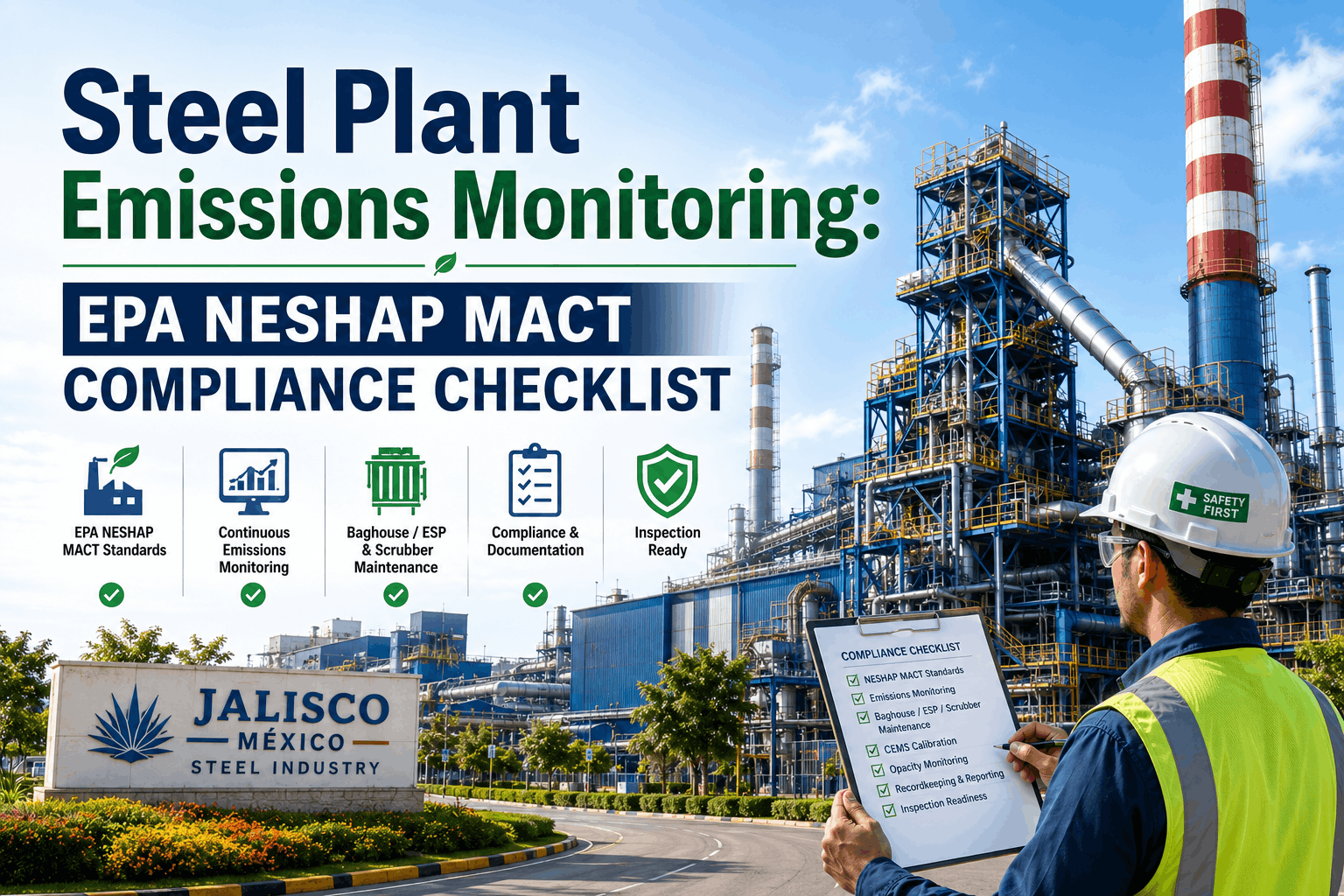
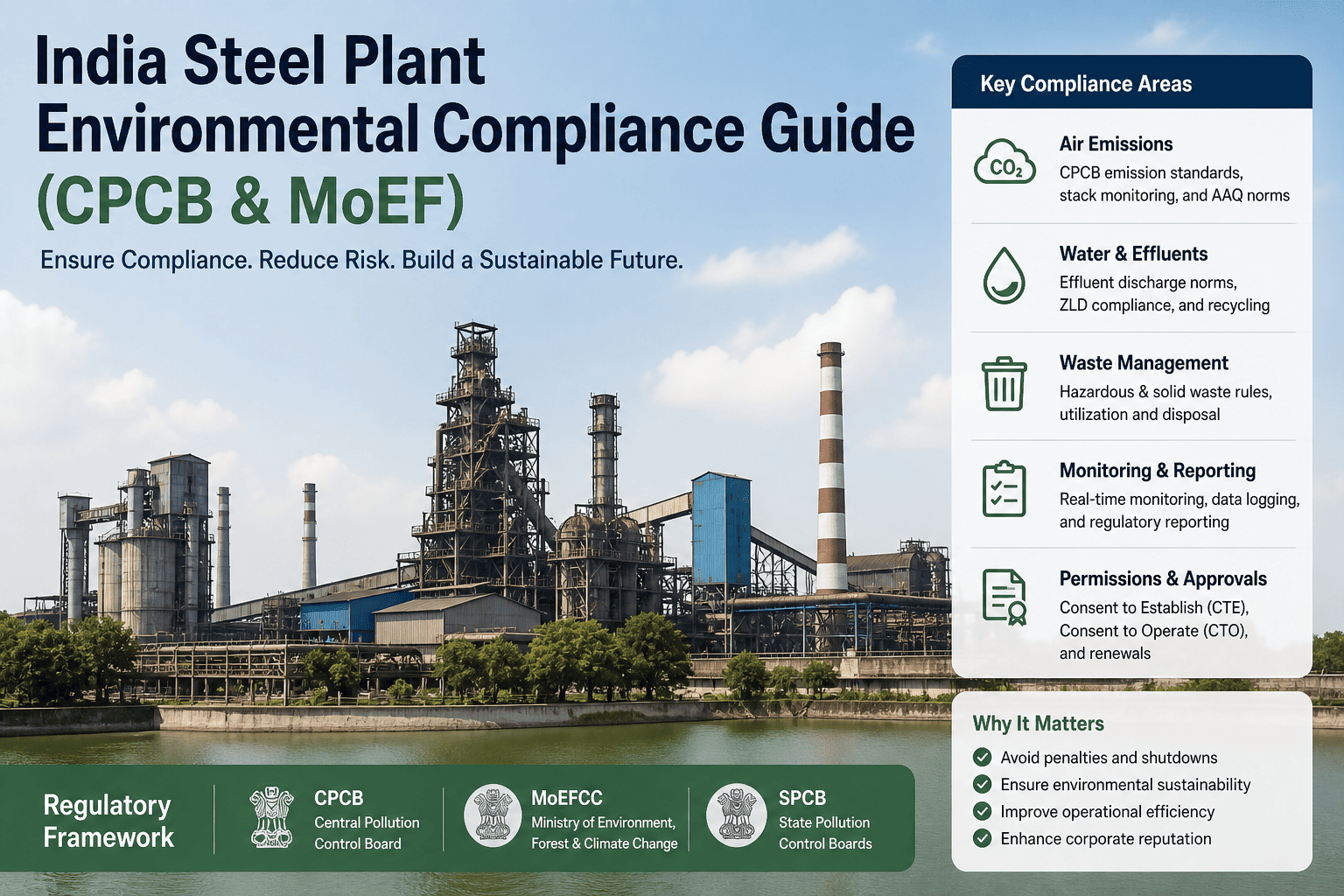
The steel industry produces 4.1 billion tonnes of CO2 equivalent annually, accounting for 7-8% of all global greenhouse gas emissions. Every tonne of steel manufactured releases an average of 2.18 tonnes of CO2e across its lifecycle. In the United States, integrated steel mills face an increasingly complex web of environmental regulations: the EPA's 2024 NESHAP amendments for iron and steel facilities introduced new emissions limits for mercury, hydrochloric acid, dioxins, and fugitive particulate matter, with compliance deadlines now extended to April 2027. Meanwhile, state-level air quality permits, Clean Air Act Title V requirements, and EPA's Greenhouse Gas Reporting Program demand continuous monitoring, documentation, and reporting that paper-based systems simply cannot handle.
For steel plant managers, the question is no longer whether to invest in emissions management, but how quickly you can digitize monitoring, reporting, and compliance workflows before the next regulatory deadline or enforcement action arrives. See how Oxmaint helps steel plants meet environmental compliance.
What Steel Plants Emit: A Complete Pollutant Profile
Steel production generates emissions at every stage, from coke making to casting. Understanding the full pollutant profile is essential for building an effective emissions management program. The EPA's NESHAP for integrated iron and steel facilities (40 CFR Part 63, Subpart FFFFF) now regulates many of these pollutants for the first time:
Carbon Dioxide (CO₂)
Primary GHG from coke combustion, iron ore reduction, and limestone flux decomposition. BF-BOF route produces 90% of steel sector CO₂. Subject to EPA GHGRP reporting under 40 CFR Part 98 Subpart Q.
Particulate Matter (PM / PM₂.₅)
Fine particles from steelmaking furnaces, sinter plants, and material handling. Includes heavy metals adsorbed onto particles. The 2024 NESHAP sets new opacity limits for bleeder valves, slag processing, and beaching operations.
Mercury (Hg) & Heavy Metals
Newly regulated under the 2024 NESHAP using MACT floor standards. Includes mercury, lead, cadmium, and chromium. Fenceline monitoring for hexavalent chromium now required at integrated facilities.
Sulfur Dioxide (SO₂) & NOx
Acid gas precursors from sulfur in coal and coke, and nitrogen oxidation at high temperatures. Subject to Title IV acid rain provisions, NSPS, and state implementation plan (SIP) requirements.
Dioxins / Furans (PCDD/PCDF)
Highly toxic persistent organic pollutants formed during combustion with chlorine-containing feedstock. First-time MACT standards established under the 2024 NESHAP for integrated iron and steel facilities.
Volatile Organic Compounds (VOCs)
Including benzene and polycyclic aromatic hydrocarbons (PAHs) from coke oven operations. The EPA's coke oven NESHAP requires benzene fenceline monitoring and community exposure assessments.
Emission Sources by Production Stage
The Regulatory Landscape: What Steel Plants Must Comply With
Steel manufacturing is one of the most heavily regulated industries in the United States from an environmental perspective. Multiple overlapping federal and state regulations govern air emissions, water discharge, and waste management. Here is the complete regulatory framework steel plants must navigate:
NESHAP for Integrated Iron & Steel (40 CFR 63, Subpart FFFFF)
The 2024 final rule established new MACT standards for previously unregulated HAPs including mercury, HCl, and dioxins/furans. Sets opacity limits for bleeder valves, slag processing, and beaching. Requires fenceline monitoring for chromium. Work practice standards for bell leaks and BF/BOPF operations. Compliance deadlines now extended to April 3, 2027 for most existing source requirements.
Clean Air Act Title V Operating Permits
All major source steel facilities must hold a Title V operating permit consolidating all applicable air quality requirements. Permits specify emission limits, monitoring requirements, recordkeeping obligations, and reporting schedules. Annual compliance certifications required. Permits renewed every 5 years with public notice and comment.
EPA Greenhouse Gas Reporting Program (40 CFR Part 98)
Steel facilities emitting 25,000+ metric tons CO₂e annually must report under Subpart Q (Iron and Steel Production). Requires monitoring of all CO₂ from coke combustion, iron production, and steelmaking. Subpart C covers stationary combustion, Subpart AA covers waste management. Annual reports due by March 31.
NSPS for Steel Manufacturing (40 CFR Part 60)
New Source Performance Standards apply to new or modified EAFs (Subpart AAa), BOFs (Subpart Na), and other steel plant equipment. Sets PM emission limits, opacity standards, and monitoring requirements. CEMS or equivalent monitoring often required.
State Implementation Plans (SIPs) & Air Quality Permits
State-level emission limits that may be more stringent than federal requirements. Include NAAQS attainment provisions for PM₂.₅, SO₂, NOx, and ozone. State-specific monitoring, reporting, and recordkeeping beyond federal minimums. Many steel-producing states (IN, PA, OH, AL) have dedicated steel industry compliance programs.
CWA NPDES Permits & RCRA Waste Management
NPDES permits govern process water discharge, cooling water blowdown, and stormwater. Effluent limitation guidelines for iron and steel (40 CFR Part 420). RCRA governs EAF dust (K061), spent pickle liquor, and other hazardous wastes. TRI reporting required for facilities meeting thresholds.
Navigate Complex Environmental Regulations With Confidence
Oxmaint centralizes every emission source, monitoring record, compliance deadline, and regulatory report in one platform. Stop managing environmental compliance in spreadsheets.
How Oxmaint Digitizes Emissions Management
A CMMS purpose-built for heavy industry transforms emissions management from reactive paperwork into proactive, data-driven compliance. Here is how Oxmaint's platform works inside a steel plant's environmental program:
Continuous Emission Monitoring Integration
Connect CEMS and air quality monitors directly to Oxmaint. Automatic logging of PM, SO₂, NOx, CO, and opacity readings. Threshold exceedance alerts notify environmental staff instantly. Historical trend data available for compliance reports and permit renewals.
Regulatory Deadline Management
Track every compliance deadline across federal, state, and local regulations. Automated reminders 90, 60, and 30 days before due dates. Assign responsible personnel to each deadline. Never miss a Title V certification, GHGRP report, or NESHAP compliance date again.
Automated Reporting & Documentation
Generate compliance reports directly from monitoring data: annual Title V certifications, semi-annual monitoring reports, GHGRP submissions, and deviation reports. Audit-ready documentation with complete chain of custody for every data point.
Emission Source Inventory
Maintain a complete digital inventory of every emission source in the plant: stacks, fugitive sources, process vents, material handling points, and storage areas. Link each source to applicable regulations, permit limits, and monitoring requirements.
Preventive Maintenance for Controls
Schedule and track maintenance on all emission control equipment: baghouses, scrubbers, ESPs, CEMS, opacity monitors, and fenceline sensors. Preventive maintenance reduces unplanned failures that cause exceedances and deviation reporting.
Deviation & Incident Management
When exceedances occur, Oxmaint triggers a structured workflow: automatic deviation logging, root cause investigation, corrective action assignment, and regulatory notification tracking. Complete documentation of every event for enforcement defense.
The 2024 NESHAP Amendments: What Changed for Steel Plants
The EPA's April 2024 final rule (89 FR 23294) represents the most significant regulatory update for integrated iron and steel facilities in over a decade. While compliance deadlines have been extended to 2027, preparation must begin now. Here are the key changes and how digital CMMS helps you prepare:
New MACT Floor Standards for HAPs
First-Time RegulationPreviously unregulated hazardous air pollutants now have emission limits determined using the upper prediction limit (UPL) methodology. Includes mercury, hydrochloric acid, and dioxins/furans from sinter plants, blast furnaces, and BOF operations.
Oxmaint tracks new monitoring requirements and maps each HAP to its source and control device.Opacity Limits for Fugitive Emissions
Tightened StandardsNew opacity limits for planned bleeder valve openings, slag processing and handling, and beaching operations at blast furnace and BOPF facilities. Industry has challenged the feasibility of the planned bleeder valve opacity limit based on operational variability.
Oxmaint schedules opacity readings and logs results against permit thresholds automatically.Fenceline Monitoring Requirements
Community ProtectionChromium fenceline monitoring required at integrated iron and steel facilities. Benzene fenceline monitoring required at coke oven batteries. Community-level exposure data will be publicly available, increasing transparency and accountability.
Oxmaint integrates fenceline monitor data streams and generates community reporting outputs.Work Practice Standards
Operational RequirementsNew work practice requirements for bell leaks at blast furnaces, unplanned bleeder valve openings, and BF/BOPF operations. Requires documented response procedures and corrective action within specified timeframes when fugitive emissions are detected.
Oxmaint triggers work practice checklists when operators report fugitive emission events.Enhanced Monitoring Frequency
Ongoing ComplianceIncreased monitoring frequency for BOPF and blast furnace operations. More frequent CEMS data validation and reporting. Annual compliance testing with prescribed methods for each regulated pollutant at each source.
Oxmaint auto-schedules all monitoring events and tracks completion with deviation alerts for missed tests.Emission Control Equipment Maintenance
Your emission controls are only as good as their maintenance. A single baghouse failure or ESP malfunction can trigger an exceedance event, a deviation report, and potentially an enforcement action. Oxmaint's preventive maintenance system ensures every control device operates at peak efficiency:
Keep Every Control Device Running at Peak Performance
Emission control equipment failures are the #1 cause of compliance deviations. Oxmaint's preventive maintenance scheduling ensures baghouses, ESPs, scrubbers, and CEMS stay operational and compliant.
Frequently Asked Questions
What are the key deadlines steel plants need to meet under the 2024 NESHAP amendments?
The EPA's interim final rule (July 2025) extended all 2025 and 2026 compliance deadlines to April 3, 2027 for existing sources. This covers opacity standards for planned bleeder valve openings, work practice standards for bell leaks, slag processing opacity limits, monitoring frequency increases, and BF/BOPF work practices. New source requirements (for facilities built or substantially modified after April 2024) have separate timelines. Oxmaint tracks every applicable deadline and sends automated reminders to responsible staff.
What emissions must steel plants report to the EPA?
Steel facilities must report under multiple programs: the Greenhouse Gas Reporting Program (annual CO₂e reports under 40 CFR Part 98, Subpart Q for facilities emitting 25,000+ metric tons), Title V annual compliance certifications, semi-annual monitoring reports, deviation reports within specified timeframes of any exceedance, and Toxic Release Inventory (TRI) reports for facilities meeting chemical thresholds. The 2024 NESHAP adds fenceline monitoring data reporting for chromium and benzene at applicable facilities.
How does CMMS software help with environmental compliance?
CMMS software like Oxmaint centralizes all emission sources, monitoring data, maintenance records, and compliance deadlines in one platform. It automates preventive maintenance scheduling for emission control equipment (baghouses, ESPs, scrubbers, CEMS), tracks regulatory deadlines with escalating reminders, generates audit-ready compliance reports from monitoring data, manages deviation investigations and corrective actions, and maintains complete documentation chains that regulators require during inspections.
What fenceline monitoring does the 2024 NESHAP require?
The 2024 final rule requires hexavalent chromium fenceline monitoring at integrated iron and steel manufacturing facilities and benzene fenceline monitoring at coke oven facilities. These monitors measure community-level exposure to hazardous air pollutants at the property boundary. Data must be collected continuously, validated against QA/QC protocols, and made publicly available. Oxmaint integrates fenceline monitoring data streams and automates the data validation and reporting workflows.
What penalties do steel plants face for environmental non-compliance?
Penalties under the Clean Air Act can be severe. Civil penalties can reach $113,625 per day per violation (2024 adjusted). Criminal penalties for knowing violations include fines up to $1 million and imprisonment. The EPA has recently increased focus on environmental justice communities near steel facilities, which often drives more aggressive enforcement. State environmental agencies may impose additional penalties. Beyond fines, non-compliance can result in consent decrees mandating costly capital improvements, enhanced monitoring, and supplemental environmental projects.