Steel Plant Lubrication Management and Oil Analysis Routing
Implement a world-class lubrication program with automated oil sampling routes, contamination control, ISO cleanliness targets, and CMMS-integrated greasing schedules — complete guide for steel plant reliability engineers.
65%Reduction in lubrication-related failures with automated oil analysis and CMMS-integrated greasing
ISO 4406Cleanliness code standard for hydraulic and lube oil systems — target 16/14/11 for critical assets
5-10xExtended bearing and gearbox life when oil is maintained at target ISO cleanliness levels
90%Of bearing failures are lubrication-related — wrong lubricant, contamination, or degraded oil
How Lubrication Management Fails — The 6-Stage Lubrication Failure Chain
Lubrication-related failures rarely start with a sudden catastrophic event. They begin with a missed greasing, a contaminated oil top-up, or an overdue oil sample. The failure chain below shows the six stages from inadequate lubrication through to catastrophic equipment failure. Understanding each stage helps reliability teams identify the specific controls that break the chain — scheduled greasing, oil analysis routing, contamination control, and CMMS action triggers. OxMaint's lubrication module interrupts the chain at Stages 2, 3, and 4 — where most steel plants currently have no automated controls.
Lubrication Failure Chain — 6 Stages from Inadequate Lubrication to Catastrophic Failure
The 6 Critical Lubrication Management Elements — Grease Selection, Oil Analysis, Routing
World-class lubrication management requires six integrated elements, each addressing a different failure mode. Grease selection ensures compatibility with temperature, load, and environment. Contamination control maintains ISO cleanliness targets. Oil analysis routing automates sampling and lab data integration. Greasing schedules with CMMS prevent missed lubrication. OxMaint's lubrication module addresses all six — automated routing, ISO target tracking, and work order generation for out-of-spec oil.
Grease Selection
Critical
NLGI grade, base oil viscosity, thickener type (lithium complex, calcium sulfonate, polyurea), EP additives, temperature range. Wrong grease causes hardening, separation, or pumpability failure.
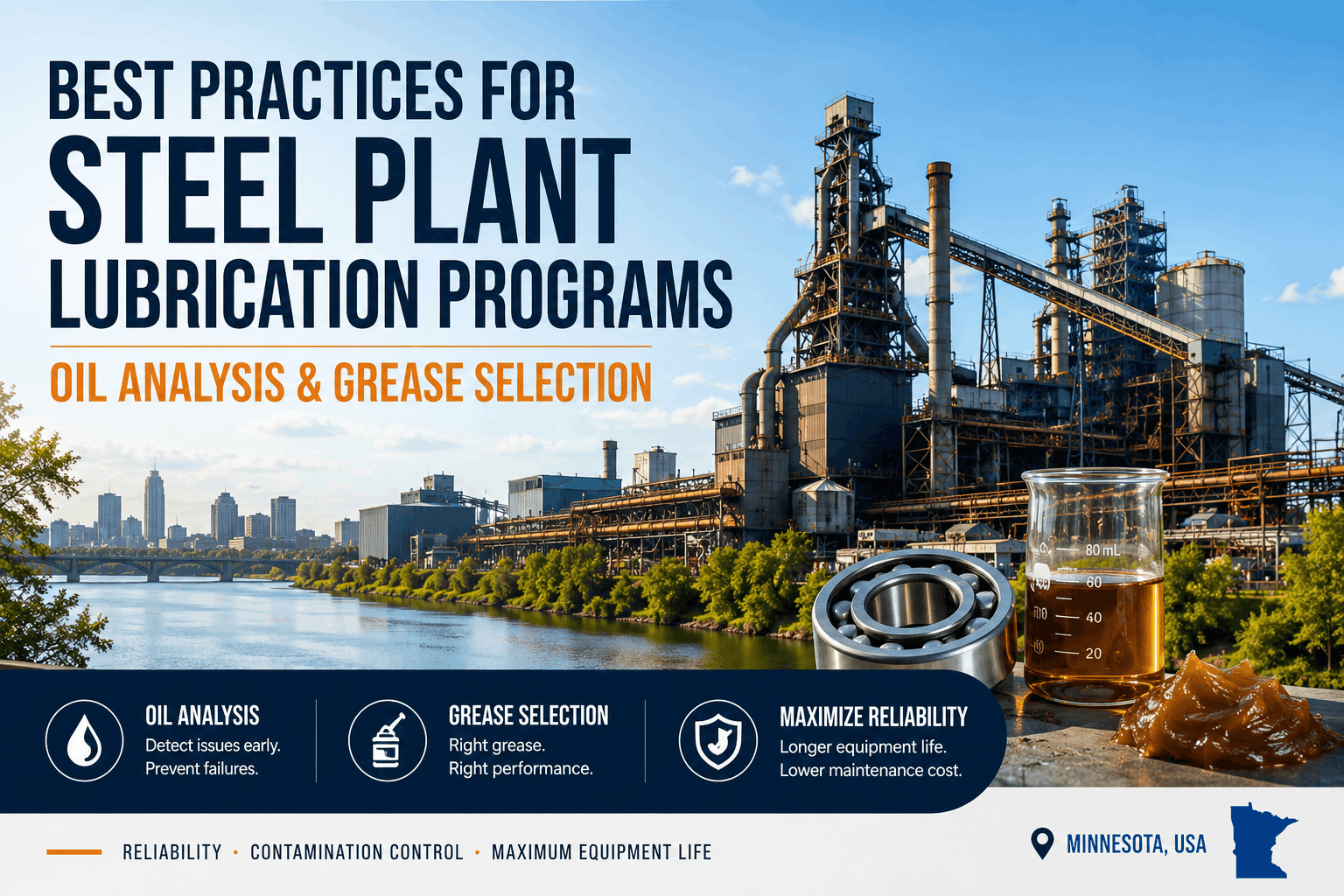
Best practice: NLGI 2 lithium complex for 80% of steel mill bearings; synthetic for high temp (>150°C)
Contamination Control
Critical
Water ingress, particle contamination, wrong oil mixing. ISO 4406 cleanliness code targets for each system (hydraulic: 16/14/11; gearbox: 18/16/13).
Best practice: Desiccant breathers, offline filtration, quick-connect sampling ports, color-coded fill points
Oil Analysis Routing
Automated
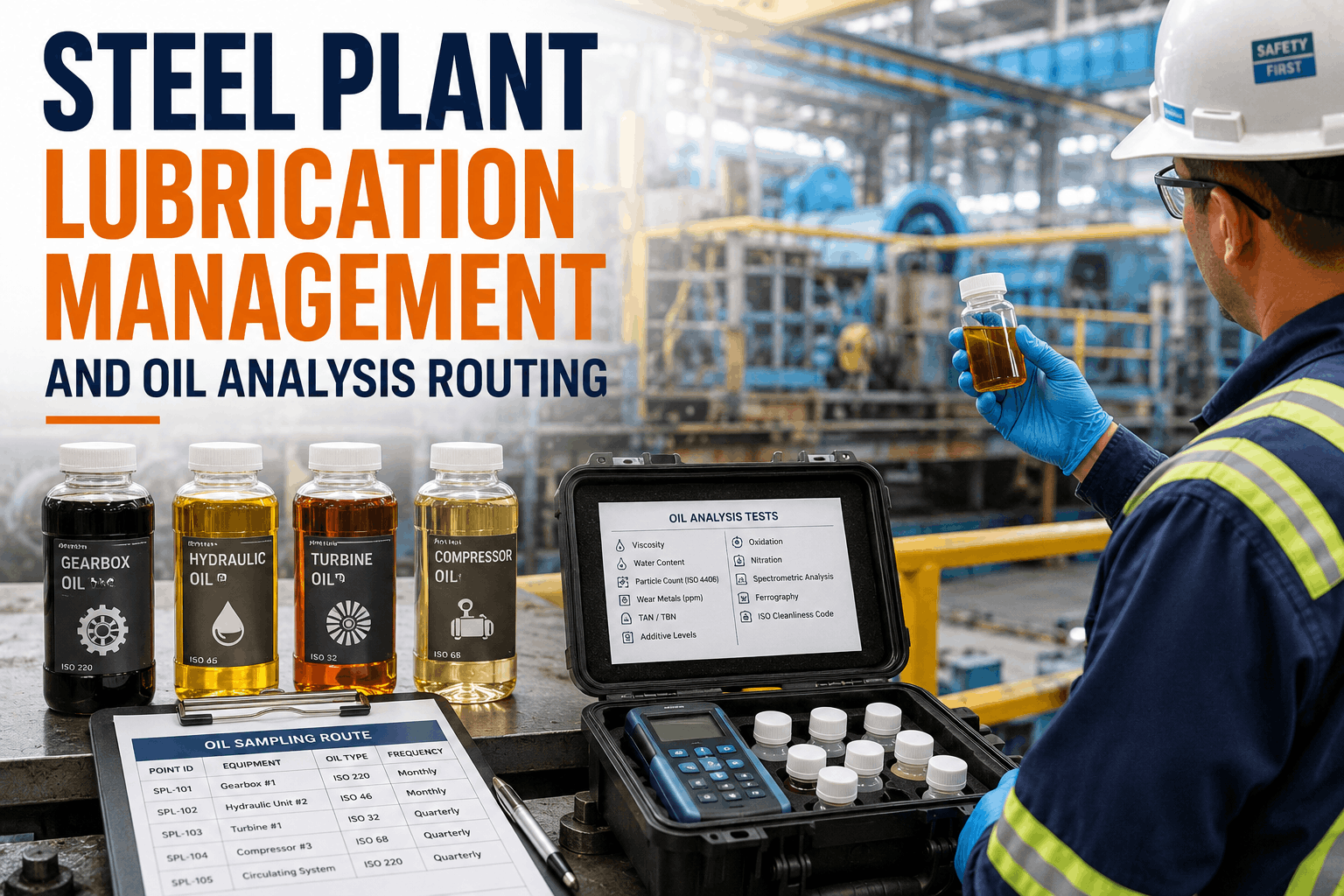
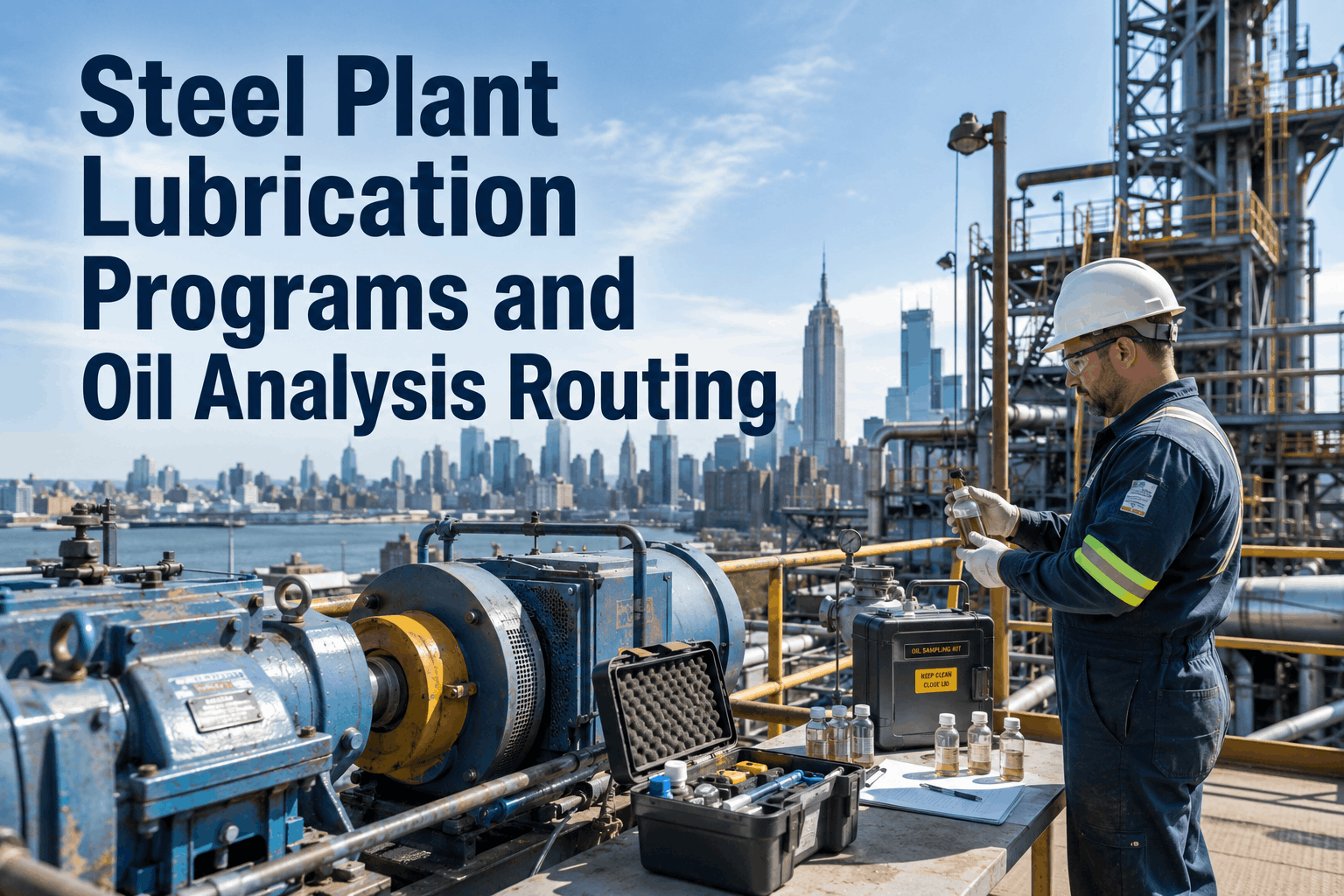
Sampling points, frequency (monthly for critical, quarterly for others), lab submission, data integration. Each sample tests viscosity, water, particle count, wear metals, TAN/TBN, additive levels.
Best practice: OxMaint generates sampling tasks at defined intervals, routes to technician mobile app, ingests lab results via API
Greasing Schedule
Preventive
Frequency calculation based on bearing speed, temperature, load, environment. NLGI 2 grease at 1500 RPM bearing: 3-6 month regrease interval typical.
Best practice: OxMint generates greasing work orders at calculated intervals, technician scans bearing QR code to confirm greasing, logs amount and date
Lubrication Routes
Optimization
Grouping lubrication points by location, frequency, and lubricant type. Optimized routes reduce technician travel time and ensure no point is missed.
Best practice: OxMaint generates optimized greasing routes by zone, technician completes route in mobile app with QR code confirmation per point
Condition Monitoring
Predictive
Trend analysis of viscosity, particle count, water content, wear metals. Alarm thresholds trigger oil change or maintenance before failure.
Best practice: OxMaint monitors oil analysis results against ISO targets, auto-creates work order when oil condition degrades below threshold
Lubrication Management Maturity — Where Does Your Steel Plant Stand?
Lubrication program maturity exists on a spectrum from no formal process to a fully automated system with oil analysis routing, ISO cleanliness targets, and CMMS-integrated greasing. The scoring framework below lets reliability engineers assess their current lubrication posture — identifying the highest-priority gaps. OxMaint's lubrication module delivers Level 5 maturity by default — automated routing, condition-based alerts, and closed-loop work order generation.
Score 5 = fully automated, condition-based · Score 1 = reactive, no documented program
5
Automated · Condition-Based · Closed-Loop
Oil analysis routes auto-generated in CMMS. Lab results ingested via API. Work orders auto-created when ISO targets exceeded. Greasing schedules with QR verification and auto-logging. Routes optimized by location and frequency.
Profile: 65% reduction in lubrication failures. Bearing and gearbox life extended 5-10×. Best insurance rates achievable.
4
Scheduled Sampling · Manual Analysis Review
Oil samples scheduled and collected. Lab results reviewed manually. Greasing schedules documented in calendar. Some contamination control (breathers, filters).
Action: Automate oil analysis routing. Integrate lab data with CMMS. Add QR code greasing confirmation to eliminate missed points.
3
Occasional Sampling · No Formal Program
Oil samples taken annually or after failures. Greasing on calendar but no confirmation of completion. No ISO cleanliness targets. No contamination control strategy.
Gap: Establish sampling frequency per asset class. Define ISO targets. Train technicians on lubrication best practices.
2
Reactive Only — Lubricate When Failed
No scheduled oil sampling. Greasing performed when bearing noise appears or failure occurs. Wrong lubricants used interchangeably.
Risk: High bearing and gearbox failure rate. Emergency repairs and extended downtime. Higher insurance premiums due to poor maintenance documentation.
1
No Lubrication Program
No documented greasing schedule. No oil analysis. No lubricant storage or handling standards. Multiple lubricant types used without segregation.
Risk: Routine bearing and gearbox failures. Frequent unplanned downtime. Immediate lubrication program required.
Modern steel plant lubrication management is built on three technology layers — oil analysis for condition monitoring, automatic lubrication systems for critical assets, and CMMS integration for work order management. OxMaint's lubrication module connects all three layers — generating sampling routes, receiving lab results via API, and triggering work orders when oil condition degrades below ISO targets.
Oil Analysis Routing
Automated Sampling
Monthly/quarterly sampling tasks assigned via mobile app
OxMaint generates sampling tasks at defined intervals, assigns to technician by zone, tracks sample collection to lab submission. Technician scans equipment QR code, collects sample, logs in app.
Lab Data Integration
API / CSV Import
Oil analysis results automatically ingested
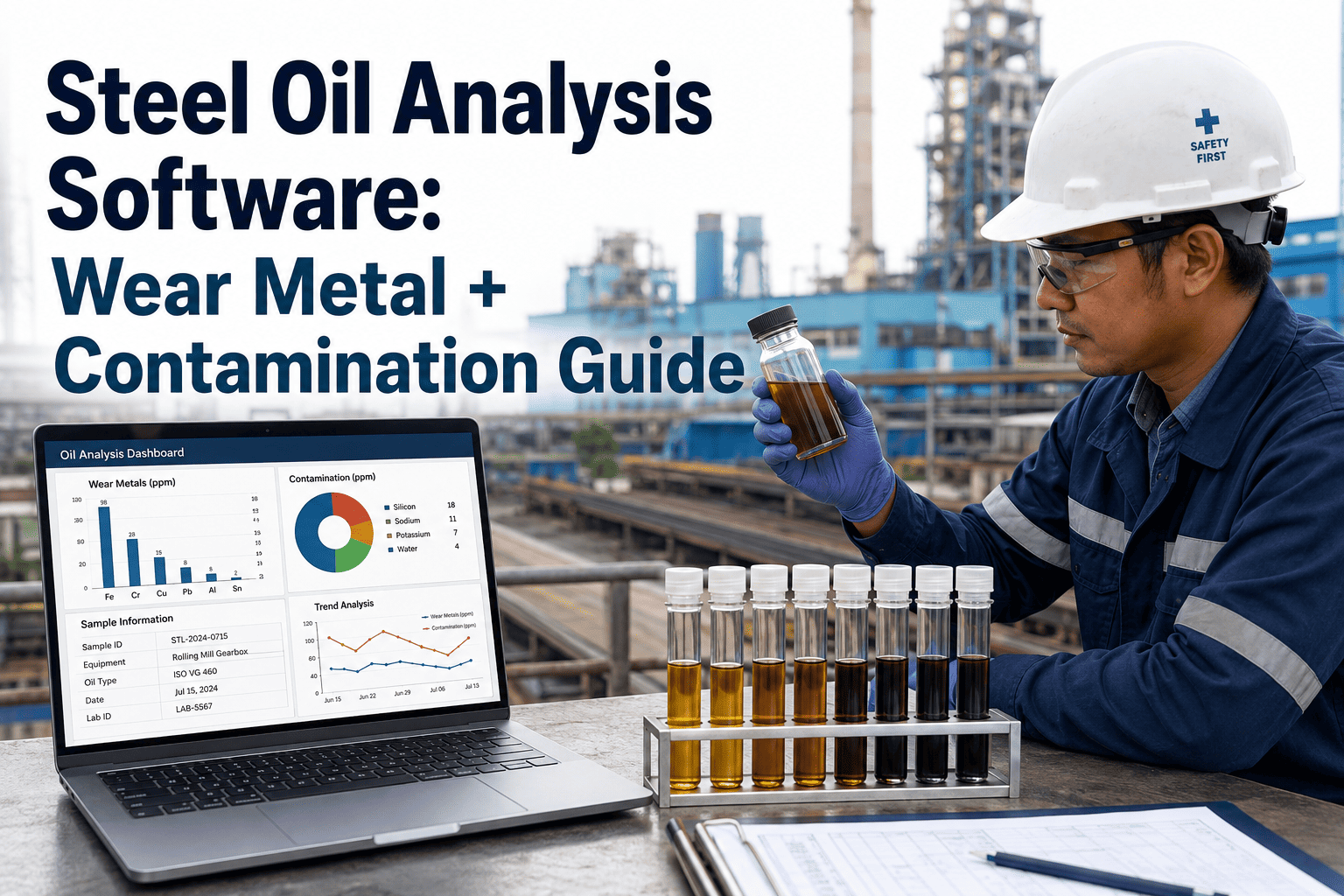
OxMaint receives lab results via API or CSV import. Viscosity, water content, particle count, wear metals, TAN, TBN, and additive levels stored against asset record. Trend analysis displayed on dashboard.
ISO Cleanliness Alerts
Condition-Based
Work order created when ISO target exceeded
When oil analysis shows particle count exceeding ISO 4406 target (e.g., 16/14/11 for hydraulics), OxMaint auto-creates work order for oil change or filtration. Prevents equipment damage.
Greasing Route Optimization
Mobile Work Orders
Optimized greasing routes by zone and frequency
OxMaint groups lubrication points by location, frequency, and lubricant type. Technician completes route via mobile app, scans QR code at each point, logs greasing amount and date.
"
Before OxMaint, our lubrication program was a calendar on the wall. Greasing happened when someone remembered. Oil samples were taken annually — if at all. After implementing OxMaint's lubrication module, we established monthly oil analysis routes for 120 critical assets, set ISO cleanliness targets for each system, and automated greasing schedules with QR code confirmation. The first oil analysis round revealed 23 assets with water contamination above acceptable levels, 14 with particle counts 3× ISO target, and 8 with viscosity out of spec. We corrected all before damage occurred. In the 18 months since, we have had zero lubrication-related bearing failures. Our lubricant consumption dropped 28% because we are greasing the right amount at the right time, not over-greasing as before.
Lubrication Engineer · Integrated Steel Mill, 1.5M tons/year, Indiana, USA
How often should oil samples be taken on critical steel plant equipment?
Monthly for critical assets (rolling mill spindles, main gearboxes, hydraulic systems). Quarterly for semi-critical (conveyor gearboxes, fan bearings). Semi-annually for non-critical. OxMaint generates sampling tasks automatically at configured intervals — no missed samples, no overdue analysis.
What are the ISO 4406 cleanliness targets for steel plant lube systems?
Hydraulic systems: 16/14/11 (ISO code). Gearboxes: 18/16/13. Turbine and compressor oils: 15/13/10. Rolling mill circulating oil: 17/15/12. OxMaint tracks particle count results against ISO targets and alerts when cleanliness exceeds alarm thresholds. Book a demo to see ISO cleanliness tracking.
What grease type is recommended for high-temperature steel mill bearings?
For bearings operating above 150°C (furnace conveyors, caster rollers), synthetic polyurea or calcium sulfonate greases. For standard mill bearings (50-120°C), NLGI 2 lithium complex with EP additives and moly (molybdenum disulfide) for extreme pressure applications. OxMaint tracks grease type per bearing point — prevents wrong grease application.
How does OxMaint prevent technicians from using the wrong lubricant?
Each lubrication point in OxMaint stores the approved lubricant type, NLGI grade, and base oil viscosity. Technician scans QR code at bearing point — mobile app displays correct lubricant type and required amount. If technician attempts to log greasing with a different lubricant, the app flags the mismatch. Color-coded grease fittings and quick-connect couplers reinforce the system.
How do automated lubrication systems integrate with CMMS?
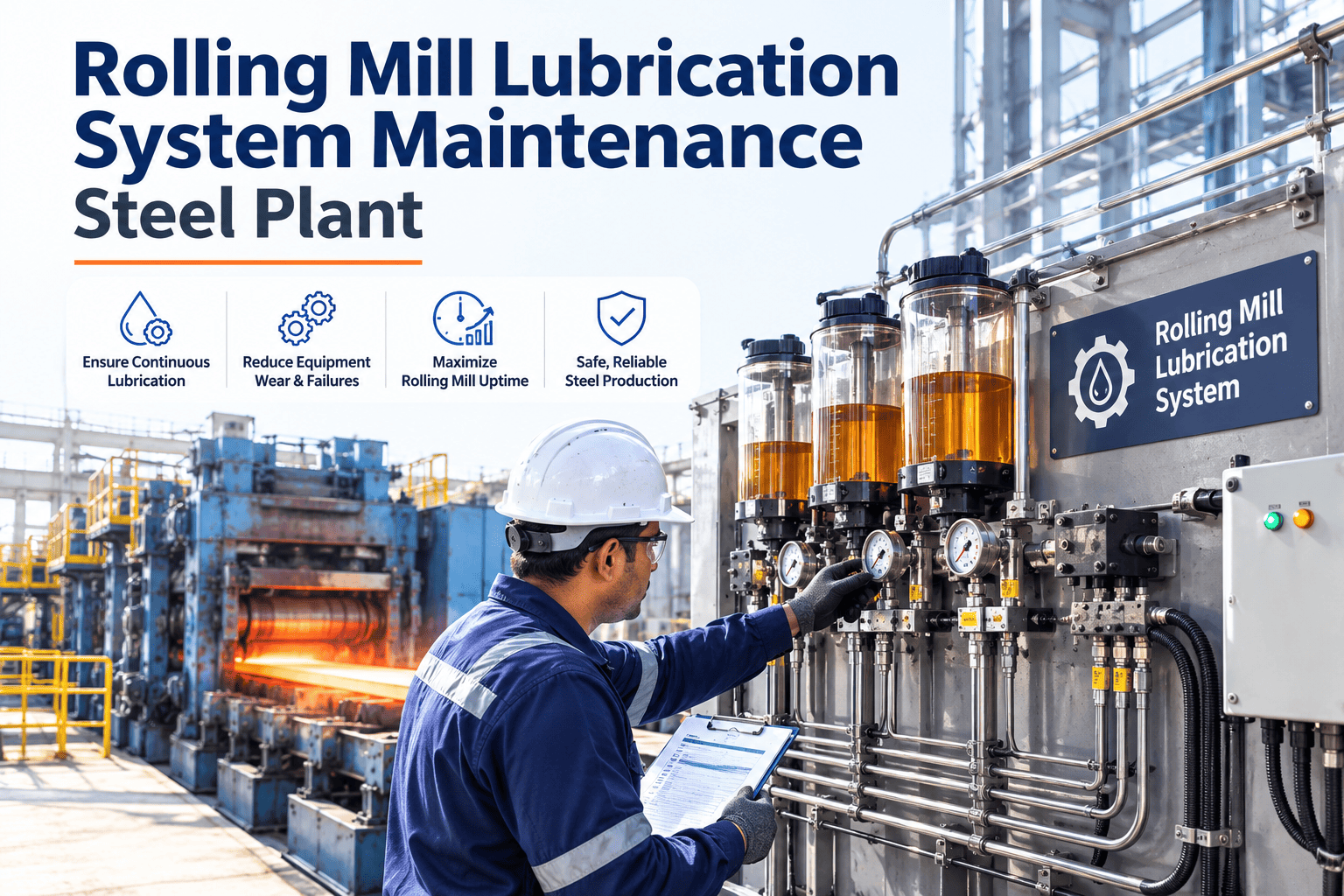
Automatic lubrication systems (centralized grease systems, single-point lubricators) send low-level and fault alerts directly to OxMaint. When a lubricator runs low or a line blockage occurs, OxMaint creates a work order automatically. Reservoir refill tasks are generated based on consumption rate — ensuring automatic systems are never starved.
What is the ROI of a world-class lubrication program in a steel plant?
A 500-bearing steel plant typically achieves $500K–$1.5M annual savings through: 65% reduction in bearing failures ($150K–$400K), extended gearbox life ($200K–$600K), reduced lubricant consumption ($50K–$150K), and lower emergency repair premiums ($100K–$350K). OxMaint's lubrication module typically pays for itself in 4-8 months through reduced bearing failures alone.
Implement World-Class Lubrication Management. Reduce Bearing Failures by 65%.
OxMaint's lubrication module automates oil analysis routing, tracks ISO cleanliness targets, generates greasing work orders with QR confirmation, and triggers oil change alerts when lubricant degrades. Free to start.