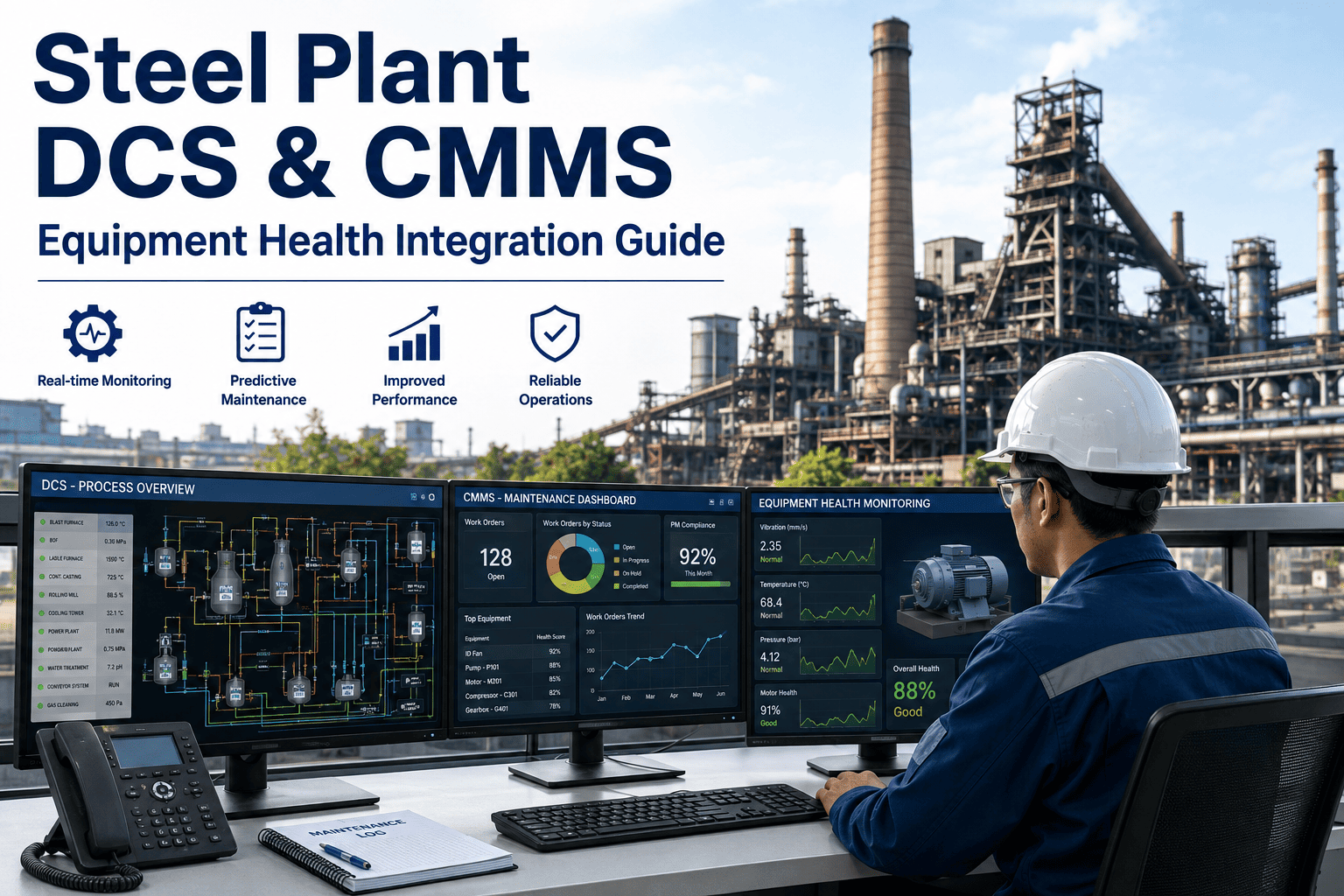
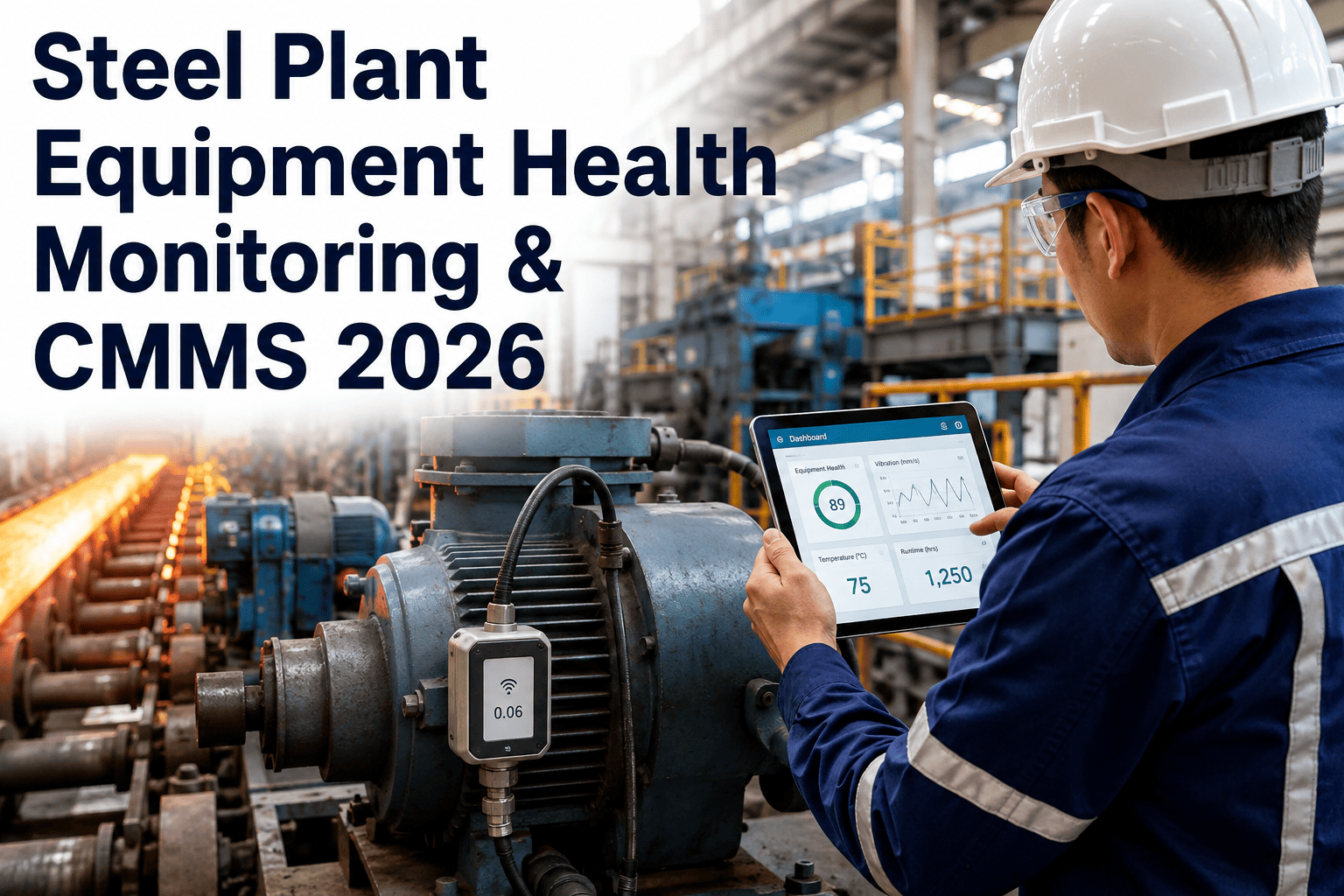
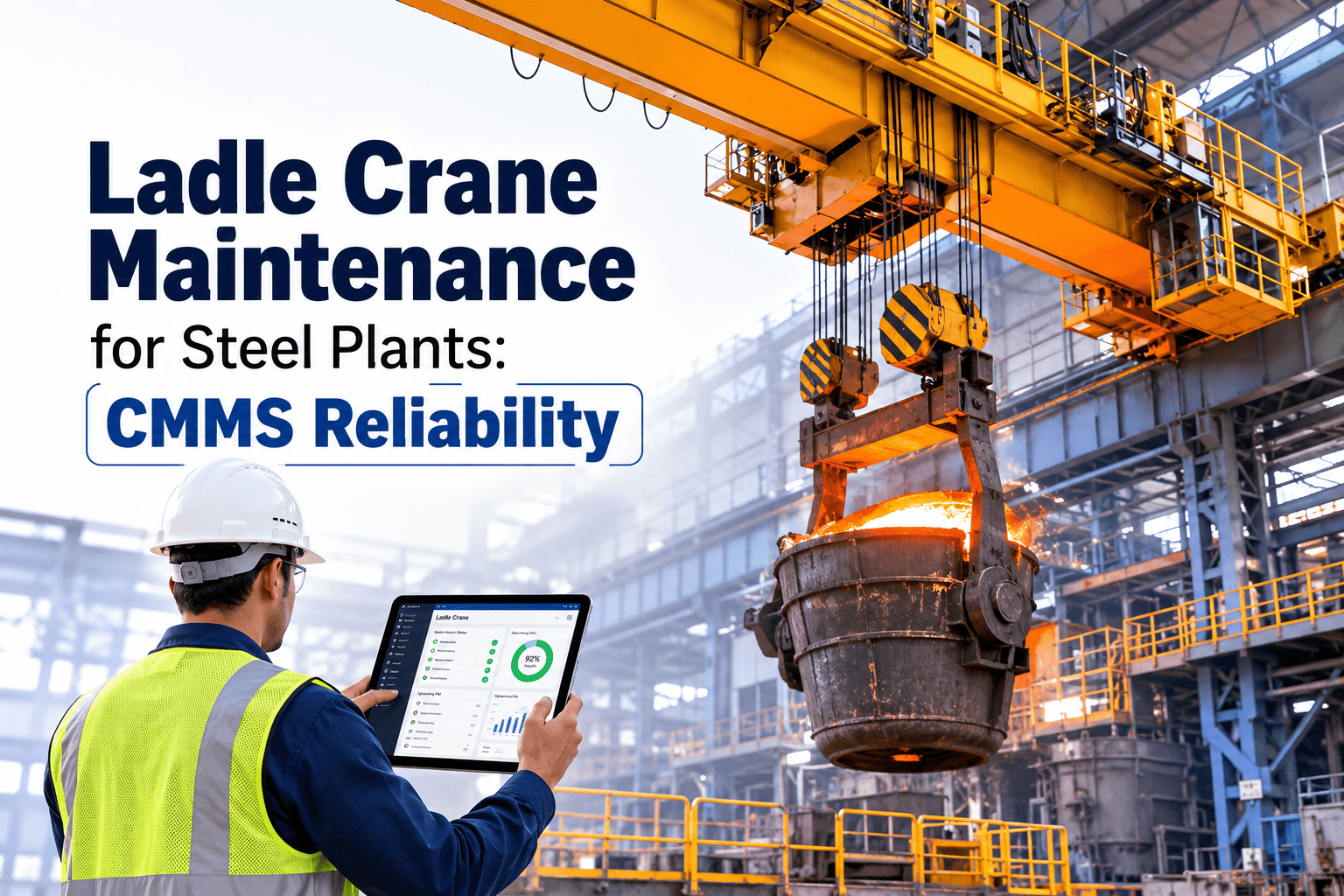
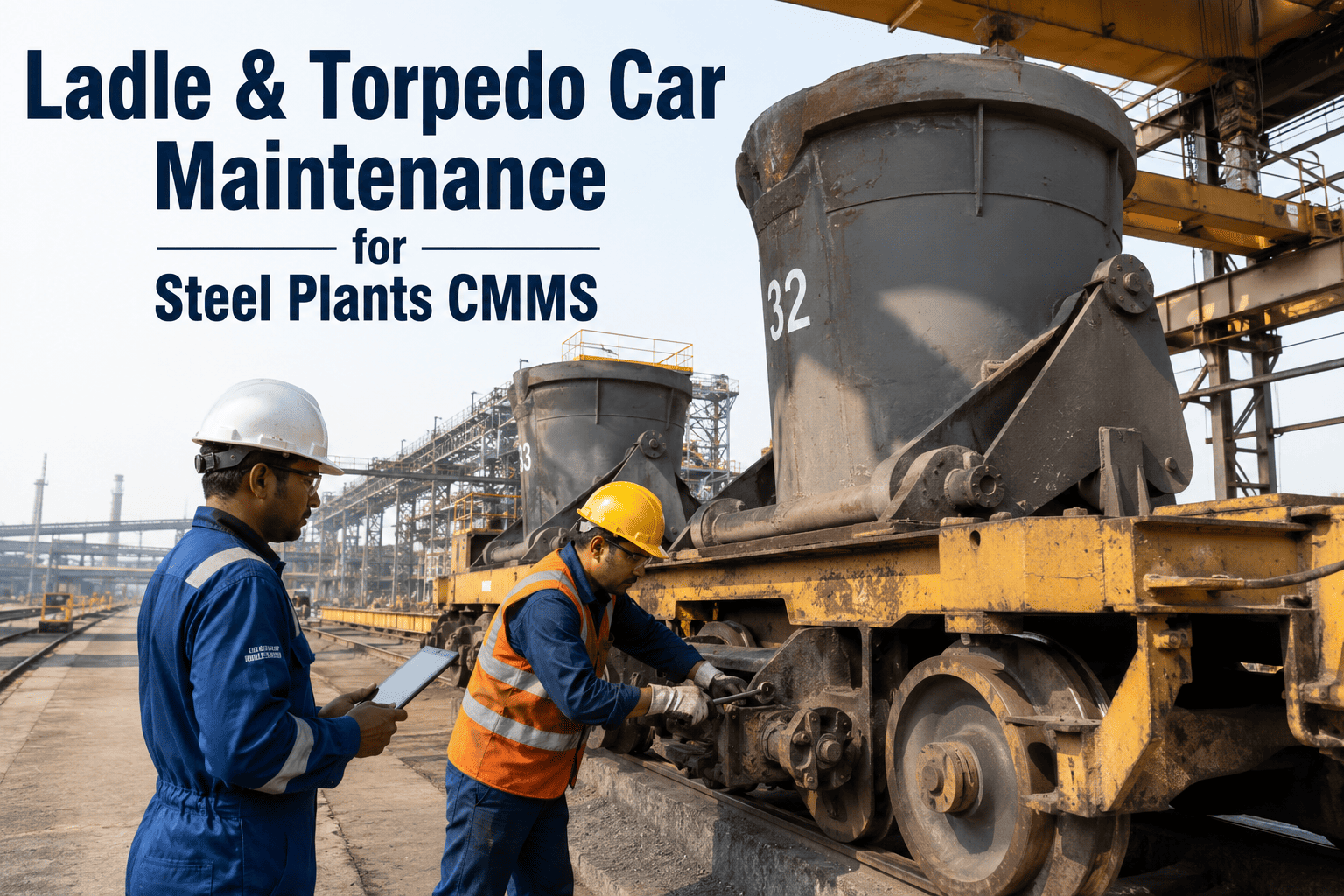
Inside every steel plant, there's a hidden operation running 24/7 that rarely gets the attention it deserves — logistics. Overhead cranes haul 300-tonne ladles of molten steel. Conveyors move thousands of tonnes of ore, coke, and slab every shift. Transfer cars shuttle materials between furnaces and casters. Locomotives push ladle cars through blind curves at walking speed. When any one of these systems fails, it doesn't just delay a delivery — it breaks the entire production chain. A seized crane bearing means molten steel has nowhere to go. A snapped conveyor belt shuts down raw material supply to the blast furnace. A derailed transfer car blocks the melt shop for hours.
Yet most steel plants still treat logistics equipment as secondary to production assets. Maintenance budgets pour into furnaces and rolling mills while cranes, conveyors, rail systems, and mobile equipment run on reactive fixes and stretched-out inspection cycles. The result? Logistics breakdowns now account for some of the most expensive and most preventable downtime events in modern steelmaking. It's time to treat the equipment that moves your steel with the same discipline you give the equipment that makes it.
The Logistics Equipment That Keeps Steel Moving
A steel plant is essentially a massive logistics operation disguised as a manufacturing facility. Dozens of specialized systems work in coordination to move raw materials in, shift molten metal between processes, and get finished products out. Here's the equipment your maintenance team needs to keep running:
Overhead Cranes
Ladle cranes, charging cranes, slab cranes, and coil cranes — the backbone of intra-shop material movement. Operating at up to 500+ tonnes in extreme heat near molten metal.
Belt Conveyors
Moving iron ore, coal, limestone, and sinter across kilometres between stockyards and furnaces. Running continuously in dusty, abrasive conditions that destroy components fast.
Transfer Cars
Ladle transfer cars, tundish cars, coil cars, and scrap buckets — moving 5 to 500 tonnes between workstations on rail systems through the hottest zones of the plant.
Rail & Locomotive Systems
Hundreds of kilometres of internal rail network, fleets of locomotives, ladle cars, and torpedo wagons carrying hot metal — with derailment risk at every curve.
Roller Tables & Cooling Beds
Motorized roller conveyors and cooling beds in rolling mills — handling red-hot slabs and billets at high speed, with drives and bearings exposed to extreme thermal stress.
Mobile Equipment
Forklifts, dumpers, wheel loaders, mobile cranes, and pneumatic carriers. The road-based fleet handling everything that doesn't move by rail or conveyor.
Why Logistics Equipment Breaks Down First
Production equipment like furnaces and rolling mills gets the headlines — and the maintenance budgets. But logistics assets often fail faster because they face a unique combination of abuse that most maintenance programs underestimate:
The Real Cost When Logistics Equipment Fails
A logistics failure doesn't just affect one machine — it creates a domino effect across the entire plant. When material can't move, production stops everywhere.
Typical Crane Failure Recovery
When a ladle crane goes down, molten steel schedules freeze. Recovery involves cooling, diagnostics, part sourcing, and testing — all while production bleeds money by the hour.
Conveyor Downtime Cost
A single belt failure cascades through the raw material chain — blast furnaces lose feed, sinter plants back up, and stockyard operations grind to a halt within minutes.
Derailment Blockage Time
A ladle car derailment inside the melt shop can block operations for hours. Rerailing heavy equipment near molten metal requires specialized hydraulic equipment and extreme caution.
Stop Letting Logistics Failures Shut Down Production
Every crane breakdown, conveyor failure, and derailment was preventable with the right maintenance data. Oxmaint gives your logistics equipment the same attention your production assets get.
Maintenance Priorities by Equipment Type
Each category of logistics equipment has its own failure modes, inspection frequencies, and critical spare parts. A one-size-fits-all maintenance approach doesn't work — here's what each system actually needs:
| Equipment | Top Failure Modes | Critical Maintenance Actions |
|---|---|---|
| Overhead Cranes | Wire rope fatigue, brake wear, hoist motor overheating, rail misalignment | Monthly rope inspection, quarterly brake testing, vibration monitoring on motors |
| Belt Conveyors | Belt splice failure, idler seizure, pulley lagging wear, misalignment/tracking | Weekly belt inspection, idler condition monitoring, thermal scanning on drives |
| Transfer Cars | Wheel wear, drive motor failure, rail damage, electrical faults from heat | Pre-shift inspections, wheel profile measurement, heat shielding checks |
| Rail Systems | Track gauge widening, rail wear, turnout failures, signal malfunctions | Periodic track gauge measurement, rail head inspection, lubrication program |
| Roller Tables | Bearing failure from thermal cycling, drive chain wear, roller surface damage | Vibration monitoring, thermal imaging, drive chain tension checks |
| Mobile Fleet | Tire wear, hydraulic leaks, engine overheating, brake system failures | Daily pre-trip inspections, scheduled fluid analysis, brake testing program |
Want a customized maintenance plan for your logistics fleet? Schedule a free demo and we'll build it with you.
Results You Can Measure
When steel plants bring their logistics equipment under proper CMMS management with scheduled inspections, predictive monitoring, and data-driven spare parts planning, the numbers speak for themselves:
Based on industry benchmarks for steel plant material handling operations. Results vary by plant size and current maintenance maturity.
See What Proactive Logistics Maintenance Looks Like
Book a personalized demo and we'll show you exactly how Oxmaint manages cranes, conveyors, transfer cars, and rail systems — all from one platform your entire team can access.
How Oxmaint Manages Logistics Equipment
Oxmaint is built for the complexity of steel plant logistics — where a single platform needs to handle everything from a 500-tonne ladle crane to a fleet of forklifts. Here's how it works:
Register Every Asset
Build a complete digital registry of all logistics assets — cranes, conveyors, transfer cars, locomotives, mobile equipment — with QR codes, location mapping, and criticality ratings.
Schedule Inspections & PMs
Set up equipment-specific preventive maintenance schedules — daily pre-trip checks for mobile fleet, weekly belt inspections, monthly crane rope tests — with automatic work order generation.
Monitor & Alert
Connect sensor data for vibration, temperature, and runtime. Get automatic alerts when crane motors overheat, conveyor belts mistrack, or transfer car wheels exceed wear limits.
Analyze & Optimize
Unified dashboards show MTTR, MTBF, cost per asset, and availability across all logistics equipment. Identify your worst performers, optimize spare parts inventory, and plan capital replacements.
Before vs. After: Logistics Maintenance Transformation
Still running logistics maintenance on paper and memory? Sign up now and bring every crane, conveyor, and transfer car under one system.
Frequently Asked Questions
Can Oxmaint handle all types of logistics equipment?
Yes. Oxmaint manages overhead cranes, conveyors, transfer cars, rail systems, roller tables, mobile fleets, and any other material handling asset — all from a single platform with equipment-specific inspection templates.
How fast can we deploy for our logistics fleet?
Most steel plants have their logistics equipment registered and running on Oxmaint within 2 to 4 weeks. QR code tagging, inspection templates, and PM schedules can be set up in phased rollouts by equipment category.
Does it work on the plant floor?
Absolutely. Oxmaint is mobile-first with offline capability. Technicians log inspections, scan QR codes, and update work orders from smartphones — even in low-connectivity zones near furnaces and melt shops.
Can it integrate with our existing ERP?
Yes. Oxmaint provides open API integration with SAP, Oracle, Microsoft Dynamics, and more. Maintenance costs, spare part orders, and asset data sync automatically between your CMMS and ERP systems.
Give Your Logistics Equipment the Maintenance It Deserves
Your cranes, conveyors, and transfer cars keep steel moving. Oxmaint keeps them running. Deploy in weeks, see results from day one, and eliminate the logistics failures that shut down your production.