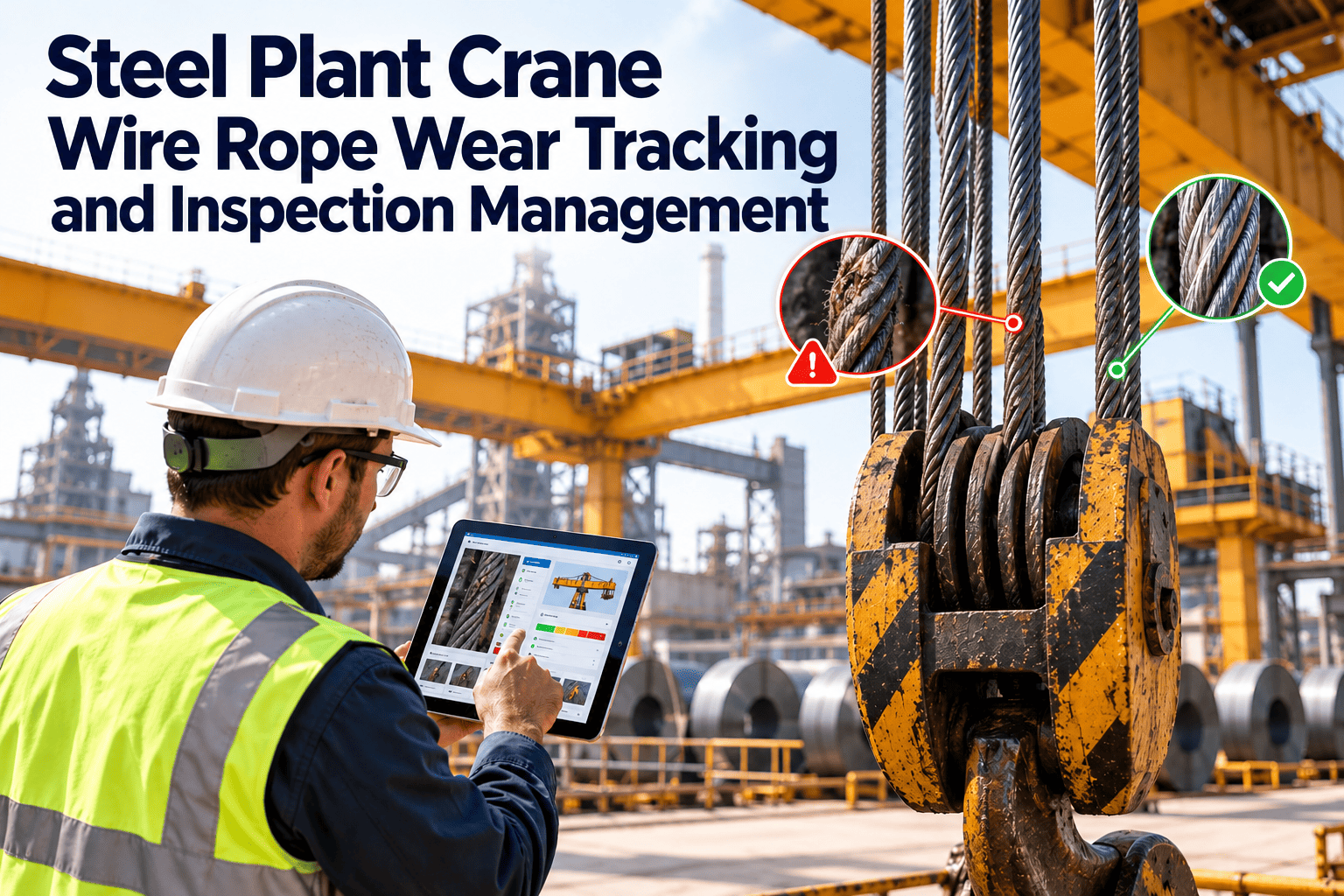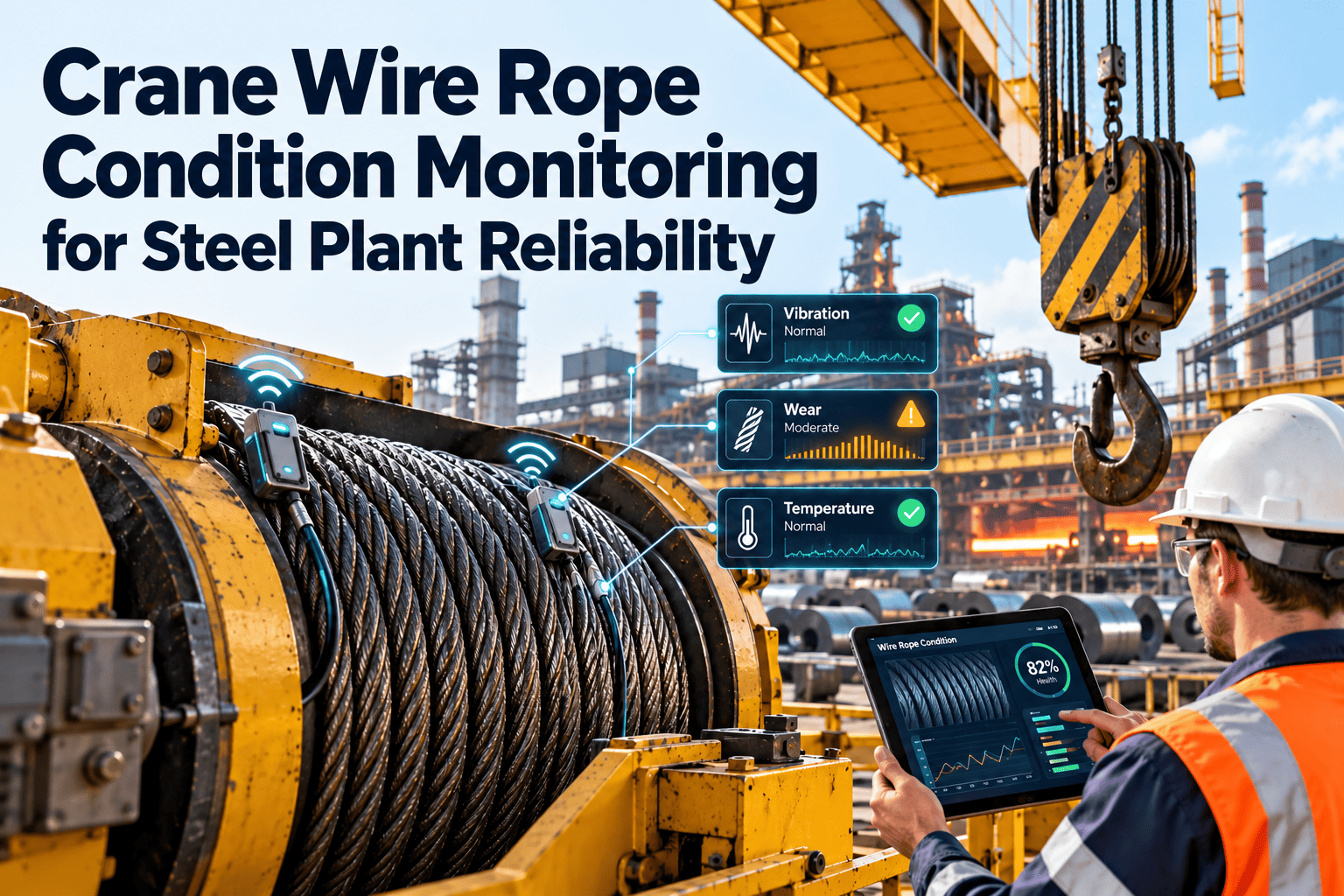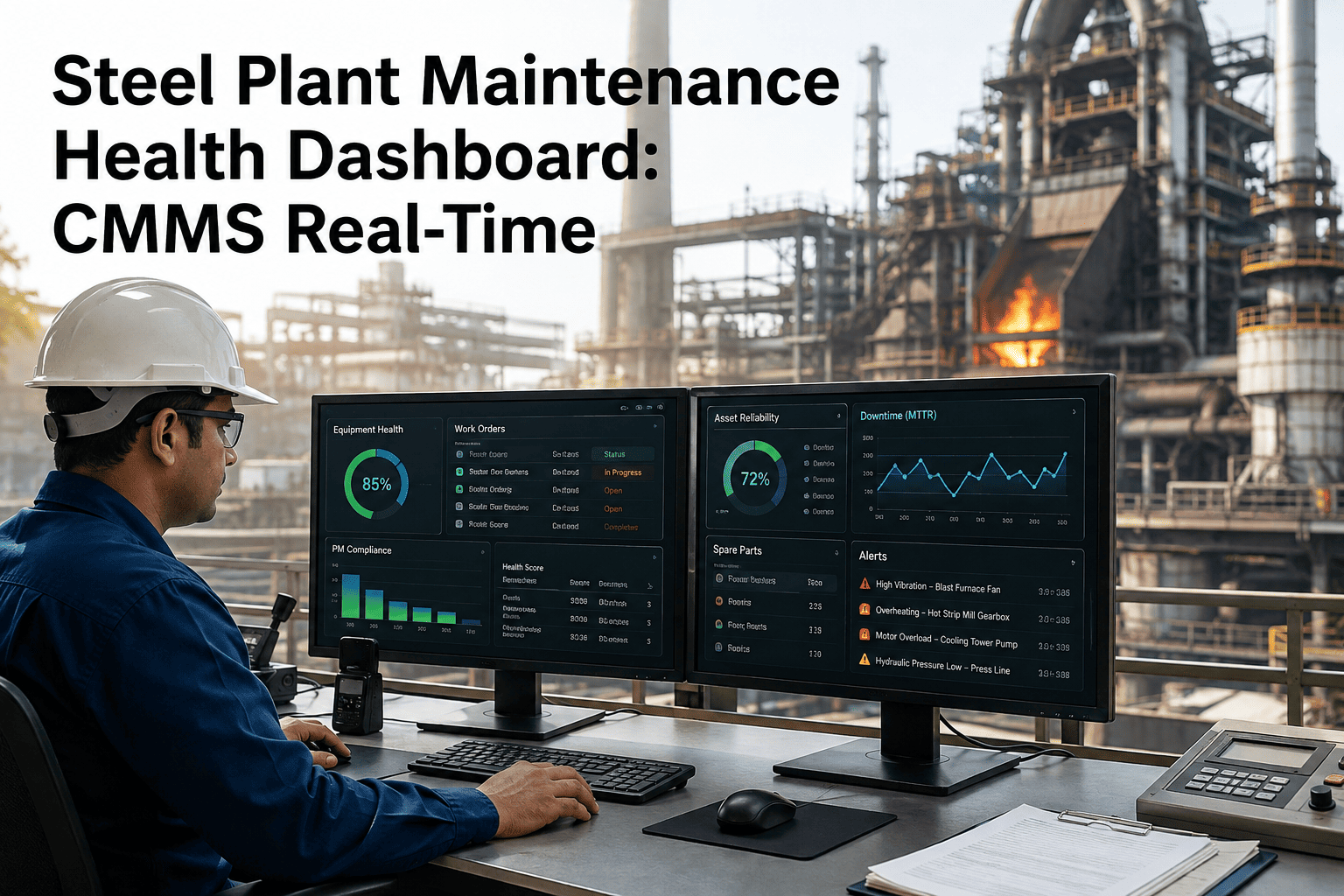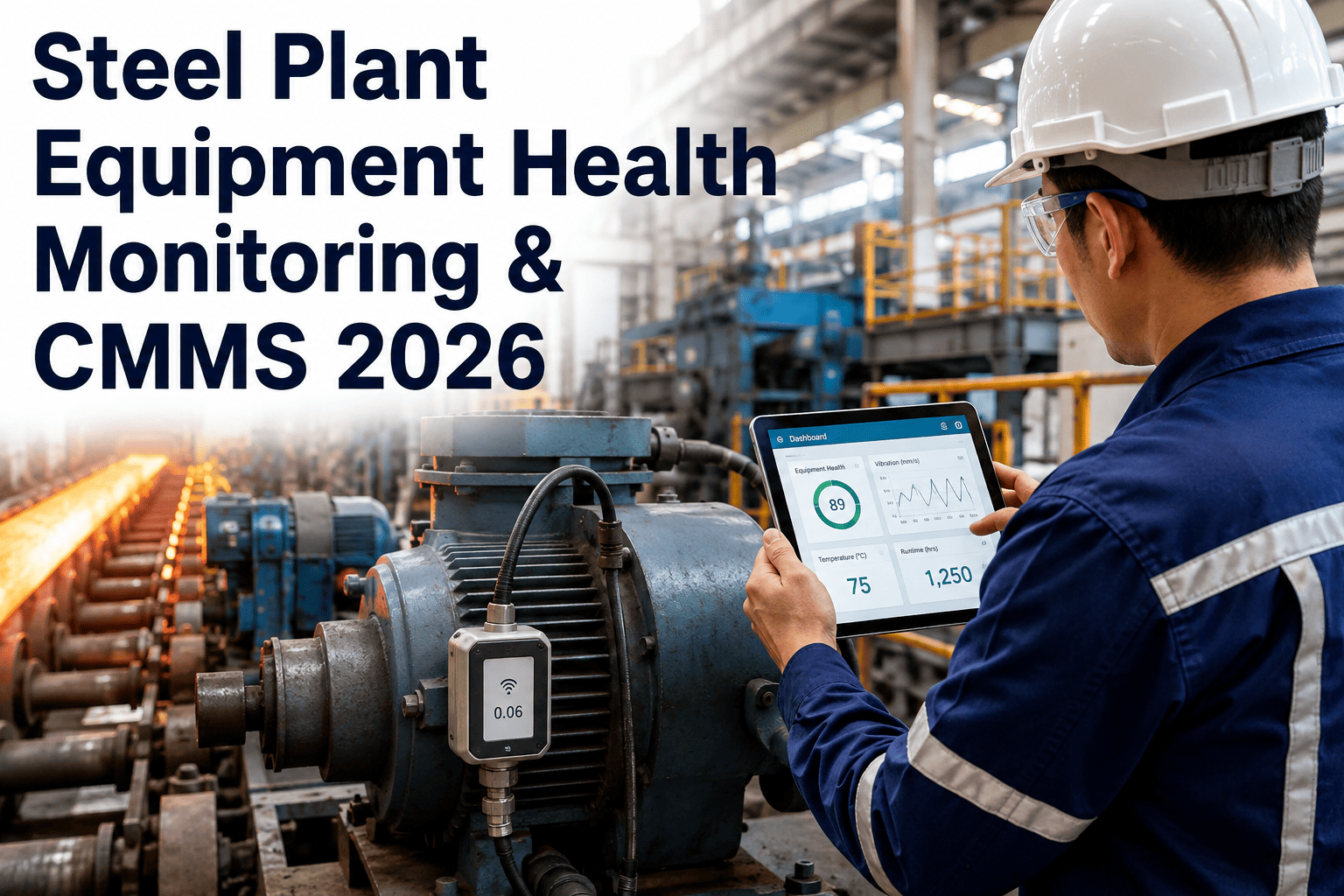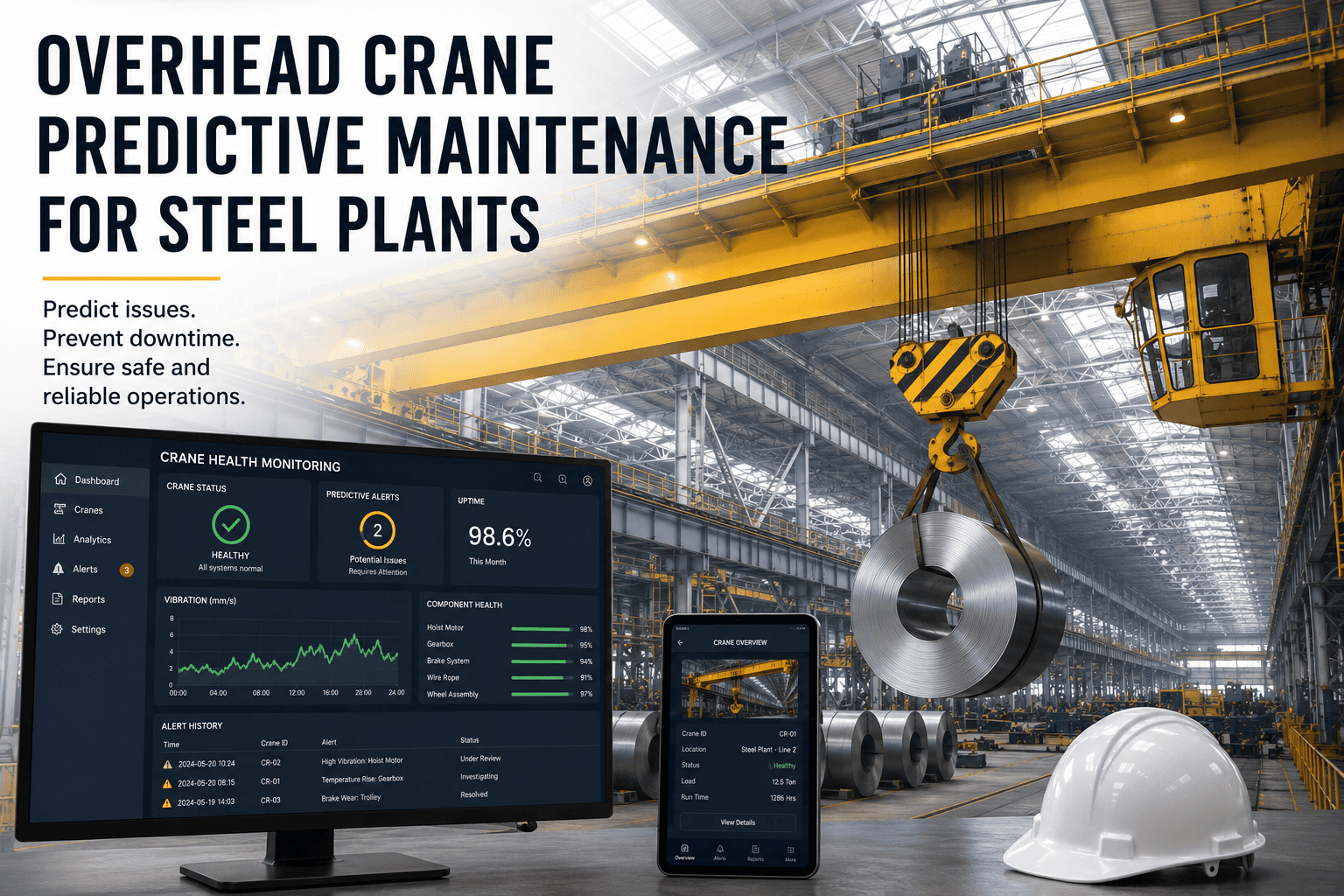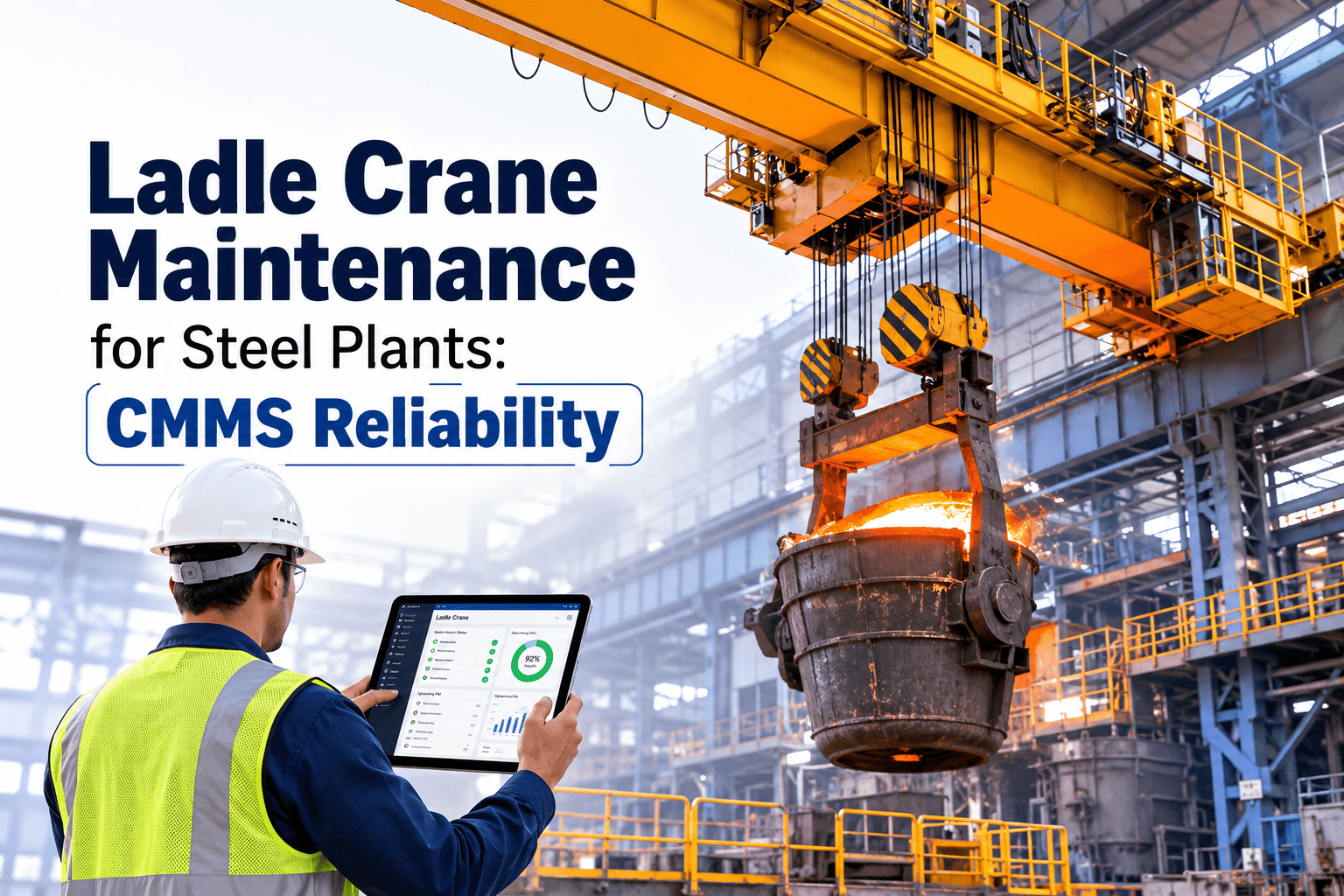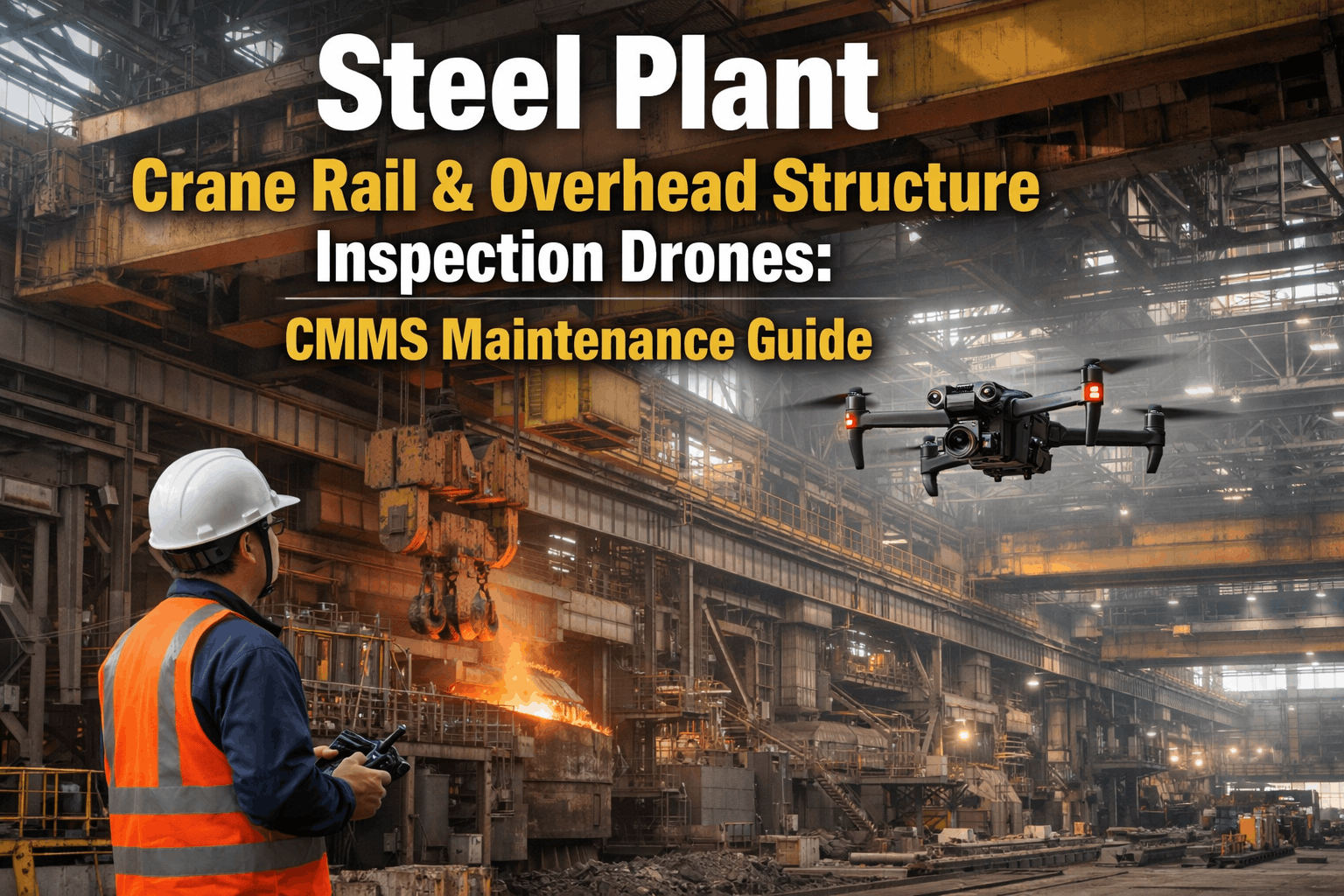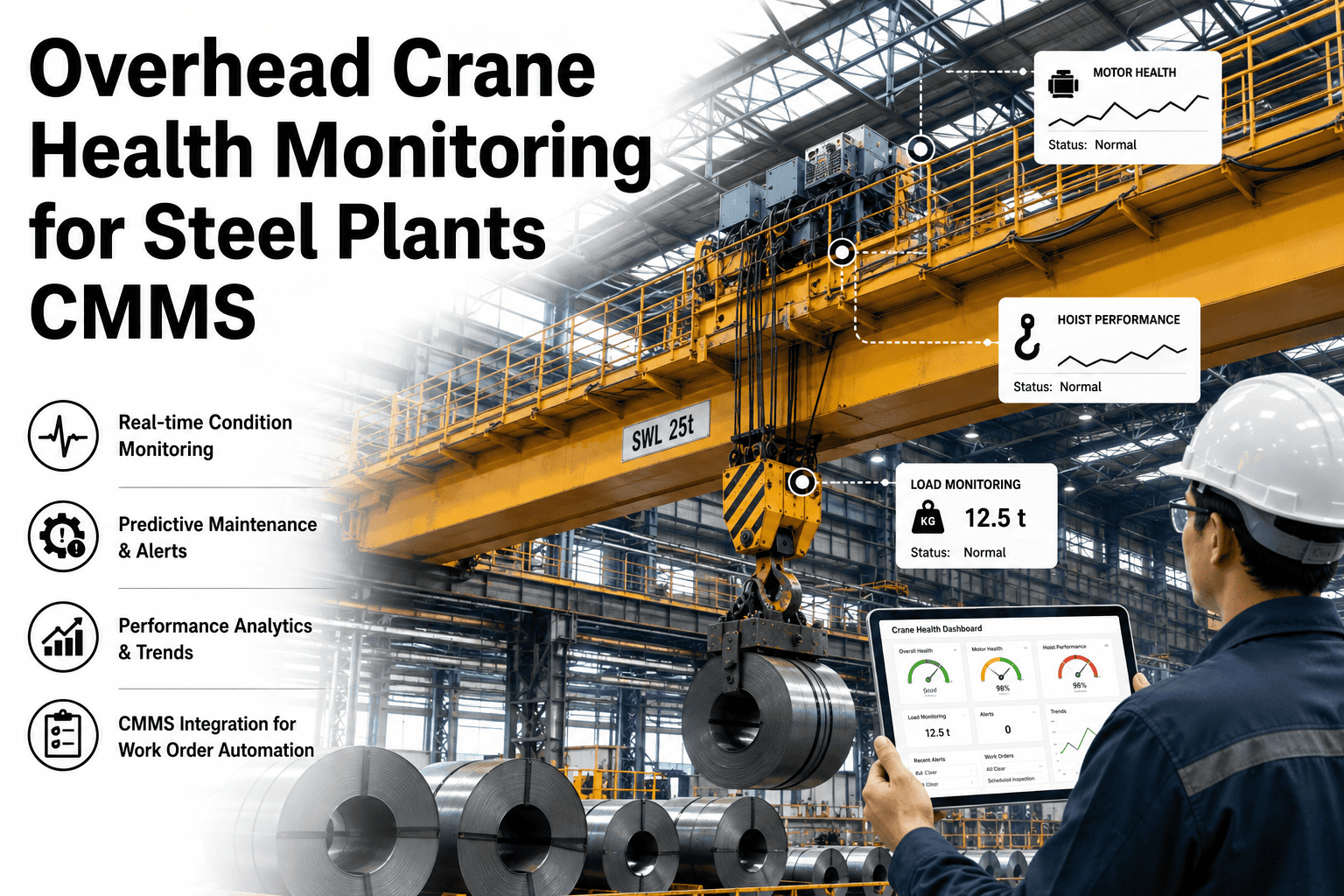
Ladle cranes, charging cranes, and slab-handling overhead cranes carry molten metal and multi-ton loads across live steel plant floors on every shift, and a single undetected fault in a brake, wire rope, or hoist motor can turn a routine lift into a safety incident or a production-halting breakdown. Manual inspection catches obvious wear, but it cannot see internal wire rope damage, brake response drift, or bearing fatigue building up between checks. Continuous crane health monitoring closes that gap by tracking hoist motor vibration, wire rope condition, brake performance, wheel bearings, and structural fatigue around the clock, turning every reading into an actionable work order before it becomes a shutdown. This guide walks through what to monitor, how the detection methods work, and what the payoff looks like on a steel plant floor, and you can book a demo to see it running on your own crane data.
How Crane Health Monitoring Works
Continuous monitoring platforms combine sensor hardware, edge processing, and duty-class-aware analysis to turn raw crane readings into a clear picture of what needs attention and when.
Monitoring & Analysis Capabilities
A continuous monitoring platform covers every system that determines whether a crane fails safely and predictably, or suddenly and without warning.
Alert Threshold Configuration
Different crane components need different sensing methods and trigger points. Understanding these thresholds helps maintenance teams set alerts that catch real problems without drowning in false alarms.
| Component | Monitored Parameter | Detection Method | Alert Trigger |
|---|---|---|---|
| Wire Rope | Metallic cross-section loss, broken wires | Electromagnetic (MRT) scan | Metallic area loss beyond safe discard limit |
| Brake System | Opening current, response time, lining wear | Continuous current and timing sensors | Response delay or lining wear crosses safety threshold |
| Hoist Motor | Vibration signature, winding temperature | Vibration and thermal sensors | Vibration or temperature trend drifts from baseline |
| Wheels & Bearings | Lateral flange load, rotation smoothness | Load and vibration sensors | Sustained rise in lateral load |
| Girder & Structure | Strain, deflection under load | Periodic strain gauge inspection | Deflection or strain beyond design tolerance |
Scheduled Inspection vs Continuous Health Monitoring
Understanding the practical difference between periodic checks and continuous monitoring shows why steel plants are moving away from calendar-based inspection alone.
- Wire rope checked visually at set intervals only
- Brake wear caught only at scheduled tests
- Motor issues surface as sudden, unplanned trips
- Findings sit in paper logs, disconnected from work orders
- Wire rope condition tracked between inspections
- Brake response drift flagged as it starts
- Motor wear trends visible weeks ahead of failure
- Every alert becomes a scheduled CMMS work order
Monitoring Priority by Crane Type
Not every crane in a steel plant needs the same level of instrumentation. Duty class and how often a crane lifts near capacity should drive where monitoring budget goes first.
| Crane Type | Typical Duty Class | Monitoring Priority | Primary Risk |
|---|---|---|---|
| Ladle Crane | Continuous heavy duty | Full instrumentation on rope, brake, motor | Wire rope fatigue, brake failure under load |
| Charging Crane | Continuous, high-cycle | Full instrumentation, high-cycle monitoring | Motor overheating, structural fatigue |
| Slab & Coil Handling | Heavy, repetitive duty | Rope and wheel monitoring priority | Wheel wear, rope wear from repetitive cycles |
| Maintenance & Standby | Light, intermittent duty | Scheduled inspection with spot sensors | Corrosion during idle periods |
Outcomes After Switching to Continuous Monitoring
The financial and safety case for continuous crane health monitoring compounds across downtime avoided, energy saved, and failures caught before they happen.
Deployment Roadmap
Rolling out crane health monitoring across a steel plant works best as a phased build, so the highest-risk cranes get covered first while the rest of the fleet follows on a predictable schedule.