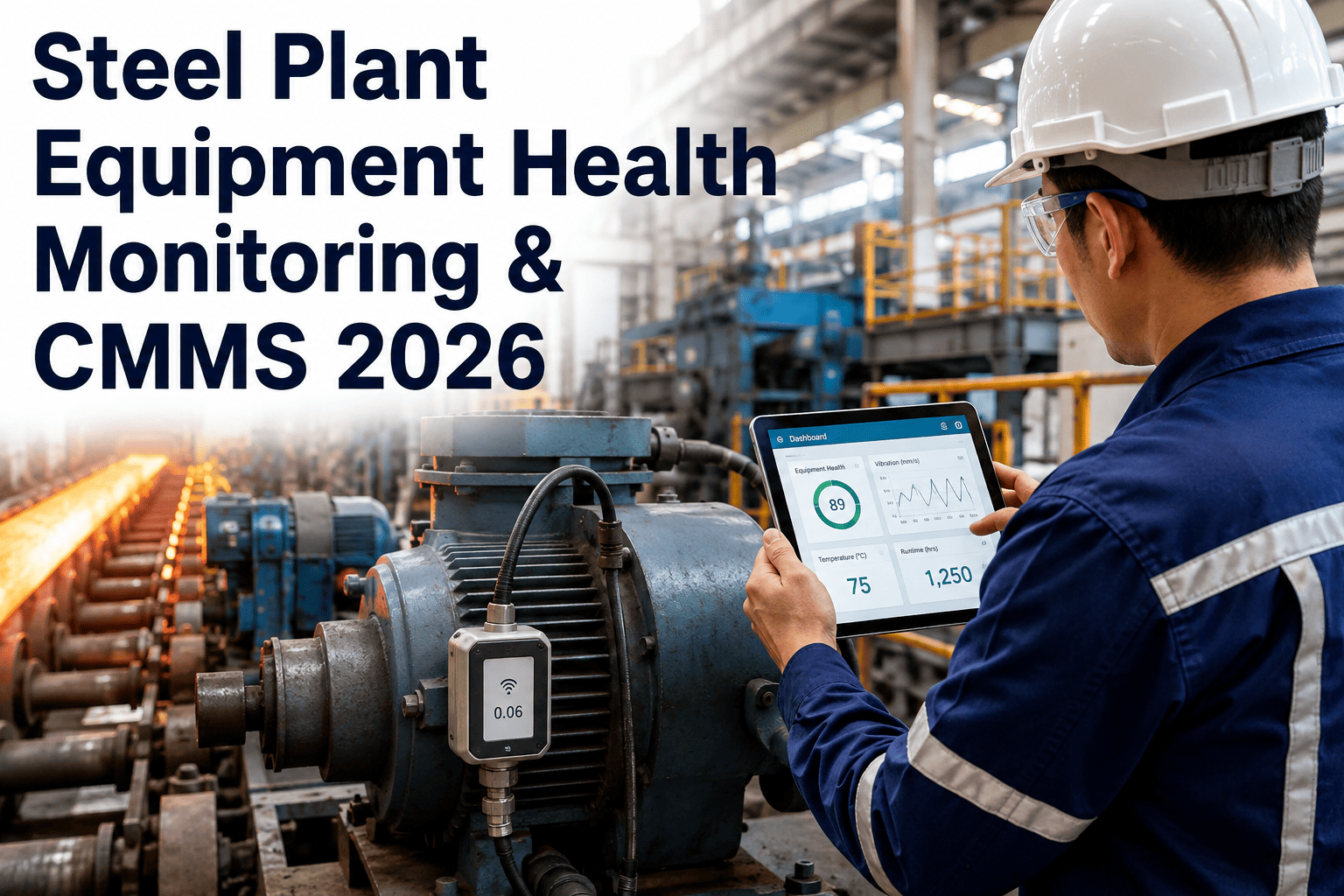
Steel Plant Equipment Health Monitoring & CMMS 2026

By Corin Hale on August 6, 2026

steel-plant-equipment-health-monitoring-cmms-2026

Steel plants run some of the toughest equipment on earth — blast furnaces holding 20 million tons of campaign life, casters where one bearing failure turns into a six-figure breakout, and rolling mills where a seized chock halts the entire line. Waiting for equipment to fail before reacting is not viable when every hour of unplanned downtime can cost hundreds of thousands of dollars. Equipment health monitoring changes that equation by scoring the real-time condition of every critical asset — stave, mold, roll, and crane — long before failure shows up on the shop floor. Schedule a consultation to see how a health-monitoring driven CMMS fits your plant.

Why Equipment Health Monitoring

Manual rounds and calendar-based PM catch what a technician can see on a walkthrough. Most failures in a blast furnace, caster, or rolling mill start weeks earlier — inside data the plant is already collecting.

The Case For Health Scoring
1-4 hrs
Detection window for a blast furnace stave breach signature before it becomes a shutdown
91-97%
Detection accuracy achieved by AI health scoring models on trained furnace and mill assets
60-80%
Reduction in caster breakout events once condition-based monitoring replaces fixed schedules
20-40%
Extension in bearing and roll service life through condition-based rather than calendar-based swaps
Turn every sensor reading into a prioritized asset health score your team can act on today.

Health Monitoring Platform Components

A working health monitoring layer connects five pieces — from raw sensor signal to a work order a technician can act on the same shift.

From Sensor Signal To Work Order
01
Sensor Network
Thermocouples, vibration transducers, strain gauges, and thermal cameras already installed across furnace, caster, and mill zones capture condition signals continuously.
02
Edge & Historian Ingestion
Edge devices and the plant historian stream this data at sub-second to per-minute intervals into the health monitoring layer through OPC-UA and MQTT.
03
Health Scoring Models
Physics-informed and machine-learning models fuse multiple signals into one composite health score per asset, trained on 12-24 months of history.
04
Anomaly Classification
Deviations are classified by severity and likely failure mode, separating a sensor glitch from a genuine early warning worth acting on.
05
Integration & Action
Scores that cross threshold auto-generate a CMMS work order with the sensor trend attached. Sign up for OXmaint to centralize health scores across every production zone.

Health Monitoring Capabilities

Different failure modes leave different signatures. A health monitoring platform needs to read all of them across the plant, not just one.

Detection & Analysis Methods
Thermal Imaging Analysis
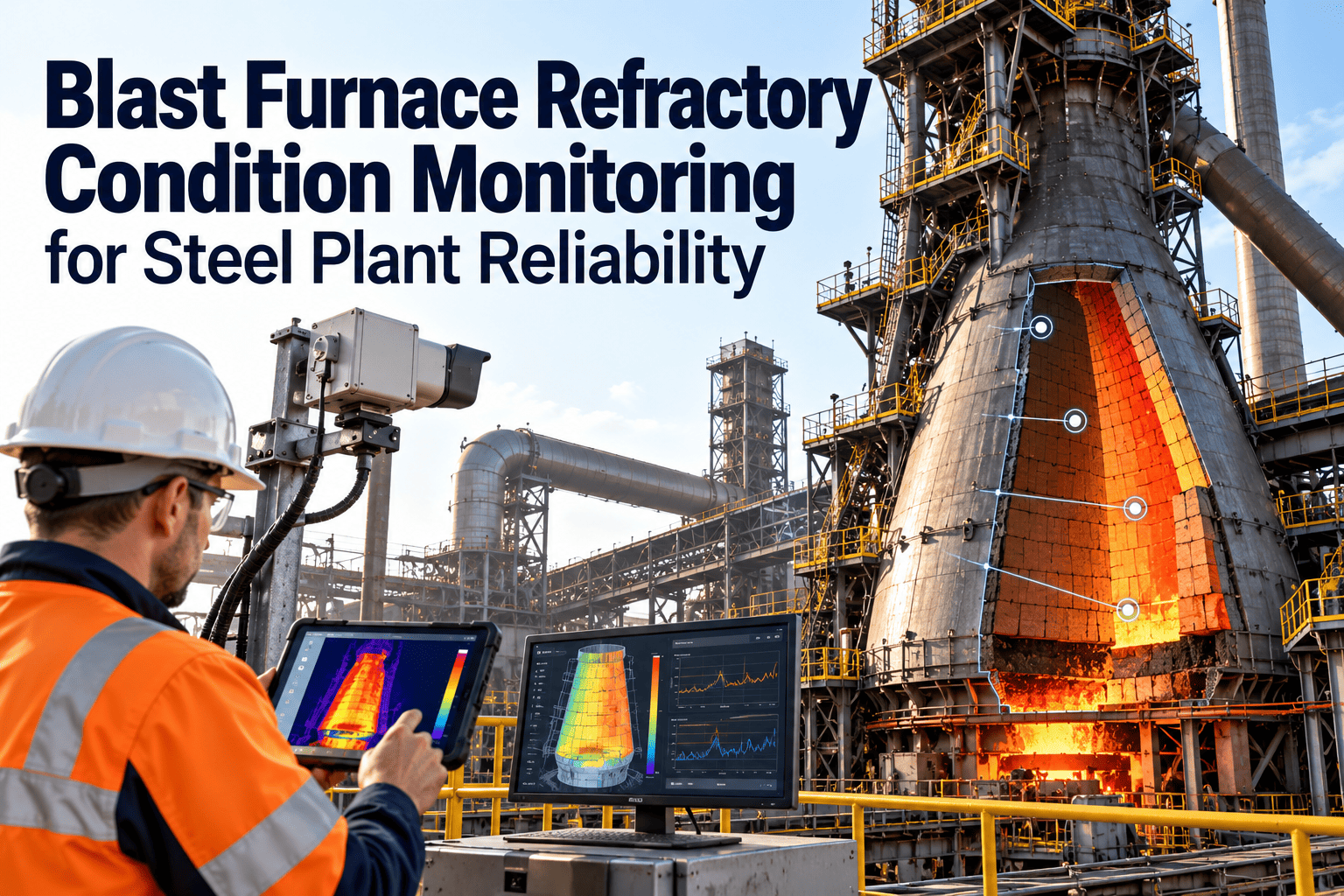
Shell hotspots and refractory hot spots reveal stave and lining failure weeks before a breakout risk.
Vibration Signature Detection
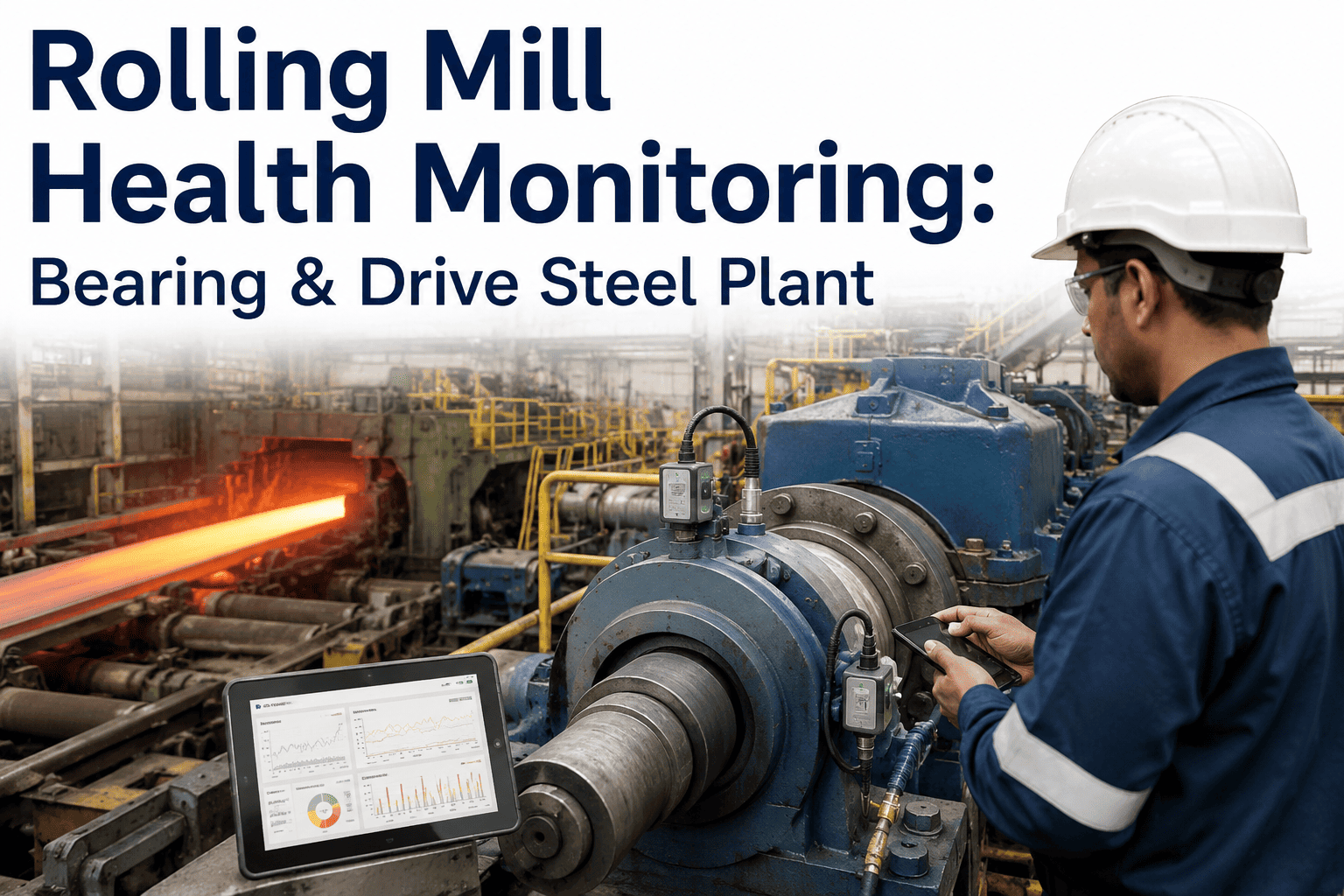
Bearing and gearbox wear patterns surface in acceleration data long before a seizure.
Oil Condition Trending
Wear particle counts in gearbox and hydraulic oil flag drive train degradation early.
Strain & Load Monitoring
Support structure strain on caster segments detects abnormal roll loading and liquid core position.
Digital Twin Forecasting
Physics-based simulations project remaining refractory and roll life on a three to six week horizon.
Multi-Sensor Health Fusion
Combining several signal types into one composite score cuts false alarms sharply.

Sensor Guide By Asset

Monitoring Method & Warning Lead Time
Asset Monitoring Method Key Signal Typical Warning Lead Time
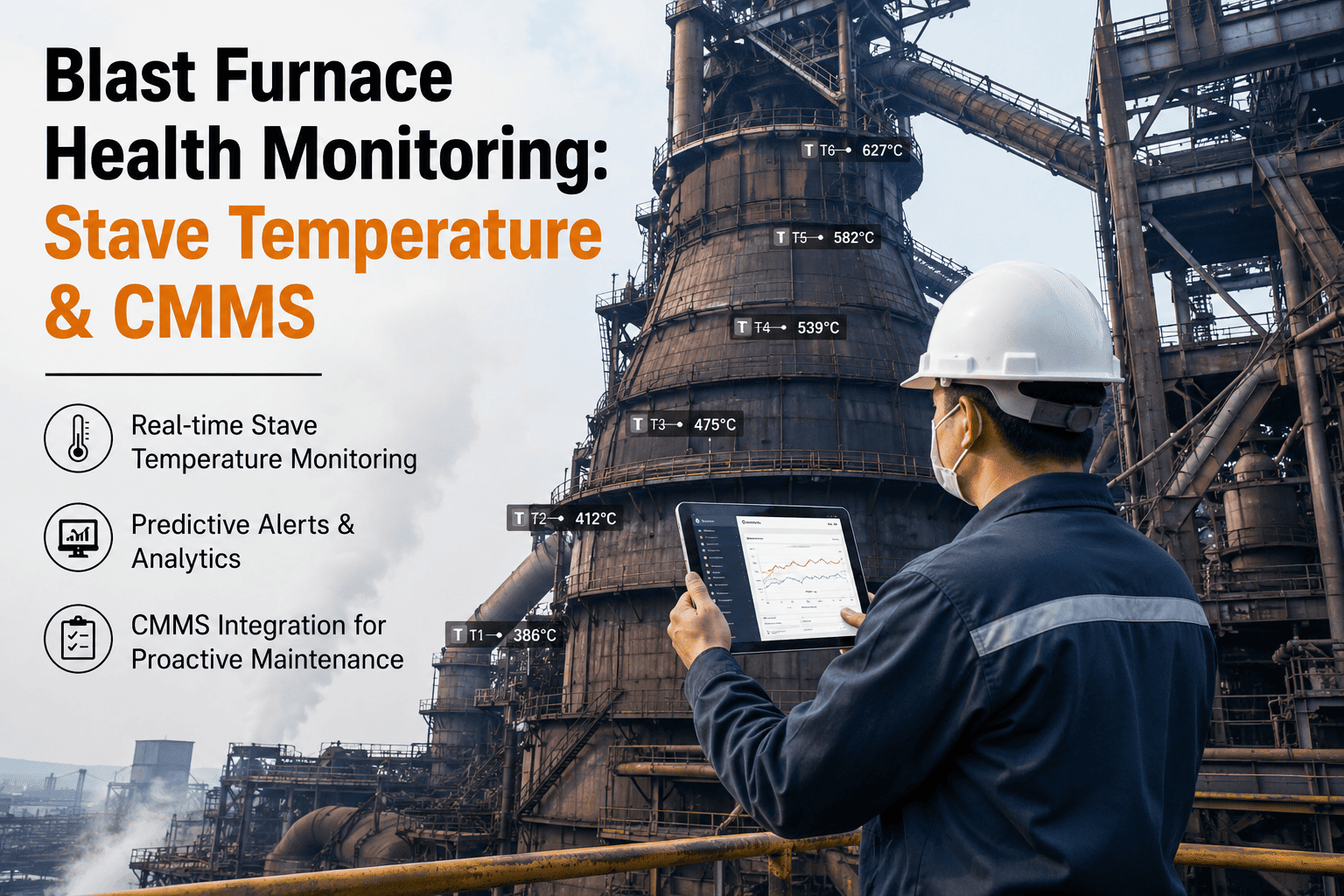
Blast Furnace Stave Cooling gallery thermocouples, thermal imaging Asymmetric outlet delta-T, shell hotspot 1-4 hrs breach / 3-6 wks wear
BOF / EAF Vessel Refractory thickness, trunnion bearing sensors Lining thinning, bearing temperature rise Campaign-length forecast
Caster Mold & Segment Mold thermocouples, segment vibration and strain Delta-T drift, bearing seizure signature 48 hrs oscillator / weeks roll wear
Rolling Mill Roll & Bearing Chock bearing temperature, gearbox oil analysis Temperature rise, wear particle count 2-3 weeks
Overhead Crane Wire rope inspection, hoist brake sensors Rope degradation, brake wear Scheduled certification cycle
Reheat Furnace Refractory thermal imaging, burner monitoring Lining hot spots, burner drift Heat-cycle based
Warning lead times vary by furnace design, campaign age, and how much historical data the health model has trained on.

Reactive Maintenance vs Health-Score Maintenance

What Changes When You Switch
Reactive Maintenance
Calendar-based PM regardless of actual condition
Inspection limited to planned outage windows
Single-sensor alarms with high false-positive rates
Bearings and rolls replaced on a fixed schedule
Little visibility into what actually caused a failure
15-25 breakout events per year
Health-Score Maintenance
Continuous multi-sensor condition scoring
Alerts generated before symptoms hit the HMI
Composite scores fusing vibration, heat, and oil data
Replacement scheduled around real remaining life
Digital twins forecast remaining life 3-6 weeks out
3-8 breakout events per year
See Your Plant's Health Score Live
OXmaint connects the sensors, historians, and digital twins your plant already runs into one health-scored CMMS — so a stave, a segment roll, or a crane rope gets flagged before it becomes downtime.

Health Monitoring By Plant Zone

Coverage Across Ironmaking To Material Handling
Zone Primary Assets Key Monitoring Focus Business Impact
Ironmaking Blast furnace staves, tuyeres, hot blast valves Cooling gallery delta-T, shell thermal imaging Avoided stave breach, extended campaign life
Steelmaking BOF/EAF vessel, trunnion bearings, electrodes Refractory thickness, bearing temperature Reline timing accuracy, fewer emergency repairs
Casting Mold, segment rolls, strand guide Mold delta-T, segment vibration and strain Breakout prevention, improved slab quality
Rolling Work rolls, chock bearings, gearboxes Bearing temperature, oil wear particles Fewer unplanned roll changeouts, higher yield
Material Handling Overhead cranes, ladles, hoists Wire rope condition, hoist brake wear Certification compliance, avoided crane downtime

Return On Health Monitoring

What Plants Report After Rollout
70%
Reduction in breakout events
30%
Extended bearing and roll life
45%
Faster root cause identification
90%
Detection accuracy on trained assets

System Performance Requirements

What A Reliable Platform Needs
Sensor Coverage
Continuous data capture across thermocouples, accelerometers, and strain gauges already installed in most plants.
Processing Latency
Composite health scores update within seconds of new sensor data arriving in the historian.
Model Accuracy
91-97% detection accuracy on assets with twelve or more months of training history.
System Reliability
Redundant data feeds and tuned thresholds keep false-positive rates low across every shift.
When a rolling mill bearing or a caster segment roll starts to fail, the signs show up in vibration and temperature data long before anyone sees smoke or hears a bang. Health scoring turns that early signal into a scheduled repair instead of an emergency stop.
Plant Reliability Manager, Integrated Steel Mill

Rolling Out Health Monitoring

Typical Deployment Timeline
Week 1-2
Sensor Audit & Baseline
Audit existing thermocouples and vibration sensors, close instrumentation gaps, recalibrate.
Week 3-4
Data Integration
Connect DCS and historian feeds into the CMMS through standard industrial protocols.
Week 5-7
Health Model Training
Train scoring models on 12-24 months of historical data and tune alert thresholds.
Week 8+
Live Monitoring & Scaling
Go live on the highest-criticality assets first, then expand fleet-wide by zone.

Connecting Health Data To Other Systems

System Integration Points
System Integration Type What Flows Into The CMMS
DCS / SCADA Real-time tag feed Temperature, pressure, and vibration alarms
Historian Batch and continuous 12-24 month trend data used for model training
Digital Twin Simulation output Remaining life forecast and wear projections
ERP Scheduled batch Spare parts availability, cost tracking, compliance records
Cloud Analytics Continuous feed Cross-plant benchmarking and health model updates

Common Challenges & Solutions

Challenge Resolution Guide
Challenge Impact Solution
Sparse historical data Low model confidence at rollout Start with physics-based rules, layer machine learning as history accumulates
Sensor drift and gaps False alarms or missed warnings Scheduled recalibration and redundant sensor placement
Alarm fatigue Real alerts get ignored Composite severity-tiered scoring instead of raw threshold alarms
Legacy PLC/SCADA links Delayed or blocked data flow Pre-built OPC-UA and MQTT connectors for major control platforms
Cross-team ownership Unclear who acts on an alert Auto-routed CMMS work orders assigned by zone and shift
Give Every Asset A Health Score
Stop finding out about stave breaches, seized rolls, and worn crane ropes after they stop production. OXmaint turns early sensor warnings into prioritized, tracked work orders.

Frequently Asked Questions

How is health monitoring different from routine inspections?
Routine inspections are periodic snapshots taken during outages. Health monitoring scores condition continuously from live sensor data, so a bearing or stave trending toward failure gets flagged well before the next scheduled inspection.
Do we need to install new sensors on our furnace or caster?
Most integrated steel plants already carry extensive thermocouple and vibration instrumentation for process control. Health monitoring typically connects to that existing data first. Schedule a consultation to review your instrumentation.
How far in advance can a health score predict failure?
It depends on the asset and failure mode. Stave breaches surface one to four hours ahead, while refractory wear and roll bearing degradation can be forecast three to six weeks out with enough training history.
Which assets should we start monitoring first?
Most plants start with the blast furnace stave cooling system and caster segments, since failures there carry the highest cost and safety risk. Rolling mill rolls and crane ropes are common second-phase additions.
How does health monitoring turn into actual maintenance work?
When a health score crosses a set threshold, the CMMS automatically generates a prioritized work order with the relevant sensor history attached. Sign up for a free account to see how alerts convert into scheduled work.

Share This Story, Choose Your Platform!