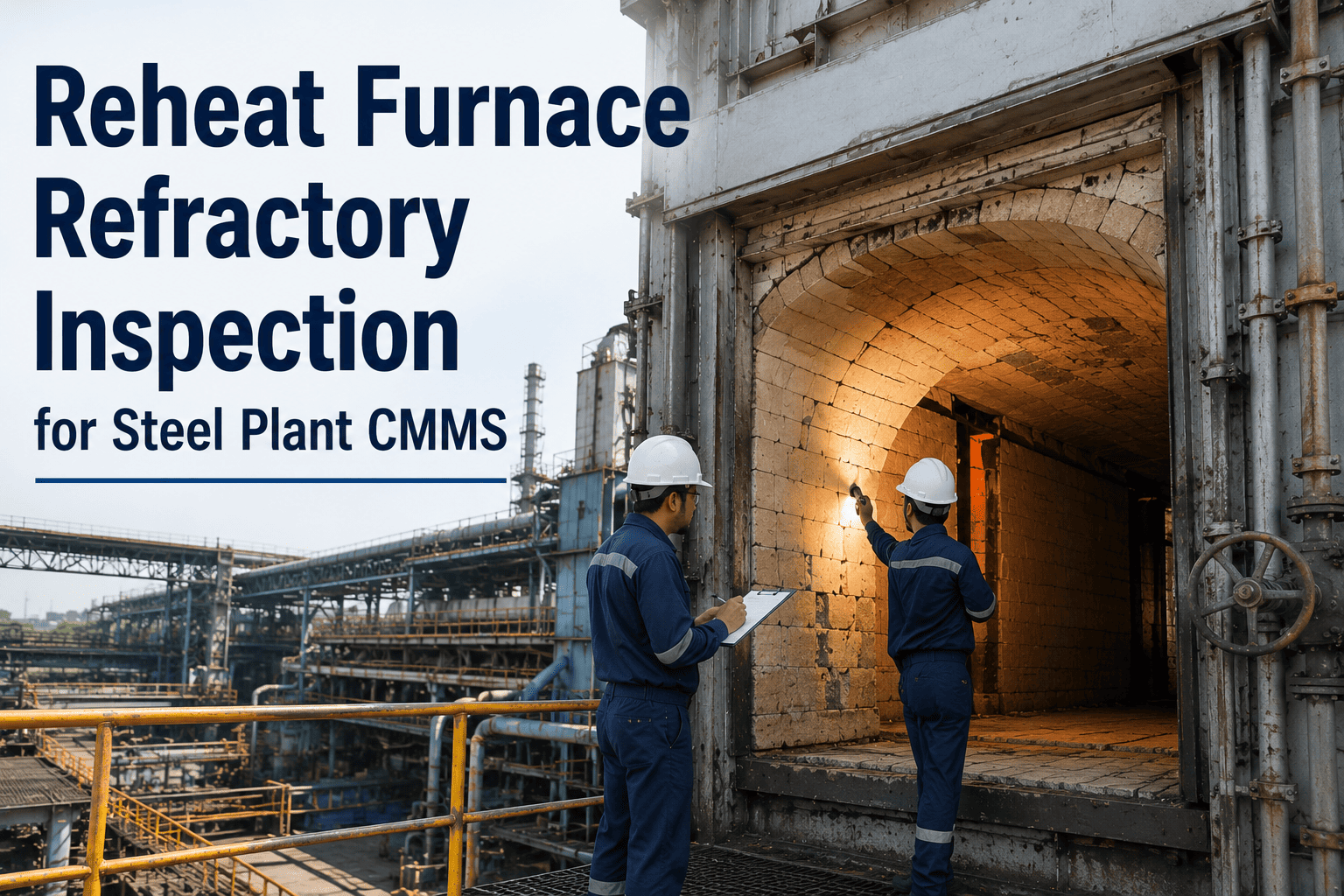
Refractory maintenance in a steel plant means working meters from liquid iron at temperatures above 1600°C, entering vessels that hold dangerous residual heat for days, and breathing air loaded with fine silica dust. A missed shell hot-spot reading, an unlogged crack on a torpedo ladle, or a rushed BOF tearout step can turn into a breakout, a runout, or a structural collapse within minutes. Hot survey crews, gunning teams, and tearout labor each face a different hazard profile, and campaign schedules built on paper or spreadsheets make it easy for a warning sign to slip through. This guide walks through refractory maintenance safety across the full campaign life — hot survey protocol, gunning and shotcreting safety, tearout and demolition control, respiratory protection, common failure points, and how mills use Oxmaint's CMMS to attach a safety checklist to every refractory work order automatically.
Refractory Safety Protocols That Prevent Breakouts — Blast Furnace, BOF & Ladle Campaigns
Hot survey discipline, gunning and tearout procedures, and respiratory protection built into a single digital work order. Track shell temperature trends, lock out tearout zones automatically, enforce PPE by campaign phase, and close the gap between a hairline crack and a shutdown before it becomes a lost-time incident.
Why Refractory Work Carries Disproportionate Risk
Refractory maintenance sits at the intersection of extreme heat, confined space, and heavy mechanical demolition — three hazard categories that rarely overlap this closely anywhere else in a steel plant. A blast furnace shell hot spot can appear between scheduled surveys and progress to a breakout within hours if nobody is trending the data. A BOF vessel that looks cool on the outside can still be lethal to enter because refractory brick holds heat far longer than the steel shell. Ladle and tundish refractory wears unevenly, and a technician relying on visual inspection alone can miss erosion that thins the working lining below safe limits.
Most incident investigations point to the same root cause: safety steps existed on paper, but nothing forced the crew to complete them before the next stage of work began. Shift handovers compound the risk further — a hot spot noted verbally at the end of one shift is easy to lose by the start of the next, especially during a compressed outage window when every hour of downtime carries direct production cost. Supervisors under schedule pressure are also the ones most likely to authorize an early entry, which is exactly why the strongest programs remove that judgment call from a single person and tie it to a verified reading instead.
Four Safety Phases of a Refractory Campaign
A refractory campaign moves through distinct phases, and each one calls for a different safety discipline. Building all four into one coordinated schedule closes the gaps that appear when phases are managed separately by different crews, contractors, and shift supervisors who rarely see each other's logs.
Put a Safety Checklist on Every Refractory Work Order
Hot survey trending, entry permits, and PPE tracking in one digital workflow — no clipboard, no missed step, no depending on memory during a compressed outage.
Common Refractory Safety Failures to Avoid
The mills that reduce incidents fastest usually start by fixing a short list of recurring failure patterns, rather than rewriting an entire safety policy at once.
Refractory Safety Maturity Score
Use this framework to place your current refractory safety program and identify the next gap to close before it becomes an incident. Most mills move up one level per campaign cycle once digital tracking replaces paper logs for even one phase of the process.
Our tearout crews used to enter BOF vessels based on how they looked from the outside — that habit is exactly what put people at risk. Once entry permits were tied to actual temperature readings inside the CMMS, nobody could skip the check even under schedule pressure. It changed the culture on the floor, not just the paperwork, and our near-miss reporting went from almost nothing to a real trend we review every month.
Frequently Asked Questions
Build a Safer Refractory Campaign Schedule
Hot survey trending, entry permits, PPE compliance, and near-miss reporting in one platform. Free to start, no long rollout required.