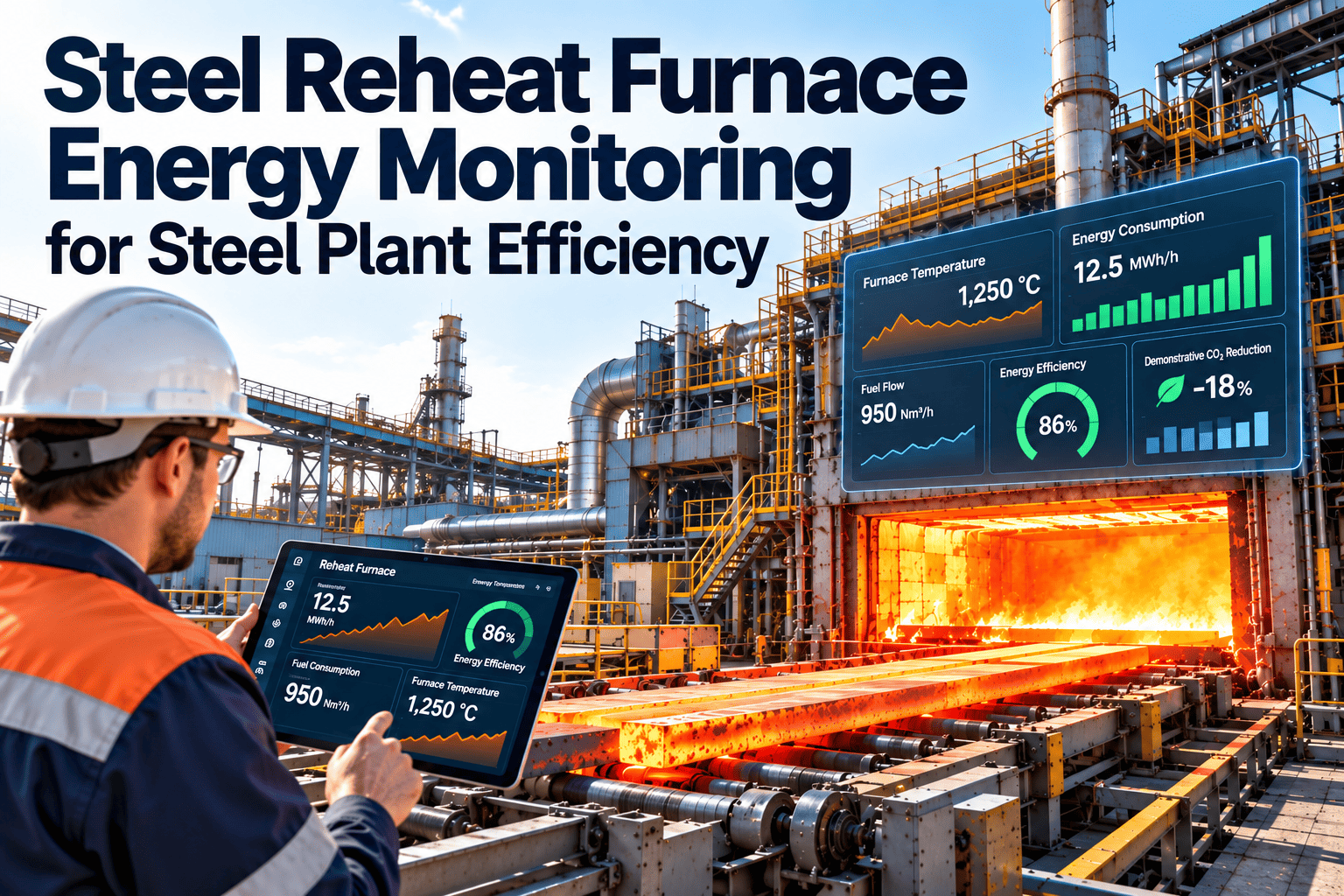
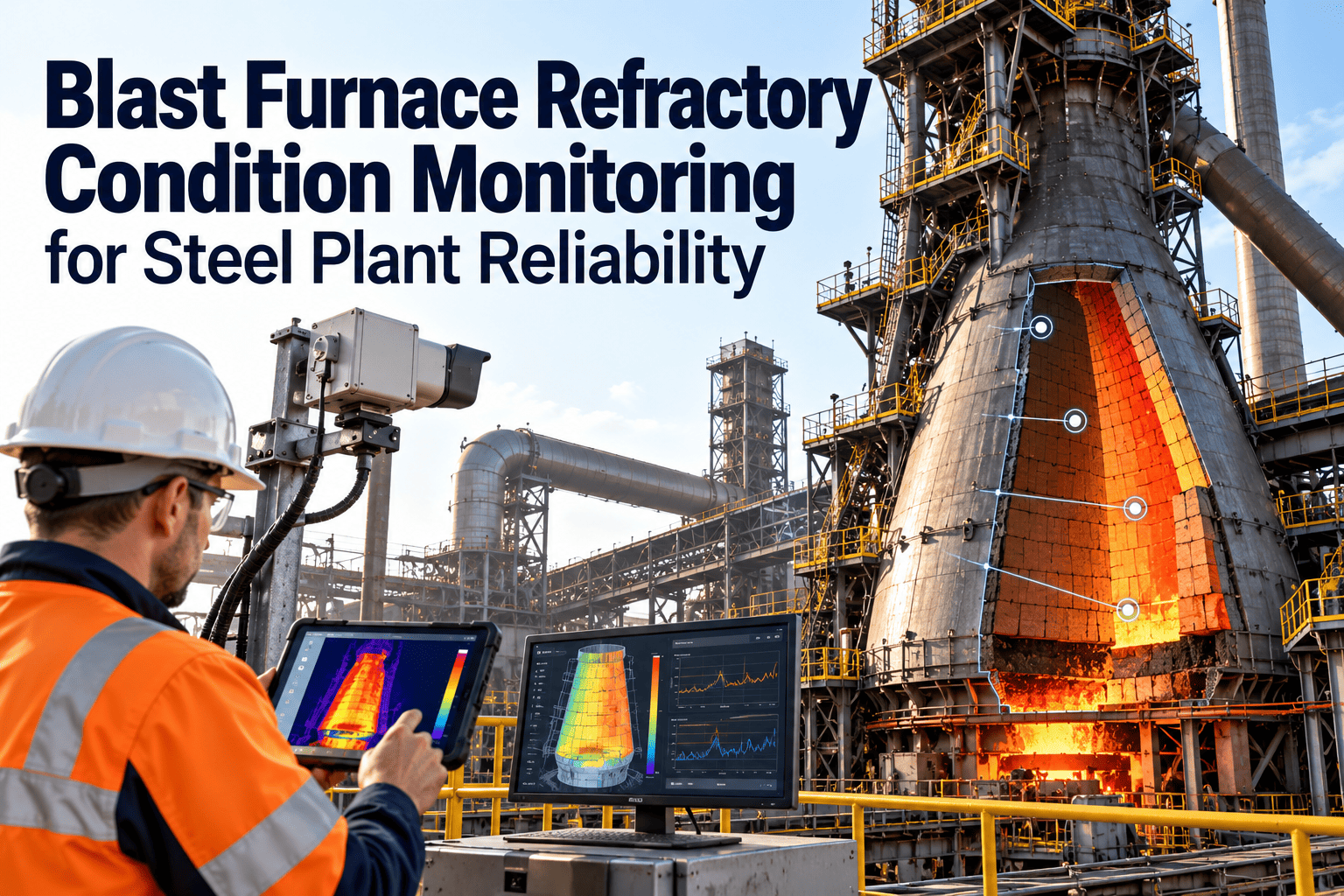
A reheating furnace is the highest single energy cost in most steel rolling operations, consuming 60 to 80% of total rolling mill fuel expenditure. Yet in the majority of plants, furnace maintenance is still managed through fixed-interval shutdowns and manual shift logs rather than systematic condition monitoring. The consequence is a dual loss — unplanned furnace stops that halt the entire rolling campaign, and continuous fuel overconsumption from burner drift, refractory heat loss, and walking beam wear that accumulate invisibly between shutdowns. Oxmaint's furnace performance tracking gives maintenance and operations teams the condition data and structured PM workflows needed to address both problems simultaneously.
Reheating Furnace Maintenance:
Walking Beam, Burners & Refractory Optimization
How structured CMMS programmes track skid mark development, burner combustion efficiency, and refractory health to reduce reheating furnace fuel consumption by 5 to 8% and eliminate the unplanned stops that cost rolling mills an entire campaign.
Why Reheating Furnace Maintenance Is the Highest-Leverage Opportunity in Rolling Operations
Most rolling mill maintenance programmes focus on the mechanical equipment downstream of the furnace — rolls, bearings, shears — while treating the furnace itself as a process variable to be tuned by operators rather than a mechanical asset to be systematically maintained. This framing is costly in two compounding ways.
First, the furnace is the largest energy consumer in the plant, and its fuel efficiency degrades gradually from multiple simultaneous causes: burner tip erosion affecting air-fuel ratio, refractory spalling increasing heat loss through furnace walls, and recuperator fouling reducing waste heat recovery. None of these degradation modes produces an alarm. They accumulate silently across production campaigns, and the only signal is an increasing gas bill that operations teams attribute to changing production mix rather than maintenance failure.
Second, furnace mechanical failures — walking beam drive seizure, skid pipe scale buildup causing slab temperature non-uniformity, cooling water system blockages — create rolling mill stoppages that are among the most expensive in the plant, because they halt not just the furnace but the entire downstream rolling campaign simultaneously. Sign up for Oxmaint to structure furnace PM tracking across all three maintenance areas: burner performance, refractory health, and walking beam mechanical condition.
Walking Beam Drive, Skid Pipe, and Cooling System Condition Tracking
The walking beam mechanism is the highest-criticality mechanical system in a slab or billet reheating furnace. Drive system failures do not degrade gradually — they produce sudden stoppages that require furnace cool-down before repair access, typically costing 12 to 24 hours of production. The two most insidious failure pathways are drive roller bearing degradation and skid pipe cooling water system blockages, both of which follow detectable degradation patterns when CMMS condition logs are maintained systematically.
Drive System, Skid Pipe Condition, and Cooling Water Monitoring
Walking beam drive roller bearings operate in a high-temperature environment with significant cyclic loading from slab weight. Thermal monitoring of drive rollers and eccentric shaft bearings provides the 2 to 4 week advance warning window needed to plan bearing replacement during a scheduled furnace maintenance window rather than an emergency cool-down shutdown.
Skid pipe scale buildup is a quality issue as much as a maintenance issue. Scale accumulation on the contact surface of fixed and moveable skid pipes creates thermal shadows in the slab — local temperature variations of 50 to 100°C that appear as differential rolling resistance, surface quality variation, and in severe cases, cold spots that produce roll force transients causing cobble events. CMMS tracking of skid pipe descaling cycles against a tonnage-based interval prevents the gradual accumulation that creates these downstream quality impacts.
Cooling water flow monitoring for skid pipe circuits is the highest-value furnace health indicator available from existing instrumentation. Flow reduction below 85% of nominal in any skid pipe circuit indicates scale deposition or blockage that, if left unaddressed, leads to pipe overtemperature, scale acceleration, and ultimately pipe distortion requiring emergency maintenance.
In Oxmaint, each walking beam drive component — eccentric shaft bearings, drive rollers, coupling assemblies — is registered as an individual asset with its thermal history and condition log. Cooling water flow readings are logged against each circuit's baseline, with automatic work order generation when flow drops below the configured threshold. Skid pipe descaling work orders are triggered by integrated tonnage counters rather than fixed calendar dates, reflecting actual scale accumulation rate.
Burner Combustion Efficiency Tracking and Fuel Consumption Analytics
Burner combustion efficiency is the primary determinant of furnace fuel consumption, yet it is the maintenance parameter most commonly managed by operator adjustment alone rather than systematic CMMS tracking. A burner with eroded tile geometry, damaged tip orifice, or air register drift produces excess oxygen or excess fuel that wastes 2 to 5% of fuel input per affected zone — and in a furnace with 20 to 40 burners, even partial degradation across a zone produces measurable fuel overconsumption that accumulates across campaigns.
Combustion Efficiency Trending, Tip Condition, and Zone Temperature Uniformity
The most effective CMMS-based burner monitoring programme combines three data streams: flue gas O₂ and CO concentration per zone (combustion efficiency direct measurement), zone temperature uniformity from existing thermocouple data (indicating burner balance across the zone), and fuel consumption per tonne reheated per zone (the aggregated efficiency KPI that reveals degradation when the individual signals are not yet alarmed).
Burner tip erosion follows a characteristic pattern — gradual orifice enlargement increases gas flow at fixed pressure, reducing flame velocity and mixing quality. The signature in CMMS data is rising fuel consumption per tonne at constant zone temperature setpoints. When the furnace energy management system logs show specific energy consumption trending upward by 3% or more over 4 to 6 weeks, it indicates either refractory heat loss or burner tip degradation requiring physical inspection. Sign up for Oxmaint to configure burner efficiency trending dashboards for your furnace zones.
Recuperator condition directly amplifies burner efficiency losses. A recuperator fouled by scale deposits reduces waste heat recovery from the expected 25 to 35% of flue gas enthalpy to 15% or less, increasing fresh fuel requirement proportionally. CMMS tracking of recuperator differential pressure and preheat air temperature — logged weekly and compared against a clean-baseline — identifies fouling accumulation before it significantly impacts fuel consumption.
Annual Savings Through AI-Driven Furnace Optimisation
A European steel producer achieved $5 million in annual savings through AI-optimised process parameters including furnace combustion management and raw material efficiency optimisation. Steel and metals operations consistently show 25 to 40% cost reduction potential — with furnace energy consumption being the primary lever, since it constitutes the majority of rolling mill operating cost per tonne produced.
Most Oxmaint customers report full platform payback within 3 to 6 months. For reheating furnace operations, the fuel savings alone from structured burner and refractory PM often exceed the CMMS cost in the first quarter of structured monitoring. Start your free Oxmaint account to begin furnace performance tracking immediately.
Refractory Condition Monitoring and Planned Repair Scheduling
Refractory deterioration is the longest-developing and highest-cost failure mode in reheating furnace maintenance. A well-maintained furnace lining provides 3 to 5 years of service between major relining campaigns. A poorly tracked lining may require emergency patching or partial relining within 18 months, and — critically — degrades furnace fuel efficiency throughout its deteriorating life by creating increasing heat loss pathways through thinned or spalled sections.
Shell Temperature Trending, Spall Mapping, and Lining Thickness Tracking
Furnace shell external temperature is the most accessible refractory health indicator available without shutdown access. Shell hotspots — localised temperature increases of 50°C or more above the baseline surface temperature — indicate refractory thinning or voidage beneath. CMMS-maintained shell temperature logs, recorded by thermal camera survey during normal operation, build a longitudinal record of lining deterioration that enables planned repair scheduling during the next campaign changeover rather than emergency intervention during production.
Shutdown inspection data — refractory thickness measurements by zone, spall location mapping, and crown condition assessment — forms the primary input for relining life prediction. When this data is recorded systematically in the CMMS against each furnace zone's history, the maintenance engineer can generate a data-driven projection of remaining lining life rather than relying on operating experience alone. This projection drives the capital planning process for relining materials procurement, contractor scheduling, and production planning for the required furnace outage.
The combustion efficiency connection is direct: areas of localised refractory thinning create temperature non-uniformity that operators compensate by increasing firing rate in adjacent zones, driving up fuel consumption. Refractory condition data in the CMMS correlates with burner fuel consumption trends, creating a diagnostic linkage that identifies the physical cause of efficiency drift rather than treating it as a process control problem. Book a demo to see how Oxmaint links refractory health data to furnace energy performance metrics.
Track Your Furnace's Three Maintenance Dimensions in One Platform
Walking beam mechanics, burner combustion efficiency, and refractory health analytics — all configurable in Oxmaint with L2 integration for production-linked PM triggers.
Furnace Failure Modes, Risk Levels, and PM Trigger Intervals
Use this reference when configuring furnace asset PM schedules and condition monitoring alerts in Oxmaint.
| Component / System | Primary Failure Mode | CMMS Detection Method | Risk Level | Recommended PM Trigger |
|---|---|---|---|---|
| Walking Beam Drive Bearings | Fatigue spalling in high-temperature cyclic loading | Thermal trend per bearing position | Critical | Weekly thermal scan with baseline trending |
| Skid Pipe Cooling Water | Scale blockage leading to pipe overtemperature | Flow rate per circuit vs. nominal | Critical | Daily flow log with 85% of nominal alert |
| Skid Pipe Scale Buildup | Thermal shadows causing slab temperature non-uniformity | Tonnage-based descaling interval counter | High | Tonnes-reheated threshold per campaign |
| Burner Tips and Tiles | Orifice erosion causing excess fuel consumption | Fuel/tonne KPI trend + O₂ per zone | High | Weekly specific energy consumption log |
| Recuperator | Scale fouling reducing waste heat recovery | Differential pressure + preheat air temp | High | Weekly differential pressure measurement |
| Furnace Refractory Lining | Spalling and thinning increasing heat loss | Shell thermal camera survey | High | Monthly shell survey + shutdown inspection log |
| Burner Air Register / Valve | Air-fuel ratio drift from actuator wear | Zone combustion analysis per burner group | Moderate | Quarterly combustion balance check per zone |
| Trigger intervals based on continuous furnace operations typical of slab and billet reheating service. Adjust in Oxmaint for your specific furnace type, firing rate, and production throughput. | ||||
How Oxmaint Addresses Each Reheating Furnace Maintenance Need
Furnace Performance Tracking and Fuel KPI Dashboard
Oxmaint integrates with Level 2 furnace energy management systems to receive fuel consumption, zone temperature, and flue gas analysis data. Specific energy consumption per tonne is tracked per zone and per campaign, with trend alerts generated when efficiency drifts beyond configurable thresholds. The dashboard surfaces burner and refractory efficiency trends that would otherwise remain invisible in raw data streams.
Burner PM Scheduling and Combustion Analysis Logging
Each burner is registered as an individual asset in Oxmaint with its combustion history, tip inspection record, and O₂ measurement log. PM work orders for burner tip inspection and replacement are triggered by operating hours or fuel consumption anomaly alerts — not fixed calendar dates. Combustion balance data per zone is tracked and surfaced alongside burner-specific maintenance history. Sign up free to configure burner tracking.
Refractory Health Analytics and Shutdown Inspection Records
Shell temperature survey results from thermal camera inspections are logged per furnace zone in Oxmaint, building a longitudinal heat loss map that enables data-driven lining life projection. Shutdown inspection data — thickness measurements, spall locations, crown condition assessments — is recorded against zone IDs with photo evidence attached, creating the condition history needed for capital planning and relining scope definition. Book a demo to see refractory tracking configured.
Walking Beam Condition Monitoring and Skid PM Scheduling
Walking beam drive bearings are tracked with thermal trend history per position. Cooling water flow readings are logged per skid pipe circuit with automatic threshold alerts. Skid pipe descaling work orders are generated by integrated tonnage counters rather than calendar triggers — reflecting actual scale accumulation in your production mix — with work order escalation if cooling flow trends downward before the descaling interval is reached.
"Steel and metals operations show 25 to 40% cost reduction potential — but furnace energy consumption is the primary lever. Most of that savings is invisible to operations teams because it accumulates gradually across campaigns rather than appearing as a single failure event. A CMMS that tracks combustion efficiency and refractory condition makes the invisible visible."
Frequently Asked Questions
Optimise Your Reheating Furnace Performance With Structured CMMS Tracking
Walking beam condition monitoring, burner combustion efficiency trending, and refractory health analytics — all configured in Oxmaint for the continuous operating environment of slab and billet reheating service.