A rolling mill is the highest-value, highest-consequence maintenance asset in most steel plants. The hot strip mill produces every coil that feeds the downstream cold rolling, coating, and finishing lines — a single unplanned stand outage during a rolling campaign can strand dozens of slabs in the reheating furnace, produce a quality excursion across the sequence, and create a recovery window measured in hours rather than minutes. Cold rolling mill failures cascade to automotive, packaging, and construction customers whose own production lines depend on delivery precision. The maintenance discipline required to keep rolling mill equipment serviceable — rolls, bearings, gearboxes, AGC systems, coilers, and shears — is the most technically demanding in steel plant engineering. A structured rolling mill preventive maintenance checklist executed on schedule and documented in a CMMS is the foundational practice that converts reactive fire-fighting into planned maintenance. The difference in unplanned failure rate between plants with and without structured mill PM programmes is consistently 35–45% — a gap measured directly in output tonne yield and customer delivery performance.
Rolling Mill Maintenance Checklist: Hot and Cold Rolling Equipment
Zone-by-zone PM checklists for hot and cold rolling mills — roll management, mill stand bearings and gearboxes, AGC hydraulics, coilers, flying shears, and entry/exit equipment. Every checklist item configurable as a recurring OxMaint work order.
Rolling Mill PM Interval Framework
Rolling mill PM intervals are driven by rolling volume (tonne throughput and roll change frequency) rather than calendar time alone. The intervals below assume a medium-throughput hot strip mill (3–4 Mtpa) or a multi-stand tandem cold mill. Plants at significantly higher utilisation should compress intervals proportionally. Book a demo to see how OxMaint configures throughput-based PM triggers for rolling mill assets.
Roll condition assessment · Chock bearing inspection · Roll surface scan · Coolant nozzle alignment · Roll gap reference reset
Bearing temperature trends · Gearbox oil level · Hydraulic filter condition · AGC cylinder seal check · Coiler mandrel inspection
Gearbox oil analysis · Stand alignment survey · Drive spindle inspection · Hydraulic system pressure test · Shear blade gap measurement
Full chock rebuild · Gearbox overhaul assessment · AGC calibration · Laminar cooling header inspection · Complete alignment survey
Rolling Mill Maintenance Checklists by Zone
Six zone checklists cover the complete rolling mill from roll management through coiling and cut-to-length. All items are configurable as PM work order templates in OxMaint — each zone generates a recurring work order on schedule with asset link, photo documentation requirement, and compliance logging. Sign up to import rolling mill PM templates into OxMaint — free.
Roll management is the highest-frequency PM activity in a rolling mill — every roll change is a maintenance inspection opportunity that must be used systematically. Roll surface condition, chock bearing condition, and roll surface profile directly determine strip quality and roll campaign length. Missed inspection at roll change translates directly into either premature roll failure in service or quality excursion from a damaged roll surface running undetected through the stand.
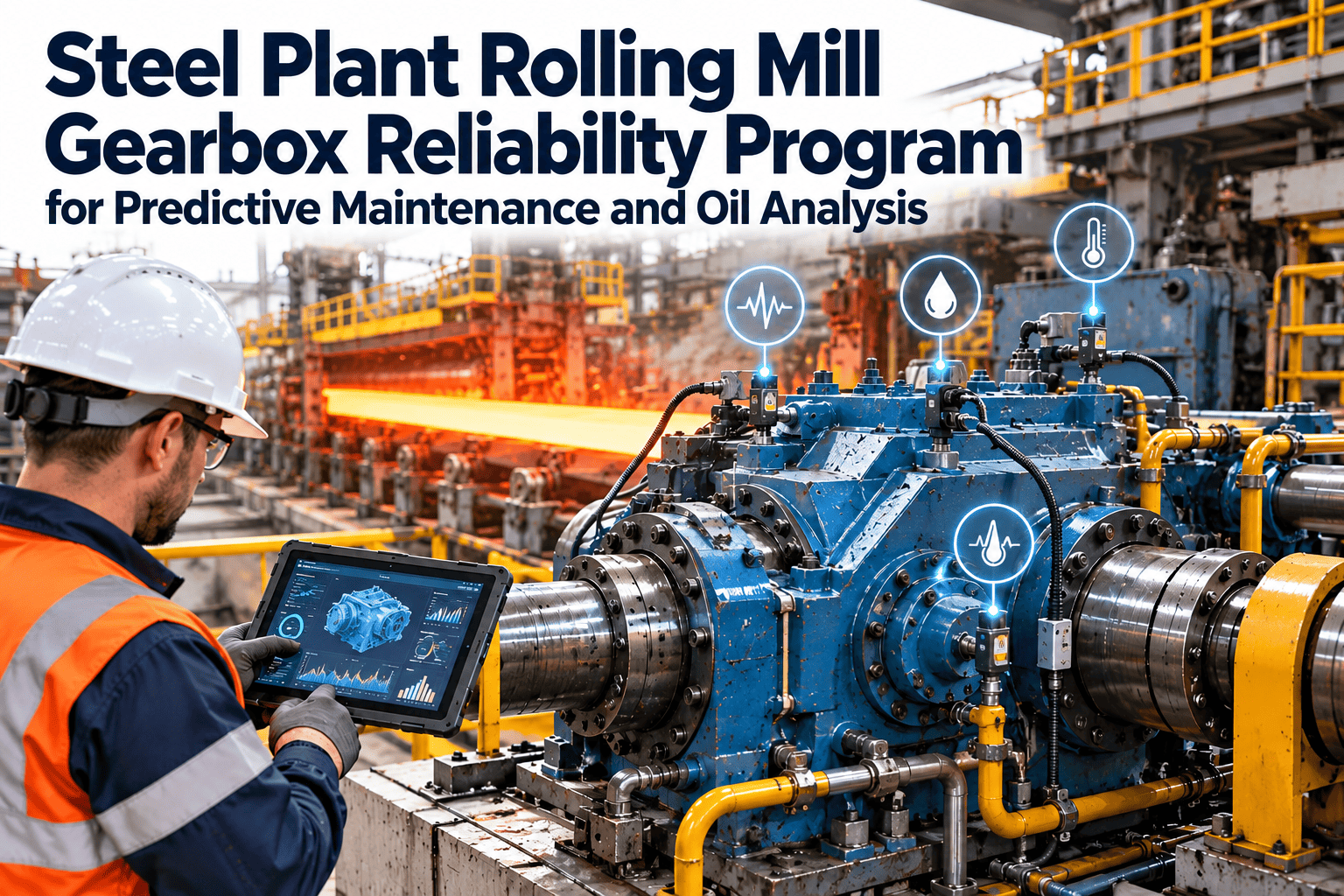
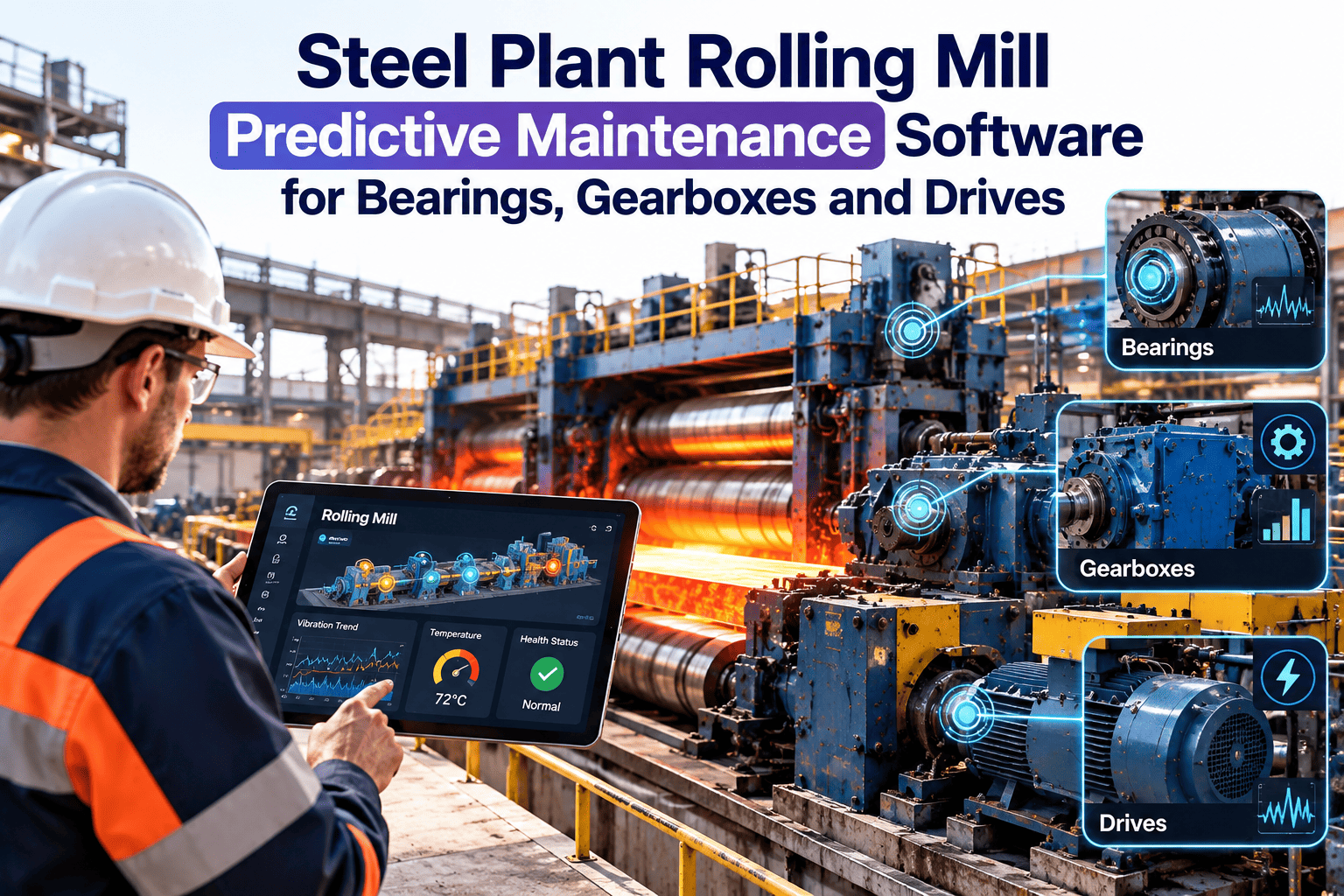
Mill stand gearboxes and drive spindles transmit the full rolling torque from the drive motor to the rolls. Gearbox failures in the mill stand are among the longest-lead-time outages in the rolling complex — replacement gearboxes for large finishing mill stands have lead times of 6–18 months. The PM programme on mill gearboxes must prevent first failures, not manage them. Oil analysis on mill gearboxes is the highest-ROI single maintenance action available — it catches gear and bearing wear debris before failure and at a cost of $80–120 per sample versus $500K+ for a gearbox replacement.
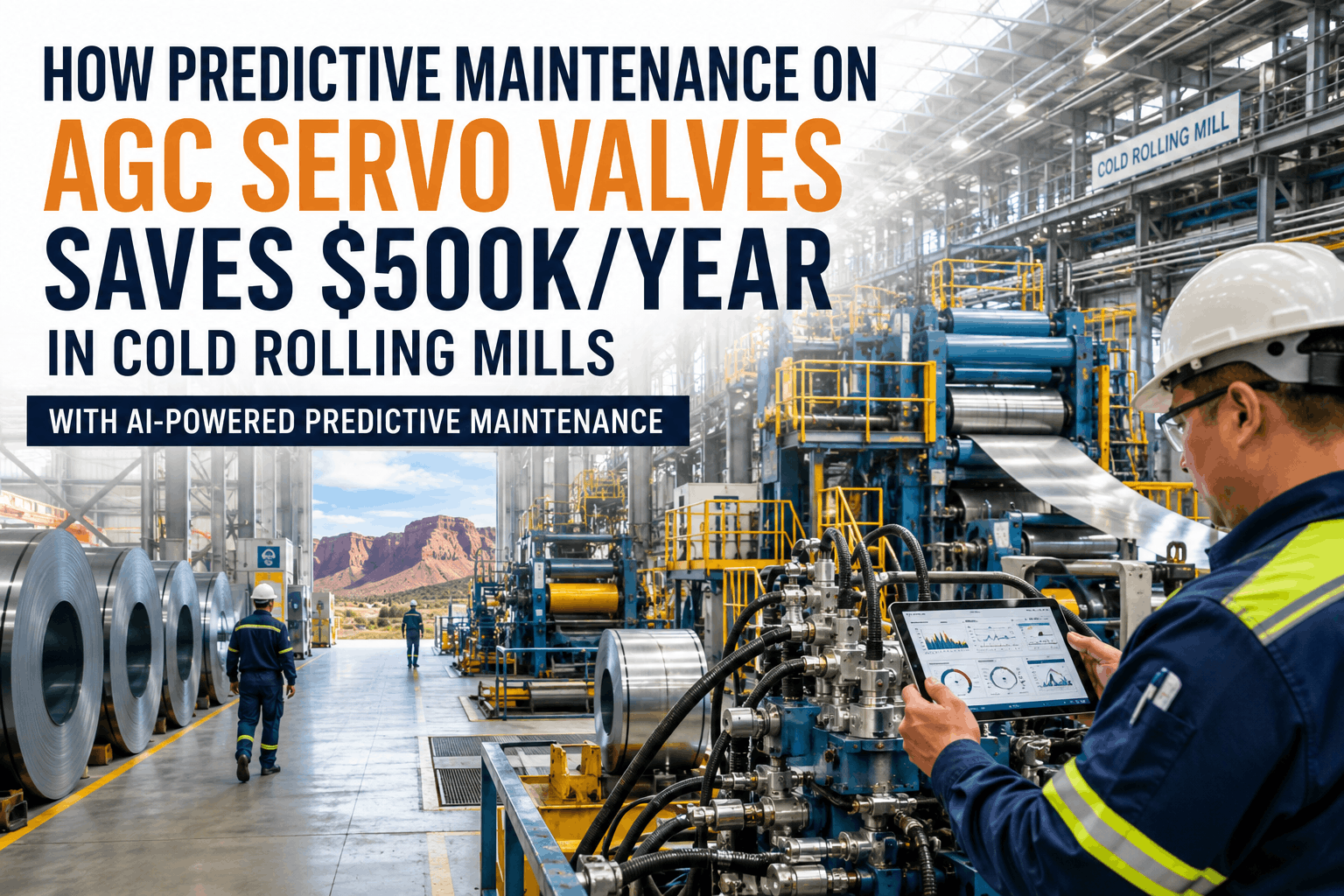
The AGC system controls mill stand roll gap to the micron — hydraulic cylinders responding at millisecond speed to strip thickness deviations detected by X-ray or gamma gauges. AGC system performance directly determines finished gauge tolerance. Hydraulic seal leakage, servo valve contamination, and position transducer drift are the three primary failure modes — all detectable through structured PM inspection before they produce gauge deviations outside customer tolerance. Book a demo to see how OxMaint structures AGC PM work orders for your specific mill configuration.
Coiler failures are the most common cause of campaign interruption in hot rolling and cold rolling finishing lines. Mandrel expansion mechanism failures, wrapper roll bearing failures, and pinch roll surface damage all cause coiling defects — telescoped coils, damaged inner wraps, and strip buckling at entry. The coiler operates at the highest speed point in the mill and under significant cyclic loading from the coil weight growing on the mandrel — making it the highest bearing replacement frequency zone in the mill.
Flying shear and crop shear failures are high-consequence events — a shear blade fracture or drive failure during operation can produce a strip cobble that takes hours to clear and damages guide equipment throughout the mill exit zone. Blade condition and gap setting are the two variables with the most direct impact on cut quality and blade life; both are measurable and manageable through structured PM inspection.
Rolling mill stand alignment is the maintenance activity with the longest consequence horizon — a misaligned mill stand produces strip camber, edge wave, and centre buckle that accumulates over an entire rolling sequence before it becomes recognisable as an alignment problem rather than a pass schedule or roll problem. Monthly alignment verification and campaign-end full alignment surveys are the only reliable method to distinguish alignment drift from other causes of flatness and shape quality defects. Sign up to store mill alignment survey records in OxMaint — free.
Frequently Asked Questions
How often should rolling mill gearboxes receive oil analysis?
What are the most common causes of AGC gauge deviation in cold rolling mills?
How is roll surface inspection at extraction best integrated with OxMaint?
Every Roll Change, Oil Sample, and Alignment Survey. One Asset Record.
OxMaint builds the rolling mill maintenance history that identifies which stands, which rolls, and which campaigns produce failures — and prevents the next one before it reaches the mill stand.