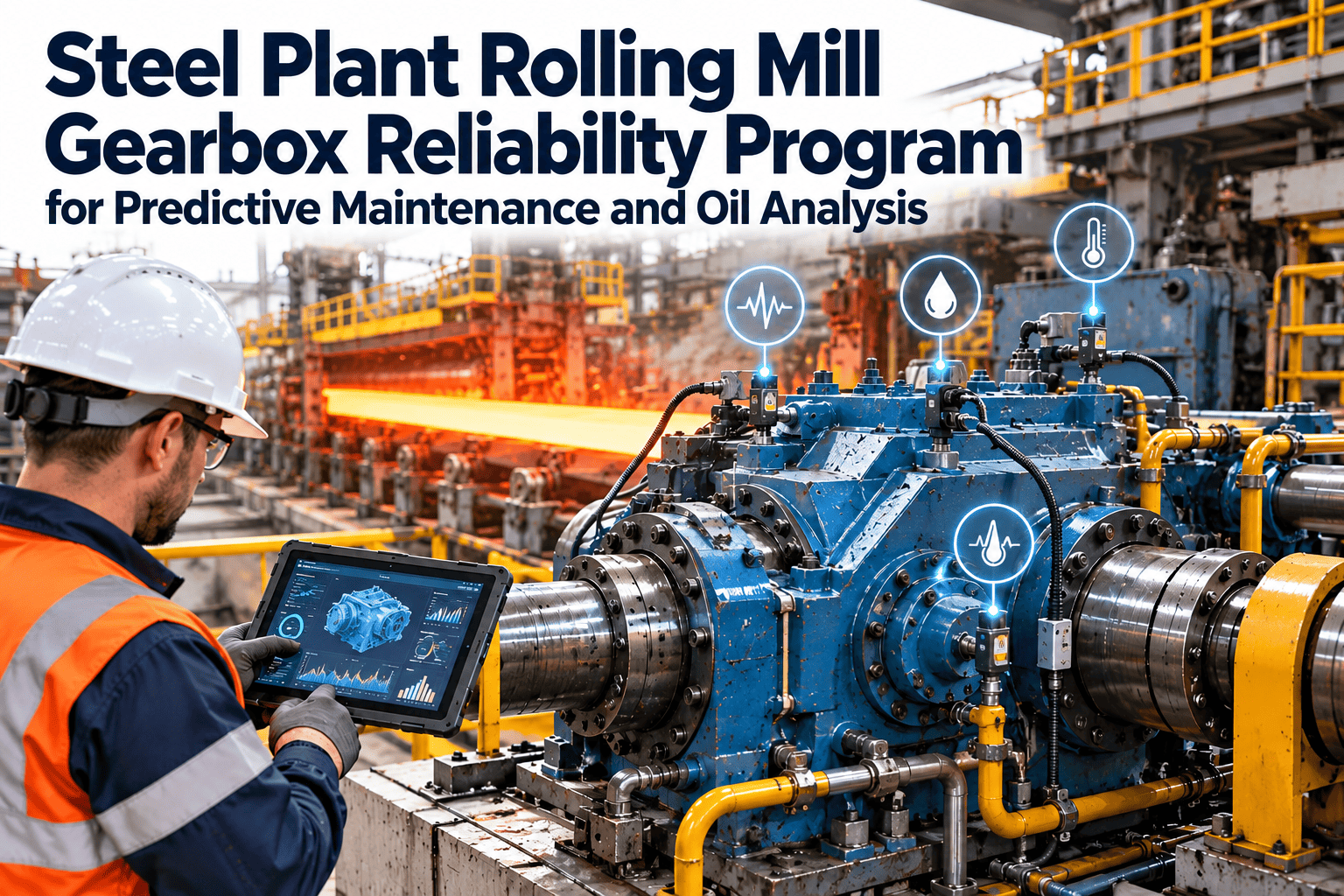
A rolling mill gearbox rarely fails without warning, but the warning is easy to miss when vibration, oil, temperature, and lubrication records live in different places. Shock loads from bite entry, high torque, heat, and scale contamination all shorten gear and bearing life. A gearbox reliability program combines these data sources into one decision process, so teams act on wear trends rather than on breakdowns. Learn how steel plant maintenance software can organize that program.
Steel Plant Rolling Mill Gearbox Reliability Program for Predictive Maintenance and Oil Analysis
Combine vibration analysis, oil sampling, lubrication control, thermal monitoring, and failure history into one structured program that catches gear and bearing wear early.
The stresses that wear down rolling mill gearboxes
Mill drives work harder than most industrial gearing. Understanding the stress sources helps decide what to monitor and how often.
Shock and torque spikes
Billet or slab entry creates sudden torque, which can cause tooth surface fatigue, pitting, and in severe cases tooth breakage.
Contamination
Mill scale, water from cooling sprays, and dust enter through seals and breathers, raising abrasive and corrosive wear.
Heat
High ambient temperature and heavy load speed up oil oxidation and thin the lubricant film that protects gear contact.
Misalignment
Coupling or foundation problems load bearings and gear teeth unevenly, which shows up in vibration and wear patterns.
Lubrication errors
Wrong grade, mixed oils, low levels, clogged filters, or failed circulation pumps starve contact surfaces.
Overload practice
Aggressive reductions, cold material, or mill stalls repeat high-stress events without being logged as such.
Four layers of a gearbox reliability program
No single technique tells the full story. The strongest programs stack methods so one confirms what another suggests.
What vibration and temperature reveal about gear condition
Vibration spectra point to specific mechanical faults. Temperature trends add context about load and lubrication.
| Signal | What It Can Indicate | Typical Follow-Up |
|---|---|---|
| Rising gear mesh frequency amplitude | Tooth wear, pitting, or load changes at the mesh | Compare with oil wear metals, inspect through ports if available |
| Sidebands around mesh frequency | Eccentricity, shaft bending, or local tooth damage | Check alignment and run order analysis |
| High-frequency bearing defect signatures | Rolling element or race damage in early stages | Increase monitoring frequency, plan bearing inspection |
| Rising running speed harmonics | Imbalance, looseness, or misalignment | Verify coupling, soft foot, and base condition |
| Bearing temperature trend | Lubrication loss, overload, or developing damage | Review oil flow, filter condition, and load history |
| Oil sump temperature rise | Cooler fouling, low oil, or excessive churning | Inspect cooler, level, and circulation pump |
Alarm limits should follow the gearbox manufacturer's guidance and recognized vibration standards such as the ISO 20816 series, then be refined using each machine's own baseline.
Building an oil analysis panel that answers real questions
Oil carries evidence of wear, contamination, and chemical degradation. Each test addresses a different risk.
Sampling practice matters as much as testing
- Sample from the same point, at the same operating condition, every time
- Use clean, labeled bottles and record the machine hours and last top-up
- Avoid sampling from drain valves or stagnant dead legs
- Track the sample date, result, and action taken against the asset
Put gearbox condition data and maintenance actions in one record
Track oil results, inspections, and repairs against each mill gearbox and see which units need attention first.
Lubrication discipline protects the gearbox between samples
Many oil analysis problems start with routine practice. Controlled lubrication prevents contamination before it becomes a wear event.
Routine controls
- Correct oil grade identified on the asset record
- Sealed, labeled storage and transfer containers
- Desiccant breathers on gearboxes in humid areas
- Scheduled filter replacement with differential pressure checks
- Level and leak inspection as part of every round
Circulation system checks
- Pump pressure and flow at normal operating temperature
- Cooler condition and water side cleanliness
- Magnetic plug and strainer inspection
- Alarm tests for low flow and high temperature
- Seal and flange leak tracking
Deciding which gearboxes get attention first
Not every gearbox deserves the same monitoring depth. A simple criticality grid focuses effort where failure hurts most.
Consequence should consider production loss, spare lead time, safety exposure, and the effect on downstream mills.
Turning every repair into a learning record
Reliability programs mature when each failure is analyzed. Recorded history reveals patterns that no single sample can show.
Capture the event
Record time, load, product, alarms, and what operators noticed before the stoppage.
Preserve the evidence
Photograph damaged teeth and bearings, retain oil samples, and save debris from filters.
Assign cause and remedy codes
Use consistent codes such as lubrication, contamination, overload, alignment, or fatigue.
Adjust the program
Update alarm limits, sample intervals, inspection tasks, or operating guidance based on findings.
Reactive repair versus a managed reliability program
- Oil samples sent irregularly and results filed away
- Vibration alarms handled without oil confirmation
- Gearbox replaced after catastrophic damage
- Failure causes described only as bearing or gear failure
- Sampling scheduled and results linked to the asset
- Findings confirmed using multiple condition methods
- Repairs planned for scheduled mill outages
- Failure history guides spares and intervals
How findings become work orders
The value of monitoring appears only when a finding turns into a planned action. A clear path avoids results sitting in reports.
Measures that show whether the program is working
- Sample complianceSamples collected and analyzed on schedule
- Alert to action timeDays between abnormal result and work order completion
- Unplanned gearbox downtimeHours lost to unexpected gearbox stops
- Repeat failure causesSame cause code returning on similar units
- Oil cleanliness trendParticle code against the target for each unit
How Oxmaint helps run the program
Oxmaint organizes the routine work that makes condition monitoring effective in a steel plant.
- Asset management: store gearbox specifications, oil grades, drawings, and complete repair history
- Preventive maintenance: schedule oil sampling, filter changes, breather checks, and lubrication routes
- Work orders: create corrective jobs from inspection findings and track completion
- Inventory: manage spare bearings, seals, filters, and lubricants with reorder control
- Reports and dashboards: view backlog, repeat failures, and compliance trends across mills
Setting limits that people trust
Alarms that fire constantly are ignored, and limits set too loosely miss real wear. Good limits start with standards and manufacturer data, then adapt to the behavior of each gearbox.
Starting points
- Manufacturer guidance for temperature, vibration, and oil condition
- Recognized standards for vibration severity and cleanliness codes
- Baselines recorded after installation or overhaul
- Results from similar gearboxes on the same mill
Refining over time
- Review false alarms and missed events every quarter
- Adjust limits for load and product changes
- Use rate of change, not only absolute values
- Document each change with the reason behind it
Choosing between monitoring, repair, and replacement
When condition data points to wear, the question becomes what to do and when. A consistent decision path avoids both premature teardown and costly delay.
Mistakes that weaken gearbox reliability programs
- Inconsistent samplingDifferent points and conditions make trends unreliable and hide real changes.
- Results without ownersReports arrive but nobody is responsible for turning abnormal findings into work.
- Ignoring operating contextData is reviewed without knowing about stalls, overloads, or product changes.
- Skipping root cause reviewParts are replaced but contamination or lubrication causes remain in place.
- Spare gapsEarly warning is wasted when long lead time bearings or gear sets cannot be obtained.
What operators and technicians should check every round
Not every sign of trouble needs an instrument. Trained eyes, ears, and hands catch changes between formal samples when routines are consistent.
Aligning spare parts with condition information
Early warning only helps when parts are available. Mill gearbox components can have long lead times, so condition findings should feed spare decisions directly.
- Identify which bearings, seals, gear sets, and oil system parts are critical for each mill stand
- Compare supplier lead times with the typical warning period provided by your monitoring methods
- Record reconditioning options, such as repairing gear sets, and where rebuilt spares are stored
- Review spare levels after each failure or major finding to confirm they still match risk
A staged way to launch the program
Trying to monitor every gearbox at once usually stalls. A staged launch builds habits, data quality, and credibility.
Who does what in the program
- OperatorsReport noise, leaks, and temperature changes, and log mill events such as stalls or overloads.
- TechniciansCollect samples, perform lubrication tasks, and complete inspections with photos and readings.
- Reliability engineersReview trends, adjust limits, and recommend repairs or design improvements.
- PlannersTurn findings into scheduled work with parts, tools, and outage windows secured.
Reviewing gearbox health in a regular meeting
A short monthly review keeps the program active. The goal is to decide actions, not to read every report line by line.
- Gearboxes with abnormal or worsening results since the last review
- Open work orders created from condition findings and their due dates
- Samples overdue or taken from the wrong point, with the reason recorded
- Repairs completed and whether follow-up samples confirmed improvement
- Spare parts or outage needs that must be raised with planning and purchasing
Rolling mill gearbox reliability questions
How often should rolling mill gearbox oil be sampled?
Interval depends on load, risk, and trend. Many plants start monthly on critical units and adjust after reviewing results.
Is vibration analysis enough on its own?
Not usually. Pairing vibration with oil analysis improves confidence about wear type and severity.
What is the biggest source of oil contamination?
Scale, dust, and water ingress through seals and breathers are common. Inspect seals and breathers regularly.
Can maintenance software schedule sampling routes?
Yes, recurring tasks can be assigned by asset and tracked to completion. You can book a demo to see the setup.
Where should a plant begin?
Start with the most critical stand gearboxes and build records first. You can sign up to organize assets quickly.
Plan gearbox repairs before the mill plans them for you
Bring oil analysis, condition alerts, and maintenance history together so your team can schedule repairs with confidence.