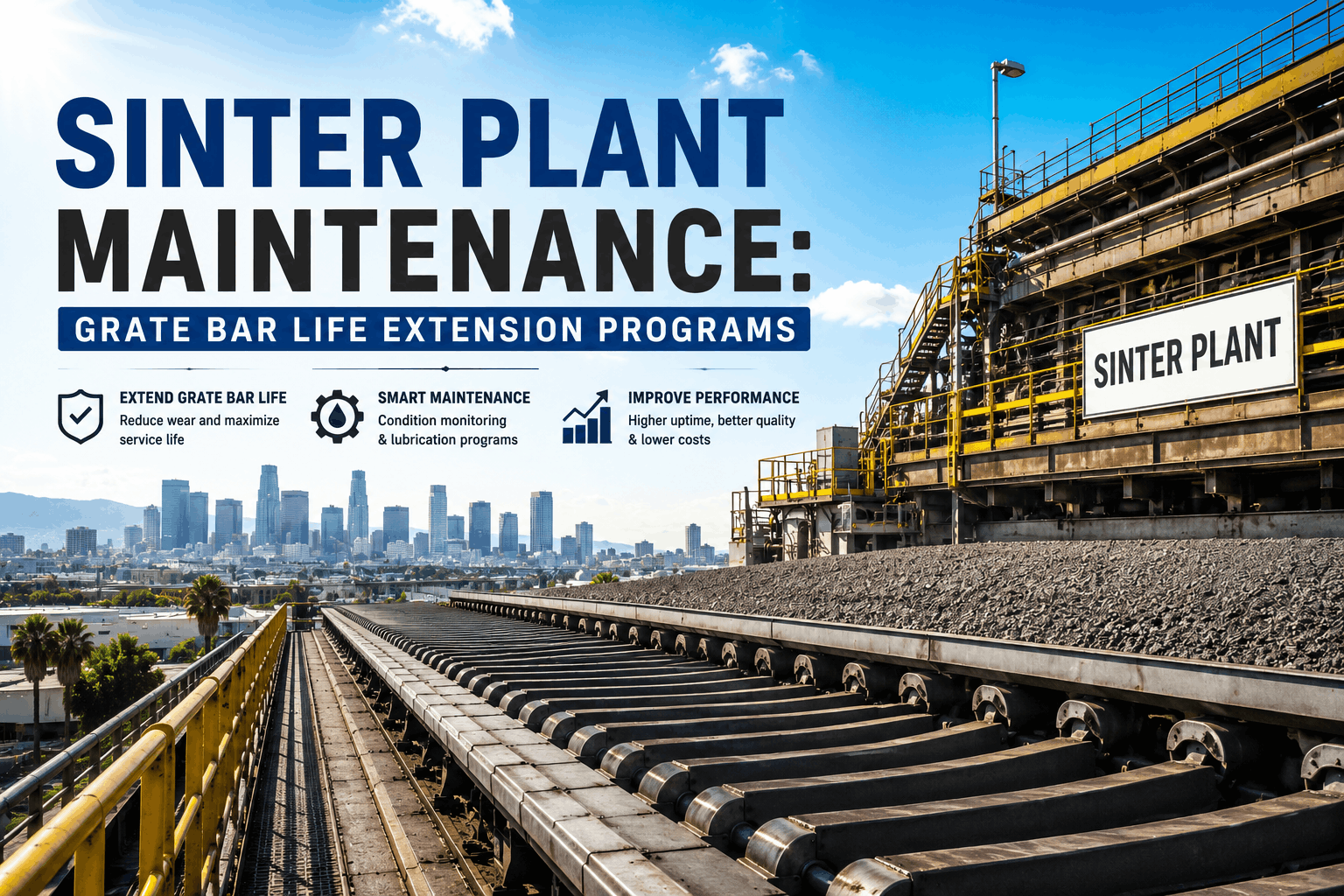
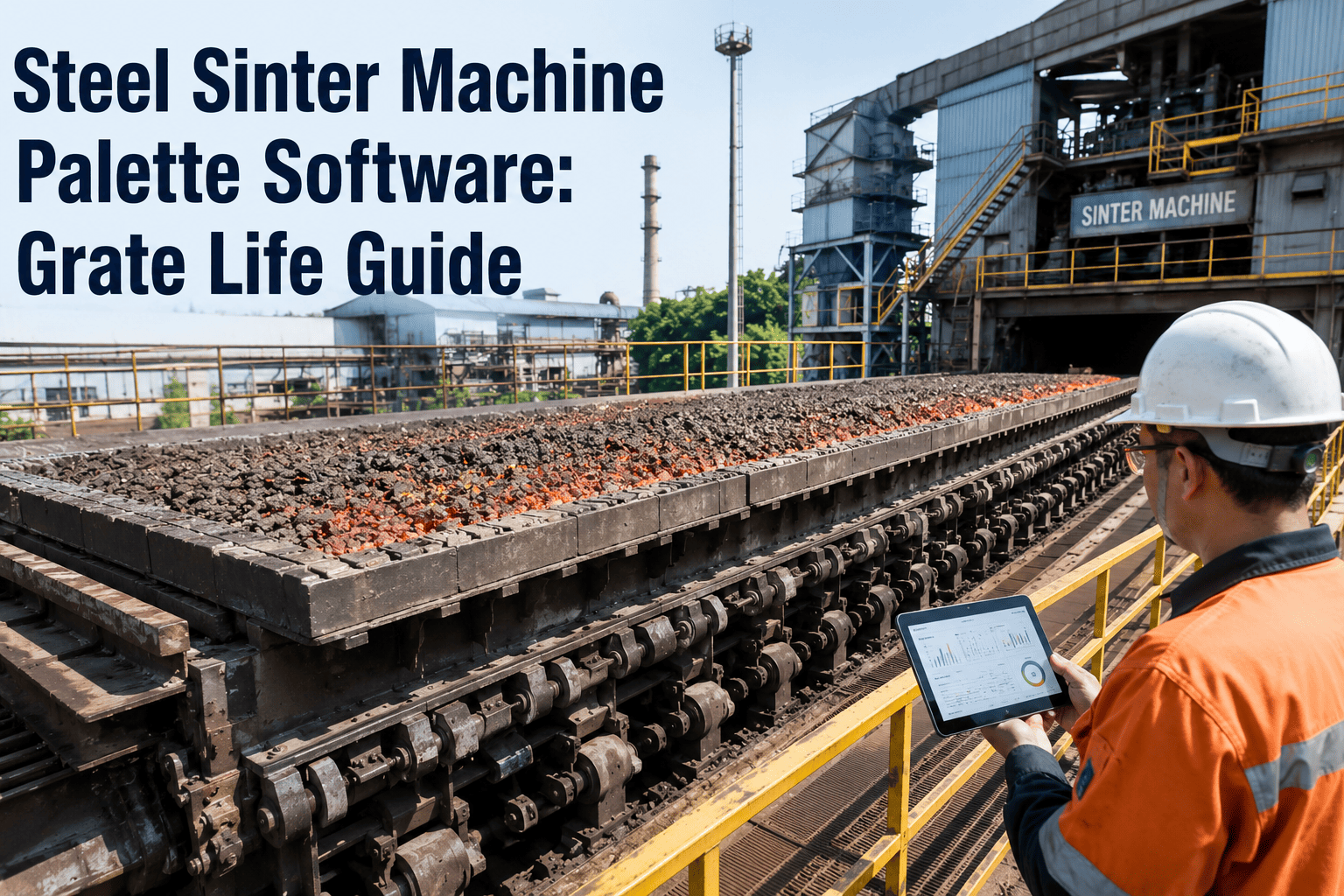
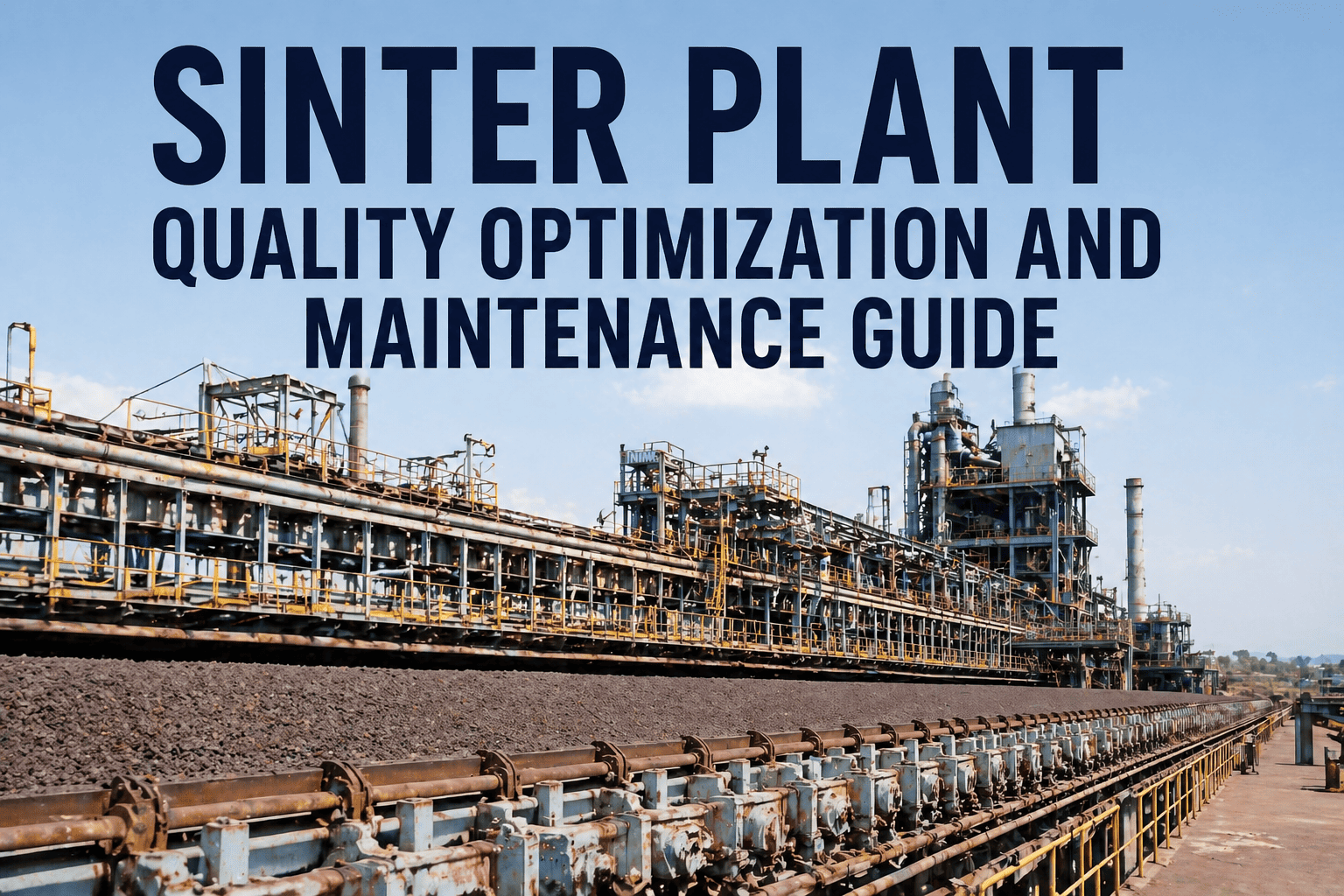
Sinter Plant Maintenance: Grate Bar Life Extension Programs
By Alex Jordan on June 17, 2026
A major sinter plant in the USA operating a traveling grate strand faced chronic grate bar consumption exceeding budget projections by 35-40% annually. Grate bar failures forced unexpected strand shutdowns, degraded sinter quality through premature breakthrough, and created catastrophic downtime during emergency replacements. By implementing condition-based pallet car maintenance tracking, grate bar thickness measurement on cold cars, planned rotation management programs, and automated bearing lubrication scheduling through CMMS integration, the facility reduced annual grate bar consumption by 25%, extended pallet car campaign intervals from 2,000 to 3,000+ operating hours, and increased strand availability from 78% to 88% within 18 months. This comprehensive approach demonstrates how systematic grate bar management transforms reactive emergency repairs into predictive preventive maintenance, delivering $245,000+ annual cost savings and operational excellence.
Steel Plant Case Study · Sinter Plant · 2026
Sinter Plant Maintenance: Grate Bar Life Extension Programs
Extend pallet car campaign life 15-25% through condition-based grate bar replacement, bearing wear trending, and planned rotation management. CMMS-integrated grate bar thickness tracking, vibration monitoring, and lubrication scheduling programs eliminate emergency grate bar failures, reduce strand downtime, and improve sinter quality through extended pallet car availability.
The Operational Challenge: Controlling Grate Bar Consumption & Strand Availability
A traveling grate sinter strand operating 24/7 processes raw iron ore sinter mix on pallet cars moving through ignition, sintering, and cooling zones at constant speed. Grate bars are the wearing component with shortest replacement cycle — failing under extreme thermal cycling (1100+ °C surface temperature), thermal stresses from ablation, mechanical wear from cart loading/unloading, and potential breakthrough if burn-through occurs. Traditional grate bar management operated reactively: track consumption tonnage, replace bars when they fail or thickness becomes questionable, and accept emergency strand shutdowns when critical failures occur. Grate bar gap measurements rarely exceeded 8 mm threshold (allowing raw mix to fall through) forcing immediate shutdown. Vibration analysis on pallet cars was performed sporadically or ignored entirely, missing bearing degradation and wheel wear that contributed to improper grate bar seating and accelerated bar cracking. Bearing lubrication followed loose schedules, sometimes skipped due to production pressure. Result: grate bar consumption climbing 10-15% annually, emergency replacements causing 3-4 unplanned strand shutdowns per year at $25,000-$35,000 cost per event, and degraded sinter quality with inconsistent BTP temperature profiles indicating grate bar condition problems.
Five Critical Sinter Machine Maintenance Systems Requiring CMMS Integration
Grate Bar Thickness Measurement & Wear Tracking
Critical
Measure grate bar thickness on cold pallet cars (off-strand) at fixed measurement points every 500-750 operating hours using calibrated thickness gauge. CMMS trends thickness progression per pallet position, calculates wear rate per campaign, and projects remaining useful life. Bars reaching burnout thickness threshold (typically 15-18mm from original 24-26mm) are flagged for scheduled replacement before emergency breakthrough occurs.
Benefit Thickness trending per pallet + burnout prediction + scheduled replacement vs emergency intervention
Pallet Car Vibration Analysis & Bearing Condition Assessment
Priority
Monthly vibration measurements on pallet car main drive bearing, return pulley bearing, and track wheel bearings. Compare against baseline signature established at commissioning — changes in vibration amplitude or frequency indicate bearing degradation. Machine-specific baseline comparison detects developing bearing failures 2-4 weeks earlier than generic ISO alarm bands.
Grate Bar Gap Monitoring & Raw Mix Fall-Through Prevention
Safety
Weekly grate bar gap measurement at multiple points across strand width (specification: 4-6mm, tolerance limit 8mm). Gaps exceeding 8mm allow raw mix to fall through, creating yield loss and return fines generation. CMMS alerts gap approaching tolerance 2-3 weeks before breach, enabling scheduled bar replacement rather than emergency intervention during active sintering.
Benefit Weekly gap trending + tolerance breach prediction + zero emergency replacements during active sintering
Daily lubrication and wheel condition checks are minimum standard. CMMS schedules bearing lubrication per fixed intervals (typically weekly) and triggers work orders automatically. Wheel flange thickness measured every 2,000-3,000 operating hours — tracks wear progression and projects replacement timing before flange reaches wear limit that could cause derailment.
Planned Pallet Car Rotation & Maintenance Bay Scheduling
Operations
Large sinter strand pallet fleets require rotation management rather than individual pallet tracking at grate bar level. Planned rotation program cycles complete pallets through maintenance bay on schedule — pallets scheduled for maintenance every 2,000-3,000 operating hours. Early intervention at consistent quality reduces total grate bar consumption 15-25% compared to run-to-failure approach.
Benefit Maintenance bay schedule automation + pallet rotation planning + zero emergency replacements during sinter sequence
Grate Bar Management Implementation: 18-Month Path to Strand Availability Excellence
Program Phase
Month 1-4: Establish
Month 5-10: Deploy
Month 11-18: Optimize
Grate Bar Measurement & Thickness Tracking
Baseline thickness measurements on all pallets, wear rate estimation by pallet position, burnout threshold definition
Bearing degradation detected 2-4 weeks early, bearing replacement scheduled during planned maintenance windows
Grate Bar Gap Management & Weekly Monitoring
Gap measurement baseline across strand width, tolerance breach history review, emergency replacement response tracking
Weekly gap measurements scheduled, trending system active, gap-approaching-tolerance alerts configured
Zero gap-related emergency strand shutdowns, scheduled bar replacement 2-3 weeks before tolerance crossing
Pallet Rotation Schedule & Maintenance Bay Coordination
Total pallet inventory count, current maintenance bay capacity assessment, typical campaign duration per pallet review
Rotation schedule created based on pallet consumption rate, maintenance bay workload planned 8-12 weeks in advance
Pallets rotating through maintenance on predictable schedule, grate bar replacement completed during planned maintenance, zero emergency replacements
Five Quantifiable Returns from Sinter Plant Maintenance Excellence Program
Grate Bar Management ROI: 18-Month Outlook
Measured against unplanned downtime elimination and consumption reduction
1
Grate Bar Consumption Reduction — $155,000 Annual Savings
Planned rotation program reducing total grate bar consumption 15-25% through earlier intervention at consistent quality. Typical sinter strand consumes 400-500 grate bars annually at $300-$400 per bar installed. 25% reduction eliminates 100-125 bar purchases annually: $30,000-$50,000 direct cost reduction. Labor efficiency improvement from planned scheduling (vs emergency replacement) adds additional $35,000-$50,000 annual savings through reduced overtime and expedite costs.
Cost Basis: 120 bars × $350 average cost = $42,000 direct reduction + $80,000-$95,000 labor efficiency = $122,000-$137,000 annually. Emergency replacement elimination reduces additional $35,000-$40,000 in unexpected labor and procurement premium costs.
2
Strand Availability Improvement — Elimination of Emergency Shutdowns — $92,000
Sinter plant availability increases from 78% to 88% (10 percentage point improvement) through elimination of 3-4 emergency grate bar failure shutdowns annually. Each emergency shutdown costs $25,000-$35,000 in lost production margin. Availability improvement also enables scheduling maintenance during planned downtime rather than production-interrupting emergency response — eliminating cascade effects where one failure triggers multiple days of extended issues.
Uptime Driver: Planned pallet rotation scheduling moves grate bar maintenance out of active sinter sequence. Predictive gap and thickness monitoring eliminates surprise tolerance breaches that force emergency intervention.
3
Sinter Quality Improvement — Reduced Return Fines & Yield Loss — $68,000
Consistent grate bar condition and zero gap tolerance breaches eliminate raw mix fall-through and uncontrolled breakthrough events. Return fines generation reduced 8-12%, and yield loss from poor sintering quality drops by similar magnitude. Quality improvement enables product shift toward higher-margin specification categories and reduces customer complaints related to sinter quality variation.
Quality Driver: Grate bar condition drives BTP temperature profile stability. Worn bars create uneven air flow and premature heat penetration. Predictive replacement maintains consistent temperature control across strand width, improving sinter strength and cold strength metrics.
Planned rotation scheduling enables predictable maintenance workload in maintenance bay. Grate bar replacement material and labor can be budgeted precisely rather than responding to emergency demand. Reduced emergency overtime and expedite procurement saves $25,000-$35,000 annually. Spare parts inventory optimization (grate bars kept on-hand at exact replacement schedule) reduces carrying costs by $15,000-$20,000.
Planning Driver: CMMS projects pallet maintenance schedule 12-16 weeks forward, enabling material planning, labor scheduling, and contractor coordination without production disruption.
Vibration monitoring and wheel flange wear tracking prevent catastrophic bearing failures and potential derailment events that could cause environmental release, operator injury, and extended production loss. Regulatory audits demonstrate systematic maintenance discipline, improving compliance score and reducing environmental violation risk.
We operated our sinter strand for years accepting that grate bar breakdowns and emergency replacements were just part of the business. Budget $500,000+ annually for grate bar consumption and plan for 3-4 emergency shutdowns per year costing $30,000 each. Implementing OxMaint's pallet rotation program with thickness tracking and gap monitoring transformed that reality. Grate bar consumption dropped $155,000 annually, emergency shutdowns went from 3-4 per year to zero in year two, and our sinter strand availability jumped from 78% to 88%. The difference between reactive emergency maintenance and predictive scheduling is night and day.
Sintering Operations Manager — Integrated Steel Mill, USA South
Grate Bar Management: CMMS-Integrated Operational Excellence
Thickness Measurement & Burnout Prediction
Predictive
Quarterly measurements on cold pallets, wear rate calculation per pallet, burnout threshold projection using exponential degradation model
System calculates remaining useful life per pallet, schedules measurement frequency based on wear rate (fast-wearing pallets measured more frequently). Creates replacement work order 4-6 weeks before burnout threshold, enabling planned maintenance vs emergency intervention.
Baseline-Referenced Vibration Trending
Condition-Based
Monthly vibration measurements compared against machine-specific baseline (not generic ISO bands), trending over 4-6 month rolling window
System detects 25% increase in vibration amplitude as bearing degradation indicator, predicts failure date 2-4 weeks in advance. Bearing replacement scheduled during next planned maintenance vs after catastrophic failure occurs.
Grate Bar Gap Monitoring & Tolerance Alert System
Critical
Weekly gap measurements at multiple points, trending across 8-week rolling average, alert when trending approaches 8mm tolerance
CMMS projects gap crossing tolerance 2-3 weeks in advance, enables scheduled bar replacement during planned maintenance. Zero emergency interventions during active sintering sequences.
Pallet Rotation Schedule & Maintenance Bay Coordination
Operations
Automated schedule generates pallet maintenance sequence 12-16 weeks in advance, coordinates with casting schedule and maintenance bay availability
System optimizes rotation timing to avoid production-critical periods. Maintenance workload evened across calendar, preventing feast-famine maintenance bay utilization pattern.
Frequently Asked Questions: Sinter Plant Grate Bar Maintenance & Management
How frequently should grate bar thickness be measured and what is the typical burnout threshold?
Measure every 500-750 operating hours on cold pallets. Typical grate bars start at 24-26mm thickness and reach burnout (failure) at 15-18mm. Wear rate varies by sinter grade and thermal cycling severity. Fast-wearing pallets may need quarterly measurement; slower-wearing pallets every 6-8 months. CMMS adapts measurement frequency to actual wear rate per pallet.
What bearing lubrication schedule is recommended for sinter machine pallet cars?
Daily lubrication and wheel condition checks are minimum standard; weekly is preferred practice. CMMS schedules daily/weekly checks with automatic work order generation. Bearing types (antifriction vs sleeve bearing) determine specific lubrication intervals. Some modern pallet cars have sealed bearings requiring no routine lubrication; system tracks bearing type per pallet.
How much does a planned pallet rotation program reduce emergency shutdowns compared to run-to-failure approach?
Typical 200-250 pallet fleet operating run-to-failure model experiences 3-4 emergency grate bar shutdowns annually costing $25,000-$35,000 each. Planned rotation program reduces emergency events to near zero (one per 24 months or less). Sinter plants report elimination of 95%+ of emergency grate bar failures through predictive maintenance.
Return rail wear should be measured at defined gauge points every 2,000-3,000 operating hours. Replacement when wear exceeds 8mm from baseline. Wheel flange thickness tracked at same interval; replacement when flange reaches minimum thickness specification (typically 12-15mm from original 18-20mm). Both systems prevent derailment risk and improper grate bar seating.
Current vibration compared to baseline (measured at commissioning or last major overhaul) indicates bearing health. 25% increase in amplitude suggests developing wear; 50%+ indicates imminent failure. Machine-specific baseline eliminates guesswork inherent in generic ISO 10816 alarm bands. System predicts failure 2-4 weeks early through trending analysis.
Large pallet fleets (200+ pallets) should schedule complete overhaul every 2,000-3,000 operating hours. CMMS projects pallet condition and maintenance bay workload 12-16 weeks forward, enabling balanced rotation schedule. Typical 240-pallet mill has 4-5 pallets in maintenance bay simultaneously, avoiding bottleneck conditions while maintaining predictable maintenance pace.
Yes, grate bar gap specification is typically 4-6mm nominal with 8mm tolerance limit. Gaps approaching 8mm allow raw mix to drop through, creating yield loss and return fines. Weekly measurement program catches gaps trending toward tolerance 2-3 weeks before breach, enabling scheduled bar replacement during planned maintenance rather than emergency intervention during active sintering.
Planned rotation programs reduce grate bar consumption 15-25% through earlier intervention (replacing bars at consistent 20-22mm thickness) vs emergency replacement after catastrophic wear at 15mm or thickness-induced failure. Labor efficiency improvement from eliminating emergency overtime and expedite procurement adds $35,000-$50,000 annual savings alongside direct material cost reduction.
Optimize Your Sinter Plant Maintenance Program
OxMaint CMMS integrates grate bar thickness tracking, pallet car vibration monitoring, gap tolerance management, and planned rotation scheduling into a single maintenance platform. Reduce grate bar consumption 25%, eliminate emergency shutdowns, improve strand availability to 88%+, and save $245,000+ annually. Connect with our sinter plant specialists to review your facility's specific pallet car management requirements and rotation scheduling roadmap.