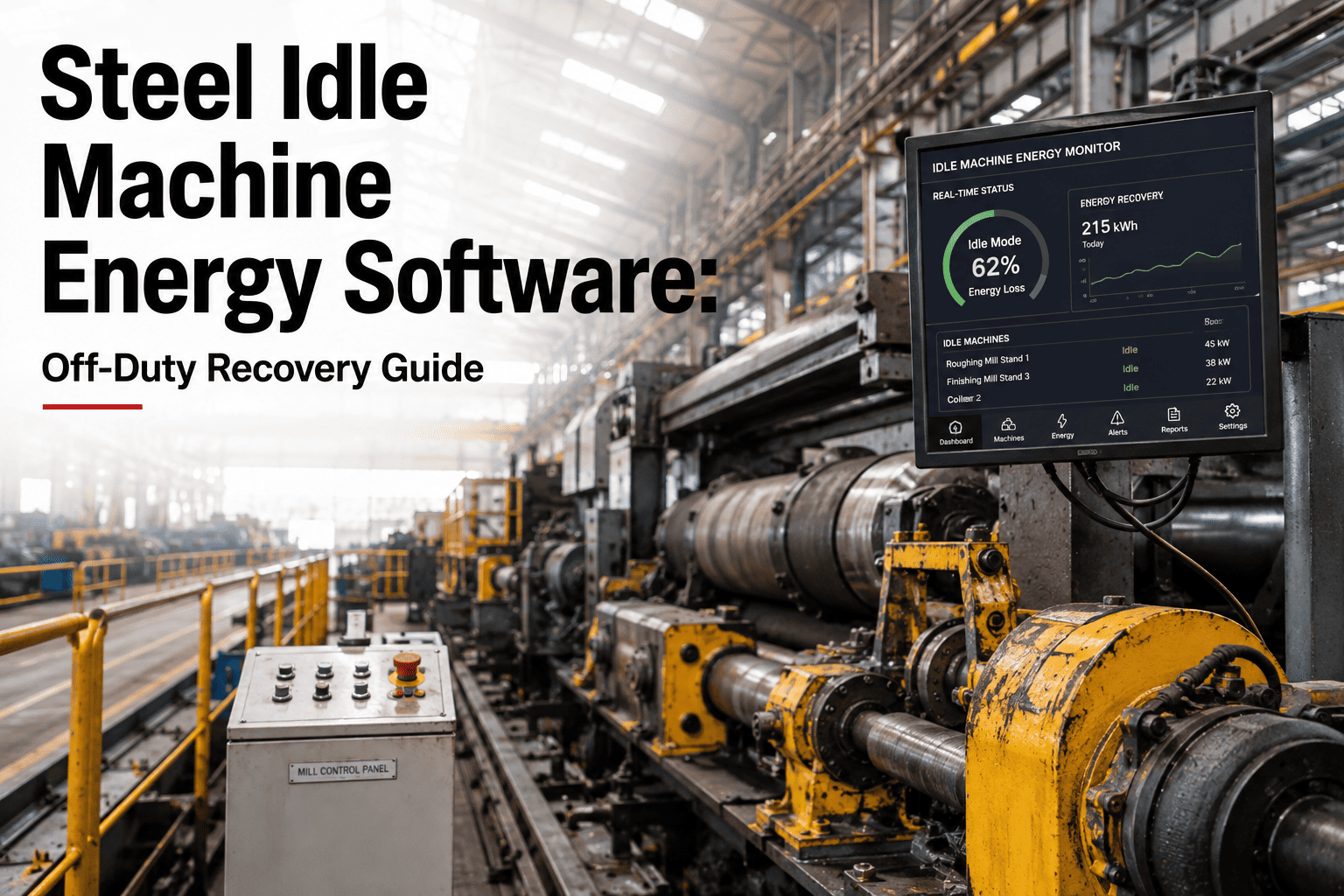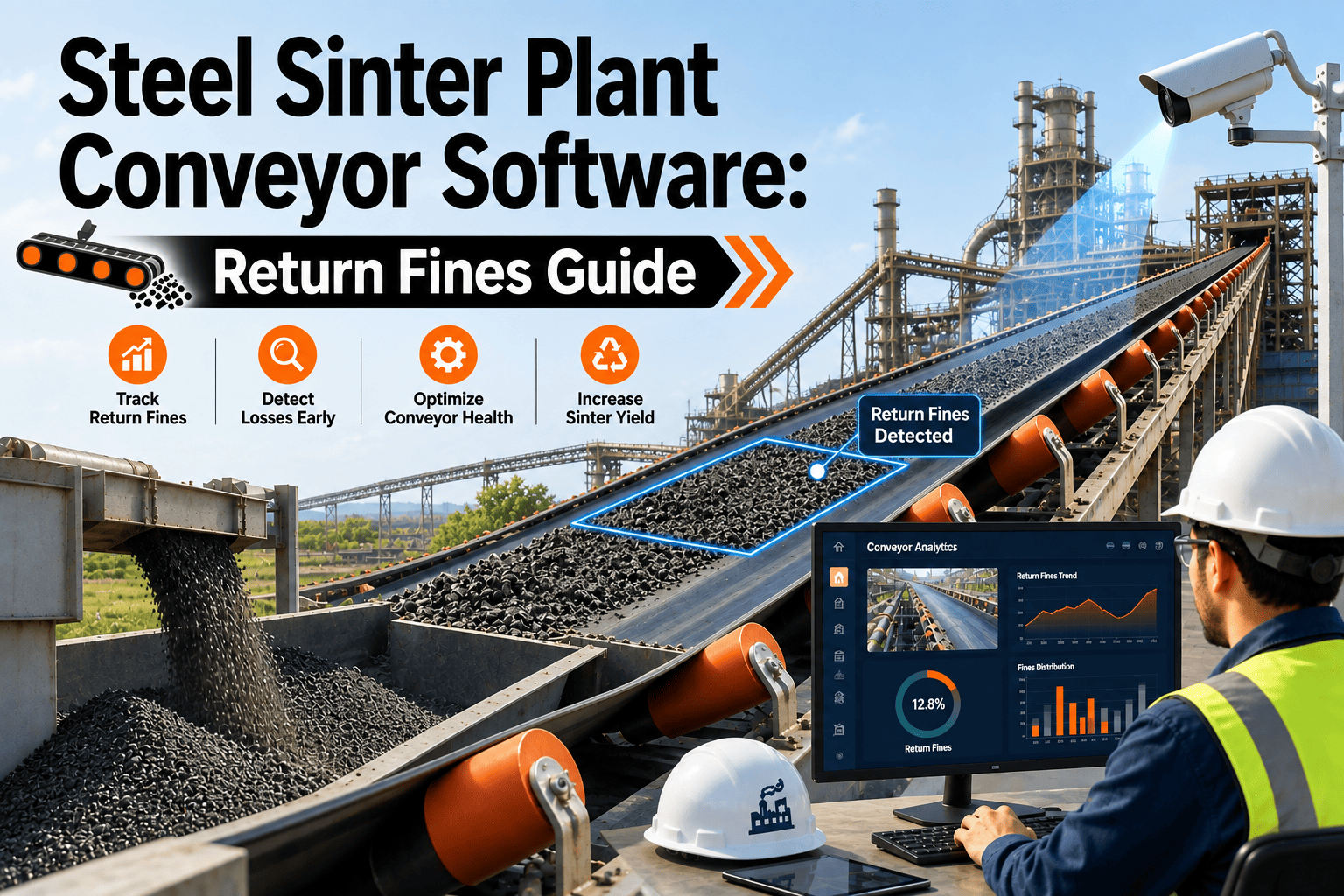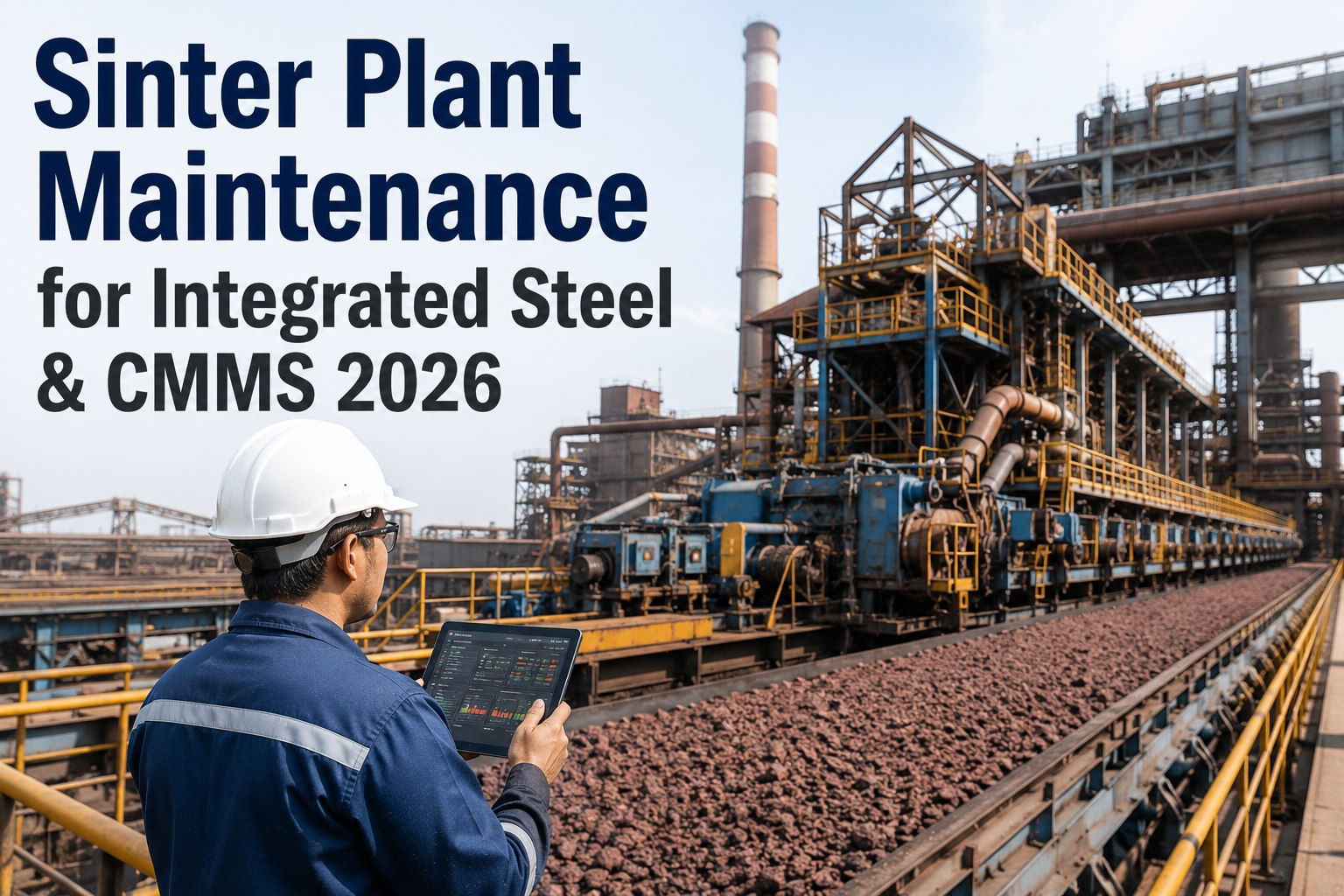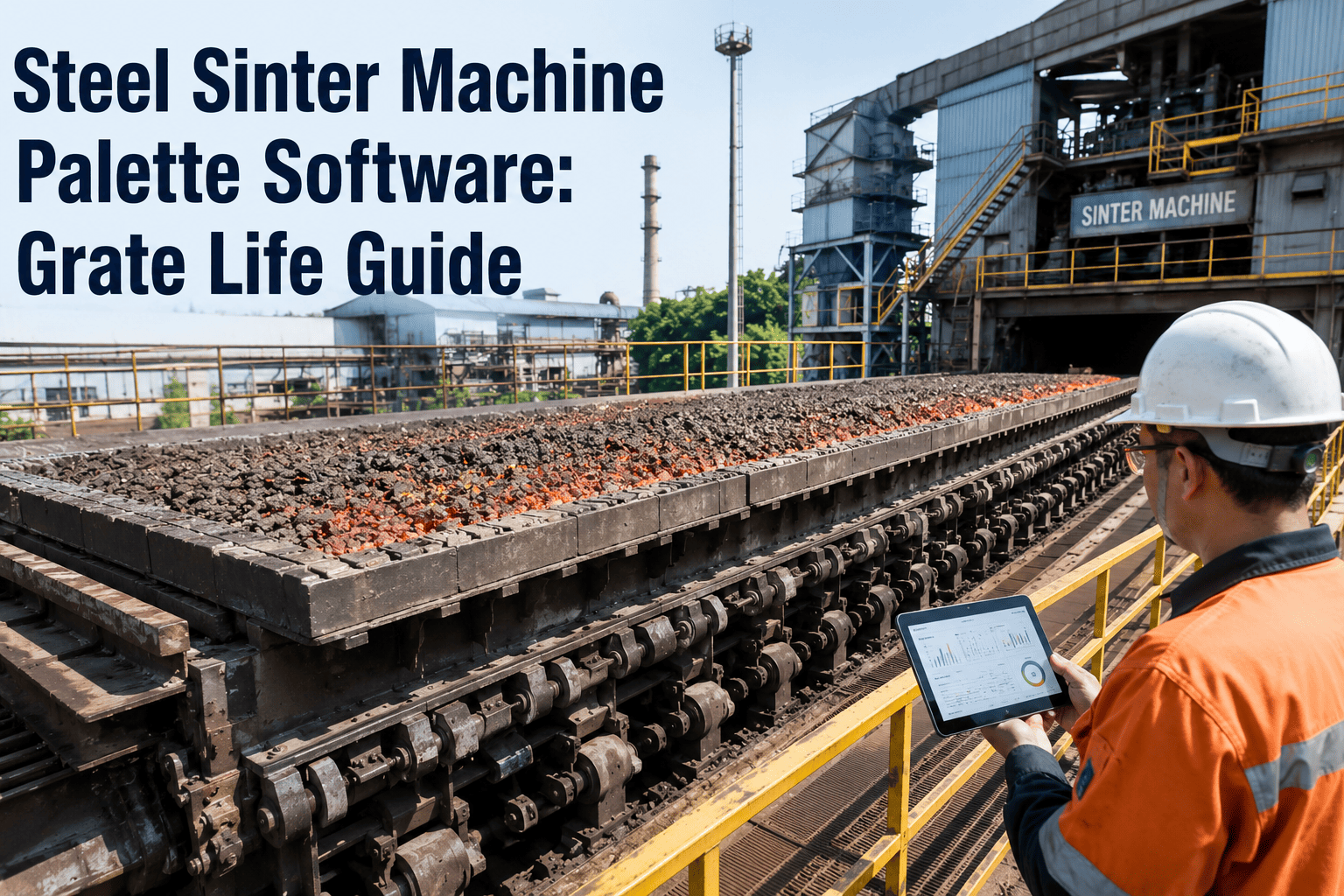
A steel sinter machine runs on a moving chain of pallet cars — often called the sinter "palette" on the plant floor — dragging a bed of raw ore through 1,300°C ignition and burn-through zones, twenty-four hours a day, every day of the campaign. The grate bars lining every pallet are the only thing standing between that molten heat and the windbox below, and they wear down in silence, a fraction of a millimeter at a time, until one bar burns through and the strand goes down without warning. Most plants find out a bar has failed only after sinter has already dropped into the windbox. A disciplined palette and grate bar tracking program catches that thinning years before burnout, and it starts with the same data steel plants already generate every shift — start a free trial with Oxmaint to see how sinter plants turn cold-pallet measurements into a working grate life program.
Steel Sinter Machine Palette Software: The Grate Life Guide
Track every pallet car, grate bar, windbox seal, and drive chain on the strand — and replace wear parts on data, not on guesswork or emergency downtime.
Why Palette and Grate Bar Wear Goes Unnoticed Until the Strand Shuts Down
Every pallet car on a sinter strand carries a bed of grate bars that hold the ore layer in place while letting combustion air pass through from below. Those bars sit directly in the ignition and burn-through path, cycling from ambient temperature to over 1,300°C on every pass around the strand. Thermal fatigue, oxidation, and corrosive coal-tar and sulfur compounds attack the bar surface continuously, and none of it is visible from the operating floor. A bar that starts life at roughly 24-26mm thick can thin to 15-18mm before it perforates — and the only way to know where any individual bar sits on that curve is to measure it.
The failure itself is rarely gradual from an operations standpoint. A pallet running with a burned-through bar drops raw sinter mix straight into the windbox, damaging seals, fouling ductwork, and in the worst cases forcing an immediate strand shutdown. Because pallets are identical-looking steel frames cycling past at speed, plants running paper logs or spreadsheets almost never know which specific pallet is closest to failure — they only find out when it fails. A digital record per pallet changes that equation entirely. To see how it works on your strand, start a free trial or book a demo with the Oxmaint team.
Sinter Palette Wear Points and How Often to Measure Them
Grate bar and pallet car wear is driven by operating hours and thermal cycles, not calendar dates. A strand running heavier sinter grades or hotter burn-through profiles reaches replacement thresholds far sooner than one running lighter mixes.
| Wear Point | Measurement Interval | Replacement Threshold |
|---|---|---|
| Grate Bar Thickness | Every 500-750 hours, cold pallets | 15-18mm, or 60% life consumed |
| Pallet Rail / Return Rail | Every 2,000-3,000 hours | 8mm wear from baseline |
| Wheel Flange | Quarterly, four cardinal points | Minimum 20mm thickness |
| Drive Chain Elongation | Continuous via drive current trend | Inspect at 1.5%, replace at 2.0-2.5% |
| Wheel / Roller Bearings | Daily visual, sealed units every 4-6 months | Per bearing type and OEM spec |
| Windbox Seals | Every inspection port walk-down | Any through-burn or leakage sign |
6 Palette Components That Decide Strand Uptime
Support the sinter bed and hold airflow permeability through the burn-through zone. Thermal burnout and coal-tar corrosion pit the surface until bars perforate, dropping material straight into the windbox below.
Keep suction air moving through the bed instead of leaking around it. A seal breached by a burned-through grate bar drops sinter into the duct, cuts draft efficiency, and can force an immediate strand stop.
Carry every pallet around the strand loop under constant thermal and mechanical load. Flange wear beyond safe thickness or a starved bearing derails a pallet and stops the entire chain, not just one car.
Pull the entire pallet loop at a fixed pace. Elongation past 2.0-2.5% risks a mid-campaign chain snap, which halts strand travel completely until the section is replaced and re-tensioned.
Guide pallet wheels along the strand path. Rail wear beyond 8mm from baseline lets pallets ride unevenly, accelerating wheel and grate bar wear on every car that follows behind it.
Contain the bed edges and protect the pallet frame from direct flame contact. Worn side seals let material spill and expose frame steel to thermal stress it was never designed to absorb directly.
How One Thin Grate Bar Becomes an Unplanned Strand Shutdown
Grate bar wear is cumulative and mostly invisible from the operating floor. A bar that measures fine at installation keeps thinning through every thermal cycle until it crosses a threshold nobody was watching for — and by then, the failure mode has already moved past the bar itself.
Run-to-Failure vs a Tracked Palette Program
Stop Chasing Windbox Breakthroughs — Track Every Pallet by Number
Oxmaint records grate bar thickness, rail wear, wheel flange condition, and chain elongation against each individual pallet, then projects burnout timing so replacement work orders land weeks before failure instead of after it.
How Oxmaint Runs the Palette and Grate Bar Program
Log cold-pallet thickness readings against each bar's own history. Wear-rate projection flags bars approaching the 15-18mm burnout range weeks before the threshold, not after.
Every pallet car gets its own record covering grate bars, wheels, bearings, and rail contact points, so no two pallets are ever treated as identical when one is closer to failure.
Record return rail and wheel flange measurements at defined gauge points, and trend them against the 8mm wear threshold before rail misalignment starts accelerating wear on neighboring pallets.
Trend drive current and tension load to catch chain elongation crossing 1.5%, triggering sprocket inspection before elongation reaches the 2.0-2.5% range where mid-campaign failure risk rises.
Log inspection port findings and seal condition alongside grate bar trend data, connecting a thinning bar directly to the windbox seal most likely to take the next hit.
Convert burnout projections into replacement work orders scheduled 4-6 weeks ahead, so bar swaps happen in the maintenance bay with proper alignment instead of during an emergency stop.
What a Tracked Grate Life Program Changes on the Strand
Frequently Asked Questions
How often should grate bar thickness be measured on a sinter machine?
Cold-pallet measurement every 500-750 operating hours is the standard baseline. Fast-wearing pallets may need quarterly checks while slower ones can go 6-8 months. Start a free trial to see automated measurement scheduling per pallet.
What causes a grate bar to burn through?
Bars thin from thermal fatigue at 1,300°C combined with pitting corrosion from coal-tar and sulfur compounds. Once thickness drops from roughly 24-26mm to the 15-18mm range, perforation risk rises sharply.
Can the platform track individual pallet cars instead of the strand as a whole?
Yes. Each pallet gets its own record covering grate bars, wheels, bearings, and rail contact, so the system knows exactly which pallet is closest to a replacement threshold. Book a demo to see a pallet-level record.
How does windbox seal damage connect back to grate bar condition?
A perforated grate bar drops raw sinter mix directly into the windbox below, damaging the seal and fouling suction ductwork. Tracking bar thickness ahead of burnout is the most direct way to protect the seal underneath it.
What is the safe replacement point for a chain before it fails mid-campaign?
Sprocket inspection should trigger once elongation reaches 1.5%. Replacement between 2.0% and 2.5% elongation avoids the catastrophic mid-campaign failure risk that comes with running a chain past that range.
Give Every Pallet on the Strand Its Own Wear Record
Oxmaint trends grate bar thickness, rail wear, wheel flange condition, chain elongation, and windbox seal findings against each individual pallet car — turning cold-pallet measurements into replacement work orders scheduled weeks before burnout.