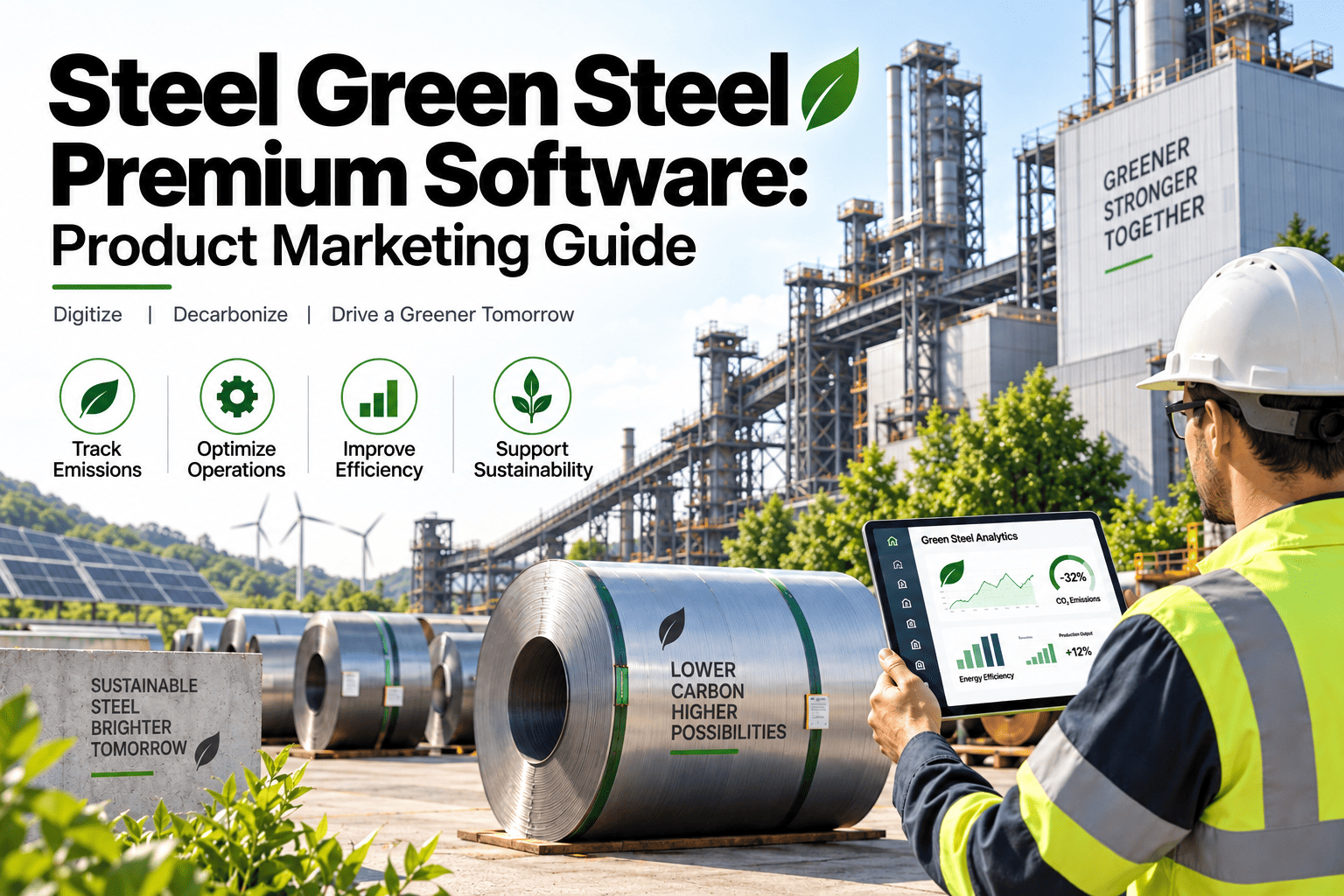
Green steel no longer trades on sustainability language alone — it trades on proof. Buyers in automotive, construction, and appliance manufacturing will pay a documented premium for low-carbon steel, but only when a plant can show verified emissions data down to the heat and batch level. For integrated mills and EAF operators chasing that premium, the real barrier is rarely production technology — it is the absence of a system that connects scrap intake, energy consumption, certification records, and sales in one traceable chain. This guide breaks down how the green steel premium actually works in 2026, what certification and CBAM compliance require on the plant floor, and how OxMaint's CMMS gives reliability and operations teams the traceability backbone to capture that premium instead of losing it to paperwork.
Green Steel Premium Management
The green premium is real money. Can your plant prove it earned it?
Certification bodies, CBAM auditors, and OEM procurement teams now ask for heat-level carbon data, not sustainability slogans. OxMaint gives steel plants the asset, inspection, and compliance records needed to substantiate green steel claims — and get paid for them.
€100–180
Per-tonne premium, EU flat steel
$30–80
Per-tonne premium, US OEM offtakes
50–400 kg
CO₂e/tonne threshold for "low-carbon" steel
Market Reality
Why buyers pay more for green steel — and why most mills still can't collect it
The green steel premium has moved from concept to contract. Automotive OEMs, construction developers, and appliance makers are now signing multi-year offtake agreements tied to verified carbon intensity, not marketing claims.
What's driving demand
- Corporate net-zero pledges push Scope 3 emissions accounting down the supply chain to steel buyers.
- The EU's Carbon Border Adjustment Mechanism now prices embedded carbon on imported steel, turning the premium from voluntary to compulsory for exporters.
- Building codes and green procurement policies increasingly specify embodied-carbon limits, not just structural grade.
What's still limiting capture
- Carbon intensity remains a fourth purchasing criterion behind price, quality, and delivery — buyers only pay the premium when proof is airtight.
- Pricing varies widely by region, certification method, and carbon-intensity tier, so unverifiable claims get discounted or rejected outright.
- Most plants track emissions data and maintenance data in separate systems, breaking the chain of custody auditors need to see.
Root Cause
The traceability gap: where mills lose the premium they already earned
A plant can run a genuinely low-carbon process and still fail to monetize it. The premium is lost between the furnace and the invoice, not on the shop floor.
Disconnected heat records
Scrap mix, DRI/HBI ratios, and energy source per heat sit in operator logs that never link back to the finished coil or billet a customer receives.
Manual certification prep
Assembling data for a ResponsibleSteel audit or an Environmental Product Declaration becomes a weeks-long spreadsheet exercise instead of a system export.
Maintenance data left out
Electrode consumption, DRI shaft furnace efficiency, and EAF transformer performance directly affect carbon intensity per tonne, yet rarely feed the sustainability report.
No audit trail on record
When a buyer or CBAM verifier asks for evidence a year later, the underlying work orders, inspection logs, and supplier data are difficult to reconstruct.
Process Chain
The embedded-emissions traceability chain, step by step
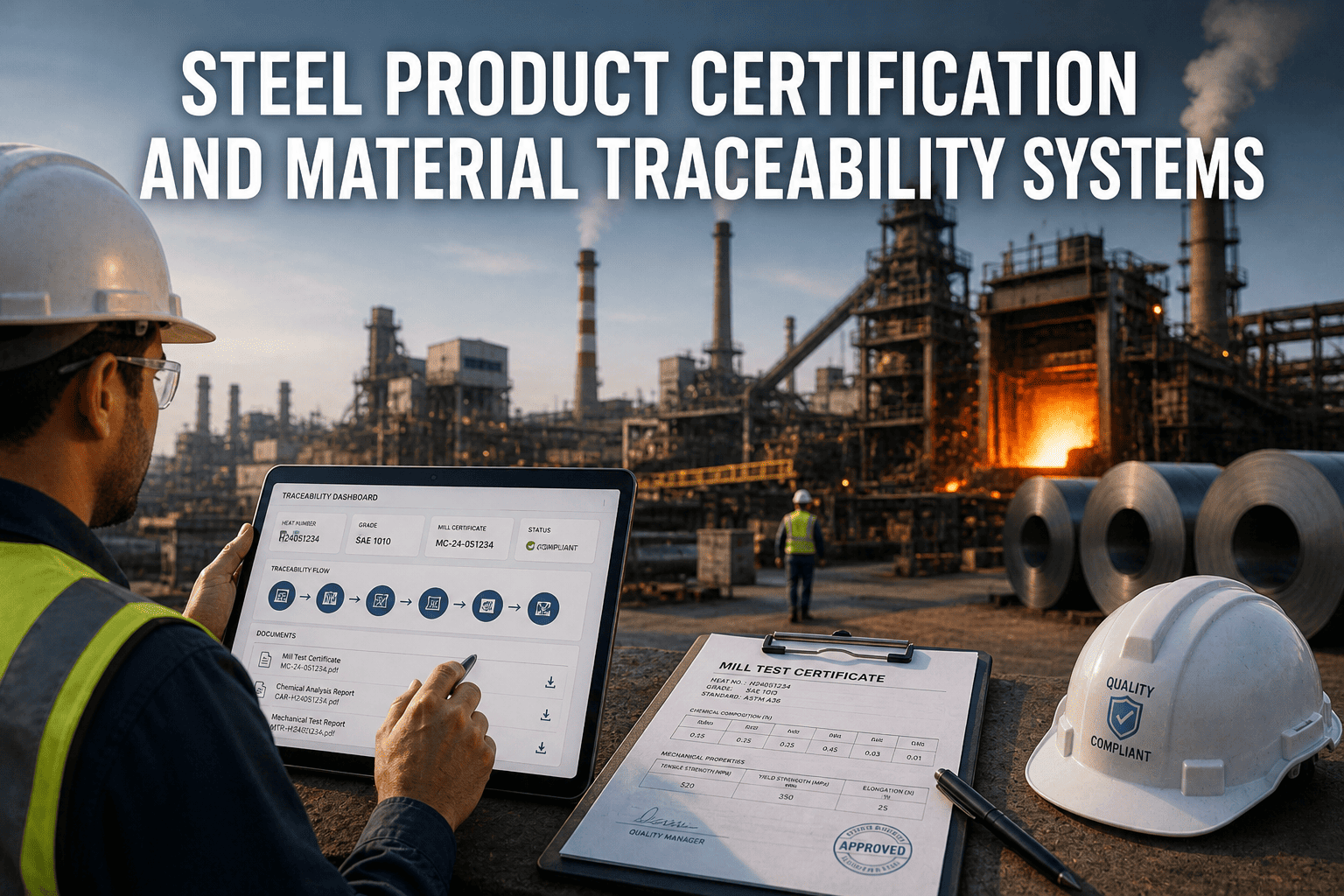
Capturing the green premium requires an unbroken data chain from raw material intake to the certified sale. Each link in this chain is a record a CMMS can generate automatically instead of manually.
Scrap and feedstock intake logging
Record scrap grade, DRI/HBI volumes, and supplier origin against each inbound lot, establishing the starting carbon baseline before melting begins.
Heat-level process capture
Tie EAF or BF-BOF route, electrode and flux consumption, and melt duration to a unique heat number that travels with the material downstream.
Scope 1 and Scope 2 energy tracking
Log fuel, electricity source, and on-site energy use per process step so direct and purchased-energy emissions attach to the batch, not just the plant total.
Scope 3 supplier data aggregation
Pull upstream carbon data from scrap, alloy, and DRI suppliers into the same asset and inventory records used for procurement and reorder tracking.
Third-party verification and certification
Export compiled records for ResponsibleSteel audits, Environmental Product Declarations, or CBAM default-value reporting without rebuilding the data set each cycle.
Certified lot released to sales
The finished coil or bar ships with a documented carbon intensity figure, giving commercial teams the evidence needed to invoice the premium with confidence.
Certification Landscape
Which green steel framework actually applies to your plant
Certification bodies, product declarations, and regulatory mechanisms each verify different things. Plants typically need more than one to satisfy every buyer and regulator in their supply chain.
| Framework | What It Verifies | Audit Cycle | Records the Plant Must Produce |
|---|---|---|---|
| ResponsibleSteel Certification | Site-level ESG performance across 13 principles, including climate and GHG management | Full recertification every 3 years | Emissions reduction targets, governance records, labor and biodiversity documentation |
| Environmental Product Declaration (EPD) | Product-specific embodied carbon per ISO 14025, tonne-for-tonne | Typically every 3–5 years or per product change | Life-cycle inventory data, energy mix, process-level emissions |
| EU CBAM Declarations | Embedded carbon in steel imported into the EU, priced against EU ETS carbon costs | Quarterly reporting, moving to full liability from the definitive regime | Verified specific emissions per product, installation-level data |
| Worldsteel Climate Action Program | Corporate participation in sector-wide CO2 data collection and benchmarking | Annual data submission | Plant-level CO2 intensity figures against the worldsteel methodology |
Market Snapshot
What the green premium is actually worth right now
Premiums vary sharply by region, product form, and buyer motivation. Understanding where your product and market sit helps set realistic pricing conversations with commercial teams.
Europe — Flat Products
€100–180 per tonne
Roughly 20–30% above conventional HRC pricing, with CBAM tightening the gap between voluntary and mandatory carbon costs on imports.
United States — OEM Offtakes
$30–80 per tonne
Automotive and appliance manufacturers are locking in multi-year contracts tied to verified low-carbon specification, not spot pricing.
China — Flat Steel Differential
¥0–500 per tonne
The reduced-carbon differential remains narrow but is expected to widen as CBAM-driven export pressure accelerates domestic certification uptake.
Recycled / Grade-Specific Premiums
£100–400 per tonne
Premiums scale with certification requirements and grade — higher for specialty products where Scope 3 accounting matters most to the buyer.
Operational Impact
Spreadsheet tracking versus CMMS-driven traceability
The difference between a plant that captures its green premium and one that leaves it on the table usually comes down to how emissions data is generated and stored.
Manual, Disconnected Tracking
- Heat records live in operator notebooks or standalone spreadsheets
- Certification prep requires pulling data from multiple departments by hand
- Maintenance and energy data are never linked to carbon reporting
- Audit evidence is reconstructed under time pressure, increasing error risk
CMMS-Driven Traceability
- Heat and batch data auto-links to assets, work orders, and inventory records
- Certification exports pull directly from a single system of record
- Equipment condition data feeds directly into carbon-intensity calculations
- Every claim has a documented, time-stamped audit trail on demand
See the Traceability Chain in Action
Turn your carbon data into a documented, sellable premium
Walk through how OxMaint connects heat-level records, inspections, and certification exports on your own asset hierarchy.
How OxMaint Helps
Building the traceability backbone for green steel with OxMaint
OxMaint was not built as a carbon accounting tool — it is built as the operational system of record that carbon accounting depends on. By linking assets, work orders, inspections, and inventory, it gives plants the evidence base certification and CBAM reporting require.
Heat and Batch Asset Traceability
Track scrap, DRI, and alloy inputs against specific furnace assets and work orders, so every heat has a documented feedstock and process history.
Digital Certification Records
Store inspection results, energy logs, and compliance documentation in one place, ready to export for ResponsibleSteel audits or EPD renewals without a manual scramble.
Condition-Based Maintenance on Decarbonization Assets
Schedule predictive and preventive maintenance on EAF transformers, DRI shaft furnaces, and electrode systems, since equipment efficiency directly shapes carbon intensity per tonne.
Compliance-Ready Dashboards
Give sustainability and commercial teams real-time visibility into carbon-linked KPIs, inventory of low-carbon feedstock, and upcoming certification renewal dates.
Audit Readiness
Checklist: is your plant ready for a green steel audit today?
Certification bodies and CBAM verifiers expect documentation to already exist, not to be assembled on request. Use this checklist to identify gaps before an audit is scheduled.
Every heat or batch has a traceable feedstock and energy record linked to a unique identifier.
Maintenance and inspection logs for melting and reduction assets are stored digitally, not on paper.
Supplier Scope 3 data is captured at the point of inventory receipt, not requested after the fact.
Certification and EPD renewal dates are tracked with automated reminders, not calendar memory.
Reports can be generated for any date range without manually re-collecting source data.
Frequently Asked Questions
Green steel premium and certification: questions answered
What exactly is a green steel premium?
It is the additional price buyers pay for steel with verified lower embedded carbon compared to conventional blast-furnace production. Premiums currently range from roughly €100–180 per tonne in Europe to $30–80 per tonne on US OEM contracts, depending on certification and product form.
How is embedded carbon in steel actually calculated?
Embedded carbon combines Scope 1 direct emissions from the process, Scope 2 emissions from purchased energy, and Scope 3 emissions from upstream materials like scrap and DRI, measured per tonne of finished product.
Do I need ResponsibleSteel certification, an EPD, or CBAM reporting?
Most exporting plants need more than one: ResponsibleSteel verifies site-level ESG practices, an EPD documents product-specific carbon intensity, and CBAM reporting is mandatory for steel entering the EU regardless of other certifications held.
How does a CMMS help capture the green premium?
A CMMS like OxMaint links feedstock, energy, and maintenance data to specific heats and work orders, so certification and audit evidence already exists instead of being rebuilt manually. Learn more with a personalized walkthrough.
How long does it take to set up certification-ready tracking?
Most plants can establish core asset hierarchy, feedstock logging, and inspection workflows within 4 to 8 weeks, giving commercial teams documented evidence in time for the next certification or audit cycle.
Start Capturing the Green Premium
Stop leaving certified carbon data on the shop floor
Give your commercial team the traceable, audit-ready evidence they need to price and sell every certified tonne with confidence.
Free 14-day trial · No credit card required