Your CMMS already contains the data that could predict your next critical asset failure in the steel plant — the problem is that 91% of steel plant maintenance teams never analyze it for condition monitoring trends. Every vibration measurement your technicians have recorded, every oil analysis sample they have submitted, every thermal image they have captured over the past 24 months contains degradation patterns that repeat with statistical regularity across asset types, operating zones, and failure modes. A 2025 analysis of industrial maintenance practices found that condition monitoring enables early detection of failure precursors to avoid unplanned stoppages, optimization of maintenance timing to reduce unnecessary replacements, and extension of machinery lifespan to improve return on equipment investment [citation:5]. The bearing fault that shows a 20% increase in vibration amplitude at 18 months on your roughing mill motor is not a random event — it is the third bearing failure on that motor class in your plant this year, and the previous two showed the characteristic sideband pattern weeks before failure. That pattern is sitting in your condition monitoring data right now, invisible because nobody has built the trending analysis that surfaces it. Oxmaint's condition monitoring module turns your existing sensor data into a degradation prediction engine — automatically tracking vibration trends, flagging oil analysis anomalies, generating thermal alerts, and creating preventive work orders before critical assets fail. The data is already yours, and the analysis that prevents the next unplanned shutdown takes minutes to configure, not months. If your steel plant is still reacting to failures instead of predicting them from the condition data you already collect, start a free trial or book a demo to see how Oxmaint surfaces condition monitoring patterns from your existing data.
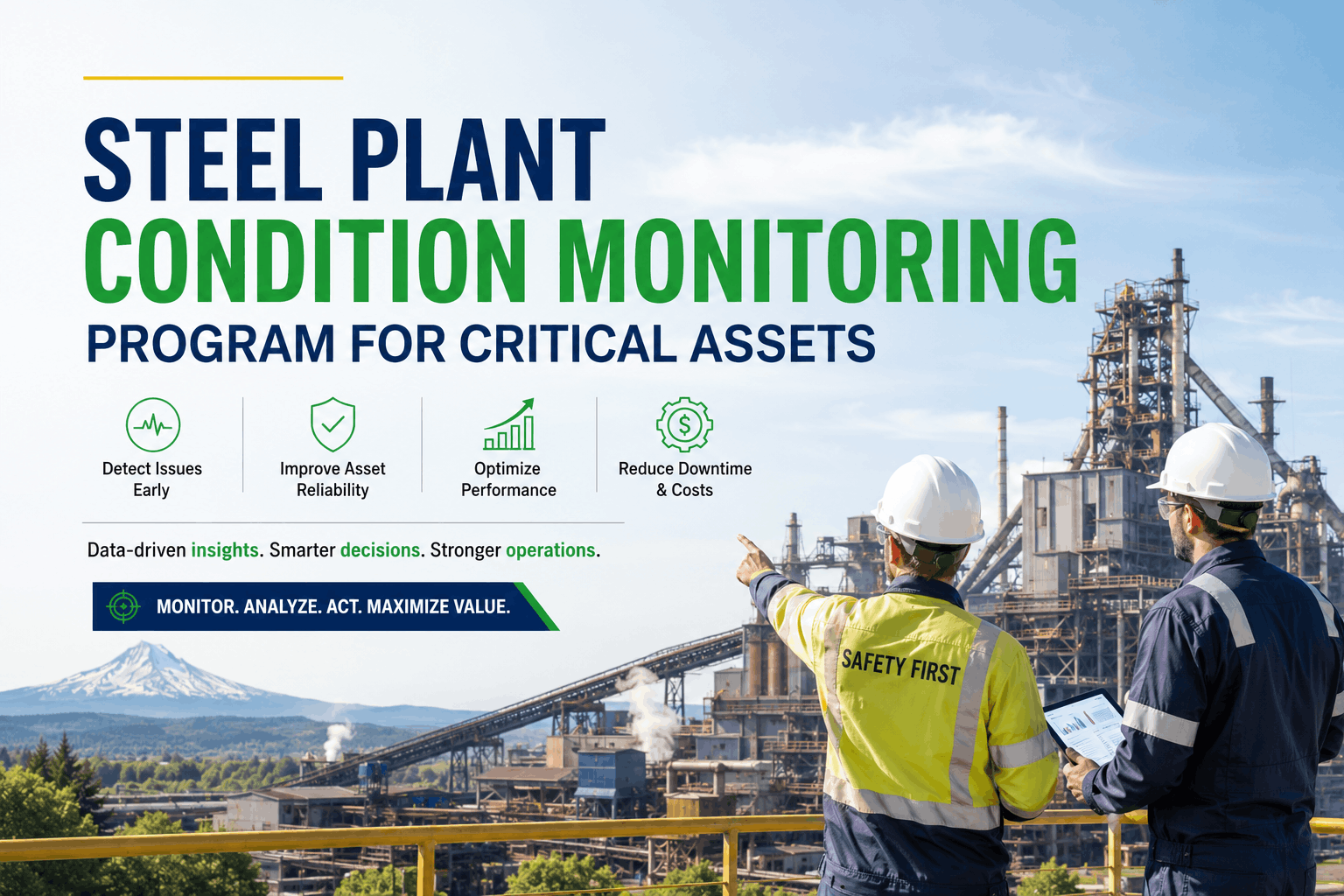
Steel Plant Condition Monitoring Program for Critical Assets
Build a comprehensive condition monitoring program for steel plant assets — vibration monitoring, oil analysis, thermography, ultrasound testing, and motor current analysis for predictive maintenance of critical equipment.
You Already Have the Condition Data — You Just Need the Analysis
Every vibration measurement captured by your sensors is a data point. Every oil analysis sample is a wear indicator. Every thermal image is a temperature signature. Oxmaint does not require new sensors or specialized software — it analyzes the condition monitoring data you have already been collecting and surfaces the degradation patterns that prevent critical asset failure. Steel plants with 50+ critical assets can start a free trial or book a demo to see how condition monitoring analysis works on your plant's actual data.
What Is Condition Monitoring for Steel Plant Assets?
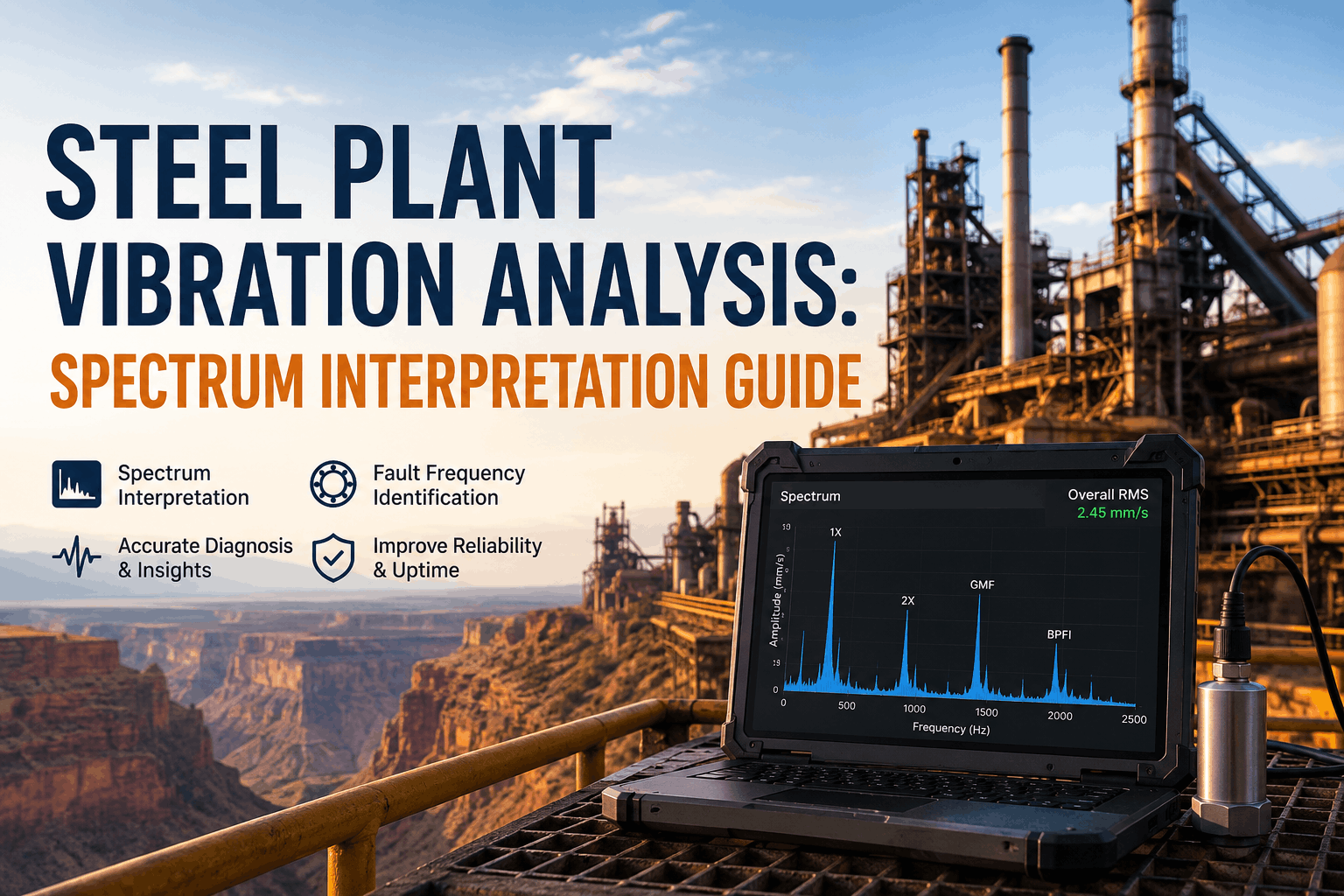
Condition monitoring (CM) is a predictive maintenance approach that uses sensors and analysis to track the performance of components, equipment, and processes to identify parts that may need repair or replacement as part of a predictive maintenance strategy [citation:1]. The approach uses sensors to monitor certain machine parameters — like vibration levels and temperature — and identify abnormal patterns [citation:6].
Condition monitoring acts as a technology enabler for other maintenance methodologies such as predictive maintenance. It is not itself a maintenance methodology, but rather the data collection and analysis capability that enables condition-based maintenance (CBM) and predictive maintenance (PdM) strategies [citation:2]. The core principle is simple: machines produce many data points during normal operation. Sensors collect vibration, thermal, acoustic, and other data which is sent to a control system for analysis. Software flags potentially troubling results for human review or can trigger an automated response to protect equipment and workers [citation:1].
The Six Core Condition Monitoring Techniques for Steel Plants
Steel plants can employ various techniques and tools to implement a condition monitoring program [citation:4]. The six most common approaches for critical steel plant assets are vibration monitoring, thermography, ultrasound, oil analysis, motor current analysis, and visual inspection [citation:5][citation:6].
Oil Analysis, Motor Current Analysis, and Visual Inspection
Beyond vibration, thermal, and acoustic monitoring, steel plants rely on oil analysis, motor current analysis, and visual inspection to provide a comprehensive condition monitoring program for critical assets. Each technique addresses different failure modes and provides unique diagnostic insights [citation:4][citation:5].
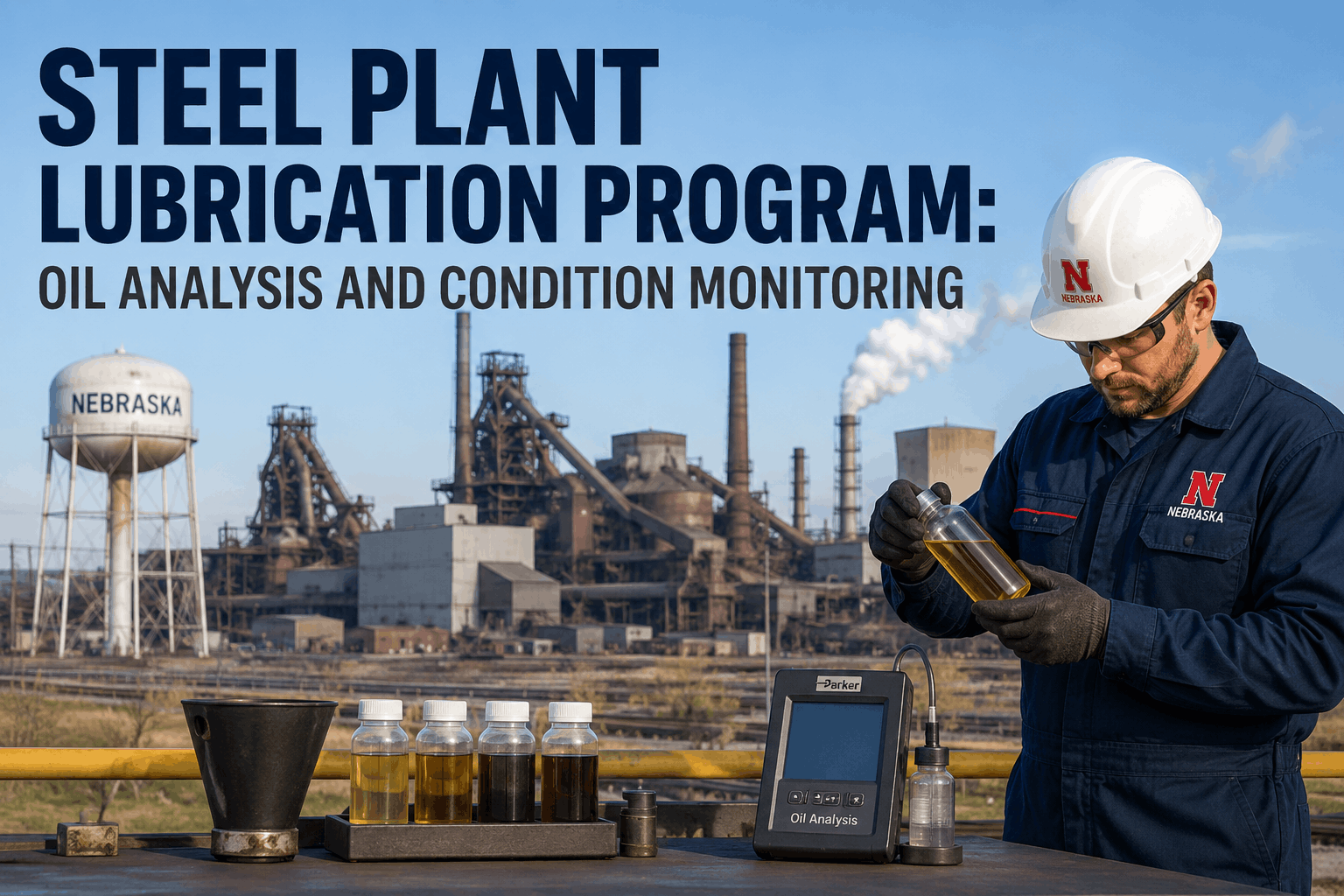
Oil analysis assesses the properties of lubricating oil — viscosity, acidity, contamination, and wear particles — to detect internal wear, contamination, and lubricant degradation [citation:4]. It involves collecting a sample of lubricating oil from the equipment and sending it to a laboratory for analysis. Oil analysis can detect wear progression in gears, bearings, and piston assemblies; track oil degradation, oxidation, and additive depletion; and identify contamination issues before they cause damage [citation:5].
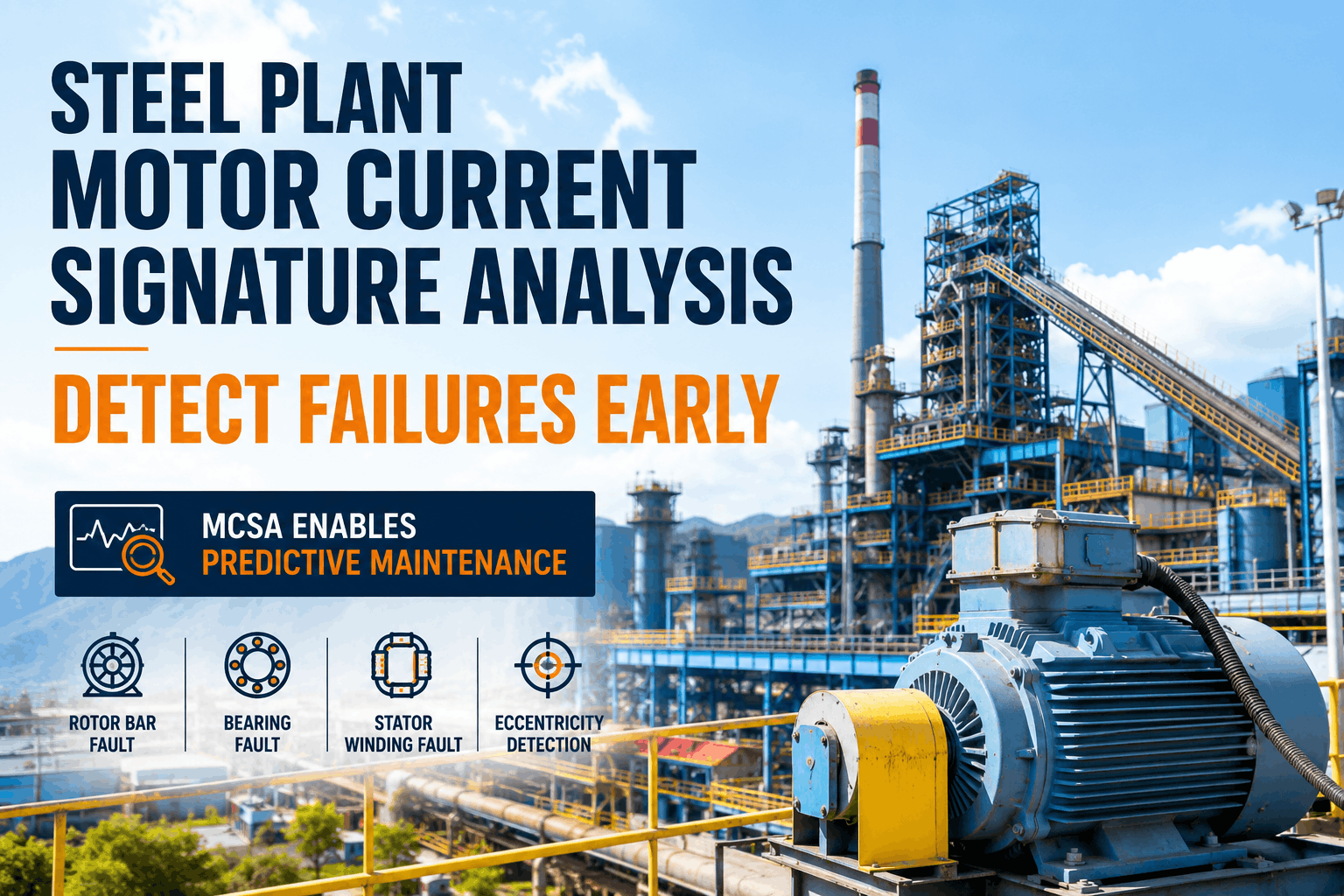
Motor Current Signature Analysis is a non-invasive technique that detects mechanical and electrical faults in electric motors by analyzing the harmonic content of stator-current signals. It can detect broken rotor bars, stator winding faults, bearing defects, and eccentricity [citation:5]. MCSA offers the advantage of online diagnostic capability that eliminates production downtime, leverages existing power monitoring infrastructure, and is compatible with AI analytics [citation:5].
Visual inspection remains a fundamental condition monitoring technique that detects visible issues — leaks, corrosion, loose components, and structural damage — that may not be captured by automated sensors [citation:4]. Performance testing measures output parameters to identify efficiency declines that indicate developing problems. These techniques can be combined with advanced methods for comprehensive monitoring.
How Oxmaint Turns Condition Data Into Degradation Prediction
Oxmaint's condition monitoring module is not a standalone analysis tool bolted onto your maintenance process — it is the CMMS that collects condition data, structures it correctly, and surfaces degradation patterns automatically as part of daily steel plant operations. Every vibration measurement, every oil analysis, every thermal image feeds the prediction engine without any additional data entry. Steel plants ready to move from reactive to predictive maintenance can start a free trial or book a demo to see the condition monitoring workflow on live plant data.
Oxmaint provides a centralized repository for all condition monitoring data — vibration measurements, oil analysis results, thermal images, ultrasound readings, and motor current waveforms. Standard data formats supported: CSV, Excel, and direct integration with sensor gateways.
Trend monitoring uses continuous measurement and data analysis to identify trends that point to asset deterioration. Organizations decide which metric is the best indicator of equipment health and use that metric to assess trends in asset performance, anticipating when the asset will deteriorate past the critical limit [citation:4].
Oxmaint generates alerts when the system detects abnormalities based on analysis results. Threshold configuration establishes criteria levels such as caution, warning, and critical for each measurement parameter. Alert notification methods include email/SMS, on-site warning lights, and automatic ticket generation [citation:5].
Condition monitoring sensors collect machine health data that allows organizations to establish baseline measurements for assets and decipher what is and is not normal for a piece of equipment [citation:4]. All future comparisons reference this baseline to detect changes in parameter values and degradation patterns.
When condition parameters reach threshold levels, Oxmaint automatically generates preventive work orders with detailed condition data, trend analysis, and recommended actions attached. This enables planned maintenance during scheduled outages rather than emergency repairs [citation:5].
Condition monitoring integrates with CMMS systems to auto-generate work orders based on asset health data. The CMMS can track data, map trends, create in-depth reports, and organize maintenance records for auditing and compliance [citation:6].
Reactive Maintenance vs Condition Monitoring-Driven Prediction
Seven Steps to Build Your Steel Plant Condition Monitoring Program
Implementing a condition monitoring program is a structured process involving several key steps. Each step builds on the previous one to create a comprehensive program that delivers measurable ROI [citation:2][citation:4].
| Step | Action | Steel Plant Application |
|---|---|---|
| 1. Set Goals | Define objectives — regulatory compliance, efficiency improvement, cost reduction [citation:2] | Reduce downtime on rolling mills, extend blast furnace equipment life, improve motor reliability |
| 2. Select Assets | Start with critical assets with known issues; establish easy data collection methods you can scale [citation:2] | Pilot program on 5-10 critical assets — rolling mill motors, main gearboxes, compressors |
| 3. Collect Historical Data | Gather historical data, maintenance history, and manufacturer documentation [citation:4] | Import 12+ months of existing vibration, oil analysis, and thermal data into Oxmaint |
| 4. Install Sensors | Install sensors on critical assets — vibration, temperature, current, and pressure sensors [citation:4] | Wireless vibration sensors on motors, thermocouples on bearings, current sensors on VFDs |
| 5. Establish Baselines | Collect initial machine health data to establish baseline measurements for each asset [citation:4] | Record vibration signatures, thermal profiles, oil quality, and current signatures during normal operation |
| 6. Monitor & Analyze | Continuously monitor and analyze sensor data to assess asset health and anticipate failures [citation:4] | Oxmaint automatically trends vibration, temperature, and current data against baselines |
| 7. Activate Predictive Work Orders | Generate maintenance work orders when condition parameters reach threshold levels | Automated work orders for bearing replacement, motor rebuild, or oil change based on condition data |
Key Elements of an Effective Condition Monitoring Strategy
To implement a successful condition monitoring strategy, it is essential that businesses map out what they want to achieve and how viable these aspirations are [citation:2]. The key elements that define an effective strategy include:
To establish validity and achieve ROI from condition monitoring, key metrics must be established [citation:2]. Key metrics can include wastage reduction, reduction of spare parts in inventory, reduction of planned maintenance, extend asset lifetime, maintain uptime, or maintain quality [citation:2].
Assessing the cultural readiness of the organization to implement, maintain, and optimize condition monitoring is a key step. Consider the organization's current level of knowledge and understanding of condition monitoring, commitment needed from senior management for operations and training, and appetite and current attitude to change [citation:2].
Ensure that the overall cost of implementation and ongoing monitoring is less than the expected gains. Conduct a cost-benefit analysis comparing implementation costs — technology, training, upskilling, processes, data analysis — against potential savings — downtime avoided, extending asset lifespan, improved production quality [citation:2].
ROI of Condition Monitoring for Steel Plant Critical Assets
Condition monitoring enables early detection of failure precursors, preventing unplanned stoppages that disrupt production for 12-48 hours [citation:5]
Planned repairs during scheduled outages cost 30-50% less than emergency repairs requiring overtime, expedited parts, and premium vendor services
Optimization of maintenance timing reduces unnecessary replacements and inspections, lowering total maintenance spend [citation:5]
The condition monitoring program pays for itself through avoided downtime and reduced repair costs, typically within 6-12 months
Frequently Asked Questions
What is condition monitoring and why is it important for steel plants?+
What condition monitoring techniques are most effective for steel plant assets?+
How do I start a condition monitoring program in my steel plant?+
What ROI can I expect from a condition monitoring program?+
Your Next Critical Asset Failure Is Already in Your Condition Data — Find It Before It Shuts Down Your Plant
Every vibration measurement, oil analysis sample, and thermal image your steel plant has ever recorded contains a piece of the pattern that predicts the next critical asset failure. Oxmaint's condition monitoring module collects sensor data correctly, trends it automatically, and generates the predictive work orders that keep your rolling mills running and your blast furnaces operational. No new sensors. No specialized consultants. Import your data, identify your degradation patterns, and start predicting failures in your first 30 days.