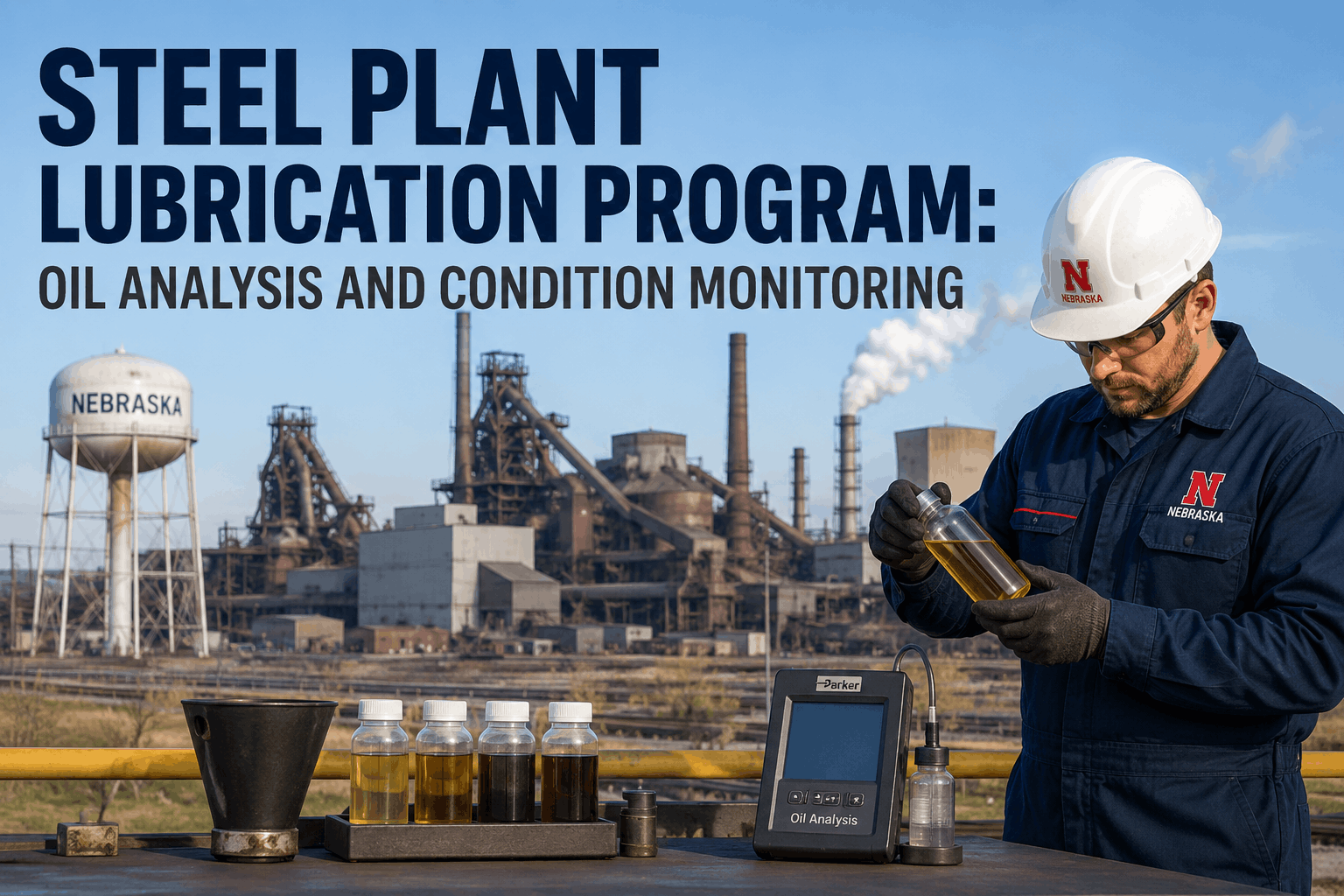
Steel Plant Lubrication Program: Oil Analysis and Condition Monitoring
By Alex Jordan on June 17, 2026
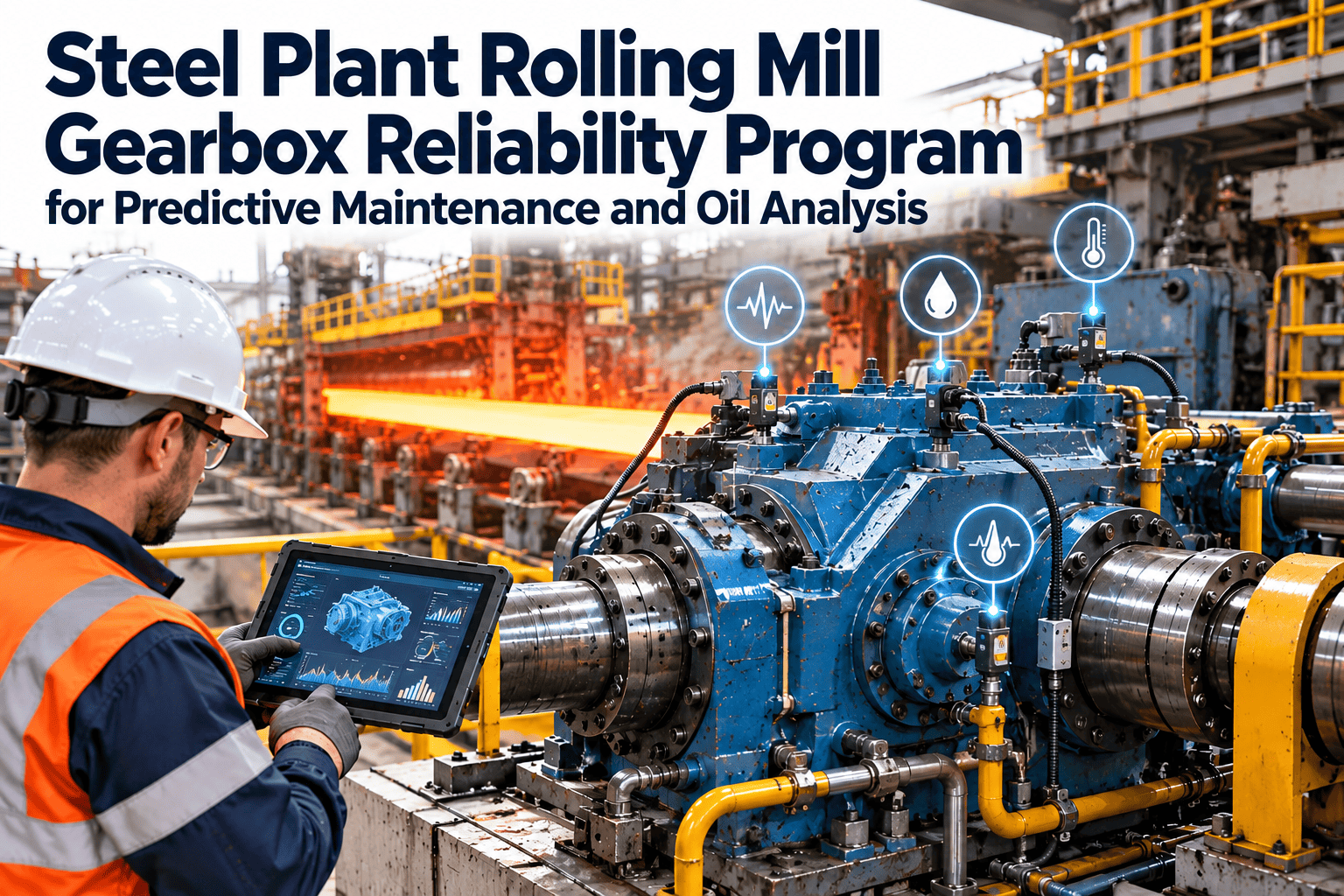
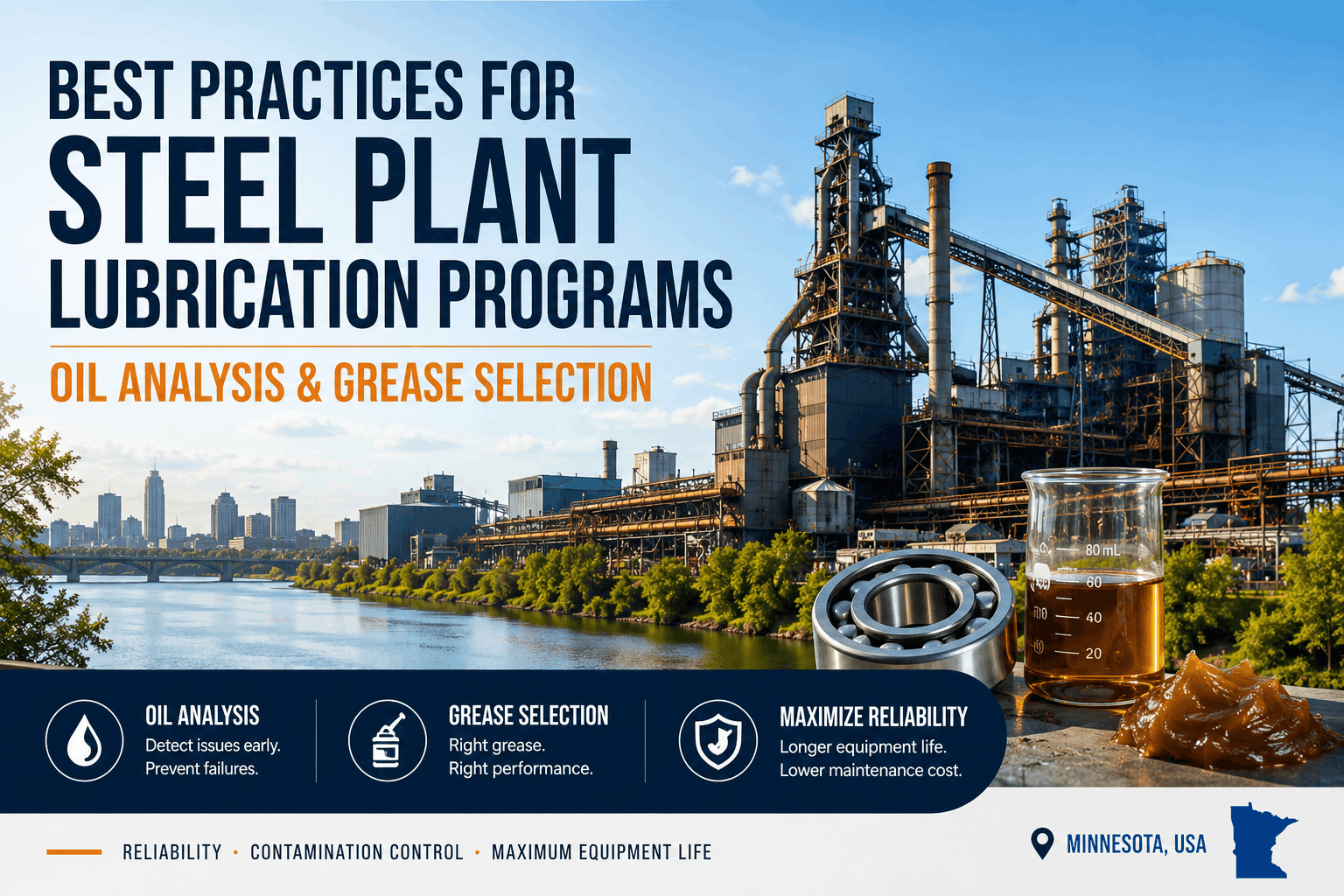
Steel plant lubrication programs protect rotating equipment—rolling mill bearings, blast furnace blowers, casting machine drives, compressors, and hydraulic systems—from friction, heat, and wear. Poor lubrication causes bearing failures costing $50,000–$200,000 per incident plus 12–24 hours production downtime. Oxmaint's CMMS implements world-class lubrication management: oil analysis sampling schedules, contamination monitoring (ISO particle counts), wear debris analysis (ferrography), viscosity trending, and condition-based oil change intervals. Mobile technicians collect oil samples directly into CMMS with automatic lab integration for rapid feedback. Real-time particle count alerts flag contamination before bearing damage occurs. Predictive analysis identifies bearing wear progression 8–12 weeks before failure. Schedule a lubrication program consultation to extend bearing life 30–50%, reduce unplanned maintenance costs by 40–60%, and achieve world-class equipment reliability through scientific oil condition monitoring.
LUBRICATION MANAGEMENT · OIL ANALYSIS · 2026
Steel Plant Lubrication Program: Oil Analysis and Condition Monitoring
Track oil sampling schedules, ISO cleanliness metrics, wear debris trends, viscosity stability, and bearing health indicators across all lubricated equipment. Predict bearing failure 8–12 weeks in advance and perform condition-based maintenance to maximize equipment life and minimize unplanned downtime.
Condition-based oil changes based on actual wear debris extend bearing lifespan from 3–5 years to 5–8 years.
40–60%
Maintenance Cost Reduction
Predictive bearing failure detection eliminates 40–60% of unplanned bearing replacement costs and emergency repairs.
95%
Failure Prevention Rate
Early wear debris detection prevents 95% of catastrophic bearing seizures and unplanned equipment failures.
12+ Months
Early Failure Detection
Ferrography and particle count analysis identify bearing wear progression 8–12 weeks before mechanical failure.
Oil Analysis Science and Bearing Health Diagnostics
Oil analysis is the science of analyzing lubricant fluid samples to predict equipment failure weeks or months in advance. Lubrication reduces friction and heat generation in rotating bearings, but friction generates microscopic wear particles (metal debris) that accumulate in oil. By analyzing oil samples, technicians can quantify wear rate, identify debris type (ferrous indicating steel wear, nonferrous indicating bronze/aluminum), measure viscosity stability (indicating oil oxidation), detect water contamination (indicating seal failure or condensation ingress), and quantify acid number increase (indicating oil degradation). Steel plant lubricated equipment includes rolling mill bearings (10–500-ton load capacity at speeds up to 300 RPM), blast furnace blower bearings (100–2,000 HP continuous duty), casting machine spindle bearings (precision 18,000 RPM operation), blast furnace hot-air stove fans (2,000+ HP), compressor bearings (50–500 PSI continuous duty), hydraulic pump bearings (in power distribution systems), and general plant motor bearings (5–300 HP distributed throughout facility). Each equipment class has specific oil analysis requirements: rolling mill bearings typically change oil every 8,000–12,000 operating hours (every 6–12 months depending on speed and load), blast furnace equipment every 2,000–4,000 hours, compressors every 4,000–8,000 hours. Traditional maintenance performs oil changes on fixed time schedules regardless of actual oil condition—wasting oil and extending change intervals when oil is still good, or running with degraded oil when conditions are severe. Condition-based oil analysis enables optimal change timing: if oil analysis shows ISO 4406 cleanliness 16/14/11 and wear debris <10 mg/L, extend oil change 4–6 months beyond scheduled interval. If particle count spikes to 18/16/13 or wear debris >50 mg/L, accelerate oil change to 2–3 weeks even if scheduled interval is not yet due. CMMS integrates oil sample data automatically from third-party labs, triggers alerts when trends exceed alarm limits, and recommends specific corrective actions.
SECTION 1: ISO Cleanliness Standards and Particle Count Monitoring
SAMPLING SCHEDULE
Oil Sampling Frequency and Chain-of-Custody Protocol
Oil samples collected every 250–500 operating hours (typically monthly for continuous equipment, quarterly for seasonal equipment). Samples drawn from system midstream point—not from reservoir bottom where sediment accumulates, not from top where foam develops. CMMS tracks sample collection date, equipment ID, operating hours, operator ID, and lab submission date. Automated alerts trigger if sample is overdue (e.g., if 2-month interval scheduled and sample not collected within 8 weeks, notification issued).
PARTICLE COUNTING
ISO 4406 Cleanliness Rating and Contamination Limits
ISO 4406 code (e.g., 16/14/11) quantifies particles >4 microns, >6 microns, and >14 microns per milliliter of oil. Rolling mill bearing oil: target ISO 15/13/10 (very clean, <1,000 particles >4µ per mL). Blast furnace equipment oil: target ISO 17/15/12 (moderately clean). Hydraulic systems: target ISO 17/15/11 (strict cleanliness for pump protection). If actual cleanliness 19/17/14 (dirty), contamination sources identified: air inlet filters clogged, seal degradation allowing dirt ingress, or oil oxidation generating particles. CMMS alerts when cleanliness exceeds maximum threshold for equipment class.
WATER CONTAMINATION
Moisture Content Analysis and Seal Integrity Assessment
Oil absorbs water from environment (humidity, cooling water leaks, condensation in warm bearings cooling during shutdown). Karl Fischer titration measures moisture content. Target: <500 ppm (0.05%) for industrial equipment, <1,000 ppm for less critical systems. If moisture >2,000 ppm, indicates seal failure or water system contamination—bearing corrosion risk, oil viscosity degradation, and rust formation on metal surfaces. CMMS alerts if moisture increases rapidly (>500 ppm per month) indicating active seal leakage or cooling system breach.
VISCOSITY STABILITY
Kinematic Viscosity Trending and Oil Oxidation Detection
Viscosity (oil thickness) measured at 40°C and 100°C. Target viscosity should remain within ±10% of original specification. Viscosity increase indicates oil oxidation (chemical degradation from heat and air exposure), reducing oil fluidity and increasing equipment wear. Viscosity decrease indicates oil thinning (typically from contamination or thermal breakdown). CMMS tracks viscosity trend—if viscosity changes >10% from baseline, oil change recommended within 2–4 weeks to prevent bearing damage.
SECTION 2: Wear Debris Analysis and Ferrography Interpretation
Alert >50 mg/L; Critical >100 mg/L—indicates severe bearing wear, plan bearing replacement within 2–4 weeks
Nonferrous (Bronze/Aluminum)
Bronze cage wear in rolling element bearings, aluminum bearing shells, brass shim wear. Indicates specific bearing component failure. Normally <5 mg/L.
Alert >10 mg/L; Critical >20 mg/L—bearing cage or shell degradation, schedule bearing inspection within 1 week
Silicon (Sand/Dirt)
Environmental contamination from air inlet filters, seal breaches, or direct dump of dirty material into system. Silicon particles accelerate wear by acting as grinding compound.
Alert >500 ppm; Critical >1,000 ppm—check/replace air filters, inspect seals, change oil immediately to stop abrasive wear
Soot (Carbon Particles)
Byproduct of oil oxidation (heat exposure, air ingress) or fuel contamination (in equipment burning fuel oil). Soot accumulation darkens oil and reduces oxidation stability. Normally <50 ppm.
Alert >300 ppm; Critical >500 ppm—indicates oil aging, change oil within 1 month and verify air inlet filters are effective
SECTION 3: Bearing-Specific Oil Analysis and Equipment Class Management
Rolling Mill Bearing Oil Analysis—High-Speed Precision Bearings
Rolling mill spindles operate 100–300 RPM under 10–500-ton loads with high-precision deep-groove ball bearings. Oil analysis every 500 operating hours (weekly). Critical parameters: ISO cleanliness <16/14/11, ferrous debris <20 mg/L baseline (<50 mg/L alert), nonferrous <5 mg/L (<10 mg/L alert), viscosity ±5% of ISO 32–46 specification. Rising ferrous debris indicates race wear or ball spalling—schedule bearing replacement within 4 weeks before catastrophic failure.
BF blowers operate 2,000+ HP continuously at 3,600 RPM pushing 100,000+ cubic feet of hot air. Elevated operating temperature (80–90°C bearing zone) accelerates oil oxidation and viscosity loss. Sample every 250 operating hours (typically 2–3 weeks). Critical: ISO cleanliness <17/15/12, ferrous debris <30 mg/L baseline (<80 mg/L alert), viscosity ±10% of ISO 46 (50°C operation = viscosity naturally thinner than ambient). Rapid viscosity loss or rising iron indicates bearing load zone overheating—reduce speed or increase cooling to prevent spalling.
Casting machine spindles operate 18,000+ RPM with hydrodynamic (fluid film) bearings, tolerating minimal load capacity compared to rolling element bearings. Oil film thickness reduced to single-micron range—even 5-micron particles cause bearing damage. Sample every 500 hours (monthly). Critical: ISO cleanliness <14/12/9 (very clean, only 100–200 particles >4µ per mL), ferrous debris <5 mg/L baseline (<10 mg/L alert indicates spindle bearing wear). Maintain oil viscosity exactly per spec (±2%)—too thin = bearing metal-to-metal contact; too thick = excessive friction and heat.
Compressor Bearing and Hydraulic System Oil Analysis
Compressor bearings operate under high pressure (50–500 PSI) with oil providing both lubrication and hydraulic actuation. Sampling every 1,000 hours (quarterly typical). Critical: ISO <17/15/11, ferrous debris <25 mg/L, water <1,000 ppm (water causes corrosion and varnish formation in hydraulic systems). Viscosity stability critical for pressure pump function. TAN (Total Acid Number) <0.5 mg KOH/g indicates acid-free oil; >1.5 indicates oxidation and imminent oil change needed.
CMMS Workflow for Continuous Lubrication Program Management
Automated Oil Sampling Schedule and Lab Integration
CMMS auto-generates sampling work orders based on equipment class and operating hours. Rolling mill bearings: every 500 hours. Blast furnace equipment: every 250 hours. Compressors: every 1,000 hours. Mobile technician app guides technician to each equipment location, notes operating parameters (hours run, temperature, any vibration/noise), and captures sample. CMMS automatically transmits sample data to partnered oil analysis lab with tracking barcode for rapid turnaround (results in 24–48 hours).
Real-Time Lab Result Integration and Automated Alert Triggering
Lab results automatically populate CMMS. System compares results against equipment-specific alarm limits. If ISO cleanliness exceeds threshold or ferrous debris >alert level, CMMS instantly triggers work order for corrective action (oil change, air filter replacement, seal inspection) with priority assignment. Email/SMS alerts sent to lubrication engineer and equipment operator explaining findings and recommended actions.
Wear Debris Trending and Predictive Bearing Failure Forecasting
CMMS plots ferrous debris trend over 6–12 months. Linear trend (rising 5 mg/L per month) predicts bearing failure 8–12 weeks before critical level. Exponential trend (doubling every month) indicates spalling has begun—schedule bearing replacement within 2–4 weeks. System automatically generates bearing replacement work order, reserves spare bearing from inventory, and coordinates shutdown scheduling with production manager.
Condition-Based Oil Change Intervals and Cost Optimization
Rather than fixed 6–12 month oil changes, CMMS recommends change intervals based on actual oil analysis data. If oil sample shows ISO 15/13/10, ferrous <15 mg/L, and viscosity stable after 6 months, extend change interval to 8–10 months. If sample shows deterioration, accelerate change to 4 weeks. Dynamic interval management reduces oil costs 15–25% while maintaining optimal bearing protection through science-based scheduling.
Multi-Equipment Lubrication Portfolio Dashboard and KPI Tracking
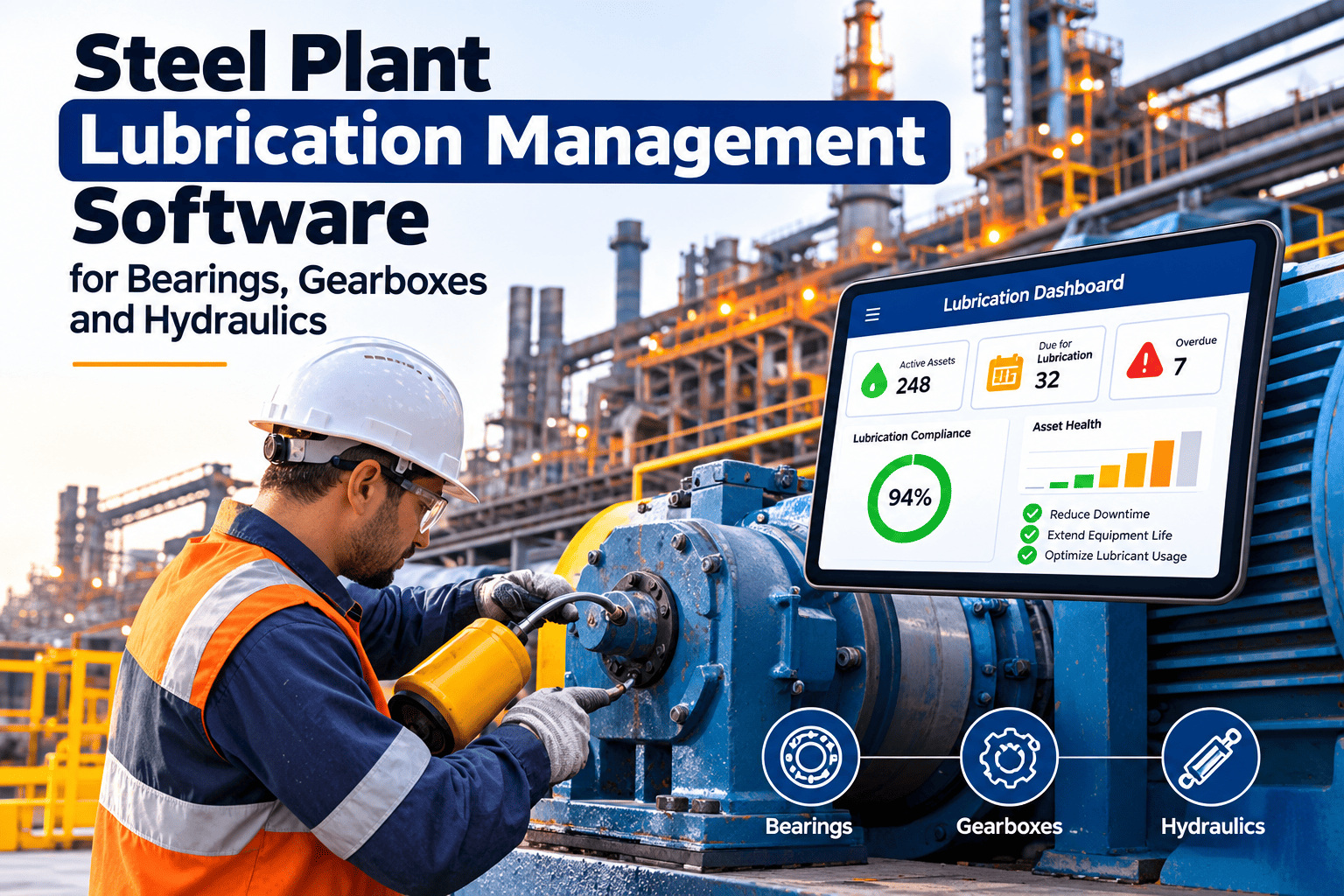
Central dashboard shows all equipment: last sample date, current ISO cleanliness, ferrous debris trend, upcoming sample dates, and oil change history. Identify equipment with highest bearing wear rates and investigate root causes (overloading, misalignment, contamination source). Track cost per bearing lifespan (bearing cost + oil + maintenance labor). Benchmark against industry standards to identify optimization opportunities.
30–50%
Bearing Life Extension
Condition-based oil management extends rolling element bearing lifespan from 3–5 years to 5–8 years across facility.
8–12 Weeks
Early Failure Detection
Ferrography and particle count trending predict bearing failure 8–12 weeks before catastrophic seizure occurs.
40–60%
Maintenance Cost Reduction
Elimination of emergency bearing replacements and unplanned downtime saves $200,000–$600,000 annually at typical mills.
100%
Program Coverage
CMMS tracks oil analysis for all 50–200+ lubricated equipment points across entire facility with automated scheduling.
Customer Success: Predictive Lubrication and Bearing Reliability
"Our rolling mill was experiencing 3–4 unplanned bearing failures annually, each costing $80,000–$150,000 in bearing replacement, labor, and lost production. We had no visibility into bearing health—only reactive replacement when seizure occurred. After implementing Oxmaint lubrication CMMS, we now collect oil samples every 500 operating hours from all mill bearings. Ferrography analysis identifies bearing wear progression 8–12 weeks before failure. Last year, we prevented 3 catastrophic bearing seizures by scheduling planned replacements based on rising iron debris trends. We transitioned to condition-based oil change intervals—instead of fixed 6-month changes regardless of condition, we now extend intervals to 8–10 months when oil analysis shows stable condition, and accelerate to 4 weeks when contamination detected. Oil costs down 20%, but more importantly, bearing lifespan increased from 3.2 years to 5.1 years average, and we eliminated emergency maintenance. Total savings: $280,000 annually on bearing maintenance plus improved mill uptime for revenue production."
—Reliability Engineer, Hot Rolling Mill, Ohio USA
Frequently Asked Questions: Lubrication and Oil Analysis
What does ISO 4406 cleanliness rating mean and why does it matter?+
ISO 16/14/11 counts particles >4µm, >6µm, >14µm per milliliter. Code 16 = 1,300–2,500 particles >4µm per mL (dirty); code 14 = 320–640 (very clean). Cleaner oil = longer bearing life. Rolling mill spindles require ISO 14/12/9; blast furnace equipment accepts ISO 17/15/12. Particle contamination acts as grinding compound, accelerating bearing wear exponentially.
How far in advance can oil analysis predict bearing failure?+
Ferrography (wear debris analysis) typically predicts failure 8–12 weeks before catastrophic seizure. Linear wear trend (5 mg/L iron per month) allows 12-week planning; exponential trend (doubling monthly) indicates spalling has begun—plan replacement within 2–4 weeks.
What is the difference between ferrous and nonferrous wear debris?+
Water >1,000 ppm causes rust formation on bearing steel, initiating spalling sites. Water reduces oil film strength (viscosity drops when water present), causing metal-to-metal contact and friction heating. Excessive water >2,000 ppm requires immediate oil change and seal inspection to identify water ingress source.
What indicates oil oxidation and when should oil be changed?+
Oil oxidation shown by: viscosity increase (>10% above baseline), TAN increase (acid number >0.8 mg KOH/g), color darkening, and rising soot content. When viscosity increases >10% or TAN >1.5, oil loses protective film strength and must be changed within 1–2 weeks.
Can condition-based oil change intervals save money vs. fixed schedules?+
Yes—if oil analysis shows stable condition, extend intervals 20–30% beyond scheduled time, saving oil costs and labor. If analysis shows degradation, accelerate change preventing catastrophic failure. Dynamic intervals save 15–25% annual oil cost while extending bearing life through optimized protection.
How does Oxmaint CMMS integrate with oil analysis labs?+
CMMS auto-generates sample work orders and barcode labels. Technician collects sample and submits with barcode. Lab results automatically populate CMMS within 24–48 hours. System compares results against equipment-specific alarm limits and triggers automated work orders if thresholds exceeded.
Extend Bearing Life 30–50% Through Scientific Oil Analysis
Oxmaint CMMS automates oil sampling, lab integration, wear debris trending, and condition-based maintenance scheduling. Predictive ferrography detects bearing failure 8–12 weeks in advance, preventing 95% of catastrophic seizures. Dynamic oil change intervals reduce costs 15–25% while optimizing bearing protection through evidence-based lubrication management.