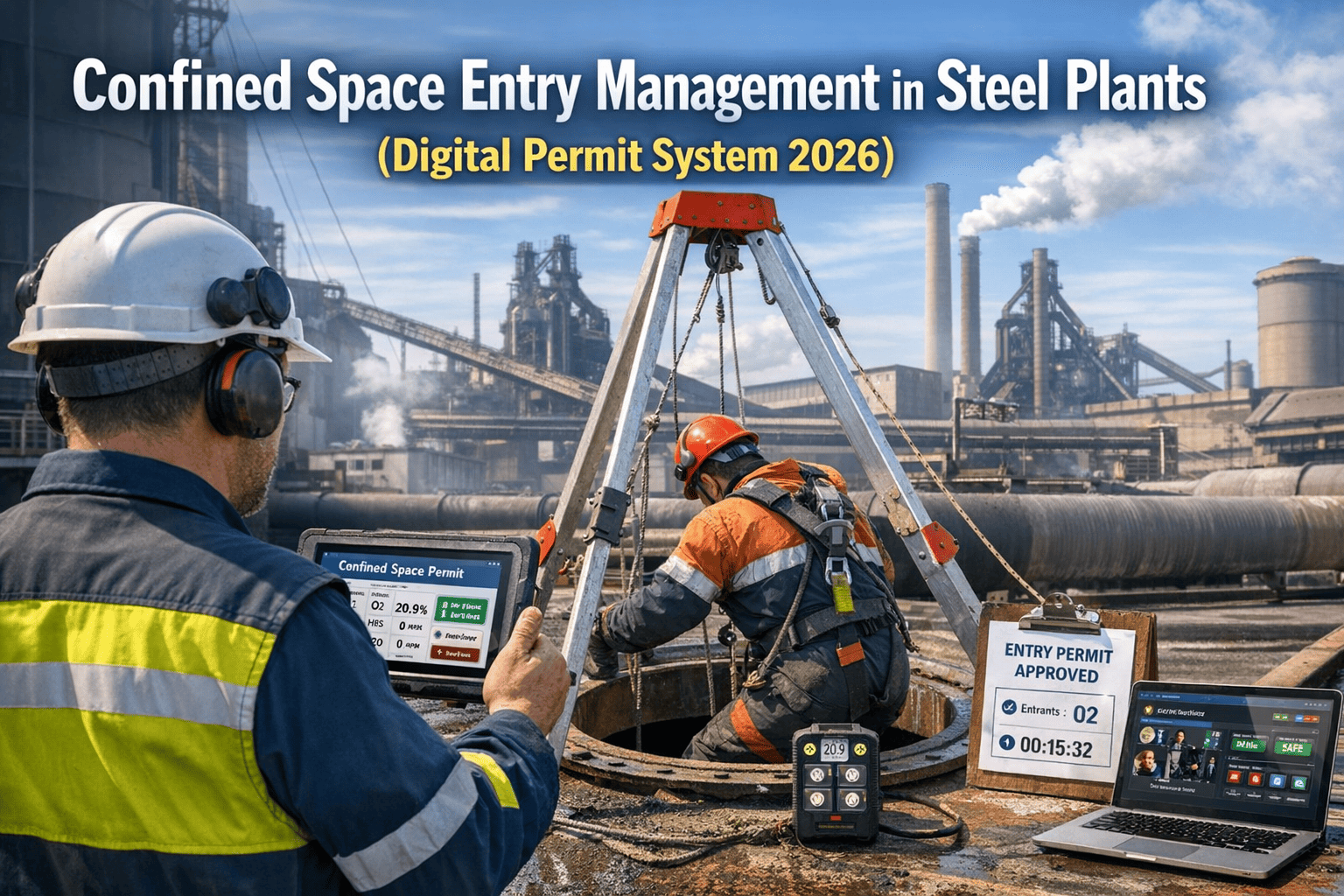
Steel Plant Confined Space Permit Template (OSHA 1910.146)
By Alex Jordan on May 22, 2026
Confined space fatalities kill more than 100 U.S. workers every year — and the defining characteristic of those deaths is that more than 60% of them are rescuers, not the original entrants. Workers who see a colleague collapse inside a blast furnace pit or a ladle car enter to help, without atmospheric testing, without a retrieved person protocol, and die from the same asphyxiation or toxic gas exposure that incapacitated the first entrant. OSHA 29 CFR 1910.146 was written to stop exactly this sequence — and the standard is specific, sequential, and non-negotiable for U.S. steel plants operating blast furnaces, BOF vessels, EAF shells, ladles, torpedo cars, gas ductwork, pits, sumps, and boiler interiors. In 2026, confined space citations remain among the top five most-cited OSHA violations in U.S. general industry — and the most frequent trigger, as with crane citations, is not a space that hurt someone, but an entry that happened without a proper written permit, without atmospheric testing documentation, or without a designated attendant on record. The consequences scale rapidly: a first confined space citation averages $15,625 per violation under OSHA's 2026 penalty table, and willful violations exceed $156,259 per instance. This page provides the complete Oxmaint OSHA 1910.146 confined space entry permit template for U.S. steel plants — with atmospheric testing sequence, authorized entrant and attendant designation fields, rescue plan documentation, and CMMS digital sign-off that makes every entry audit-ready before the first worker crosses the threshold. For the broader safety compliance framework that integrates confined space permits with crane inspections, LOTO, and hot work at your steel operation, review the steel plant maintenance schedule and compliance template.
Free editable confined space entry permit template for U.S. steel plants — atmospheric testing sequence (O₂, LEL, CO, H₂S), authorized entrant designation, attendant assignment, rescue plan documentation, and Oxmaint CMMS digital sign-off with mandatory field enforcement.
Of confined space deaths involve rescuers — not the original entrant (OSHA data)
100+
U.S. workers killed in confined spaces annually — most preventable with proper permitting
$156K
Maximum OSHA willful violation penalty per instance for confined space non-compliance (2026)
Auto
Oxmaint blocks work order execution until permit is signed — no entry without documentation
Steel Plant Confined Spaces: The Complete PRCS Inventory
Under OSHA 1910.146, every steel plant must identify and classify all confined spaces on site — and all spaces must be treated as permit-required confined spaces (PRCS) until pre-entry testing demonstrates otherwise. U.S. steel plants operating blast furnaces, BOF/EAF steelmaking shops, ladle metallurgy facilities, continuous casters, and rolling mills contain a dense concentration of permit-required confined spaces — many of which present multiple simultaneous hazards (oxygen deficiency from gas purging AND engulfment risk AND thermal hazard AND mechanical energy). The complete confined space identification, classification, and permit system must address every space in the list below as a minimum — and plant-specific spaces may add to this list based on site configuration, legacy equipment, and underground infrastructure.
The OSHA 1910.146 Atmospheric Testing Sequence — Non-Negotiable Order
OSHA 1910.146 requires atmospheric testing before any worker enters a permit-required confined space, and the sequence of testing is non-negotiable: oxygen first, then flammable gases, then toxic gases. This order exists for a critical technical reason — combustible gas sensors (LEL meters) require oxygen to generate accurate readings. A space that is oxygen-deficient will produce falsely low LEL readings because the sensor cannot complete its catalytic combustion reaction without adequate O₂. A worker who checks LEL first in an O₂-deficient space may see a "safe" 0% LEL reading while standing in an explosive atmosphere that appears non-explosive only because there isn't enough oxygen to support combustion yet. Once the space is ventilated and O₂ levels rise, that same atmosphere could instantly become explosive. The three-step sequence — O₂, LEL, then specific toxic gases (CO, H₂S, SO₂ based on the specific steel plant hazards present) — is what prevents this sequence of errors. Every Oxmaint confined space permit template enforces this testing sequence digitally: the atmospheric testing fields for LEL and toxic gases are locked until the O₂ reading field is completed and documented within acceptable limits.
ATMOSPHERIC TESTING SEQUENCE — OSHA 1910.146 REQUIRED ORDER & LIMITS
CO at 200 ppm — OSHA ceiling limit (no exposure above this for any duration)
H₂S at 50 ppm — olfactory paralysis — worker loses ability to smell danger gas
Benzene at coke plant entries — OSHA PEL 1 ppm (8-hr TWA) — carcinogen
Oxmaint: Test required per each specific gas present in space — results logged per entry
The Complete OSHA 1910.146 Confined Space Entry Permit Template
The permit template below covers every field required by OSHA 1910.146 for a permit-required confined space entry in a U.S. steel plant. The template is designed to load directly into Oxmaint as a digital work order form — with mandatory fields that block permit closure until all sections are completed and signed, atmospheric testing results validated against acceptable limits, and the completed permit auto-stored against the specific confined space asset record for the retention period required by 1910.146(e)(6): retained for at least one year to facilitate the review of the permit-required confined space program. Unlike paper permits that live in a field supervisor's clipboard and disappear, every Oxmaint confined space permit is timestamped, signed, and searchable by space, date, and entrant from the moment it is issued.
Section A: Space Identification & Entry Authorization
Permit NumberAuto-generated by Oxmaint — sequential, date-prefixed, space-coded
Confined Space ID / LocationSpace name, plant area, building/bay, equipment tag number
Purpose of EntrySpecific work to be performed — inspection, repair, cleaning, installation
Date & Time of IssueAuto-timestamped — permit valid for specified duration only
Permit Expiry Date & TimeMaximum entry duration — never open-ended. Auto-expires in Oxmaint.
Entry SupervisorName, employee ID, training certification date — digital signature required
Permit CancellationPermit cancelled and space secured — auto-timestamped closure in Oxmaint
Permit RetentionRetained minimum 1 year per 1910.146(e)(6) — stored in CMMS asset record
"We had confined space entries happening at our Ohio BOF facility on paper permits that were often incomplete — missing attendant names, atmospheric test results logged without the required O₂-first sequence. After an internal audit revealed 23 non-compliant entries in a single quarter, we moved to Oxmaint digital permits. The mandatory field enforcement stops any permit from being issued without every section completed. We haven't had a non-compliant entry since go-live."
EHS Manager
Ohio BOF Steelmaking Complex — Post-Audit Digital Permit Implementation
Frequently Asked Questions
Q1 What does OSHA 1910.146 require for confined space entry at U.S. steel plants?
OSHA 1910.146 requires a written permit issued before every entry into a permit-required confined space — covering space identification, hazard documentation, atmospheric testing results (O₂ first, then LEL, then toxics), authorized entrant and attendant names, energy isolation verification, rescue plan, and entry supervisor digital sign-off.
Q2 What is the correct atmospheric testing sequence under OSHA 1910.146?
Test oxygen first (acceptable: 19.5–23.5%), then flammable gases (acceptable: below 10% LEL), then toxic gases specific to the space hazards (CO below 35 ppm, H₂S below 10 ppm) — in this exact order, because combustible gas sensors require adequate oxygen to generate accurate LEL readings.
Q3 Which areas of a U.S. steel plant are permit-required confined spaces under OSHA 1910.146?
Blast furnace interiors, BOF and EAF vessel interiors, ladles and torpedo cars, BFG gas ductwork, rolling mill pits and sumps, boiler interiors, coke oven gas recovery areas, and electrical vaults with SF₆ equipment — all qualify as permit-required confined spaces due to hazardous atmosphere, engulfment, thermal, or other serious hazard potential.
Q4 Can the attendant enter a steel plant confined space to rescue an incapacitated entrant?
No — the attendant must remain outside for the entire entry duration. OSHA data shows 60%+ of confined space deaths involve rescuers who entered without proper equipment; the attendant's role is to summon the pre-planned rescue team, not enter — Oxmaint's permit template enforces this as a mandatory rescue plan field.
Q5 How does Oxmaint enforce OSHA 1910.146 compliance for steel plant confined space entries?
Oxmaint's digital permit template makes all 1910.146-required fields mandatory — atmospheric test results must be entered in the correct sequence, attendant assignment is required, rescue plan documentation is enforced, and entry supervisor digital sign-off is blocked until all fields are complete — preventing the incomplete paper permits that generate OSHA citations.
Q6 How long must confined space entry permits be retained under OSHA 1910.146?
OSHA 1910.146(e)(6) requires permits to be retained for at least one year to facilitate the annual review of the permit-required confined space program — Oxmaint stores every completed permit against the specific confined space asset record indefinitely, searchable by date, space, or entrant name.
Q7 What is the maximum OSHA penalty for a willful confined space violation at a U.S. steel plant in 2026?
OSHA's 2026 penalty table sets willful violation fines at up to $156,259 per instance for confined space non-compliance — with serious violations averaging $15,625 per citation; multiple citations from a single OSHA inspection (missing permit, missing attendant, no atmospheric testing) stack independently, multiplying total exposure rapidly.
Q8 Can Oxmaint integrate confined space permits with LOTO and hot work permits for combined-hazard entries?
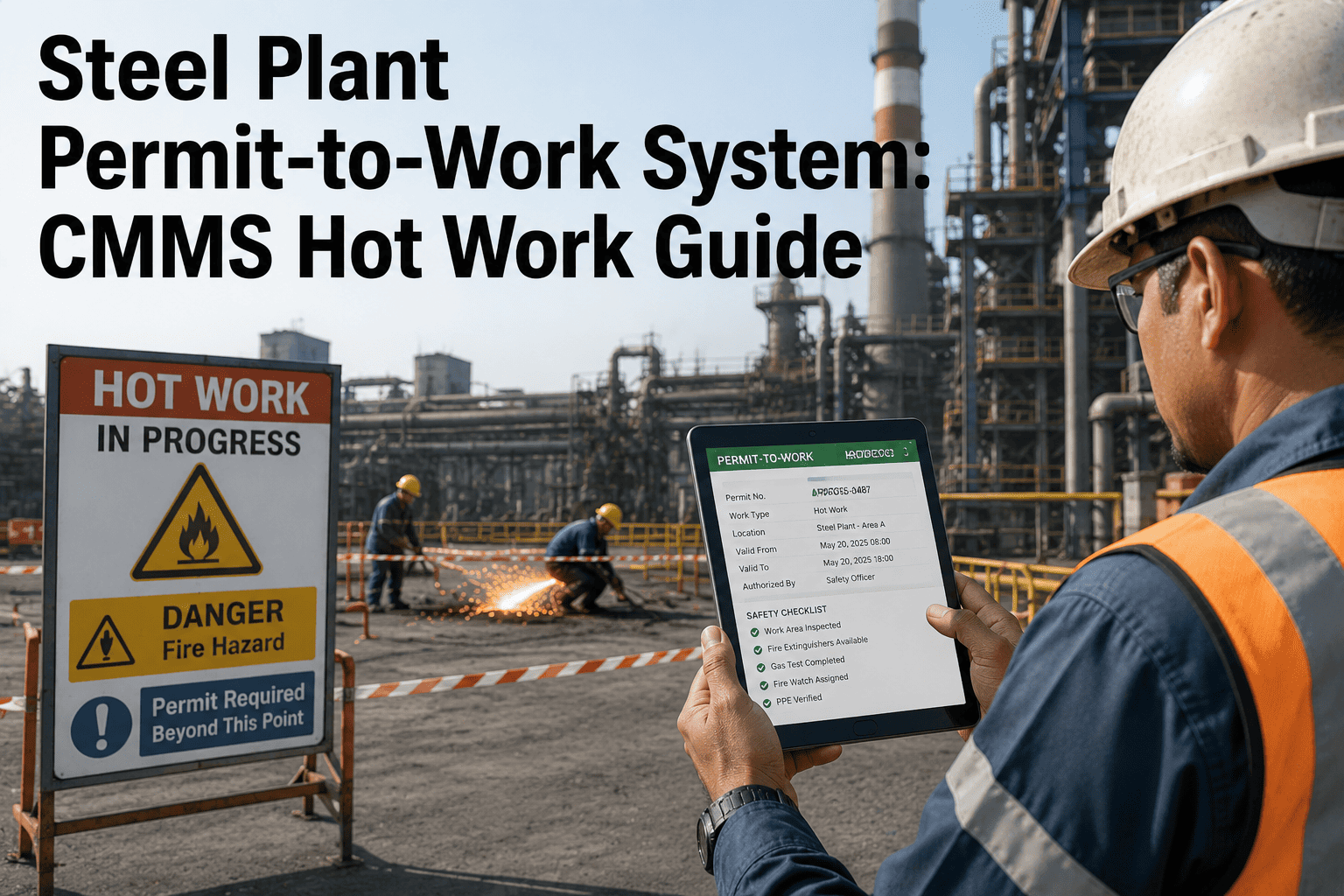
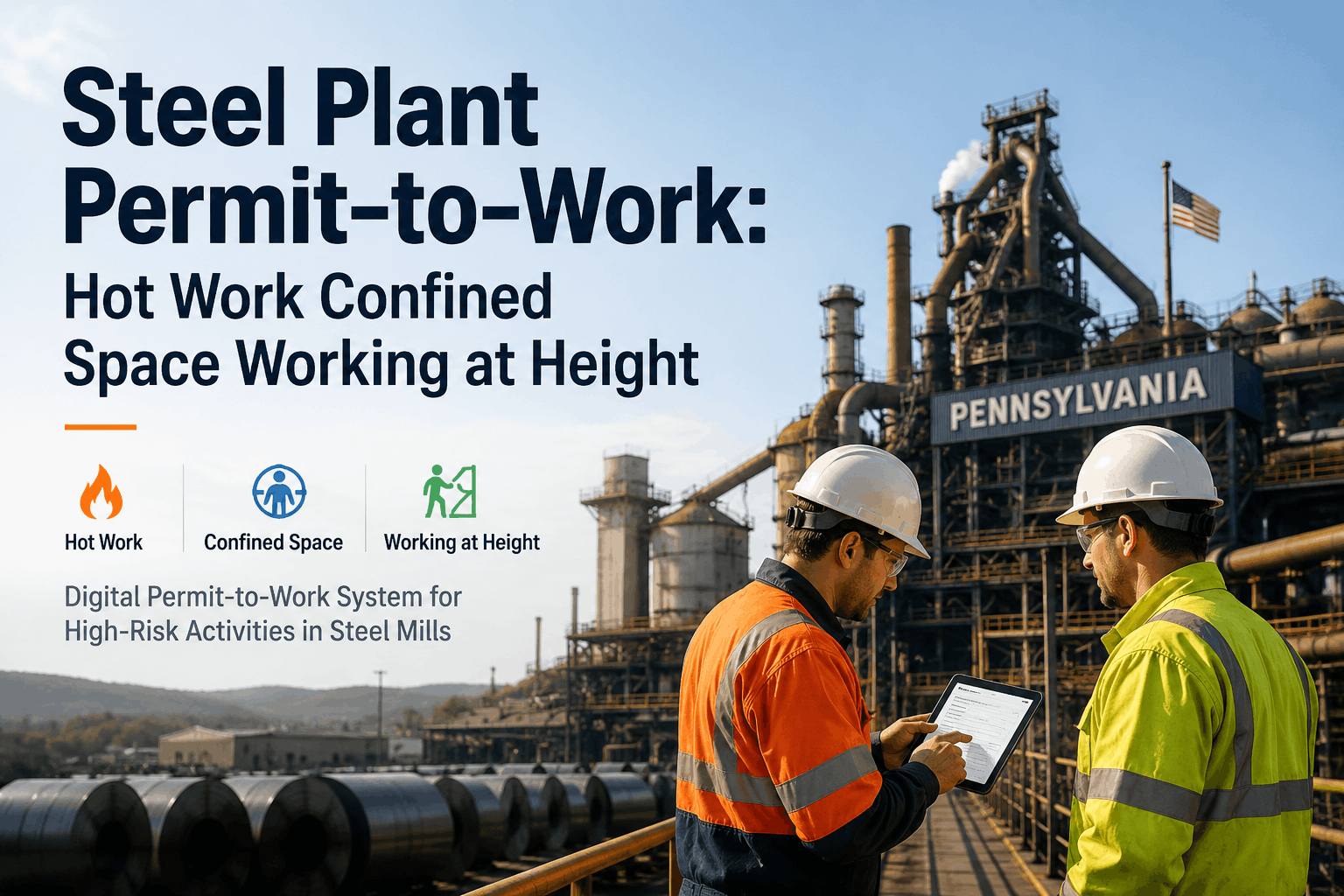
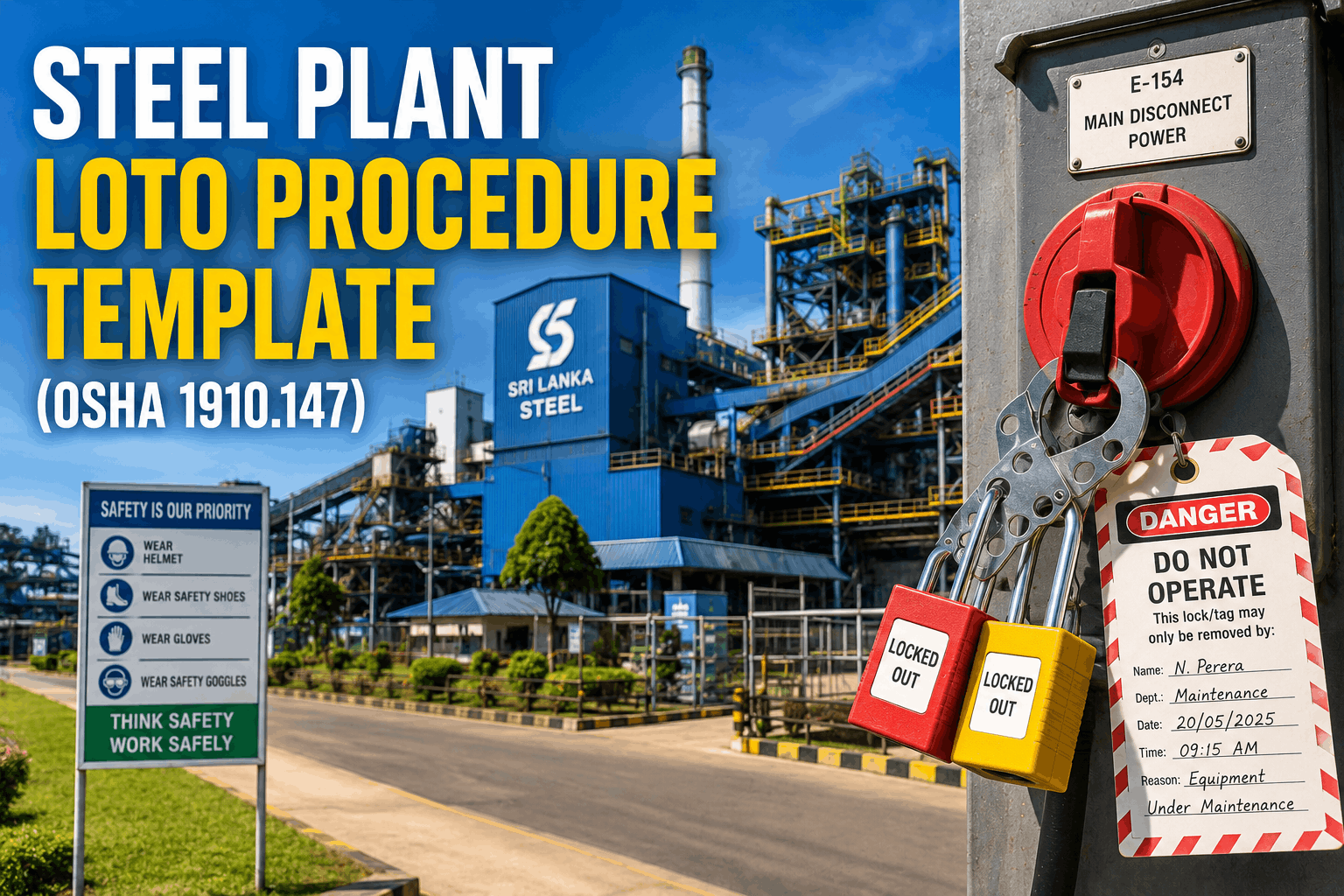
Yes — Oxmaint's permit-to-work system links confined space entry permits with simultaneously active LOTO authorizations and hot work permits, ensuring cross-permit hazard awareness is documented and that all active permits for a combined-hazard work site are visible to the entry supervisor before any worker crosses the threshold.
Implement Digital OSHA 1910.146 Confined Space Permits — Start Free
Mandatory atmospheric testing sequence, attendant enforcement, rescue plan documentation, and 1-year permit retention — all in Oxmaint's digital permit system. Live at your U.S. steel plant in days.


.png)