Steel Plant Conveyor Maintenance: Preventing Material Handling Failures
By Alex Jordan on June 17, 2026
Steel plant conveyor systems handle millions of tons of material annually—ore, coke, sinter, scrap, and finished products. A single conveyor belt failure can halt production for hours, costing $10,000–$50,000 in lost output. CMMS-managed conveyor maintenance prevents splice failures, idler roll degradation, pulley lagging wear, belt tracking drift, carryback accumulation, and belt rip propagation. Oxmaint's mobile-first maintenance platform tracks belt inspection dates, splice replacement schedules, idler condition scores, tension measurements, cleaner blade wear, and historical failure patterns across all material handling lines. Real-time alerts flag abnormal vibration, temperature rise, or belt edge damage before catastrophic failure. Schedule a conveyor maintenance consultation to deploy predictive belt lifecycle management, reduce unplanned downtime, and extend conveyor asset life by 30–40%.
MATERIAL HANDLING · CONVEYOR MAINTENANCE · 2026
Steel Plant Conveyor Maintenance: Preventing Material Handling Failures
Monitor belt splice integrity, idler roll wear, pulley lagging degradation, belt tracking alignment, carryback accumulation, and belt rip detection. Maintain zero unplanned conveyor stoppages through automated inspection scheduling, condition-based maintenance alerts, and predictive failure detection across all material handling systems.
Predictive maintenance and timely splice replacement extends conveyor belt life from 3–5 years to 5–7 years.
95%
Failure Prevention Rate
Automated inspection schedules and condition alerts prevent 95% of unplanned conveyor stoppage events.
$200K+
Annual Downtime Savings
Eliminating 2–3 unplanned 8-hour conveyor stoppages annually saves $200,000–$400,000 per production line.
24/7
Real-Time Monitoring
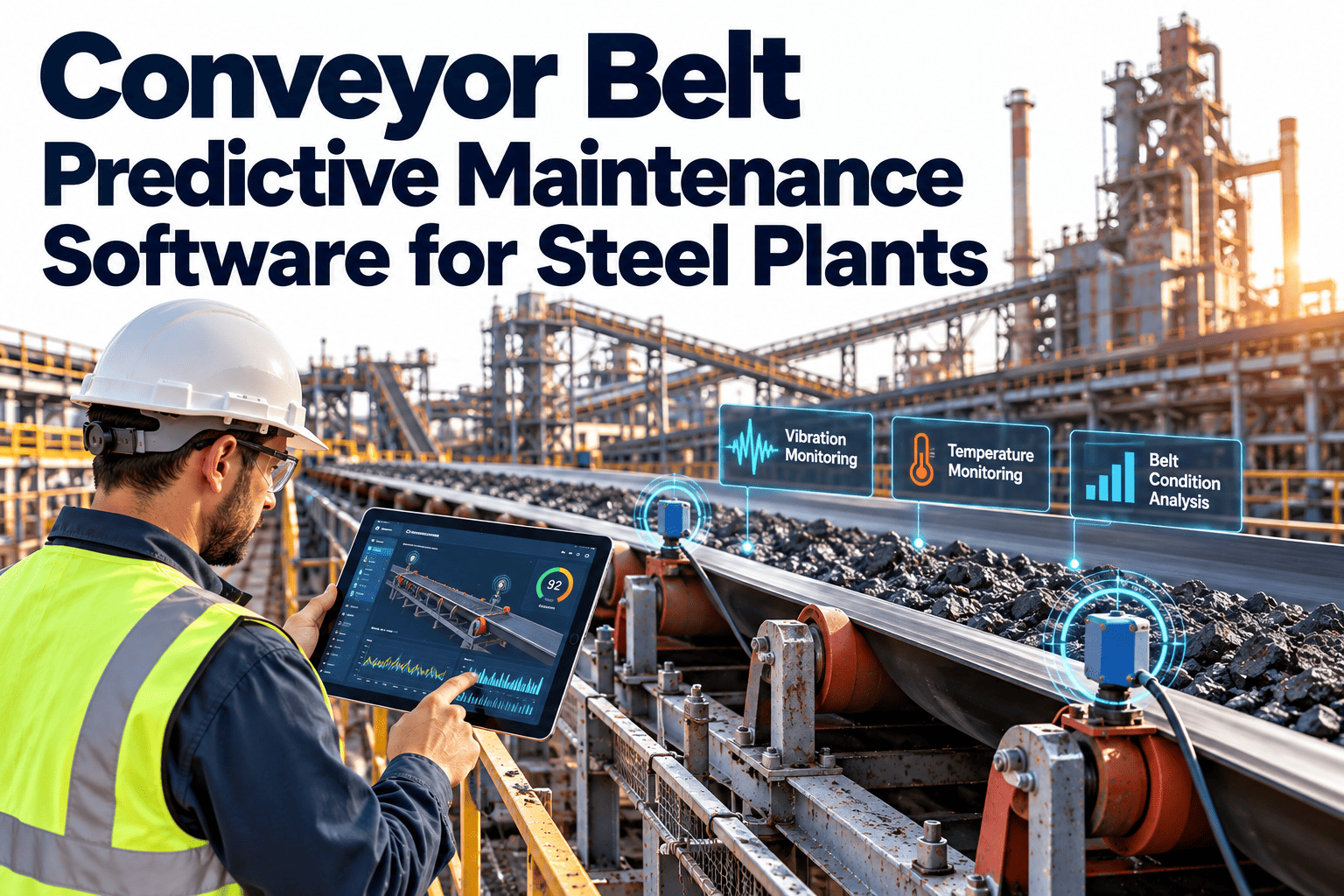
IoT-enabled conveyor sensors track belt tension, temperature, vibration, and splice condition continuously.
Conveyor System Components and Failure Modes in Steel Plants
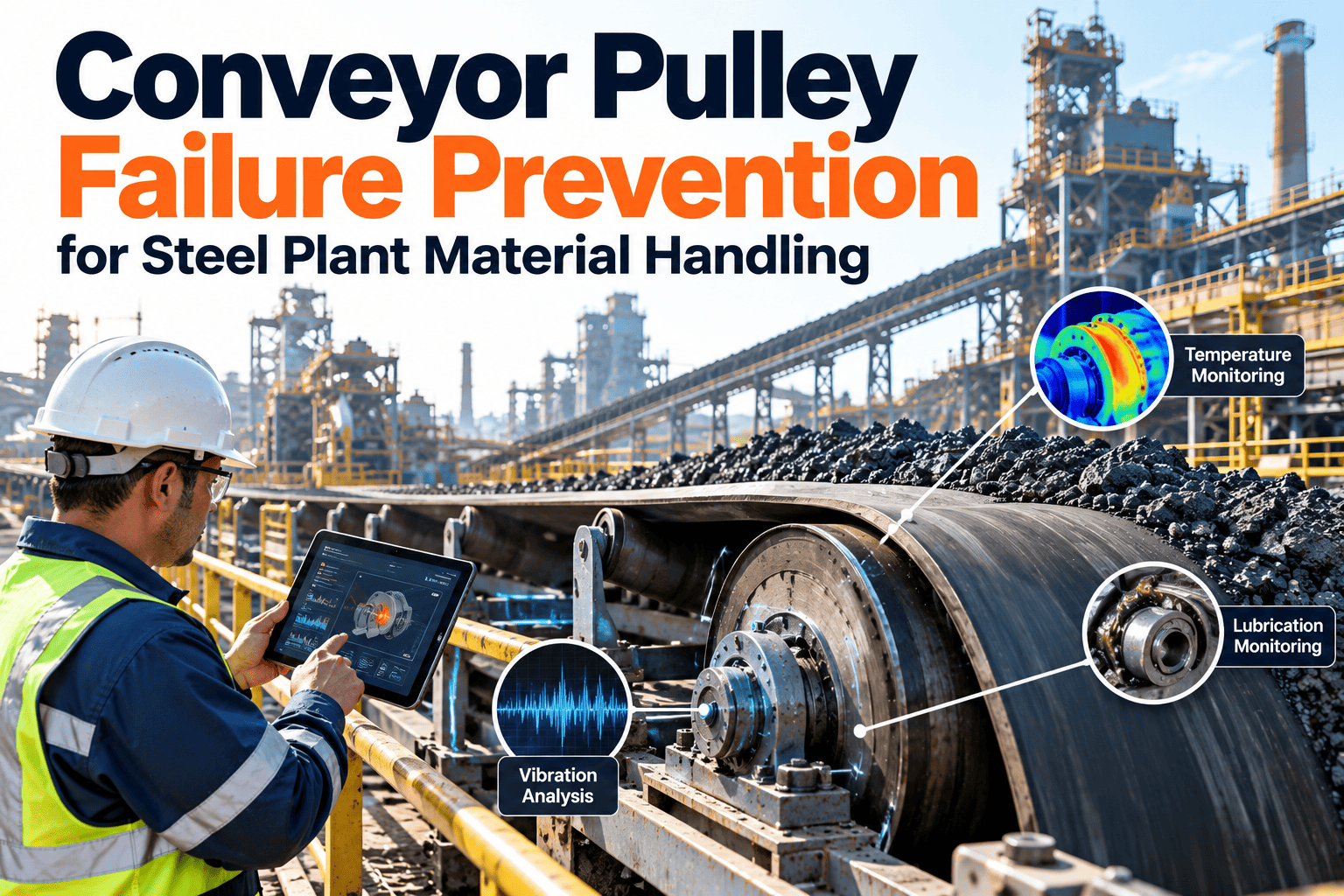
Steel plant conveyor systems consist of multiple integrated subsystems: primary belt structure (fabric/steel cord reinforced rubber compound), splice connections (mechanical fasteners or vulcanized bonds), roller idlers (supporting and tracking belt movement), pulleys (drive, tail, and bend rollers with lagging), tension adjustment mechanisms (screw or hydraulic), belt cleaners (primary and secondary blades), and drive motors (AC/DC with gearboxes). Typical failure modes include splice separation (mechanical fasteners shearing from impact loading, vulcanized bonds delaminating from heat cycling), idler bearing failure (lubrication degradation, sealing breakdown, ball/roller contact fatigue), pulley lagging deterioration (rubber facing chunking from thermal cycling, lagging adhesion loss), belt tracking drift (toe-in/toe-out misalignment causing edge contact with structure), carryback accumulation (material adhering to return side causing imbalance and equipment loading), and belt rips or punctures (sharp metal fragments, spillage impact, or maintenance damage initiating rapid propagation). Coking ovens, blast furnace burden cars, and sinter coolers expose conveyor belts to temperatures up to 200°C, accelerating rubber degradation. Ore handling conveyors experience maximum impact loading, causing splice failure within 6–12 months without predictive maintenance. Scrap and coke screening conveyors endure continuous vibration and misalignment drift. CMMS-based conveyor management implements weekly visual inspections of splice condition, monthly idler bearing temperature monitoring, quarterly belt tracking measurements, semi-annual belt deflection testing, and annual comprehensive belt and structural assessment by certified technicians.
SECTION 1: Conveyor Belt Splice Integrity and Monitoring Protocol
WEEK 1 CRITICAL
Splice Visual Inspection and Fastener Check
Inspect all belt splices for fastener corrosion, rust discoloration, or missing bolts. Check mechanical splice tension using calibrated tensioner—fasteners should require 3–5 turns to tighten (indicating proper pre-load). Log any misalignment between cover and backing plies, which signals internal bond degradation. Document photos of every 50-meter splice section.
MONTH 1 ROUTINE
Vulcanized Splice Bond Quality Assessment
For vulcanized splices, perform manual bend test at splice location—flex belt by hand and observe for cracking, white stress lines, or rubber separation. Measure splice thickness with caliper; should match belt body thickness ±0.5mm. Any thickness variance signals poor curing or adhesion failure. Schedule splice replacement if bond shows visible delamination.
QUARTERLY ASSESSMENT
Splice Stress Analysis and Load Monitoring
Measure belt tension at splice and adjacent 2-meter spans using ultrasonic or mechanical tension meter. Tension differential >10% across splice indicates fastener relaxation or bond weakening. Compare quarterly readings to establish trend—rising differential predicts imminent failure. Log all tension readings with date, operator ID, and ambient temperature for correlation analysis.
ANNUAL PREVENTIVE
Splice Life Cycle Management and Replacement Planning
Calculate remaining splice life based on inspection history, tension trends, and splice age. Mechanical splices typical lifespan is 2–4 years; vulcanized splices 4–6 years (depending on environment and loading). Schedule replacement 3–6 months before predicted failure. Budget spare belt and splicing materials for critical lines to enable rapid turnaround.
SECTION 2: Idler Roll Bearing Health and Condition-Based Replacement
Idler Type
Failure Signature
CMMS Alert Threshold
Carry Idlers (Belt Support)
Grinding noise, vibration >7.1 mm/sec, temperature >80°C, noise level >85 dB
Elastomer (rubber/spring) degradation, bearing flatness loss, uneven load distribution
Spring deflection <0.5 inches when loaded; beam deflection >0.75 inches; cracked elastomer
SECTION 3: Belt Tracking Alignment and Drift Prevention Systems
Monthly Belt Alignment Measurement
Use laser alignment tool or straightedge to measure belt edge-to-frame clearance at 5-meter intervals along conveyor length. Record toe-in (leading edge deviation) and toe-out (trailing edge deviation). Acceptable range: ±10mm from centerline. Drift >15mm requires immediate tracking idler adjustment.
Real-Time Tracking Sensor Deployment
Install ultrasonic or mechanical edge sensors on return side of belt at 30-meter intervals. Configure CMMS to trigger automated alerts if belt edge approaches frame (<20mm clearance). Alert technician to perform corrective adjustment before belt damage occurs. Log all adjustment events and tracking correction times.
Corrective Idler Adjustment Protocol
When drift detected, loosen tracking idler adjustment screw by ¼ turn and re-measure alignment after 30 minutes of operation. Repeat until belt is centered. Document screw turns made, ambient temperature, and load condition. Excessive adjustment (>2 full turns) indicates bearing wear or frame misalignment—schedule idler replacement or frame straightening inspection.
Pulley Lagging Condition and Maintenance Scheduling
Inspect drive and tail pulley lagging quarterly for chunking, delamination, or rubber hardening. Lagging provides friction for belt grip; worn lagging reduces drive efficiency and increases slip. Replace lagging when rubber is <3mm thick or visible damage exceeds 10% of surface area. Lagging lifespan typical 2–4 years depending on belt speed and load.
SECTION 4: Belt Cleaner Maintenance and Carryback Reduction
PRIMARY CLEANER
Primary Blade Wear Detection and Replacement
Primary cleaner blade contacts belt immediately after pulley. Inspect blade weekly for wear (blade thickness should be ≥10mm); measure carryback accumulation on return side (should be <1 inch). Replace blade when thickness <5mm or carryback exceeds 3 inches. Typical blade lifespan 3–6 months depending on material stickiness and belt speed. Log blade replacement dates in CMMS.
SECONDARY CLEANER
Secondary Blade Pressure and Recovery Optimization
Secondary cleaner provides final cleaning pass. Pressure should be 15–20 PSI (verify with pressure gauge monthly). Low pressure indicates spring relaxation or hydro system failure—adjust pressure screw or replace spring. Verify blade makes full contact across belt width (no gaps). Replace secondary blade every 6–12 months or when material recovery decreases visibly.
IMPACT REDUCTION
Carryback Material Disposal and Recovery Systems
Material adhering to belt return side causes unbalance, vibration, and bearing loading. Implement impact hoppers with scrapers or magnetic separation (for ferrous ore). Monitor material recovery volume weekly—declining recovery signals cleaner blade ineffectiveness. Schedule recovery screen cleaning monthly to prevent blockage and spillage of material back onto conveyor frame.
PREDICTIVE ALERTS
CMMS Carryback Trending and Automated Blade Replacement Scheduling
CMMS captures weekly carryback measurements from return idler tension sensors or visual inspection logs. System plots trend and predicts blade failure when carryback >5 inches. Alert maintenance 2 weeks before predicted failure, allowing scheduled replacement during planned maintenance window. Prevent emergency stops caused by material spillage or equipment jams.
CMMS Workflow for Continuous Conveyor Equipment Reliability
Automated Inspection Scheduling by Conveyor Line
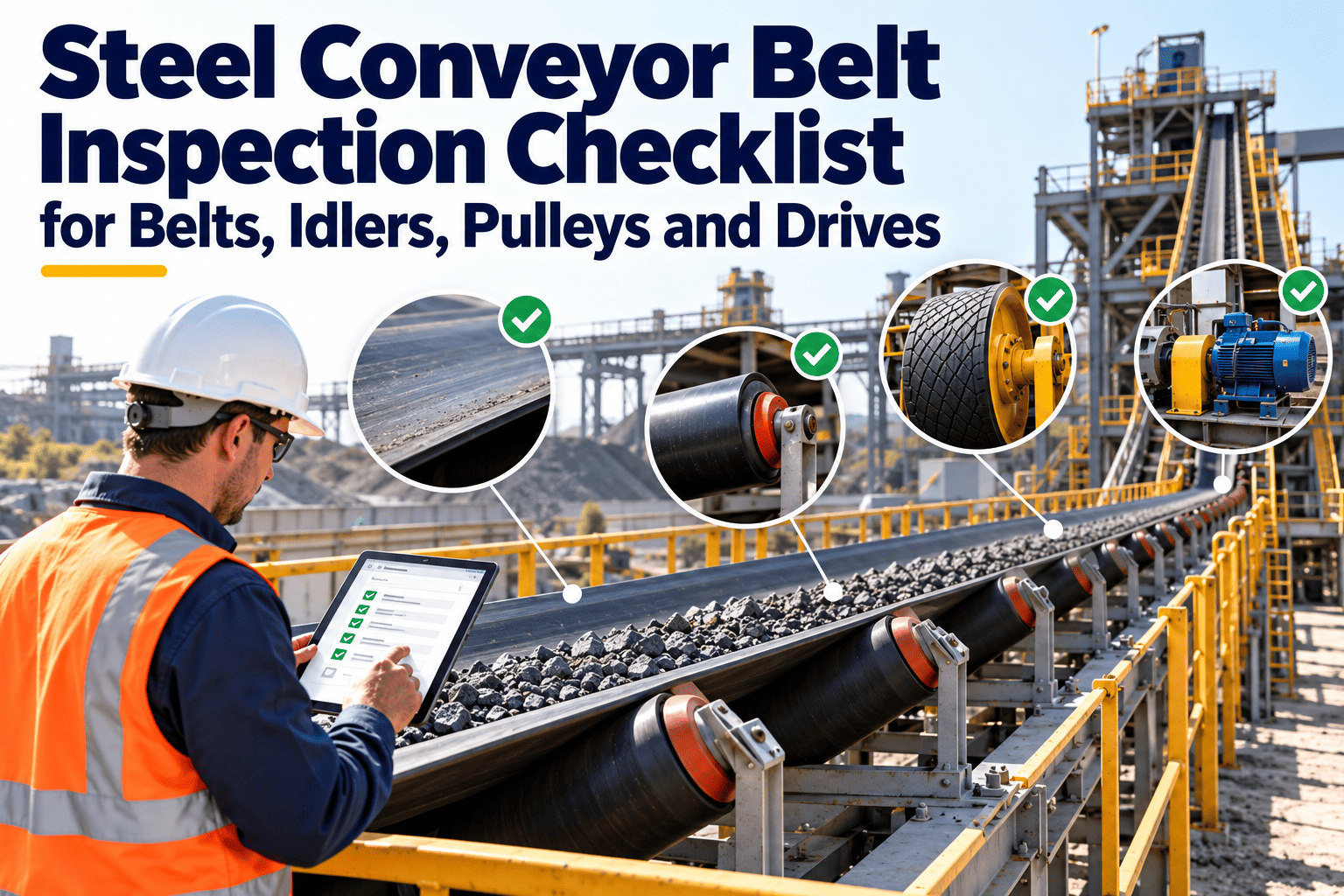
CMMS generates weekly work orders for splice inspection, monthly idler bearing assessment, quarterly belt alignment checks, and semi-annual comprehensive surveys. Mobile technicians receive task lists with historical baseline data and photos from previous inspections for rapid comparison and anomaly detection.
Real-Time Condition Data Logging and Alert Triggers
Technicians log belt tension, splice thickness, idler temperature/vibration, tracking drift, and cleaner blade wear directly into mobile app. CMMS compares readings against established baselines and triggers escalation alerts if parameters deviate >15%. Alerts auto-route corrective work orders to maintenance team with estimated repair time and parts requirements.
Belt Rip Detection and Emergency Response Protocol
Mobile app enables technicians to photograph belt damage and immediately upload to CMMS. System triggers emergency work order if rip length >6 inches. Alert escalates to supervisor, estimating belt repair time (temporary splice) or replacement requirement. CMMS predicts if rip will propagate based on historical failure patterns—recommends emergency stop vs. monitoring during current shift.
Multi-Line Performance Dashboard and KPI Tracking
Centralized dashboard displays all conveyor lines: inspection completion %, mean-time-between-failures (MTBF), maintenance cost per ton of material handled, unplanned downtime hours, and spare parts inventory. Operators identify underperforming lines requiring additional monitoring or accelerated replacement schedule. Compare belt lifespan and failure patterns across equipment brands to inform procurement decisions.
Conveyor Belt Life Cycle Management and Spare Parts Optimization
CMMS predicts splice replacement, belt replacement, cleaner blade, and idler bearing replacement dates 6–12 months in advance. System generates automated parts orders to vendors based on predicted need dates. Maintain strategic inventory of critical spares (5–10% of total belt length) to enable 4–8 hour replacement turnaround. Reduce emergency procurement costs and accelerated shipping expenses.
Compliance Audit Trail and Conveyor Equipment Certification
CMMS maintains complete inspection history showing every splice check, idler assessment, belt alignment measurement, and cleaner blade replacement with timestamps and technician IDs. Generates audit reports demonstrating compliance with MSHA belt safety regulations and OEM maintenance recommendations. Protects against liability if conveyor failure causes injury—documentation proves diligent maintenance and timely corrective actions.
100%
Inspection Coverage
CMMS-managed plants achieve 100% critical conveyor inspection completion vs. industry average 68% for manually scheduled maintenance.
Predictive maintenance eliminates 95%+ of unplanned conveyor stoppages and emergency repair costs.
35% Lower
Material Handling Costs
Extended belt life, reduced emergency repairs, and optimized spare parts inventory reduce annual conveyor maintenance costs by 35–45%.
Customer Success: Material Handling Equipment Reliability
"Before Oxmaint, our ore handling conveyors experienced 8–12 unplanned stoppages annually due to splice failures and idler bearing wear. Emergency repairs cost $40,000–$80,000 per event, plus lost production. After implementing Oxmaint CMMS with weekly automated inspections, we now predict failures 4–8 weeks in advance and perform preventive repairs during scheduled maintenance windows. We've reduced unplanned downtime to zero over the past 18 months, extended belt life from 4 years to 6+ years, and saved over $400,000 annually. The mobile app lets our technicians log inspection data instantly—eliminating manual spreadsheet errors and enabling predictive analysis across all 12 conveyor lines."
—Maintenance Director, 4 Million Tons/Year Iron Ore Processing, Minnesota USA
Frequently Asked Questions: Conveyor Maintenance and CMMS
What is the typical cost of an unplanned conveyor stoppage in a steel plant?+
An 8-hour unplanned conveyor stoppage in a 4-million-ton-per-year facility costs $25,000–$50,000 in lost ore throughput, plus $10,000–$20,000 in emergency labor and expedited parts. Total economic impact: $35,000–$70,000 per event. CMMS prevents 95% of stoppages through predictive maintenance.
How often should belt splice condition be inspected?+
MSHA regulations require minimum monthly inspection; best practice is weekly visual checks plus quarterly detailed assessment. CMMS automates weekly scheduling, ensuring no inspections are missed. Document splice condition, fastener corrosion, and tension trends to predict remaining life.
What is the typical lifespan of a mechanical belt splice vs. vulcanized splice?+
Mechanical splices (fastener-based): 2–4 years typical. Vulcanized splices (bonded rubber): 4–6 years typical. Lifespan depends on belt speed, material type, impact loading, and environmental temperature. CMMS tracks splice age and predicts replacement needs 3–6 months in advance.
How does belt tracking drift damage the conveyor structure?+
Belt drift >15mm causes belt edge to contact frame, causing rubber abrasion, edge separation, and material spillage. Drift >25mm damages frame, bends idler shafts, and causes belt rip. Monthly alignment checks and real-time tracking sensors prevent drift damage.
What causes idler bearing failure and how quickly does it progress?+
Idler bearing failure caused by lubrication degradation (moisture contamination, oxidation), impact overloading, or seal breakdown. Typically progresses from subtle vibration increase (detectable via sensors) to catastrophic failure in 4–12 weeks. Weekly temperature/vibration monitoring detects failure 6–8 weeks before mechanical breakdown.
How often should pulley lagging be replaced?+
Pulley lagging lifespan: 2–4 years depending on belt speed, material type, and operating temperature. Lagging provides friction for belt grip; worn lagging causes belt slip and efficiency loss. CMMS reminders schedule quarterly lagging inspections and replacement when thickness <3mm.
Can belt cleaner blade wear be predicted in advance?+
Yes—measure blade thickness weekly and carryback volume (material on return side) to plot wear trend. When blade <5mm or carryback >5 inches, replacement is imminent. CMMS predicts failure and schedules blade replacement 2 weeks in advance, preventing material spillage and conveyor imbalance.
How can Oxmaint CMMS reduce conveyor maintenance budgets?+
CMMS eliminates emergency repairs ($40,000–$70,000 per event) by predicting failures 4–12 weeks in advance. Extends belt life 30–40% through preventive maintenance. Optimizes spare parts inventory via predictive ordering, reducing carrying costs. Total savings: 35–45% of annual conveyor maintenance budget.
Eliminate Conveyor Failures and Extend Belt Life 30–40%
Oxmaint CMMS automates weekly splice inspections, monthly idler assessments, quarterly belt alignment checks, and predictive failure detection across all material handling conveyors. Real-time alerts enable preventive repairs during scheduled maintenance windows, eliminating emergency stoppages, reducing maintenance costs by 35–45%, and extending conveyor asset life significantly.