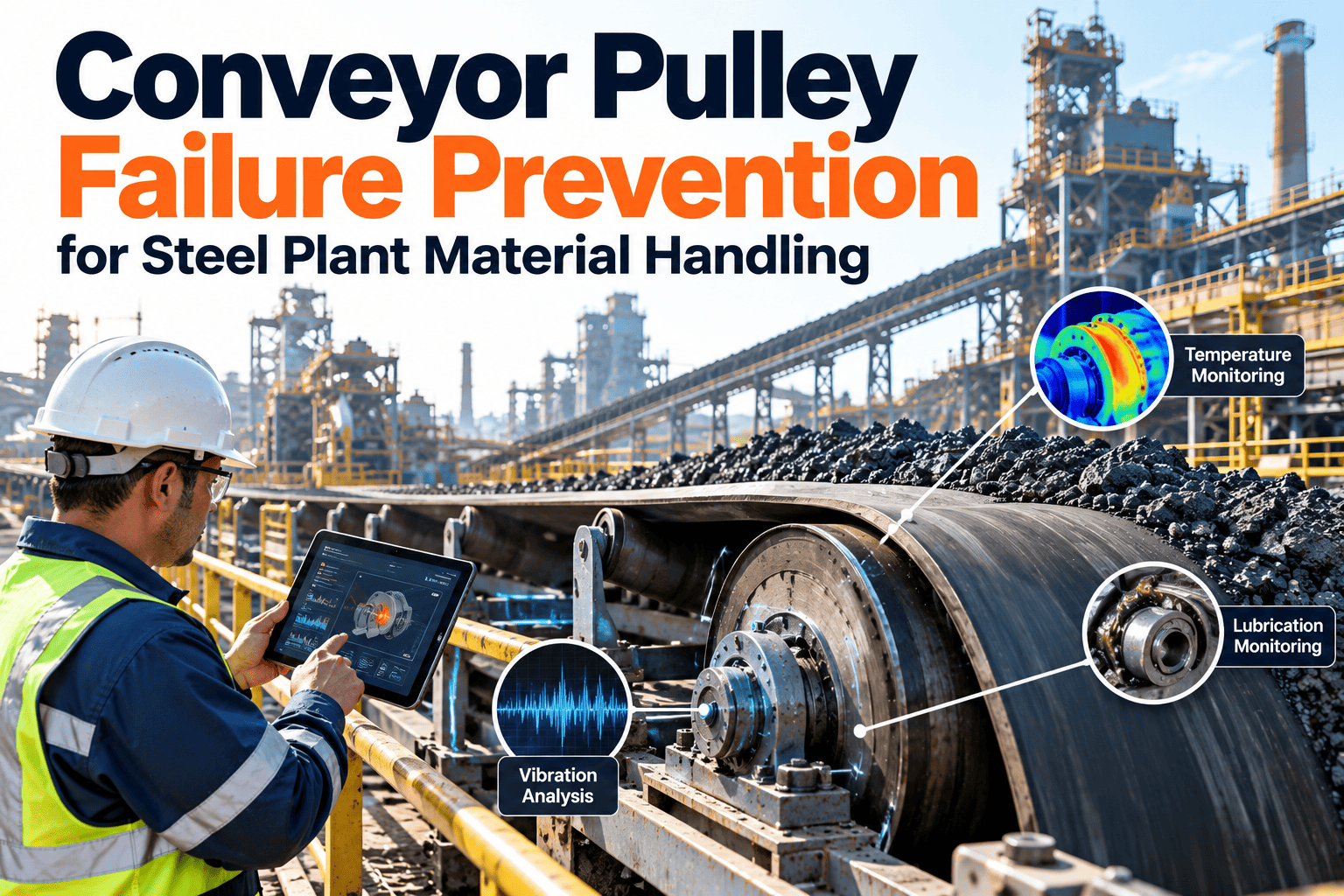
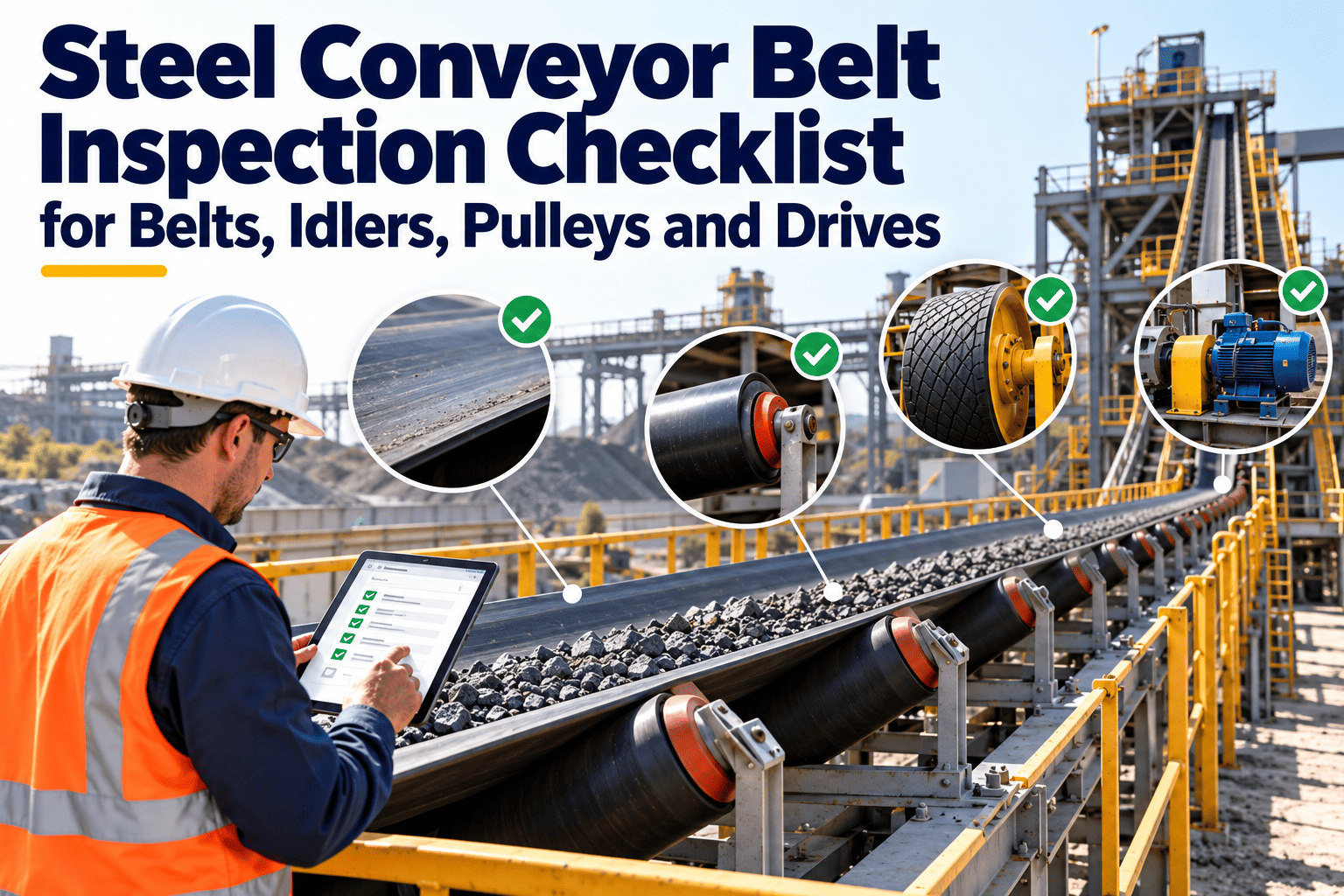
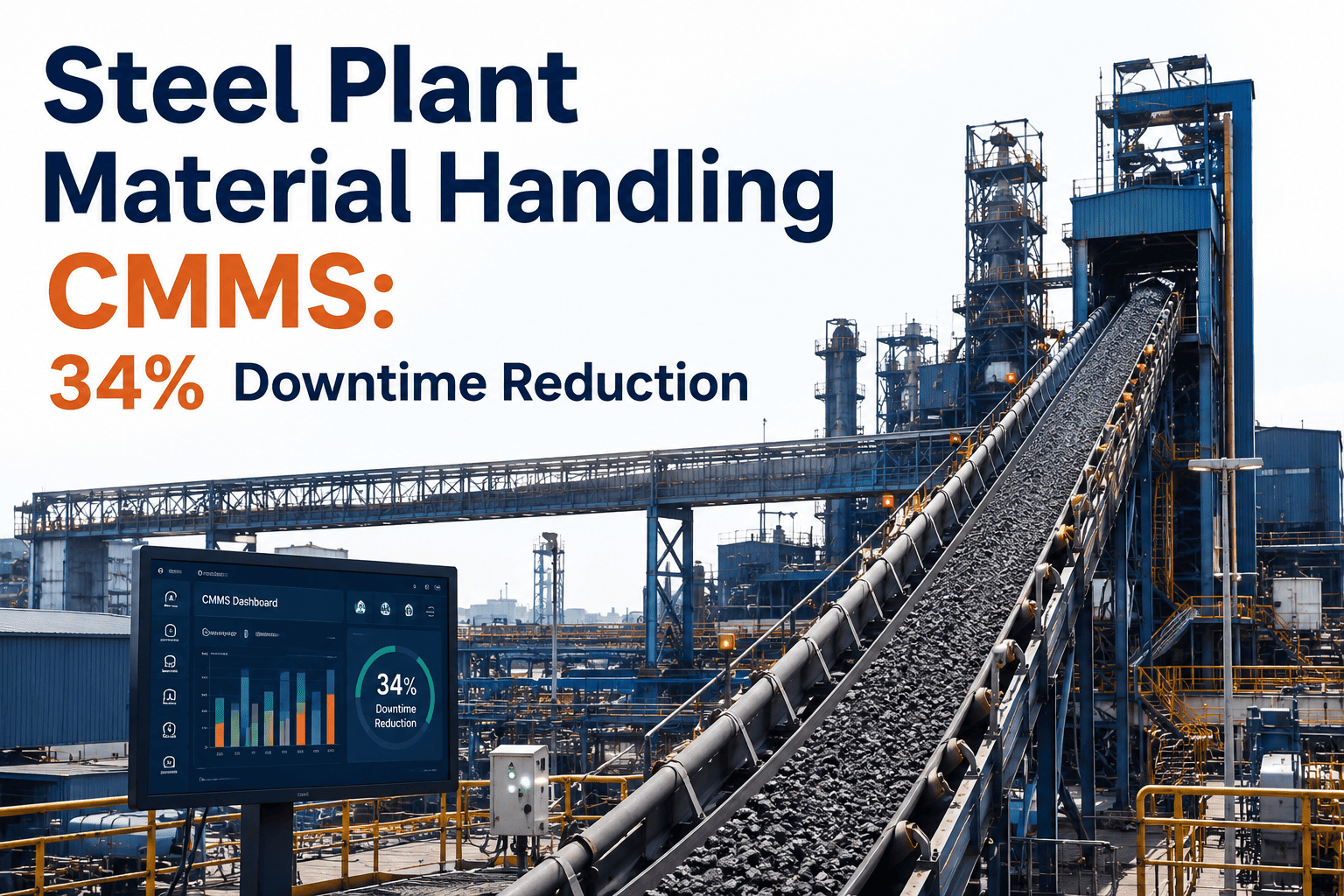
Idlers account for 80% of the total number of components on a belt conveyor and perform 90% of the transportation work. An average integrated steel plant operates thousands of individual idler rollers across ore yard, coal handling, coke oven, sinter plant, blast furnace, and finishing area conveyors. A single seized idler, if left in service, creates a flat spot against the belt that damages the cover rubber, then the carcass, and in extreme cases generates enough frictional heat to cause a belt fire. When a large-tonnage conveyor carrying iron ore, coal, or coke stops unexpectedly, the production consequences extend far beyond the direct repair cost — the blast furnace on the other end of that conveyor begins drawing down its burden inventory, and if the stoppage extends beyond the blast furnace feed buffer time, the production constraint is no longer the conveyor but the furnace itself. BHP has documented roller failure costs of up to $400,000 per hour in lost production at mining and port conveyor systems. Conveyor system downtime in bulk material handling operations costs approximately $1,000 per minute. These numbers make conveyor maintenance the highest-value preventive maintenance discipline in steel plant utilities — and yet, in most plants, conveyors receive the least systematic maintenance attention of any equipment class, precisely because they run continuously without obvious visible deterioration until a failure stops them. Sign up for Oxmaint to implement systematic conveyor maintenance tracking across your steel plant today.
Steel Plant Conveyor Systems — Six Operational Zones, Each with Distinct Maintenance Requirements
A fully integrated steel plant operates conveyors in six functionally distinct zones, each carrying different materials at different temperatures, moisture levels, and lump sizes — each zone requiring a maintenance programme calibrated to those specific conditions. A conveyor approach that works for iron ore yard reclaim will fail on coke oven feed conveyors where heat-resistant belt and idler specifications apply. Oxmaint manages all six zones in a single CMMS with zone-specific PM checklists, component specifications, and inspection intervals. Sign up for Oxmaint to configure zone-specific conveyor maintenance programmes.
Ore yard conveyors are the longest and heaviest-loaded in most steel plants — belt widths of 1,200–1,800mm, capacities of 1,500–3,000 tph, running outdoors in all weather conditions. The combination of high tonnage, abrasive lump ore, and outdoor weather exposure creates the highest belt wear rates and the most demanding idler loading conditions in the plant. Wet ore conditions in monsoon season increase belt mistracking risk as moisture changes the friction balance between belt and idlers. Tramp iron in the ore feed creates longitudinal belt rips that can propagate the full length of the belt in minutes if a magnetic separator is not functioning correctly.
Coal conveyors from the stockyard to the coke oven blending facility and from the blending plant to the coking ovens carry material that is both abrasive and combustible. Coal dust at transfer points presents explosion risk when concentrations exceed safe levels — dust suppression system maintenance is not optional. Coking coal's high moisture content in wet conditions causes severe carryback — material that adheres to the belt on the return side encrusts the return idlers and pulleys, creating tracking problems and accelerating belt wear. Belt widths of 900–1,400mm, capacities 1,000–1,800 tph. Near-oven conveyors require heat-resistant belt grades and ceramic-coated or heat-resistant idlers. Book a demo to see coal conveyor PM scheduling.
Coke conveyors from the coke dry cooling plant (CDCP) or wet quench car to the coke silo carry hot, abrasive coke at temperatures that, if CDCP cooling is operating correctly, should not exceed 180–200°C at belt contact — but which regularly exceed this in CDCP temperature excursion events or when coke is dispatched early. Hot coke conveyors use heat-resistant rubber belt grades (HR) with higher temperature ratings than standard belts. Idler bearing temperature monitoring is critical — bearing failure on a hot coke conveyor generates enough heat to ignite the belt rubber. Coke's highly abrasive particle structure causes the highest belt cover wear rates of any material in the plant.
Hot sinter from the sinter machine cooler is discharged at approximately 100–150°C and transported to the blast furnace skip or conveyor system. Hot sinter is extremely abrasive — the combination of high temperature and abrasive particle impact makes this one of the most demanding belt applications in the plant. Belt cover rubber on hot sinter conveyors commonly requires replacement every 6–12 months depending on throughput. Sinter's high bulk density (1.9–2.1 t/m³) places high structural loads on the idler frames, which require more frequent inspection for frame fatigue cracking than lighter-material zones. Sign up for Oxmaint to configure sinter conveyor PM.
Granulated blast furnace slag, BOF converter dust, and rolling mill scale each present unique material handling maintenance challenges. Granulated slag is extremely abrasive and carries significant moisture from the granulation process — wet granulated slag causes severe idler corrosion. BOF dust (fine particle, high iron content) clings to belt surfaces and return idlers, creating thick encrustation that causes tracking problems and increases belt sag. Scale from rolling mills is dense, sharp-edged, and generates significant impact load at transfer points where it falls from height onto the belt surface. Each sub-stream requires specific maintenance attention calibrated to its material characteristics.
Finished steel product conveyors — slab and billet handling within the melt shop and rolling areas — operate at different temperatures and speeds from raw material conveyors but share the same consequences for maintenance failure. A slab conveyor that stops unexpectedly with a slab on the roll table can cause the slab to cool below the rolling temperature window, requiring reheating or scrapping the slab. Hot strip mill coil handling conveyors must maintain precise speed and tension control to prevent coil deformation during transport. These conveyors have lower tonnage but higher product-value exposure per maintenance event. Book a demo to see finished product handling PM.
Seven Systematic Conveyor Maintenance Tasks Managed in Oxmaint
The difference between a conveyor fleet with 95% availability and one running at 82% is not equipment quality — it is the consistency and completeness of seven specific maintenance tasks applied systematically across all conveyors. Each task below targets one of the primary failure modes that causes unplanned stoppages at steel plant conveyors. Sign up for Oxmaint to configure all seven across your conveyor fleet.
Idlers failing from bearing seizure produce a distinctive squealing noise and elevated surface temperature before they stop rotating entirely. A stopped idler creates a stationary contact point against the moving belt — the resulting friction generates heat that chars the belt cover rubber in the contact zone, and if the idler is seized hard enough, creates a groove that eventually cuts through the carcass. Acoustic detection of pre-failure idler noise is the primary early warning method for large conveyor systems. Oxmaint schedules idler survey walk-through PM work orders at configured intervals — the technician records noisy or hot idlers by location (conveyor ID, idler position number), photographs the condition, and Oxmaint generates a replacement work order automatically. The replacement history per idler position builds a database that identifies positions with elevated bearing failure rates requiring investigation.
Belt mistracking — drifting toward one side of the conveyor — is the most common cause of belt edge damage, material spillage, and structural contact damage. The most frequent causes are misaligned idlers, material build-up on idlers or pulleys creating differential friction, off-centre loading at the feed point, and worn or damaged belt splice geometry. Oxmaint schedules belt tracking inspection as a daily or shift PM work order for high-priority conveyors, with the observation recorded as a pass/fail check plus a specific cause code when mistracking is noted. When the same conveyor generates repeated mistracking observations with the same cause code, the pattern identifies a systematic condition requiring structural investigation rather than repeated re-adjustment. Book a demo to see tracking inspection scheduling.
Belt cover wear is the predictable, steady degradation that determines belt service life on any given conveyor. The replacement trigger is when the cover thickness has worn to 75% of its original gauge — at this point the remaining rubber provides insufficient protection for the belt carcass against impact and abrasion, and accelerated degradation begins. Monthly cover thickness measurement at the same point on each conveyor, recorded in Oxmaint's belt asset record, builds a wear rate database that projects the remaining life for each belt and enables planned replacement scheduling — avoiding the emergency belt change that requires pulling a conveyor out of service without preparation and may require two to three shifts to complete. Sign up to configure belt wear tracking.
Belt splices — mechanical fasteners or vulcanised joints — are the weakest point in the conveyor belt circuit and the most common location for sudden belt failure. Mechanical fastener splices on high-tonnage ore and coke conveyors are subject to progressive fatigue from the cyclic loading at each idler pass; the fastener plate eventually loosens, the fastener pulls through the belt, and the joint fails suddenly. Vulcanised splices are stronger but show early failure symptoms in the form of edge delamination and elongation. Oxmaint schedules splice visual and tactile inspection as part of the weekly conveyor PM, with the splice age (days since last re-splice), observed condition, and any elongation measurement recorded — and triggers a planned re-splice work order when age or condition reaches the configured threshold. Book a demo.
Transfer points — where material falls from one conveyor to the next — account for the largest portion of belt surface damage, spillage, and dust generation on any conveyor system. Impact at the loading zone causes impact damage to belt covers when impact idler spacing is insufficient for the material lump size and drop height. Chute liner wear exposes the structural steel behind the liner to material impact, eventually requiring chute replacement rather than liner replacement. Skirtboard sealing between the loading chute and belt surface controls lateral spillage — worn skirtboards allow material to pack under the belt edge, damaging the belt and creating tracking problems. Oxmaint tracks chute liner thickness at each transfer point as a monthly PM measurement, and skirtboard condition as a weekly observation.
Belt cleaners — primary scrapers at the head pulley and secondary scrapers on the return side — remove material that would otherwise carry back on the return belt and accumulate on return idlers and the conveyor structure. A belt cleaner with worn blades or insufficient tension allows carryback to build up on return idlers, encrusting them in dried material that prevents rotation — creating the stationary contact condition that damages the belt from below. A scraper blade applying too much tension causes belt cover wear at the cleaning point at a rate significantly higher than normal belt wear. Oxmaint schedules weekly scraper blade condition and tension inspection, with blade wear measurement recorded and replacement triggered when the blade wears to its minimum thickness indicator. Sign up to configure scraper PM.
The conveyor drive system — drive motor, fluid coupling or VFD drive, gearbox, and head pulley — is the single highest-cost component in the conveyor system and the component whose failure produces the longest unplanned stop. Drive motor and gearbox vibration monitoring in Oxmaint triggers predictive maintenance work orders when bearing defect frequencies emerge — providing 2–4 weeks of advance warning before a drive system bearing failure stops the conveyor. Head pulley lagging — the rubber or ceramic coating that provides belt-pulley traction — wears progressively and causes belt slippage when worn to the point where friction is insufficient to drive the belt. Oxmaint tracks lagging wear observation at monthly inspection and schedules lagging replacement before slippage events occur. Book a demo to see drive PM configured.
How Oxmaint Manages Steel Plant Conveyor Maintenance at Scale
A steel plant with 150–300 conveyors across six operational zones cannot be managed with paper inspection sheets and a whiteboard PM schedule. The maintenance technician walking the ore yard cannot remember that Conveyor C-14's belt was last thickness-measured 32 days ago, that the splice at position 87m is 14 months old, and that the transfer point chute liner at T-14B showed 45% remaining thickness last month. Oxmaint holds all of this information in the conveyor's asset record, surfaces the appropriate PM task to the technician's mobile device at the right time, and records the result without an office visit. Sign up for Oxmaint to deploy systematic conveyor maintenance across your entire fleet.
All belt thickness measurements, idler condition observations, tracking check results, and splice condition records are entered on mobile at the conveyor location. The work order pre-loads the previous measurement values for comparison, shows the wear rate trend from historical data, and flags any measurement that exceeds a configured threshold for immediate supervisory attention. Offline mode covers remote ore yard areas with limited WiFi coverage. Work order completion timestamps confirm inspection was performed, not just paperwork completed later.
Each monthly belt thickness measurement updates the wear rate for that conveyor in Oxmaint — calculated as mm of cover loss per 1,000 tonnes of throughput. The wear rate, combined with the current measured thickness and the replacement threshold, produces a remaining life projection in tonnes and in days at current production rate. This projection feeds the belt replacement planning schedule — enabling belts to be procured, staged, and replaced during planned maintenance windows rather than emergency stops. Book a demo to see belt wear rate projection configured.
Every idler replacement recorded in Oxmaint — the position, the failure mode (bearing failure, bracket damage, material encrustation), and the time since last replacement — builds a failure rate database by position and by zone. Positions with idler bearing failure rates significantly above the average for their zone are flagged for investigation — they may indicate a structural issue with the frame at that location, a material spillage condition from an upstream chute that is encrusting that specific position, or a high-impact loading condition that requires upgraded idler specification. Sign up for idler tracking.
Steel Plant Conveyor Failure Modes — Consequence and Oxmaint Tracking Method
| Component | Failure Mode | Production Consequence | Oxmaint PM / Tracking Method |
|---|---|---|---|
| Idler bearing | Bearing seizure — idler stops rotating against moving belt | Belt cover charring; if undetected, belt fire or longitudinal tear | Acoustic walk-through PM; noisy idler replacement WO by position |
| Belt cover rubber | Wear to 75% of original gauge — carcass exposure | Accelerated belt failure; belt tear; emergency replacement | Monthly thickness measurement; wear rate trend; planned replacement WO |
| Belt splice | Fastener pull-through or vulcanised edge delamination | Sudden belt failure; complete conveyor stop | Weekly inspection; splice age and condition tracked; re-splice WO triggered at threshold |
| Belt tracking | Belt drifts to one side — edge damage and spillage | Belt edge tearing; material spillage; structural contact damage | Daily/shift tracking observation with cause code; recurring pattern identifies root cause |
| Pulley lagging | Worn lagging — insufficient belt-pulley friction | Belt slippage; reduced throughput; motor overload | Monthly lagging wear observation; condition-based replacement WO |
| Belt scraper blade | Worn blade — carryback builds on return idlers and structure | Return idler encrustation; tracking problems; material waste | Weekly blade condition and tension inspection; blade wear measurement |
| Transfer chute liner | Worn liner — structural steel exposed to impact | Chute hole; material spillage; chute replacement required | Monthly liner thickness PM; replacement WO at minimum thickness threshold |
| Drive gearbox bearing | Developing bearing defect frequency in gearbox | Drive system failure; conveyor stop; 2–4 shift repair | Vibration monitoring with defect frequency alert; 2–4 week advance warning |
| Magnetic separator | Reduced magnetic force from demagnetisation or power supply fault | Tramp iron passes to belt; longitudinal rip from trapped iron | Magnetic flux strength verification PM; corrective WO on low reading |
| Dust suppression system | Blocked nozzles — insufficient suppression at transfer points | Excess dust; regulatory exceedance; coal dust explosion risk | Scheduled nozzle inspection and cleaning PM; flow verification |
Swipe to view full table
Manage 150–300 Conveyors Across Six Material Zones in a Single CMMS
Oxmaint schedules belt thickness measurement, idler surveys, splice inspection, scraper maintenance, and drive monitoring across your full conveyor fleet — with mobile work orders at the equipment, automatic replacement scheduling from wear data, and an idler failure database that identifies systematic problems before they cause belt fires.
Steel Plant Conveyor Maintenance — Common Questions
Oxmaint structures the idler survey as a route-based PM work order — the technician opens a single work order for the ore yard idler survey, and the work order presents each conveyor as a section with the idler positions listed. When the technician identifies a noisy or hot idler, they tap the position, select the fault condition (noisy bearing, stopped idler, material encrustation, or structural damage), photograph the idler, and move to the next. When the survey work order is closed, Oxmaint auto-generates individual replacement work orders for each flagged position — ranked by condition severity and scheduled in the next available maintenance window. The survey completion timestamp and the positions inspected provide the audit trail that confirms the survey was performed. Sign up for Oxmaint to configure route-based idler survey work orders for your ore yard.
A trained technician with an ultrasonic thickness gauge can complete a belt cover thickness measurement at the designated measurement point and enter the result in Oxmaint in under 3 minutes per conveyor. For a typical steel plant with 80 large-tonnage conveyors requiring monthly measurement, the total monthly measurement PM is approximately 4 hours of technician time — producing a belt replacement planning database that eliminates emergency belt changes and their associated 12–24 hour production stops. The measurement point, the previous reading, and the calculated wear rate are all displayed on the Oxmaint mobile work order screen when the technician arrives at the conveyor — providing context that makes the measurement meaningful rather than just a number. Book a demo to see belt thickness tracking configured.
Yes. Each conveyor in Oxmaint has its own asset record that includes the belt specification — grade (standard, heat-resistant, fire-resistant, oil-resistant), original cover gauge, nominal width, splice type, and the replacement threshold in percentage of original gauge. The wear rate calculation and remaining life projection use the zone-specific original gauge and threshold, not a universal value. For the coke handling zone where HR belt is specified, Oxmaint stores the HR grade specification and alerts when a replacement is ordered with a standard belt grade — preventing the procurement error of ordering the wrong belt grade for a high-temperature application. Sign up for Oxmaint to configure zone-specific belt specifications across your conveyor fleet.
The Idler That Fails Without Warning, the Belt Splice That Gives Way at 2am, the Chute Liner That Develops a Hole — All Preventable with Systematic Conveyor Maintenance. Oxmaint Provides the System.
From route-based idler acoustic surveys to belt cover wear rate projections to drive gearbox vibration trending — Oxmaint manages every conveyor maintenance discipline in your steel plant's six material zones, with mobile work orders at the equipment and the measurement database that enables planned replacement over emergency response.