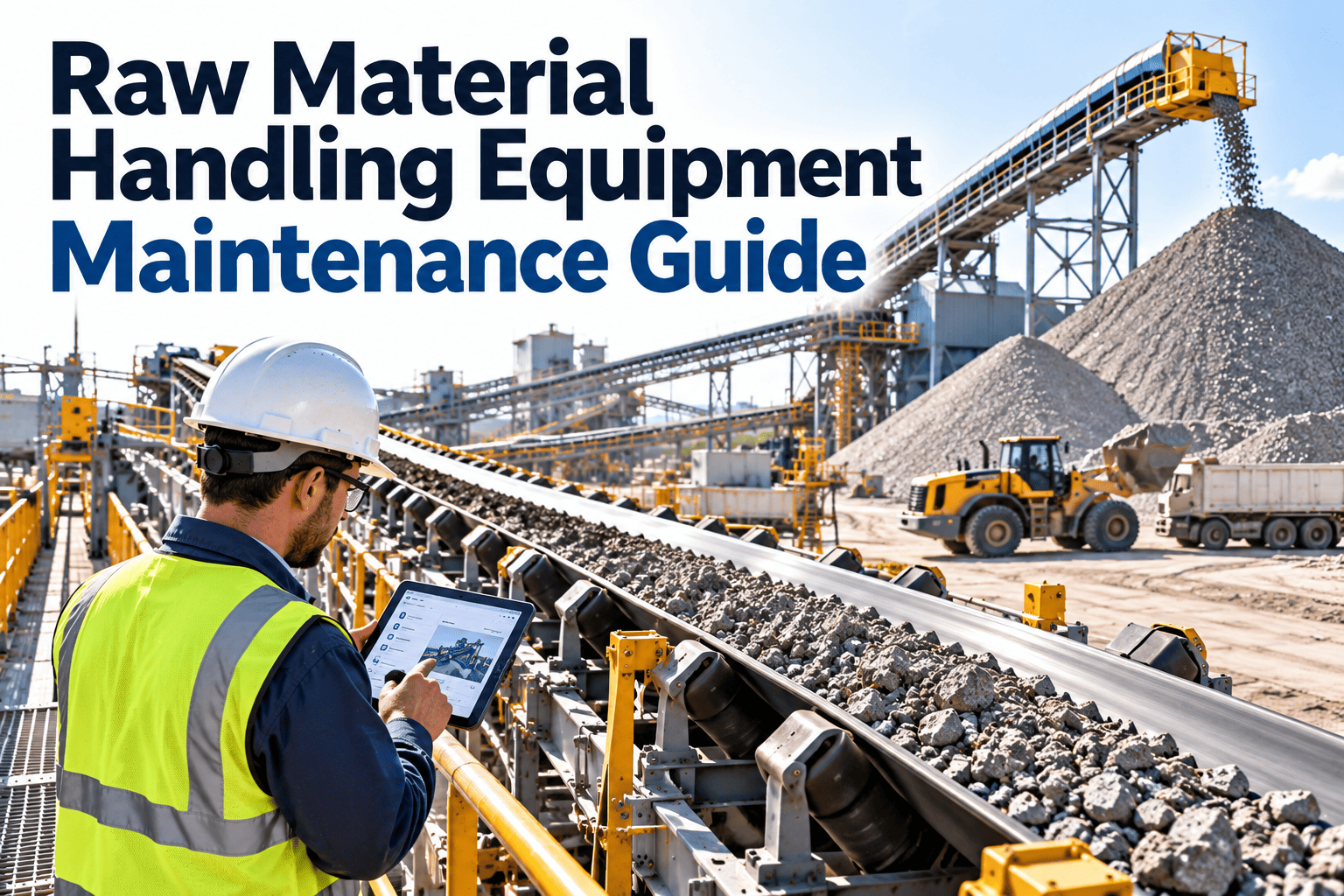
Material handling equipment moves over 90% of bulk material in steel plants — conveyors, cranes, stackers, reclaimers, feeders, and screens. Unplanned downtime on a single belt conveyor can cost $15,000–$50,000 per hour in lost production. A structured preventive maintenance program reduces material handling failures by up to 60% and extends equipment life by 40%. Track your conveyor, crane, and stacker PMs with Oxmaint’s asset hierarchy — or book a 30‑min demo to see how our CMMS automates inspection checklists for bulk material handling systems.
Material Handling Equipment Maintenance Checklist: Conveyor, Crane, Stacker & Reclaimer
Complete preventive maintenance protocols for conveyors, cranes, stackers, reclaimers, feeders, and screening equipment — reduce downtime, extend component life, and ensure safe material flow.
Turn this checklist into automated work orders. Oxmaint schedules inspections, logs findings, and triggers corrective actions for every material handling asset.
Complete Maintenance Checklist by Equipment Type
| Equipment | Component / Area | Inspection Task | Frequency | Pass Criteria | Check |
|---|---|---|---|---|---|
| Conveyors (Belt, Apron, Screw) | |||||
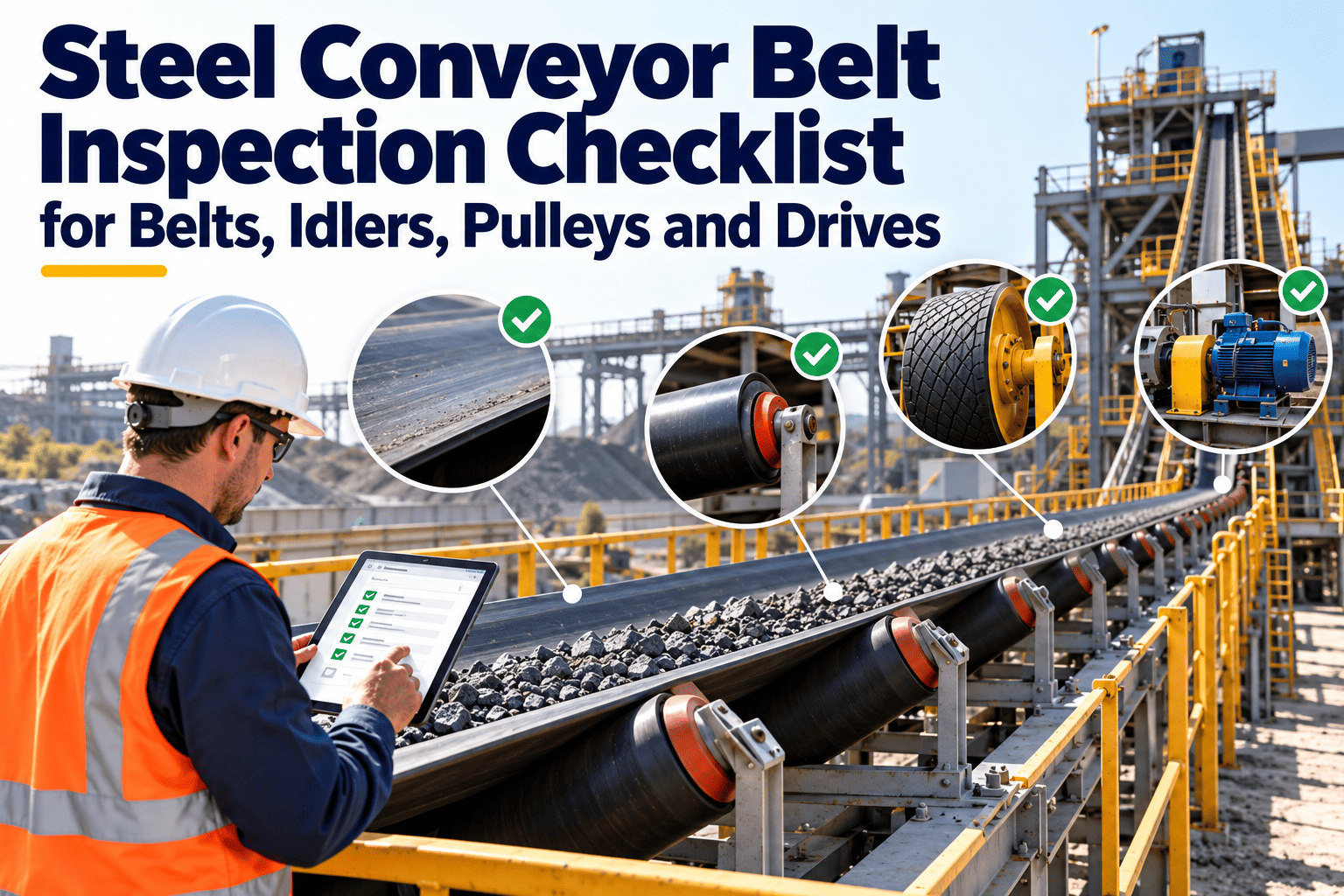
| Conveyor | Belt | Check for cuts, edge wear, splice condition, tracking alignment | Daily | No visible damage, centered on idlers, splices intact | |
| Idlers & rollers | Inspect for rotation, noise, seized rollers, build-up | Weekly | All rollers turn freely, no material wrap, no flat spots | ||
| Drive & take‑up | Check motor, gearbox oil, coupling alignment, take‑up travel | Monthly | Oil level correct, alignment ≤0.5mm, take‑up at 50% travel | ||
| Cranes (Overhead, Gantry, Jib) | |||||
| Crane | Wire rope & hooks | Inspect for broken wires, kinks, hook deformation, latch function | Daily | No visible wire breaks, hook opening within 15% of original | |
| Brakes & limit switches | Test holding torque, limit switch trip points, emergency stop | Weekly | Brake holds rated load, limits stop within 10mm of target | ||
| Runway & wheels | Check rail alignment, wheel wear, bumper condition | Monthly | Rail gap ≤2mm, wheel flange wear ≤20%, bumpers intact | ||
| Stacker & Reclaimer | |||||
| Stacker/Reclaimer | Boom conveyor | Inspect belt, idlers, scraper, tripper carriage | Daily | No belt damage, scrapers contact belt, idlers rotate | |
| Bucket wheel / drum | Check bucket wear, cutting teeth, drive chain tension | Weekly | No missing buckets, teeth intact, chain sag 2‑3% of span | ||
| Luffing & slew mechanism | Inspect slew bearing bolts, luffing cylinder seals, lubrication | Monthly | No bolt loosening, no hydraulic leaks, grease purged | ||
| Feeders & Screening Equipment | |||||
| Feeder | Apron / vibrating feeder | Check pan condition, drive springs, eccentric mechanism | Weekly | No cracks in pan, springs intact, vibration amplitude steady | |
| Belt / screw feeder | Inspect belt splice, screw flights, bearings, gate adjustment | Monthly | No material leakage, flights not worn >50%, bearings cool | ||
| Screening | Vibrating screen | Check screen panels, cloth tension, eccentric shaft, springs | Weekly | No broken panels, cloth tension uniform, no abnormal noise | |
Automate Every Material Handling PM Task
Oxmaint’s asset hierarchy lets you organize conveyors, cranes, stackers, and screens by plant area — schedule inspections, log defects, and auto‑generate repair work orders.
One‑Page Material Handling Quick Checklist
Frequently Asked Questions
How often should conveyor idlers be replaced?
What is the critical inspection point for crane wire ropes?
What are the signs of stacker structural fatigue?
Keep Your Material Handling Systems Running
Oxmaint turns this checklist into automated, auditable work orders — from conveyor idler checks to crane rope inspections and stacker slew bearing torque. Schedule recurring tasks, capture photo evidence, and close the loop on every defect.