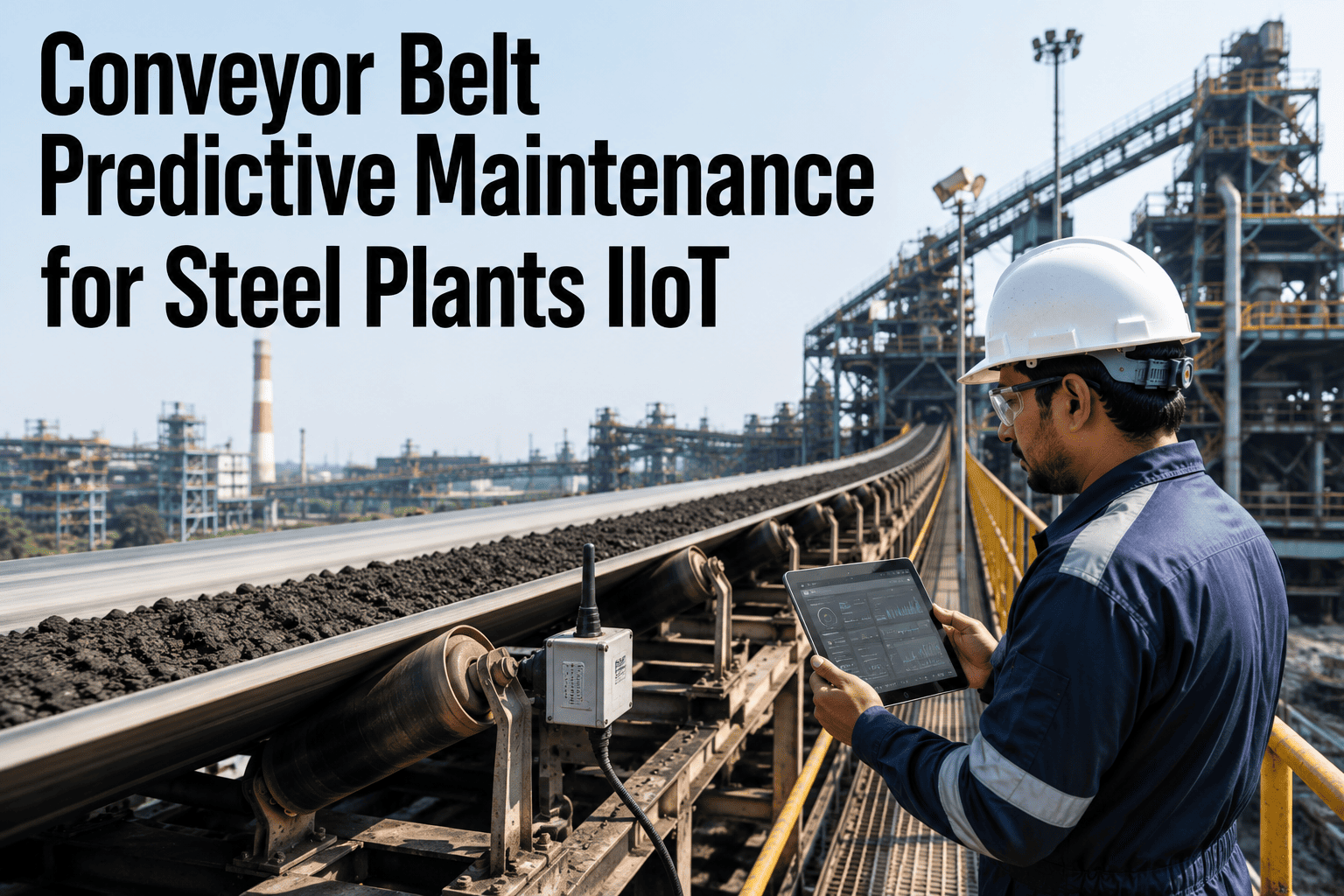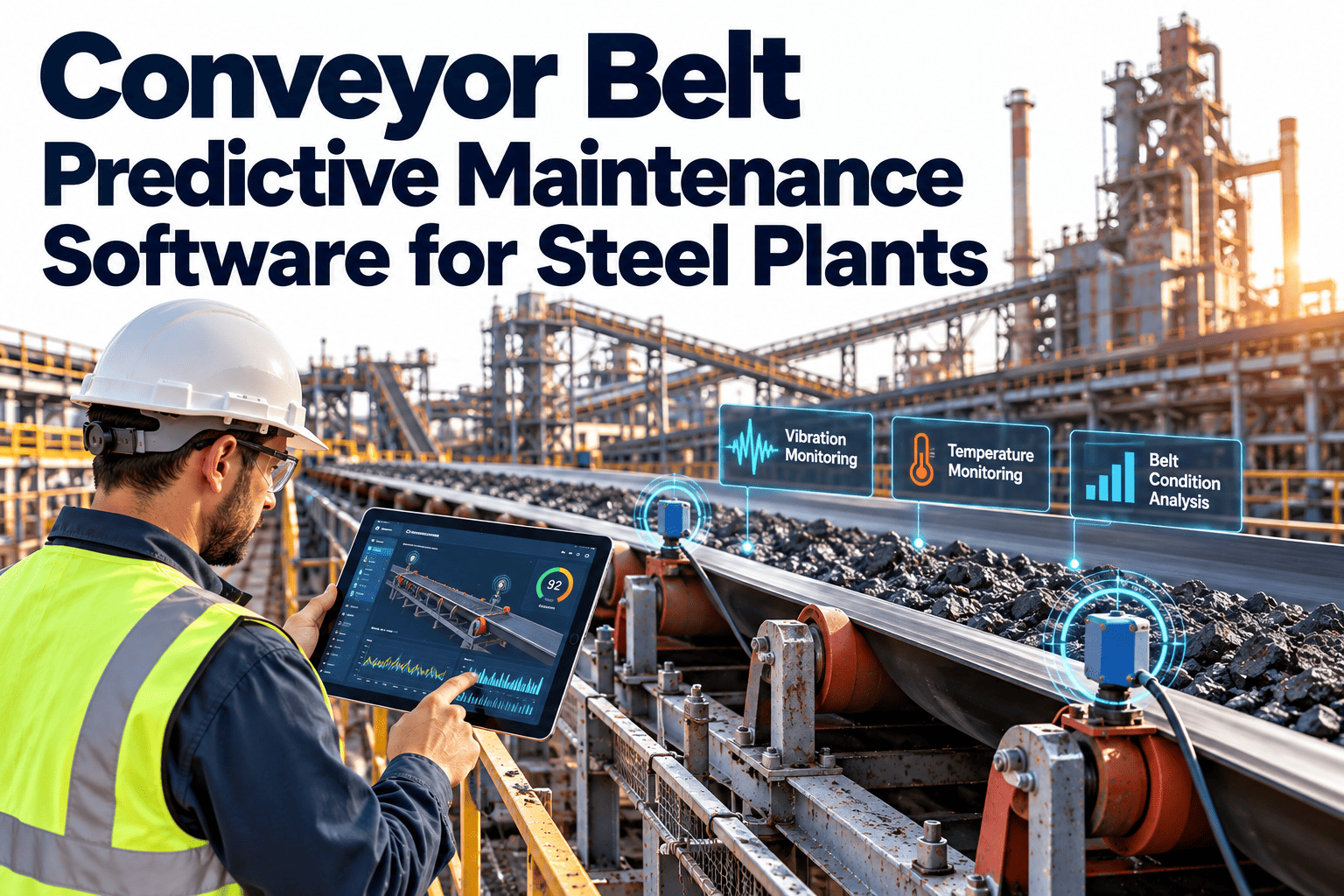
Material handling conveyors move raw ore, coke, sinter, and scrap through a steel plant around the clock, and when one line goes down, everything feeding the blast furnace or EAF behind it grinds to a halt within minutes. Belt mistracking, seized idlers, and worn pulley lagging rarely fail without warning — they build slowly through vibration, heat, and tension changes that predictive maintenance software can catch days before a belt tears or a drive overheats.
The conveyor line feeding your furnace is only as reliable as its weakest idler
Vibration, belt tension, temperature, motor current, and acoustic sensors turn conveyor maintenance from a walk-the-line inspection into a continuous, condition-based program tied directly to your CMMS.
Why conveyor failures hit steel plants harder than most industries
Steel production is a continuous process, and conveyors are the connective tissue between raw material handling, sintering, coking, and charging. A single stopped belt on a stockyard reclaim line or coke oven charging conveyor can stall an entire furnace campaign.
A raw material handling conveyor feeding the sinter plant develops a slowly seizing tail pulley bearing. Under a manual inspection schedule, the fault goes unnoticed until the bearing locks, the belt overheats against the stalled pulley, and the line trips on a fire alarm. The resulting cleanup, belt inspection, and pulley replacement take the line down for most of a shift, and the sinter plant runs on reduced feed for the next two days while stockpiled material is drawn down.
Four conveyor components, four different failure signatures
Belts, pulleys, idlers, and drives each fail differently, and each one produces a distinct sensor signature. Matching the right signal to the right component is what separates useful predictive maintenance from noisy alarms.
Mistracking, splice wear, and tension loss
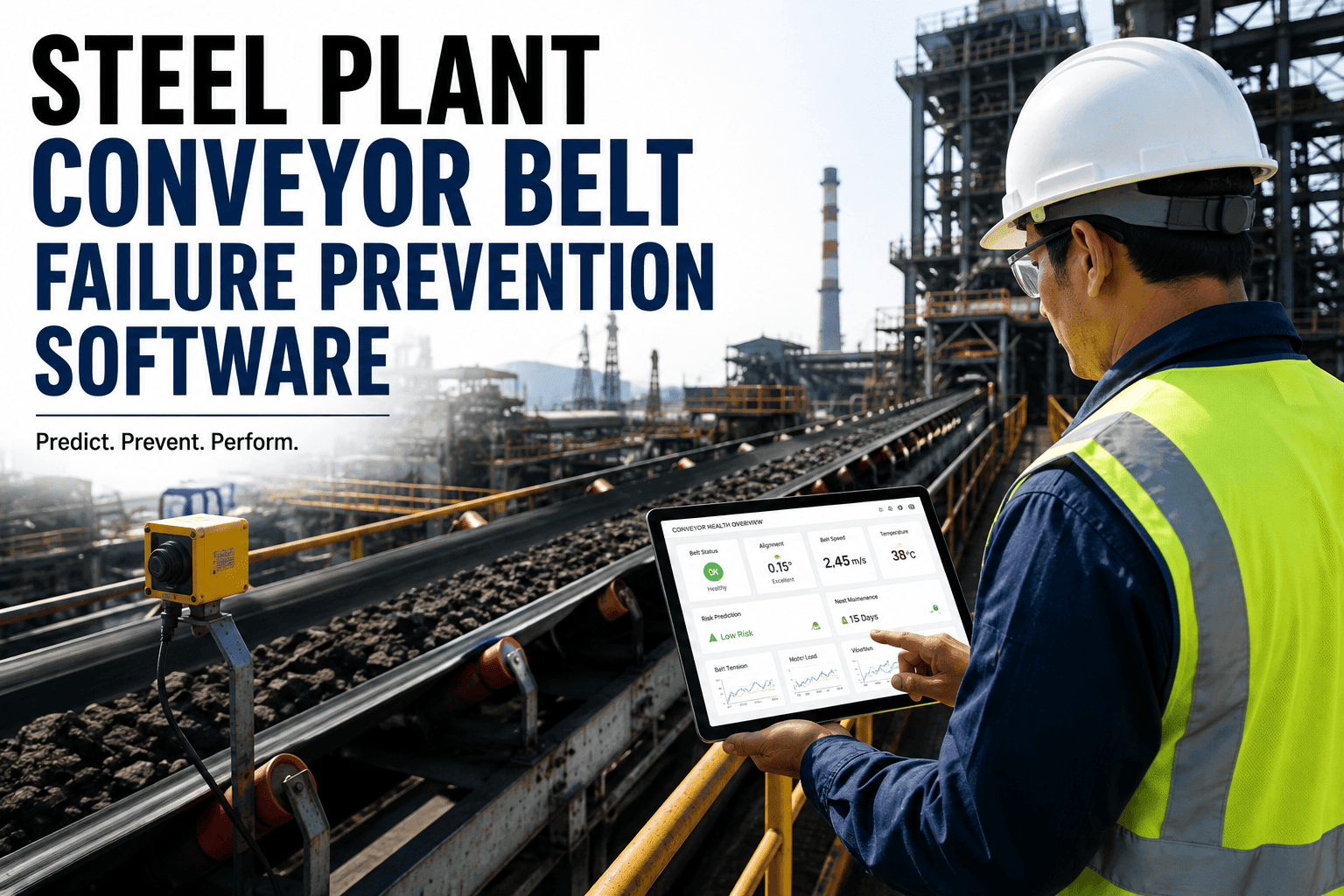
Belt tracking sensors and tension load cells detect gradual drift toward one edge or a slackening splice long before the belt rubs against the frame or a splice fails under load.
Lagging wear and bearing degradation
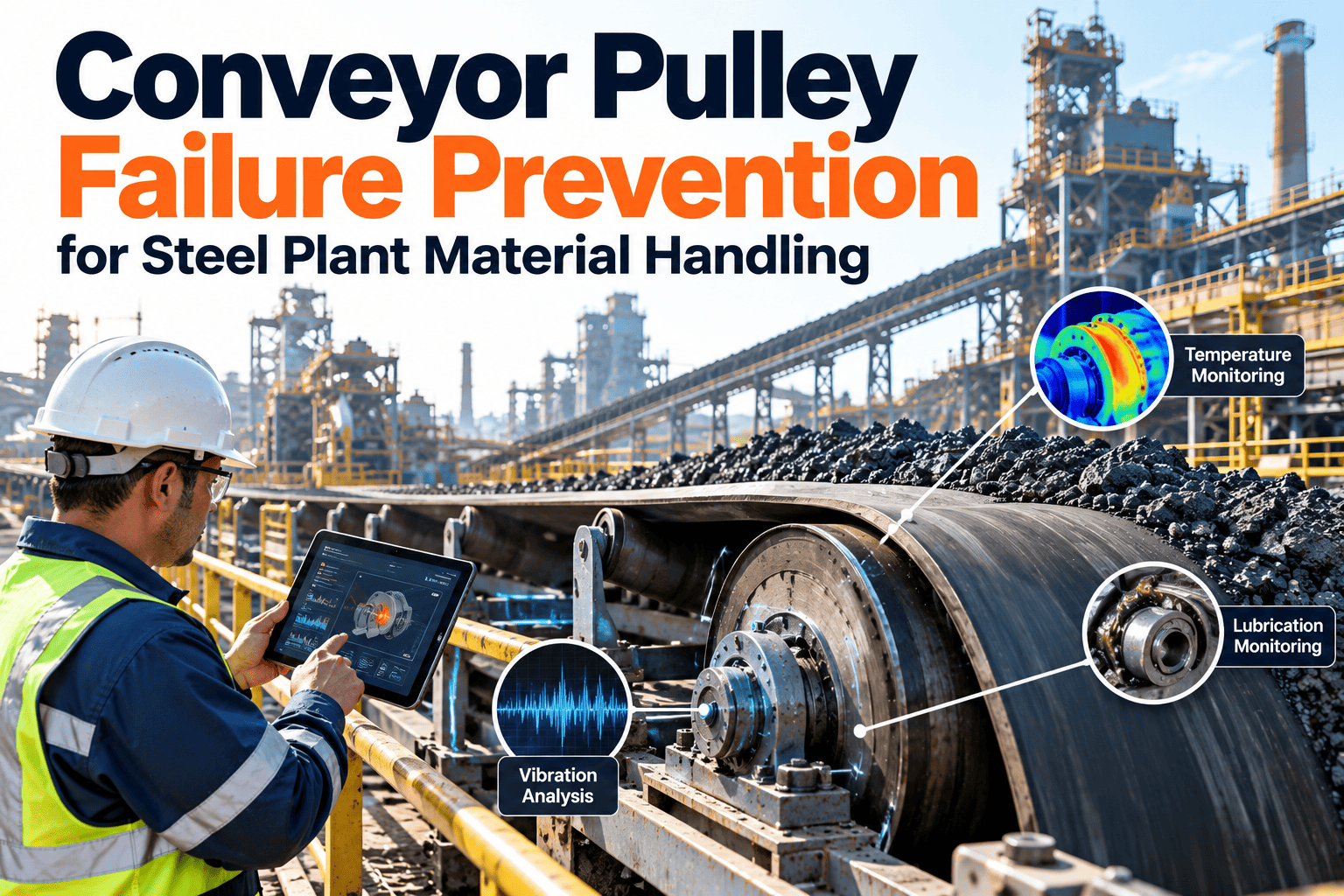
Vibration sensors on head, tail, and bend pulley bearings pick up early spalling and looseness, while surface temperature probes flag lagging wear that reduces belt grip and causes slip.
Seizure and frozen rollers
Acoustic and thermal sensors along idler runs detect the friction heat and abnormal noise signature of a bearing beginning to seize before it scores the belt or starts a fire.
Motor current and gear reducer wear
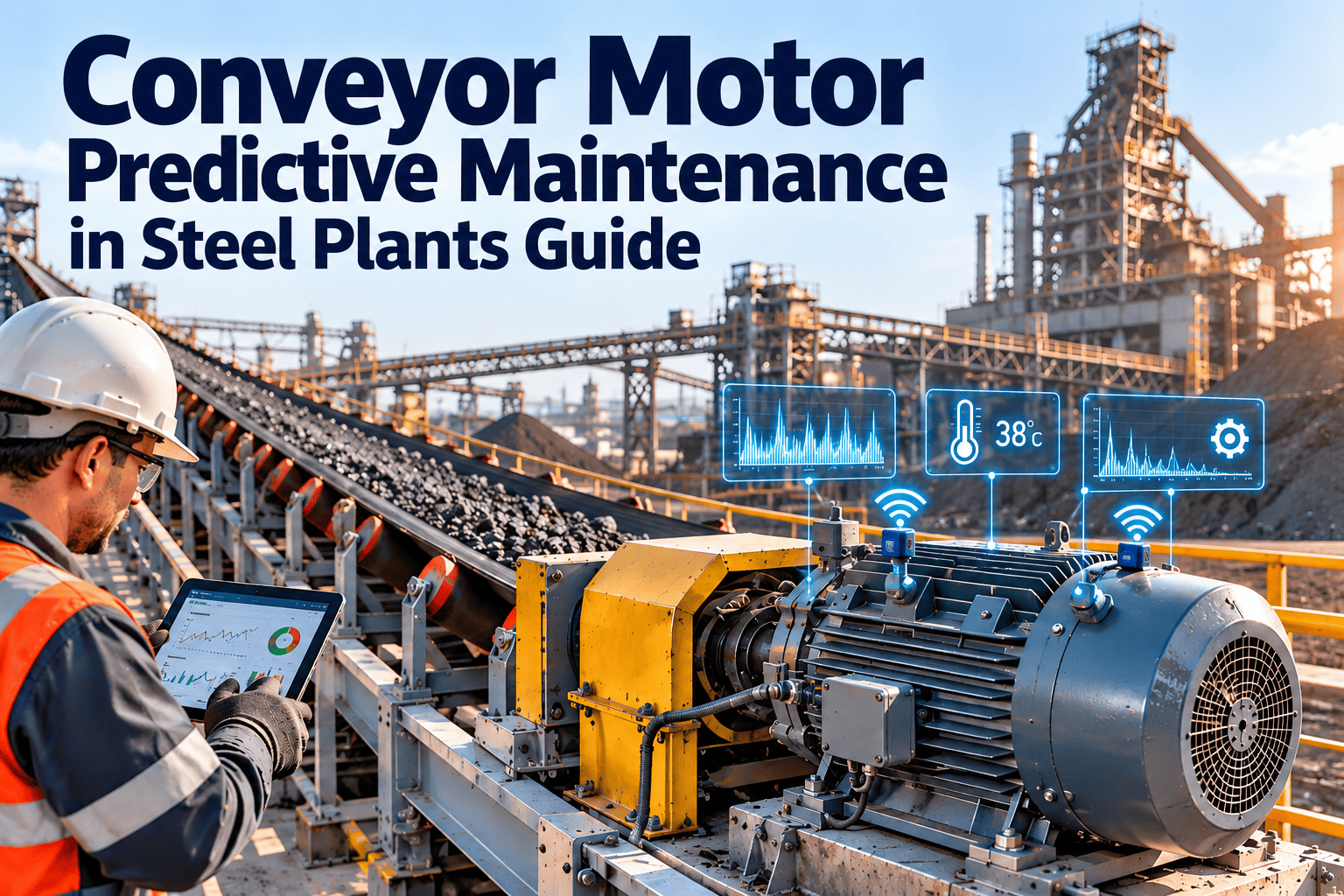
Current signature analysis on the drive motor combined with gearbox vibration and oil condition data reveals overload trends, coupling misalignment, and internal gear wear.
From raw signal to CMMS work order
A well-tuned alert ladder for conveyor systems avoids both alarm fatigue and missed early warnings. The framework below maps typical signal ranges to CMMS priority levels for a steel plant material handling line.
| Signal | Baseline | Watch | Warn (P3 WO) | Critical (P1 WO) |
|---|---|---|---|---|
| Idler bearing vibration | <2.5 mm/s RMS | 3.5 mm/s sustained | 4.5 mm/s sustained | >7 mm/s or acoustic spike |
| Belt tracking offset | Centered ± 10mm | ± 25mm for 1 hr | ± 40mm for 30 min | >50mm or edge contact |
| Pulley surface temp | <55 C | 65 C sustained | 75 C sustained | >90 C |
| Drive motor current | Within 10% of rated | +15% for 30 min | +25% for 15 min | +40% or repeated trips |
What a predictive conveyor program still needs from a physical walk-down
Sensors catch trends, but a periodic physical inspection remains part of a complete conveyor reliability program, especially for wear that sensors cannot directly measure.
- Visual check of belt edges, splices, and cover wear against baseline photos
- Confirm idler alignment and check for frozen rollers by hand where accessible
- Inspect pulley lagging for chunking, delamination, or exposed shell
- Verify skirt rubber, chute liners, and transfer point wear
- Cross-check sensor alert history against physical findings to retune thresholds
Stop discovering conveyor failures on the fire alarm panel
Connect belt, pulley, idler, and drive sensors to a CMMS built for condition-based material handling maintenance.
Deploying conveyor predictive maintenance across a stockyard or handling line
A phased rollout lets teams prioritize the conveyors with the highest downtime cost, then extend coverage across the rest of the material handling fleet.
Criticality mapping
Rank conveyors by downstream impact, identify single-point-of-failure lines feeding the furnace or sinter plant.
Sensor installation
Mount vibration, tracking, temperature, and current sensors on head, tail, and drive components of priority lines.
CMMS integration and tuning
Stream data into asset records, run a shadow period to tune thresholds, then activate automatic work orders.
Conveyor predictive maintenance for steel plants, answered
Which conveyor components should be instrumented first?
Head and tail pulley bearings, drive motors, and idlers on the highest-tonnage or single-point-of-failure lines typically deliver the fastest return since they cause the longest stoppages.
Can this integrate with our existing belt scale and PLC systems?
Yes, sensor data typically feeds through the plant's existing PLC or a dedicated gateway into the CMMS via standard industrial protocols, without disrupting belt scale or control logic.
How early can idler seizure actually be detected?
Acoustic and temperature signatures from a seizing idler bearing are typically detectable one to three weeks before the roller fully locks, giving time for a scheduled swap.
Does predictive monitoring replace belt scale calibration checks?
No, they serve different purposes. Condition monitoring focuses on mechanical failure prevention, while belt scale calibration remains a separate accuracy-focused task.
What does a typical rollout cost for a stockyard conveyor network?
Costs scale with the number of monitored points; most plants start with a small set of critical conveyors and can book a demo to scope a realistic budget.
Your next belt failure is already building heat somewhere on the line
Move conveyor maintenance from manual walk-downs to continuous, condition-based reliability across your entire material handling network.