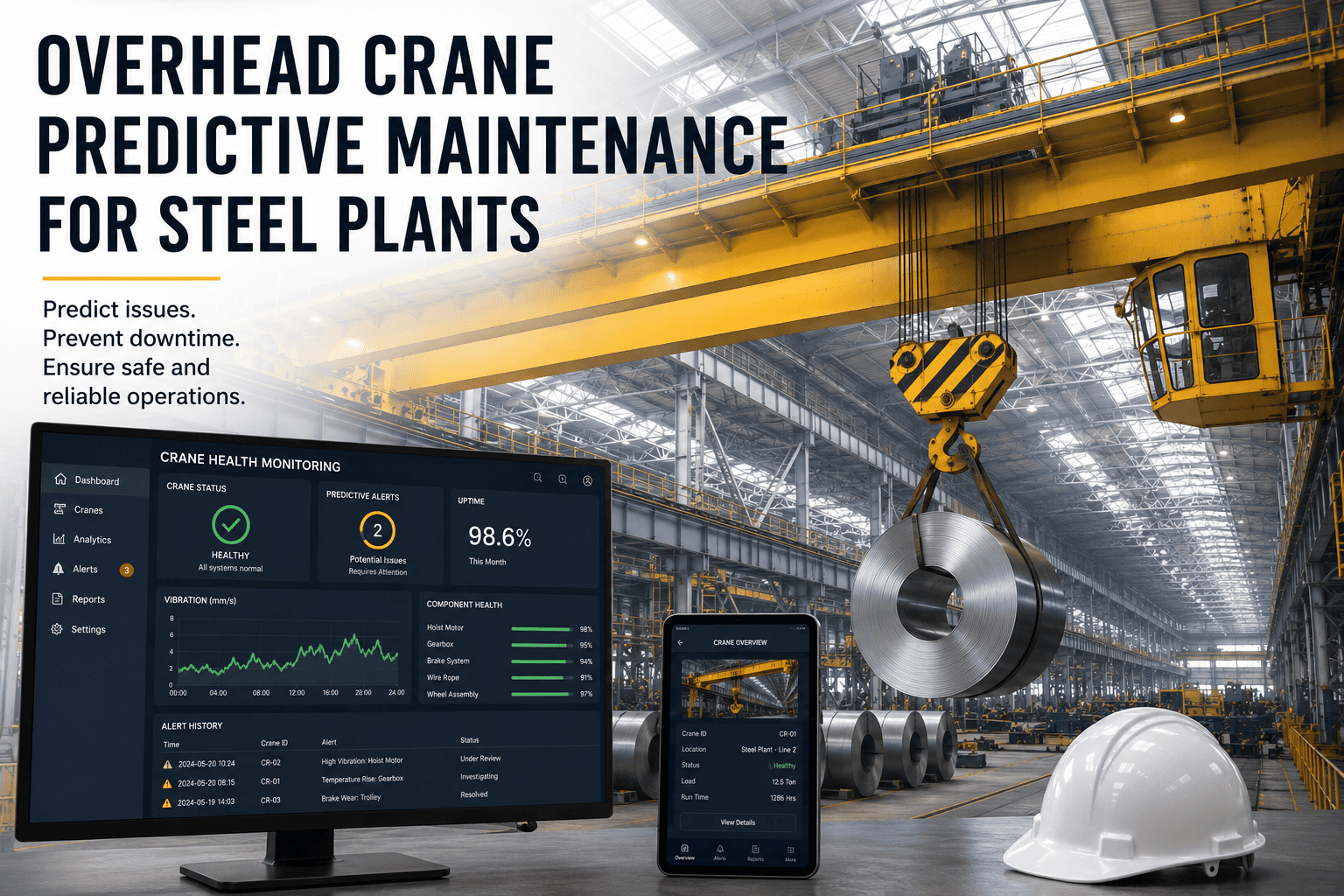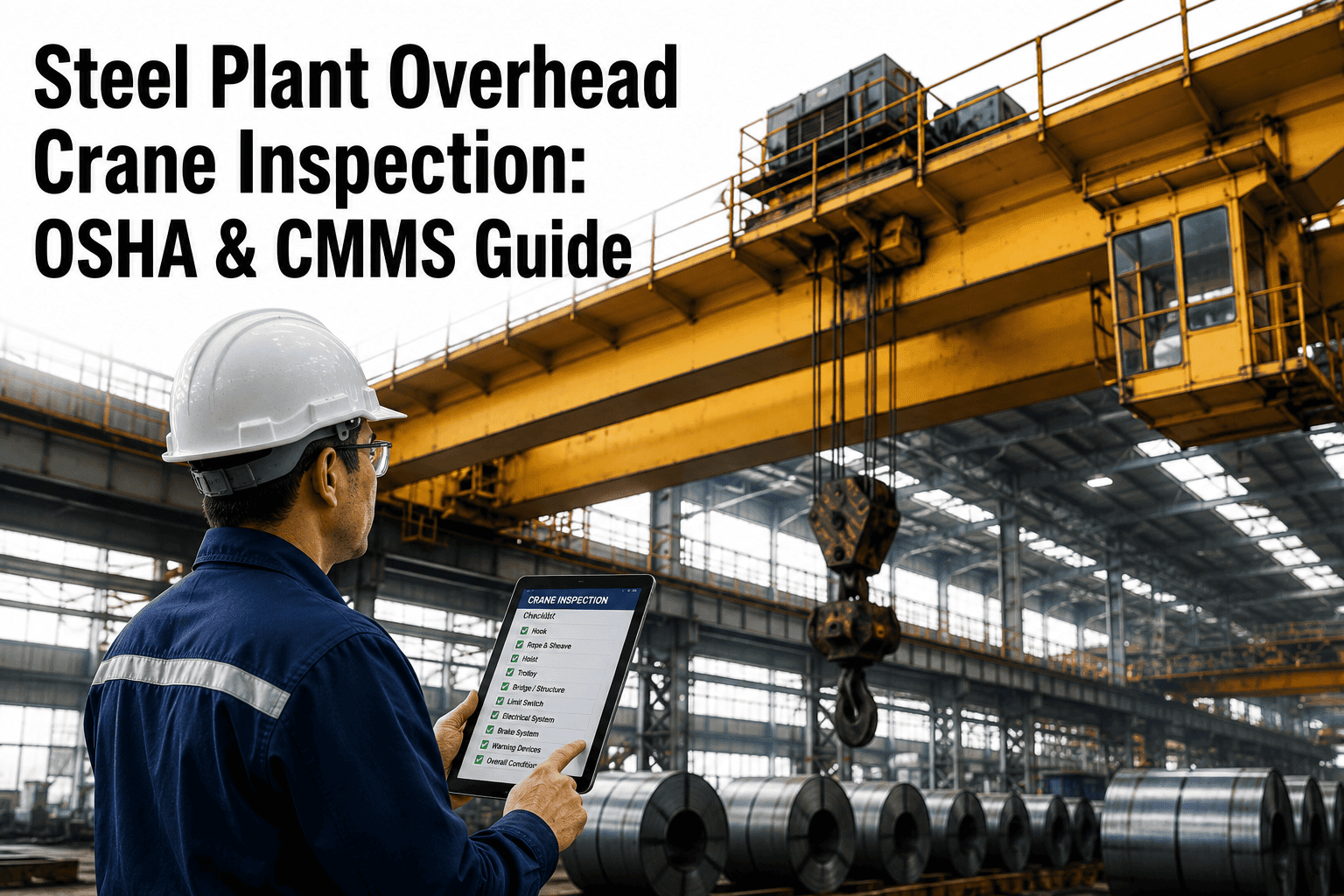
Steel plant crane predictive maintenance protects the one system that moves almost everything else: ladles, slabs, coils, scrap, rolls and spares. A crane that stops in a melt shop, caster bay or rolling mill can halt production within minutes, and a crane that fails under load becomes a safety event. Hoist motors, gearboxes, brakes, wheels, wire ropes and electrical gear all give warning through temperature, vibration, wear and inspection findings. This guide shows how to turn those signs into planned work, with overhead crane maintenance software from Oxmaint as the record that holds it all together.
Steel Plant Crane Predictive Maintenance Guide for Steel Equipment Reliability
Predict hoist, motor, gearbox, brake, wheel and wire rope problems before they interrupt material movement. Combine inspections, condition data and duty cycle in one maintenance plan.
Why cranes are a plant-wide single point of failure
Steel plants often have fewer cranes than the process needs, so each one carries heavy duty. Charging, ladle handling, roll changes, coil storage and maintenance lifts all depend on the same machines.
What the rules require, and where predictive work starts
In the United States, OSHA 1910.179 sets the legal baseline for overhead and gantry cranes in general industry. ASME B30.2 is a consensus standard that many plants use as the working practice. Always confirm requirements for your country and your lifting equipment type.
Frequent inspection
Daily to monthly intervals
- Operating mechanisms, limit switches and brakes
- Hooks, latches and visible rope condition
- Hoist chains, wire rope end connections and controls
- Performed by operators or designated personnel
Periodic inspection
One to twelve month intervals
- Deformation, cracks and corrosion on structure and fasteners
- Wear of sheaves, drums, gears, brake parts and wheels
- Electrical apparatus and safety devices
- Performed by a qualified person with recorded results
- Unsafe conditions found in an inspection must be corrected before the crane returns to operation.
- Rope that has been idle for a month or more needs a thorough inspection and a certification record with date, signature and rope identifier.
- New or altered cranes need a rated load test, with test load limits set by the standard and the manufacturer.
Compliance gives you the minimum inspection program. Predictive maintenance uses condition and duty data to catch problems between those inspections.
Failure modes and the signals that precede them
Each major crane component has a typical wear path. The table links each path to a measurable signal and a sensible maintenance trigger.
| Component | Typical failure | Warning signal | Maintenance trigger |
|---|---|---|---|
| Hoist motor | Overheating, winding or bearing failure | Rising temperature, current imbalance, insulation trend | Trend crosses review level or thermal scan fails |
| Hoist gearbox | Gear wear, bearing damage, oil breakdown | Vibration change, wear metals, noise, leaks | Vibration or oil result outside baseline |
| Brakes | Lining wear, air gap growth, slipping | Stopping distance, hold test result, lining thickness | Hold test fail or wear limit reached |
| Wire rope | Broken wires, corrosion, diameter loss, poor lubrication | Visual findings, diameter checks, service hours | Discard criteria reached or inspection fail |
| Wheels and rails | Flange wear, misalignment, rail damage | Skewing, noise, wear measurements | Wear limit or alignment drift |
| Electrical and controls | Collector wear, contactor failure, limit switch faults | Fault codes, heat, intermittent trips | Repeat fault or failed function test |
| Hooks and blocks | Deformation, cracks, latch damage | Throat opening change, visible cracks | Measurement outside limit or crack found |
Brakes and wire rope deserve their own track
These two components stand between normal operation and a dropped load, so they need more than a line on a general checklist.
Brake program
- Record lining thickness, air gap and adjustment at every inspection.
- Run a hold test on the schedule set by your crane engineer.
- Log brake changes, hot running events and slip reports against the hoist.
- Track repeat adjustments, since they often hide wear in linkages or drums.
Wire rope program
- Assign each rope an identifier and install date in the asset record.
- Record broken wire counts, diameter readings and corrosion notes by inspection.
- Apply the discard criteria of your standard and rope supplier, and use stricter rules for ladle duty where your plant requires them.
- Schedule rope lubrication and review the condition of sheaves and drums with each rope change.
Turn crane inspections into a maintenance plan you can defend
Set up crane assets, inspection checklists and condition triggers in Oxmaint, and keep every finding connected to the work that fixed it.
From inspection finding to return to service
The most valuable habit in crane maintenance is a consistent decision path. It prevents arguments at the pendant and speeds up the right repair.
Time-based, usage-based and condition-based crane maintenance
A calendar is easy to run but ignores how hard each crane works. A ladle crane and a stores crane do not wear at the same rate.
Most plants end up with all four. Regulated tasks stay time-based, while wear items move to usage and condition triggers as data improves.
Condition monitoring that fits crane duty
Cranes move, stop and reverse constantly, so condition data must be read against the right operating state.
- Take vibration readings on hoist gearboxes and motor bearings under comparable load and speed.
- Use infrared scans for motor casings, brake drums, collector shoes and electrical panels.
- Record motor current during lifts, since rising current for the same load may point to friction or brake drag.
- Sample gearbox oil and trend wear metals, water and viscosity.
- Count lifts and hours per crane so duty cycle can drive the schedule for ropes, brakes and wheels.
- Review fault logs from drives and controllers to catch repeat trips before they become outages.
Crane inspection checklist by interval
Use these lists as a starting point and adjust them to the crane manufacturer manuals and your safety procedures.
Pre-use or each shift
- Limit switches and emergency stop
- Brake response without load
- Visible rope and hook condition
- Warning devices and controls
Monthly
- Rope end connections and lubrication
- Brake lining and adjustment
- Bumpers, rail clamps and stops
- Electrical connections and heat
Periodic or annual
- Structure, welds and fasteners
- Gear, sheave and drum wear
- Wheel and rail measurements
- Load test where required
KPIs for crane reliability
Track a few measures that connect crane health to production and safety.
How Oxmaint supports crane maintenance in a steel plant
Oxmaint acts as the system of record for crane assets, inspections and repairs.
- Build the crane register. Model each crane with hoist, trolley, bridge, brake and rope components.
- Digitize inspections. Run pre-use, monthly and periodic checklists on mobile with photos and pass or fail results.
- Schedule preventive maintenance. Plan lubrication, brake checks and tests by time, lifts or hours.
- Raise corrective work. A failed inspection item creates a prioritized work order for the right component.
- Keep compliance records. Store rope records, inspection results and sign-offs against each crane for audits.
- Manage spares. Track brake parts, ropes, bearings and contactors in inventory for planned stops.
- Review dashboards. See overdue inspections, repeat defects and downtime by crane.
Crane predictive maintenance FAQs
What is the difference between preventive and predictive crane maintenance?
Preventive work follows a schedule. Predictive work uses condition and usage data to decide when a component needs attention.
Which crane components should be monitored first?
Start with brakes, wire rope, hoist gearboxes and motors. You can set them up in Oxmaint in one session.
How do we keep rope inspection records for audits?
Log each rope by identifier with date, inspector and findings, and attach photos. Records stay linked to the crane.
Does the CMMS replace the qualified inspector?
No. The inspector judges condition, while the CMMS schedules and records it. A demo shows the flow.
How do we handle cranes with very different duty?
Use lift counts and hours to trigger work for each crane, and tighten intervals on ladle and charging cranes.
Keep material moving by finding crane problems before they stop it
Bring crane inspections, condition data and repair history into one platform, and see which cranes need attention first.