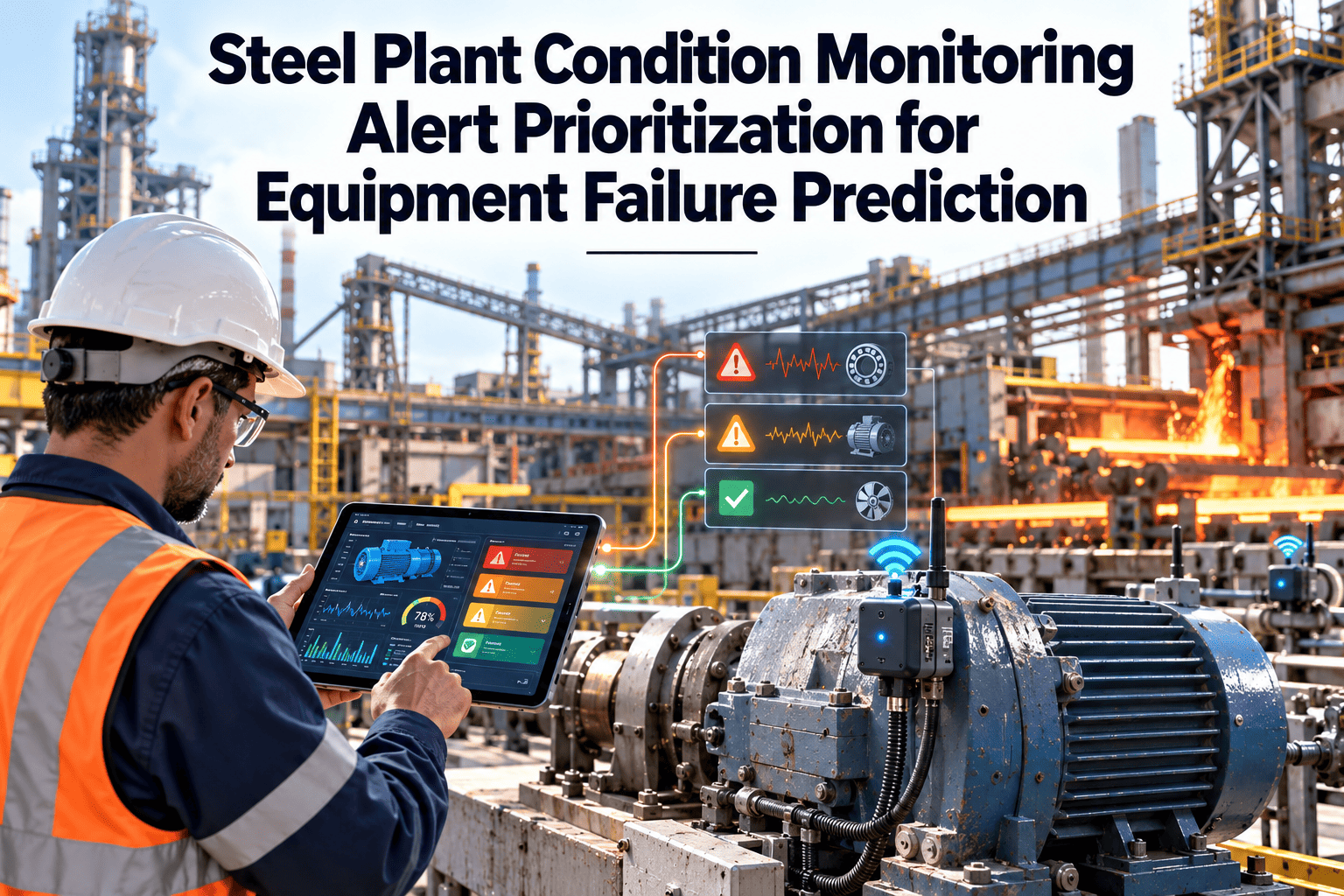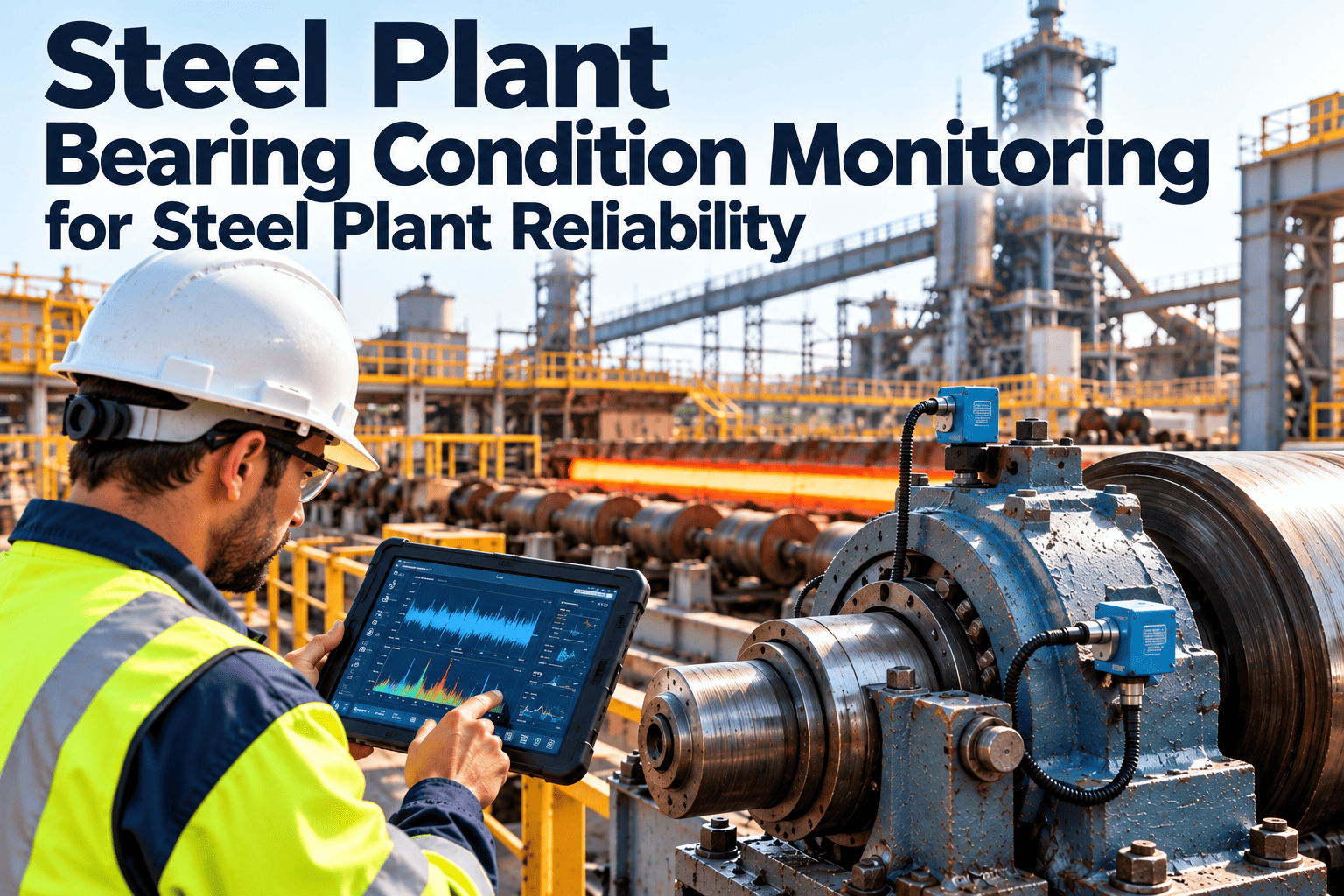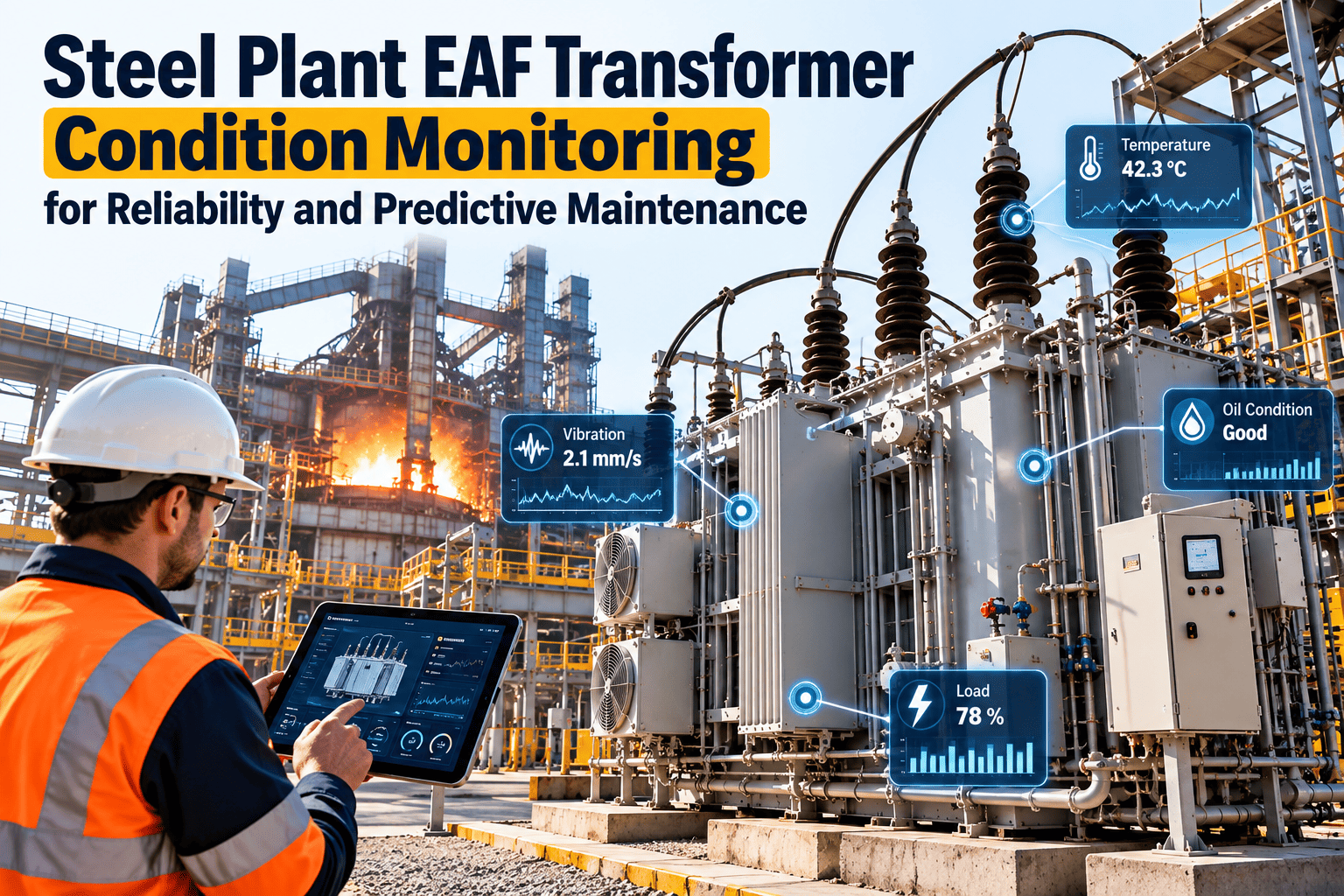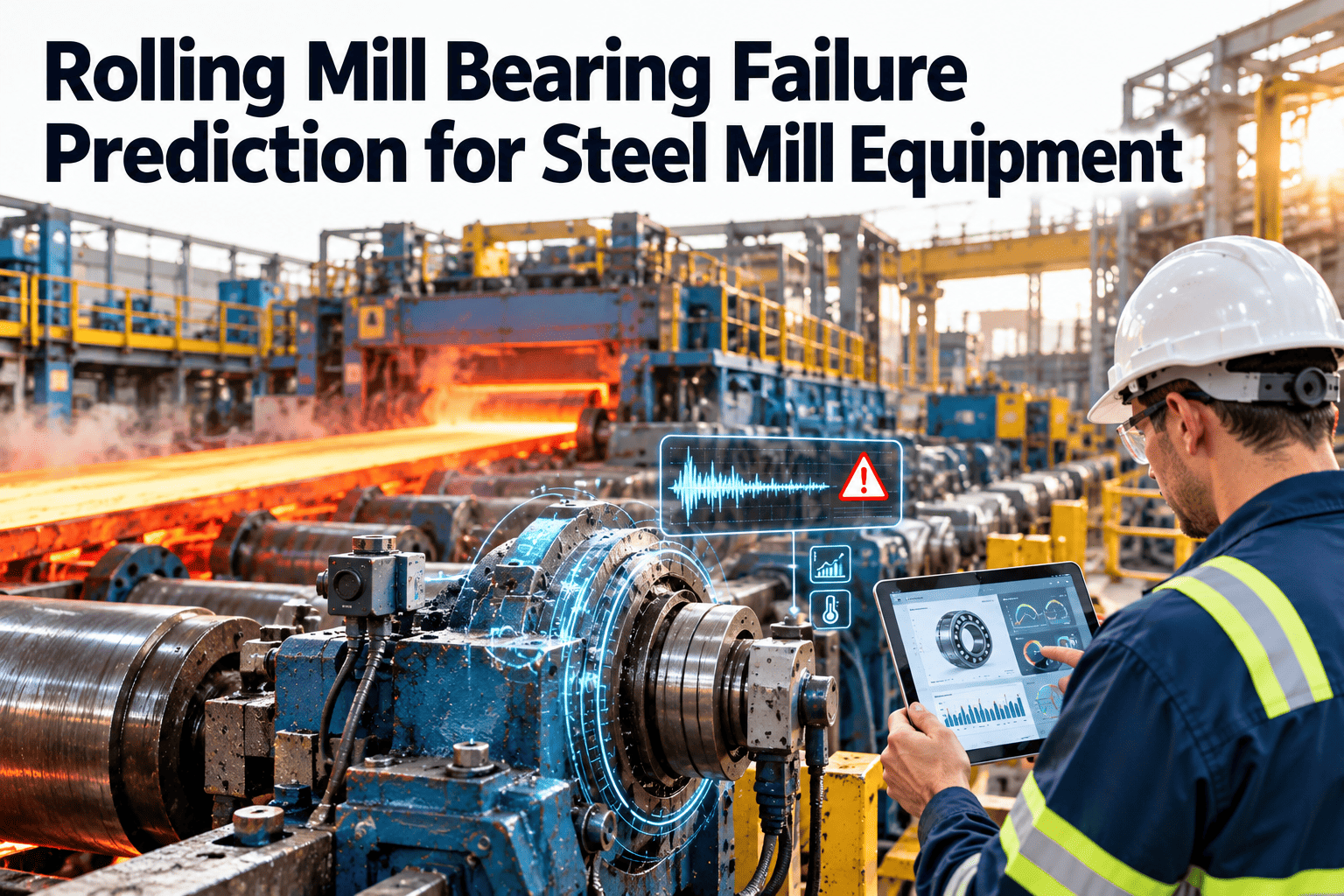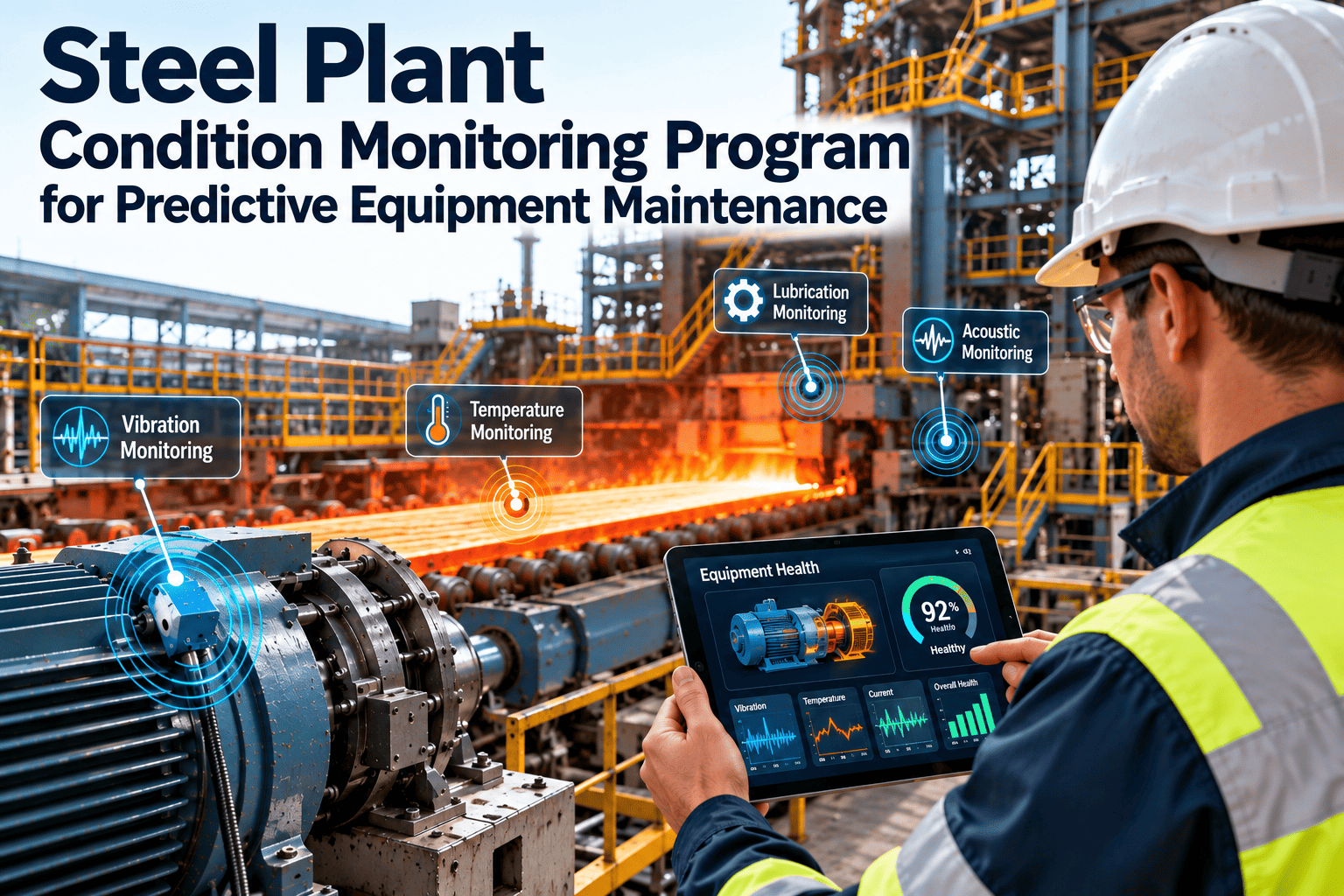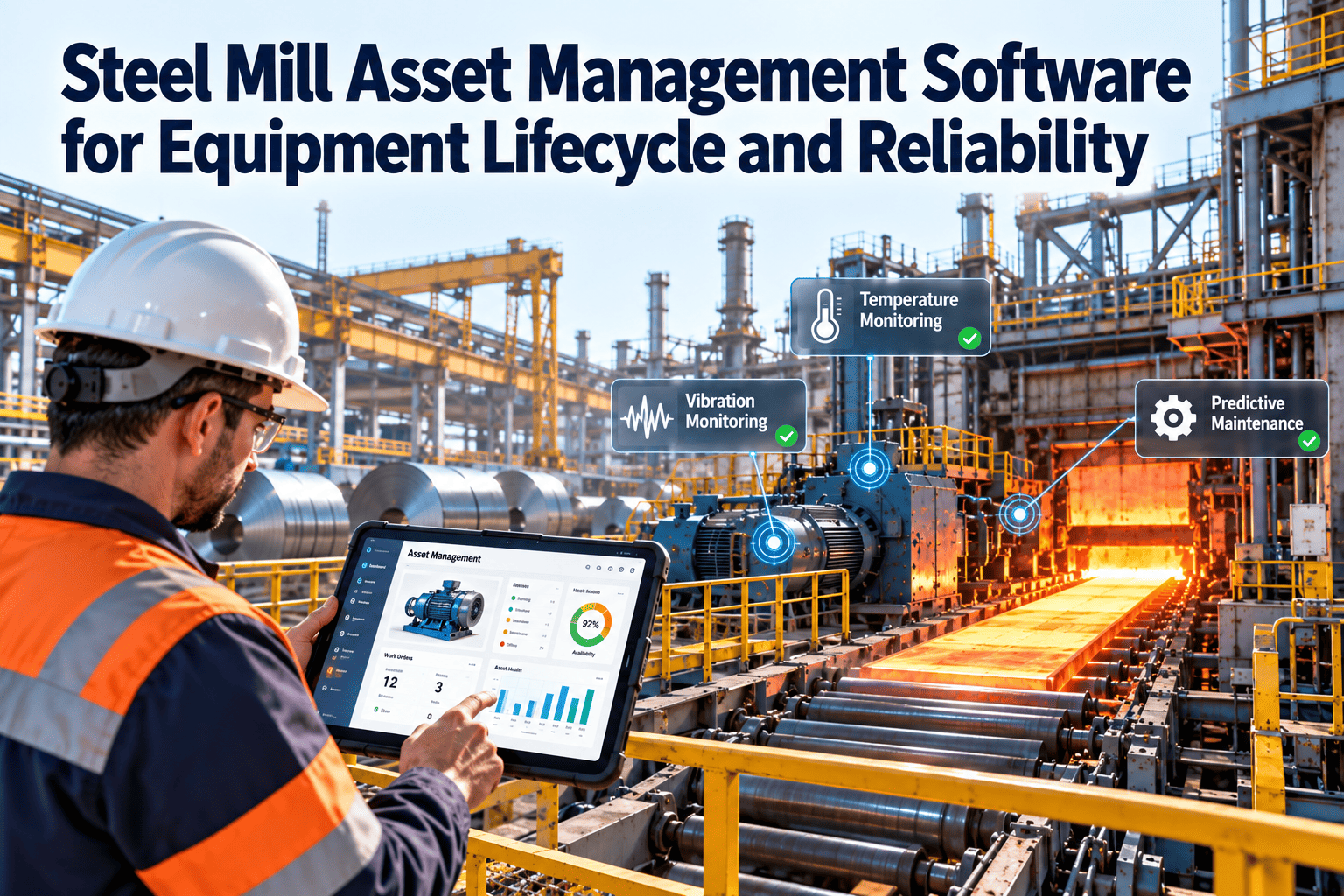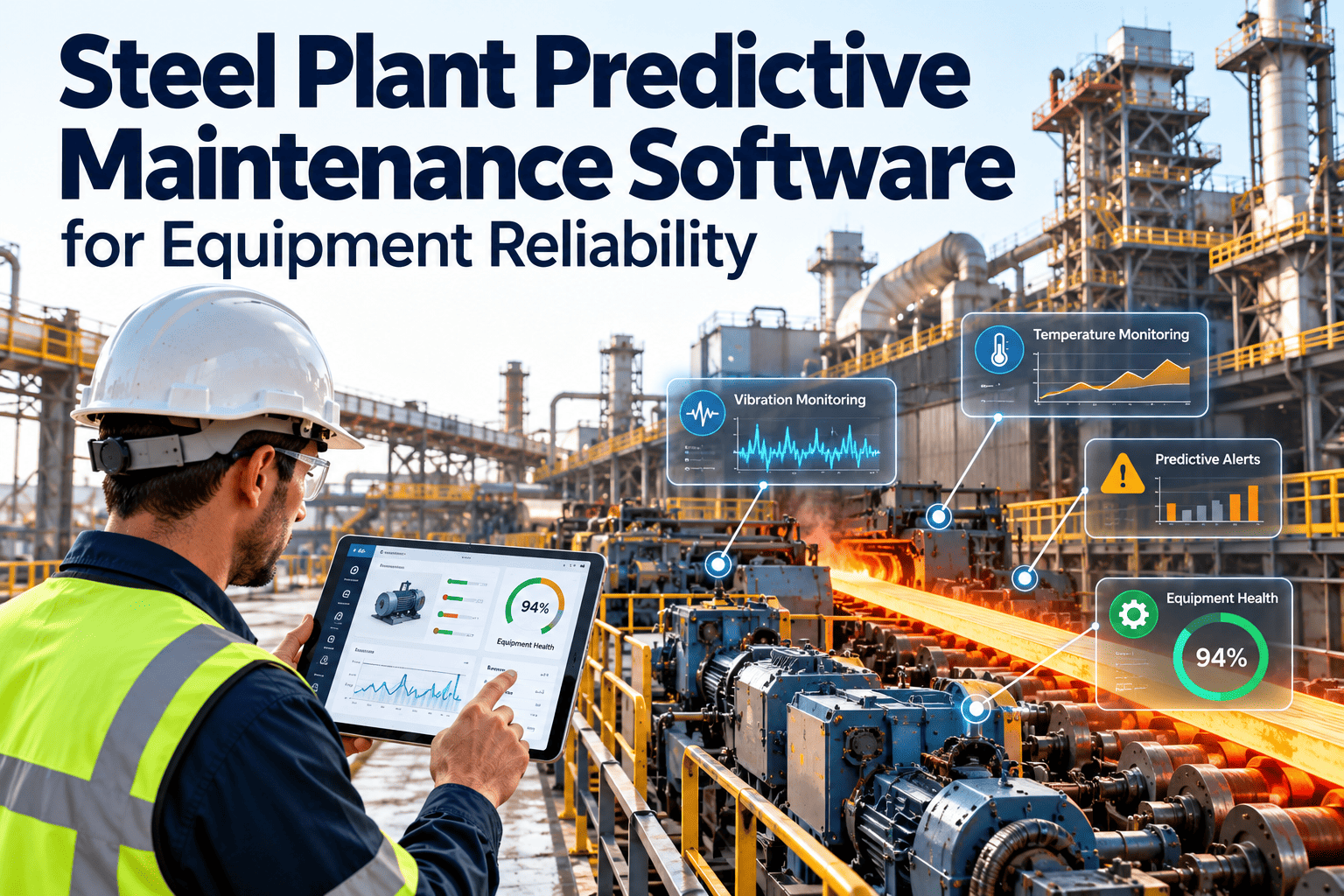
Integrated steel plants run some of the most punishing rotating and thermal equipment in industry — reheat furnaces pushing past 1,200 degrees C, continuous casters cycling molten steel every few minutes, and rolling mill drives absorbing shock loads that would destroy ordinary machinery. When a motor bearing, gearbox, or caster roll fails without warning, the ripple effect can shut down an entire production line for hours. Predictive maintenance built on condition monitoring software replaces that uncertainty with data, giving reliability teams the lead time to plan repairs instead of reacting to them.
Every unplanned stoppage in a steel mill has a signal that came before it
Vibration, temperature, current draw, and lubrication data from motors, bearings, gearboxes, conveyors, casters, furnaces, and rolling mills feed directly into a predictive maintenance platform, turning early wear signatures into scheduled work instead of emergency downtime.
The equipment classes that drive most unplanned steel plant downtime
Steel production is a chain of high-load rotating and thermal assets, and a failure anywhere in that chain stops everything downstream. Reliability teams generally trace the majority of unplanned stoppages back to a short list of repeat offenders.
Motors and drives
Winding insulation breakdown, bearing wear, and rotor imbalance on main mill and auxiliary drive motors cause sudden trips that stall entire rolling sequences.
Bearings
Roll neck, pinion, and gearbox bearings operate under constant shock loading and contamination risk from scale and coolant, making them the single most common failure point.
Gearboxes
Gear tooth pitting, misalignment, and oil degradation build slowly and are rarely visible until a tooth fractures mid-shift.
Conveyors
Belt mistracking, idler seizure, and pulley lagging wear on raw material and scrap handling lines quietly throttle throughput before they fully fail.
Continuous casters
Segment roll bearing wear and mold cooling water flow deviations threaten breakout risk, one of the most costly failure events in the entire plant.
Furnaces and rolling mills
Refractory wear, burner drift, and mill stand roll degradation erode product quality long before they trigger a hard stoppage.
What sensor data actually tells you about each asset class
Predictive maintenance is only as useful as the match between the sensor signal and the failure mode it is meant to catch. The table below maps the primary monitored signal for each major steel plant asset class to the failure it detects earliest.
| Asset Class | Primary Signal | Failure Mode Detected | Typical Lead Time |
|---|---|---|---|
| Motors & Drives | Vibration + current signature | Bearing wear, rotor imbalance, winding fault | 2 - 6 weeks |
| Bearings | Vibration (envelope analysis) | Spalling, contamination, lubrication loss | 1 - 4 weeks |
| Gearboxes | Vibration + oil analysis | Tooth pitting, misalignment, oil breakdown | 3 - 8 weeks |
| Conveyor Systems | Vibration + belt tracking sensors | Idler seizure, pulley lagging wear, mistracking | 1 - 3 weeks |
| Continuous Caster | Bearing vibration + cooling flow | Segment roll wear, mold cooling restriction | days - 2 weeks |
| Furnace & Rolling Mill | Thermal imaging + roll force data | Refractory thinning, roll surface degradation | weeks - months |
Why unplanned stoppages cost more in steel than almost any other industry
A single unplanned trip on a hot strip mill or caster does not just stop one machine — it interrupts a continuous metallurgical process. Reheated slabs cool, cast strands risk breakout, and restart procedures themselves consume hours of production capacity.
Asset degrades silently under vibration, heat, or contamination stress
Without condition data, the failure surfaces as a sudden trip or alarm
Line stops mid-process, in-process material is scrapped or reworked
Restart, requalification, and expedited parts extend the outage further
Turn vibration, thermal, and current data into scheduled work orders
Connect your plant's condition sensors to a maintenance platform built to prioritize, assign, and track predictive work across every asset class.
What changes when a steel plant moves to predictive maintenance
Time-based maintenance schedules were built for an era without continuous sensor data. They still have a place for regulatory and safety-critical tasks, but for high-value rotating and thermal assets, condition data changes the entire operating model.
- Bearings and gearboxes replaced on fixed intervals regardless of actual wear
- Vibration checks performed manually, often monthly or quarterly
- Failures discovered as production trips, not as trends
- Spare parts ordered reactively after a breakdown
- Maintenance crews spend most of their time firefighting
- Components replaced based on measured degradation, extending usable life
- Vibration, thermal, and current data streamed continuously into the CMMS
- Work orders generated automatically at defined severity thresholds
- Spares reordered ahead of predicted replacement dates
- Crews redirected toward planned, prioritized predictive work
How a steel plant rolls out predictive maintenance without disrupting production
A phased rollout across critical assets lets reliability teams prove value on the highest-risk equipment first, then extend coverage without overwhelming the maintenance organization.
Criticality ranking
Rank motors, bearings, gearboxes, conveyors, caster segments, and mill stands by downtime cost and failure history to prioritize sensor placement.
Sensor deployment
Install vibration, thermal, and current sensors on the highest-criticality assets first, wired into existing PLCs or a dedicated gateway.
CMMS integration
Stream sensor data into asset records, configure severity thresholds, and validate alerts during a shadow period before automation goes live.
Predictive work orders
Activate automatic work order generation, mobile inspections, and reporting so planners can schedule repairs around production windows.
Steel plant predictive maintenance, answered
Which steel plant assets benefit most from predictive maintenance?
Main drive motors, roll neck and gearbox bearings, continuous caster segments, and rolling mill stands see the fastest payback because their failures cause the longest, most expensive stoppages.
Do we need new hardware for every machine, or can existing sensors be used?
Many steel plants already have vibration or temperature instrumentation on critical drives; predictive maintenance software typically integrates with that existing data through a CMMS connection rather than replacing it.
How is predictive maintenance different from a CMMS we already use?
A CMMS tracks work orders and asset history; predictive maintenance adds live condition data that automatically triggers those work orders before failure occurs. You can book a demo to see the integration in practice.
What is a realistic timeline to see results?
Most plants catch their first meaningful early-warning event, such as a bearing trend or gearbox oil deviation, within eight to twelve weeks of instrumenting critical assets.
Does predictive maintenance replace scheduled shutdown inspections?
No. Condition monitoring works alongside planned outages, helping prioritize which assets need inspection or replacement during the next scheduled shutdown window.
Stop scheduling maintenance by the calendar. Start scheduling it by condition.
Bring motor, bearing, gearbox, conveyor, caster, and mill data into one predictive maintenance platform built for steel plant reliability.