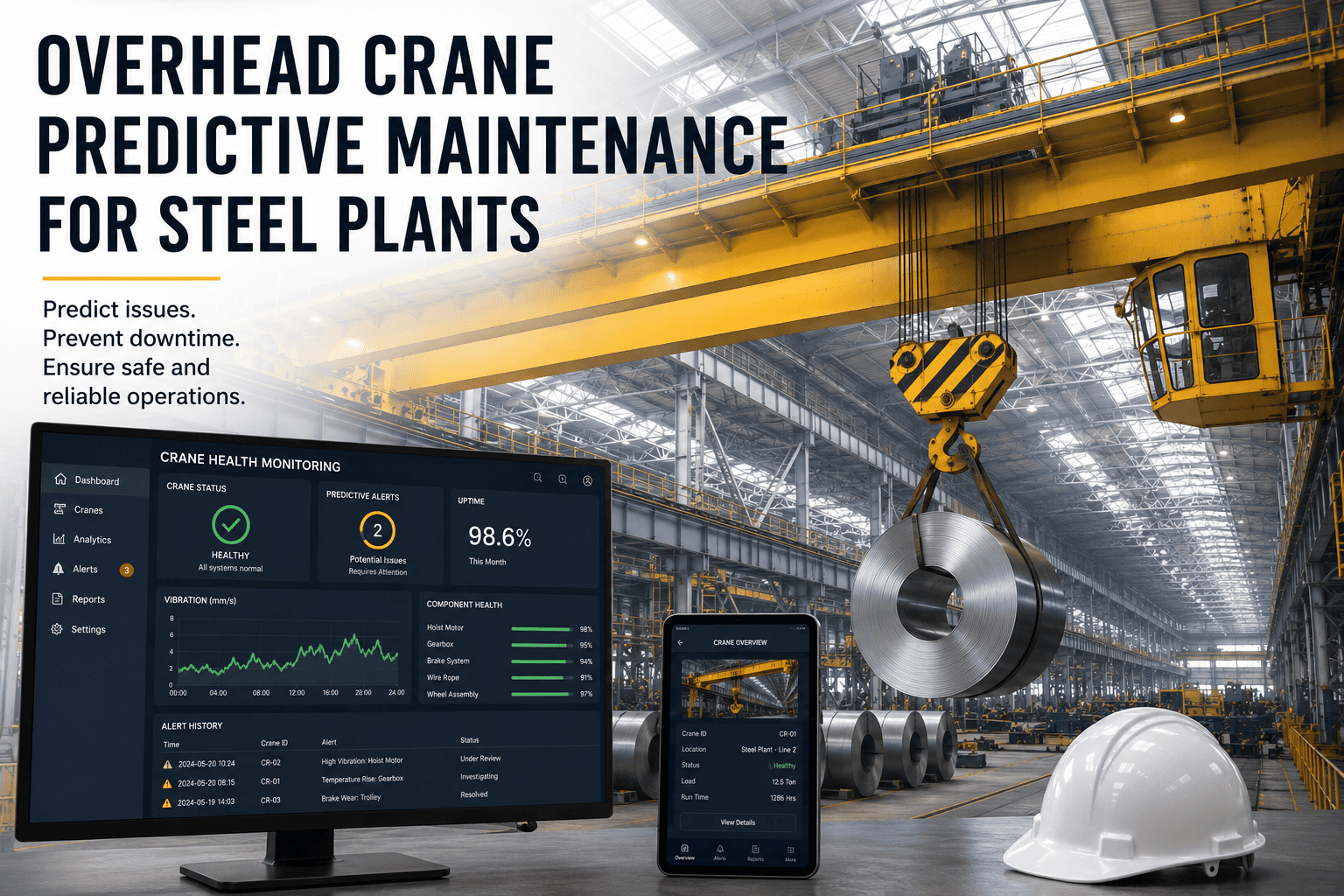
When an overhead crane stops in a steel plant, the problem rarely stays with the crane. Ladle moves wait, slabs and coils stack up, furnaces and casters lose their feed, and a single hoist fault becomes a plant-wide delay. Hoists and motors carry the heaviest duty, in heat, dust and constant start-stop cycling. This guide explains how predictive and condition-based maintenance can reveal wear early, and how Oxmaint maintenance management software keeps inspections, findings and repairs connected.
Steel Plant Overhead Crane Predictive Maintenance for Hoists and Motors
Detect hoist, brake and motor wear before it interrupts ladle, slab and coil handling, and keep inspection records ready for audits.
Why one crane failure spreads across the plant
Overhead cranes connect melting, casting, rolling, finishing and dispatch. A fault at one lifting point interrupts every process waiting on it.
- Safety exposure: a dropped or uncontrolled load is among the most serious hazards in a steel works.
- Limited redundancy: many bays depend on one or two cranes, so there is little room to work around a failure.
- Hard duty: frequent starts, plugging, shock loading and hot environments accelerate wear.
- Access difficulty: inspections at height, above live processes, need planning and permits.
Where hoists and motors wear out
Predictive maintenance works best when each component is linked to a known failure mode and a practical way to detect it.
| Component | Typical failure modes | Early warning signs | Detection approach |
|---|---|---|---|
| Hoist motor | Bearing wear, winding insulation breakdown, overheating | Rising temperature, abnormal noise, current imbalance | Thermography, current monitoring, vibration checks |
| Hoist brake | Lining wear, glazing, adjustment drift, coil faults | Longer stopping distance, drift under load, heat marks | Wear measurement, air-gap checks, brake test records |
| Hoist gearbox | Gear pitting, bearing damage, oil contamination | Metal particles in oil, new vibration frequencies, leaks | Oil analysis, vibration, temperature trending |
| Wire rope and drum | Broken wires, corrosion, flattening, drum groove wear | Reduced diameter, visible damage, uneven spooling | Visual inspection, diameter measurement, rope records |
| Wheels, rails and drives | Flange wear, misalignment, rail damage, skewing | Noise, drive load increase, uneven wear | Alignment checks, measurement, drive current review |
| Limit switches and controls | Contact wear, wiring damage, setting drift | Intermittent faults, missed stops | Functional tests and fault logging |
| Power feed and collectors | Wear, arcing, loose connections | Hot spots, voltage drops, intermittent loss of power | Thermography and connection inspection |
Duty severity in steel plant crane bays
Not every crane works equally hard. Rank bays by duty and environment so inspection frequency follows real stress.
Keep every crane lift on a planned inspection and repair path
Link inspections, condition readings and corrective work to each hoist and motor in one maintenance record.
Steel plant conditions that shorten crane component life
Environment matters as much as load. Account for these factors when setting inspection intervals and alarm limits.
- Radiant heat: ladle bays expose motors, brakes, cables and rope to high temperatures that age insulation and lubricants faster.
- Scale and dust: abrasive deposits clog cooling paths, contaminate gearboxes and wear collectors and rails.
- Shock and snatch loading: scrap handling and sudden stops raise stress on gearing, rope and structure.
- Vibration from adjacent equipment: nearby mills and presses can disturb readings and loosen fasteners.
- Moisture and corrosion: cooling water and weather exposure speed corrosion on ropes, fittings and electrical enclosures.
Hoist motor monitoring: what to watch
Hoist motors work hardest during acceleration and lifting, so their warning signs often appear under load.
- Temperature trend: compare similar duty cycles over weeks, not single readings, and check ventilation and cooling paths.
- Current balance: unusual imbalance or rising current for the same lift can point to winding, connection or mechanical issues.
- Bearing condition: listen for changes and use vibration checks on motor bearings during representative operation.
- Insulation condition: follow electrical testing intervals recommended by the manufacturer and your electrical standards.
- Drive and control faults: log repeated trips, overload events and fault codes against the crane asset record.
Hoist brakes: why records matter most
Brakes are a primary safety component. Their condition should never depend on memory or informal notes.
Lining and gap
Record lining thickness, air gap and adjustment at each check.
Holding performance
Perform functional tests as required and log the result and tester.
Heat and contamination
Look for glazing, oil on friction surfaces and signs of drag.
Replacement timing
Use wear trends and duty data to schedule parts and downtime.
Mistakes that undermine crane predictive programs
Most failures of a crane program come from process gaps rather than missing sensors.
- Monitoring without ownership: data is collected but no one is responsible for reviewing it and raising work.
- Ignoring duty differences: comparing a ladle crane with a yard crane leads to misleading limits.
- Unrecorded inspections: a check that is not documented cannot support trends or compliance.
- Late parts planning: a good warning is wasted when the brake lining or rope is not available.
- No follow-up verification: repairs should be checked afterward and the outcome recorded against the original finding.
A phased start for crane predictive maintenance
Begin with the cranes whose failure stops production or creates the highest safety exposure.
Rank cranes
Score each crane by process dependence, duty and safety consequence.
Build records
Create the component hierarchy and load existing inspection and repair history.
Standardize checks
Set mobile checklists and readings with clear pass, watch and fail criteria.
Review and refine
Hold monthly reviews of findings, repeat defects and trigger rules.
Four layers of crane inspection
Predictive maintenance does not replace operator checks or required inspections. It adds a data layer on top of them.
Operator pre-shift check
Controls, brakes, limit devices, hooks and unusual noise reported before lifting begins.
Frequent inspection
Regular visual and functional checks of ropes, hooks, brakes and controls, as your applicable standard requires.
Periodic inspection
Detailed inspection of structure, rails, gearing, wiring and components, with documented results.
Condition monitoring
Thermography, oil analysis, vibration and current data that reveal wear between formal inspections.
Condition monitoring methods for hoists and motors
Each method has strengths and limits, especially on cranes that run intermittently at variable speed.
| Method | Where to apply it | What it can reveal | Practical limitation |
|---|---|---|---|
| Infrared thermography | Motors, brakes, collectors, panels, connections | Overheating, loose connections, brake drag | Needs safe access and loaded operation |
| Vibration analysis | Motor bearings, gearbox, drum bearings | Bearing and gear defects, misalignment | Intermittent, low-speed duty complicates interpretation |
| Oil analysis | Hoist and travel gearboxes | Wear metals, contamination, degraded lubricant | Results depend on sampling quality and interval |
| Motor current review | Hoist and travel motors and drives | Load changes, imbalance, rising friction | Requires baselines for each duty condition |
| Brake wear measurement | Hoist and bridge brakes | Lining wear and setting drift | Manual checks must be recorded consistently |
| Rope and structural inspection | Ropes, drums, girders, rails | Wire breaks, corrosion, deformation | Mostly visual, so it relies on skill and records |
| Usage counting | Lift cycles, starts, hours by crane | Cumulative duty for component planning | Meaningful only when tied to the asset record |
Reactive crane maintenance versus predictive workflow
The change is mostly one of timing: finding the problem when it can be scheduled, not when the hoist has stopped.
- Hoist trips or stops mid-shift
- Production waits while the fault is traced
- Parts are sourced in a hurry
- Repair is done under pressure at height
- Cause is rarely recorded properly
- Trend shows rising motor or gearbox temperature
- Work order is raised with a defined job plan
- Spares are checked and reserved
- Repair is scheduled into a production window
- Findings are recorded to improve future decisions
Trigger rules that turn signals into crane work orders
Set triggers conservatively at first, then refine them with inspection outcomes.
How Oxmaint supports crane maintenance workflows
Oxmaint organizes crane assets, inspections and work orders so that findings do not stay in notebooks or spreadsheets.
- Crane asset records: structure each crane by bridge, trolley, hoist, motor, brake and gearbox with documents and history.
- Inspection checklists: run pre-shift, frequent and periodic checks on mobile with photos and pass or fail results.
- Preventive scheduling: plan lubrication, brake checks, rope inspection and electrical tests by time or usage.
- Condition-based work orders: create corrective orders when readings or inspection results cross defined limits.
- Spare parts control: track brake linings, ropes, bearings, contactors and motors, with minimum stock levels.
- Compliance records: keep inspection dates, findings and corrective actions available for internal and external review.
- Reports: review repeat failures, overdue inspections and downtime by crane and component.
Spares and downtime planning for critical lifts
Predictive warnings only help when parts and people are ready to act on them.
| Spare or resource | Why it matters | Planning action |
|---|---|---|
| Brake linings and coils | Brake condition is critical to safe load control | Hold stock and link usage to brake history |
| Wire rope and fittings | Replacement needs lead time and qualified work | Track rope age, duty and inspection results |
| Motor bearings and spare motor | A failed hoist motor can idle the bay | Decide on a spare or rebuild plan for critical cranes |
| Gearbox seals and oil | Leaks and contamination accelerate wear | Standardize lubricants and sampling points |
| Crane access window | Work at height needs time and isolation | Coordinate with production and bundle tasks |
Compliance and documentation for crane maintenance
Requirements vary by country and site, so confirm which standards and regulations apply to your cranes.
- Frequent and periodic inspection requirements for overhead cranes, such as those in OSHA 1910.179 and ASME B30.2 in the United States, or equivalent local rules.
- Wire rope inspection and discard criteria set by standards and the crane or rope manufacturer.
- Manufacturer maintenance instructions for hoists, brakes, motors and controls.
- Records of tests, repairs, modifications and competent person sign-off for each crane.
Mobile checklist items for hoists and motors
Short, consistent checklists produce better data than long forms that technicians rush through.
- Rope condition, spooling and drum grooves
- Hook, block and sheave movement
- Brake setting, wear and signs of heat
- Gearbox oil level, leaks and noise
- Upper and lower limit device function
- Surface temperature and cooling airflow
- Unusual noise or vibration during start and stop
- Terminal box, cable and connection condition
- Collector and conductor wear or arcing
- Drive faults and overload events since last check
Questions for the monthly crane reliability review
A short, regular review keeps findings connected to decisions and spares.
- Which cranes had repeat defects on the same hoist, brake or motor?
- Which inspections were missed, and what was the reason?
- Are any trends approaching limits that need planned work next window?
- Do spares on hand match the likely failures for the coming quarter?
- Which trigger rules produced useful findings, and which created noise?
- Were any repairs completed without a recorded cause, action and verification result?
- Has duty or production pattern changed enough to justify new inspection intervals?
- Which findings need review by a competent person before the crane returns to full service?
KPIs for crane reliability
Track these indicators by crane and by bay to see whether predictive work is paying off.
| KPI | Meaning | Desired movement |
|---|---|---|
| Unplanned crane downtime | Hours lost to unexpected stops | Falling |
| Inspection compliance | Inspections completed on time | Close to complete |
| Mean time between failures | Average run time between hoist or motor failures | Rising |
| Mean time to repair | Average repair duration | Falling, with spares ready |
| Planned work share | Planned versus emergency crane work | Shifting toward planned |
| Repeat defect rate | Same defect returning on the same component | Falling |
Overhead crane predictive maintenance FAQs
Does predictive maintenance replace required crane inspections?
No. It supplements them by giving earlier insight between formal inspections.
Which crane components should be monitored first?
Start with hoist brakes, motors, gearboxes and ropes on cranes serving ladles and critical process bays.
Can vibration monitoring work on intermittent crane duty?
Yes, but readings must be taken under consistent operating conditions and compared to baselines.
How does a CMMS help with crane inspections?
It schedules checklists and stores findings. You can sign up to build crane inspection routes.
Can we see a crane maintenance workflow first?
Yes, book a demo to walk through hoist and motor scenarios.
Lift with confidence, not with luck
Bring crane inspections, condition data and repairs into one workflow built for steel plant maintenance teams.