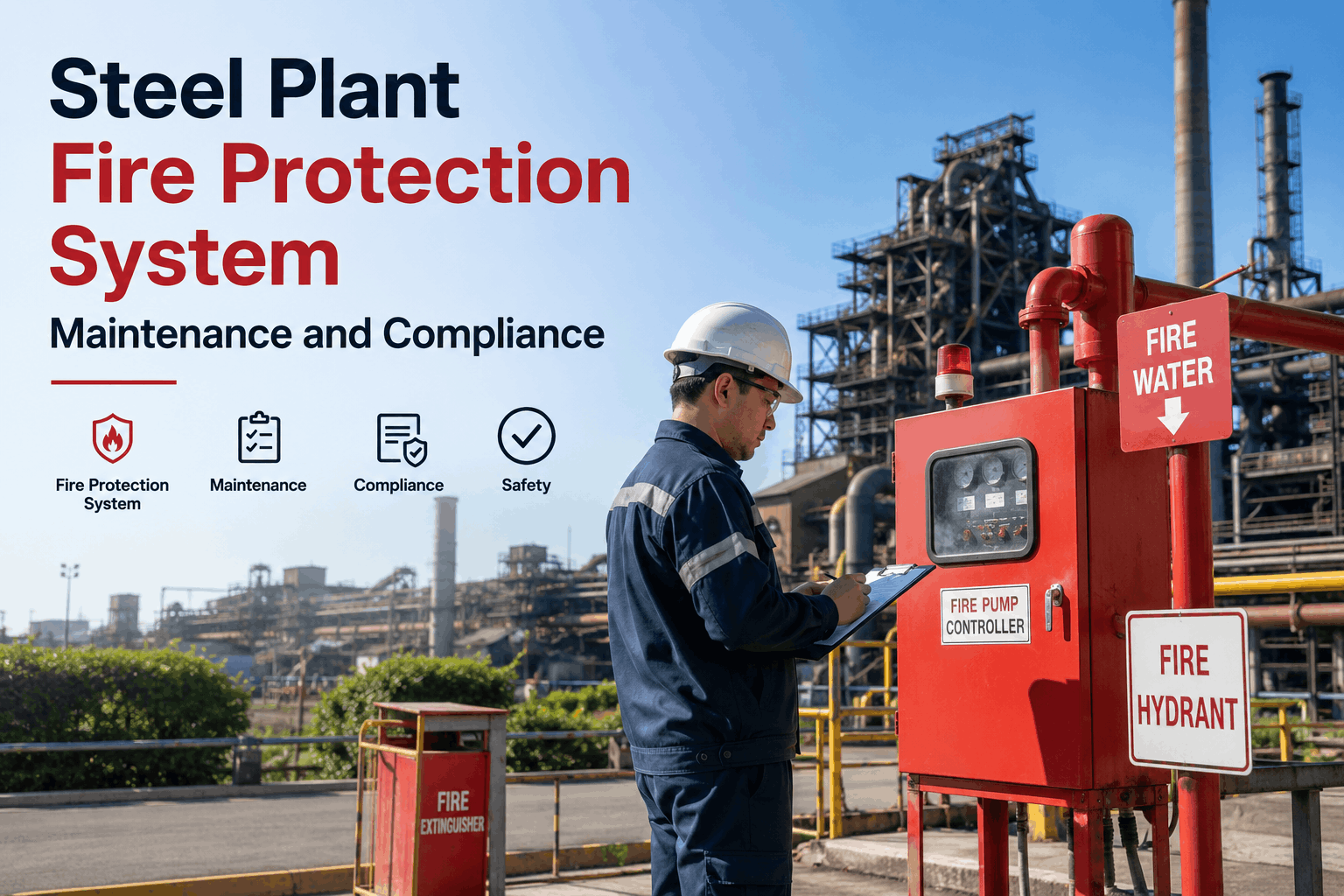
Fire protection systems at steel mills protect blast furnaces, electric arc furnaces, hydraulic rooms, cable galleries, and material handling areas where combustible materials accumulate and high-temperature processes create ignition risk constantly. Yet many plants still manage fire system compliance through paper inspection logs and spreadsheets—creating gaps where quarterly sprinkler system tests get delayed, fire pump annual load tests slip past the original schedule, or automatic transfer switches remain untested until the moment they are needed during actual emergency. A single delayed NFPA 25 quarterly inspection costs $7,500–$15,000 in citations; a fire suppression system failure during actual emergency can result in uncontrolled fire spread, equipment loss exceeding $10 million, production downtime measured in months, and casualty exposure. OxMaint centralizes fire protection system maintenance—linking NFPA 25 quarterly sprinkler inspections, NFPA 22 storage tank maintenance, fire pump load testing, and relay protection system verification to one unified compliance platform.
Fire Protection Systems That Defend When Production Demands Them Most
Fire sprinkler systems, suppression equipment, and backup power deliver zero protection if testing is overdue or maintenance records are incomplete. OxMaint automates NFPA 25 quarterly inspections, fire pump load testing, and compliance documentation so regulators see your commitment and your team stays ready for emergencies.
Steel Plant Fire Protection System Complexity and Maintenance Requirements
Integrated steel mills operate distinct fire suppression systems for different hazard zones. Each system demands different maintenance intervals, different test frequencies, and different compliance documentation. OxMaint organizes fire protection assets by hazard area so maintenance teams prioritize highest-risk zones and compliance officers can generate unified reporting for all systems simultaneously.
Automated Sprinkler Systems
Protect production areas, storage zones, and administrative facilities. NFPA 25 requires quarterly inspection of waterflow alarm devices, control valve position, fire department connection, and alarm supervisory signals. Annually, all sprinkler heads, hangers, backflow preventers, and piping require comprehensive testing. OxMaint schedules combined quarterly/annual visits with contractors to reduce call-outs while maintaining full NFPA 25 compliance.
Hydraulic Room and Cable Gallery Suppression
High-pressure hydraulic equipment and electrical power cables require automatic fire detection and suppression because water spray would damage equipment. These systems typically use FM-approved dry powder agents or CO₂ suppression. NFPA 12 (carbon dioxide) or FM 3150 (dry powder) require annual discharge testing, agent weight verification, and pressure cylinder inspection. Any detected leakage triggers immediate recharge before system is returned to service.
Fire Pump Systems and Emergency Water Supply
Fire pumps ensure adequate water pressure and flow to sprinkler systems and standpipes even when municipal water supply fails. NFPA 20 requires monthly operation testing without discharge (jockey pump verification), quarterly flow testing to confirm rated capacity, and annual full-load test at 150% rated flow. Diesel-driven fire pumps require fuel polishing, cooler inspection, and starting reliability verification. Any test failure requires immediate repair and re-test before system returns to service.
Fire Water Storage Tanks and Supply Lines
NFPA 22 governs steel or concrete fire protection tanks. Monthly visual inspection for cracks, corrosion, or sediment accumulation. Annual internal inspection of interior surfaces, suction strainer, and drain valve operation. Every 5 years, complete internal cleaning and inspection for structural integrity. OxMaint schedules all tank inspections and logs photographs so deterioration trends are visible and repairs can be planned before tanks become unreliable during emergencies.
NFPA Fire Compliance Testing and Maintenance Intervals
Federal and state regulations enforce NFPA standards rigorously. Most industrial insurance policies require documented compliance with NFPA 25, NFPA 20, and NFPA 22. OxMaint tracks every test with timestamp, results, and technician responsibility so your compliance file is audit-ready and every delayed test triggers automatic escalation before citations accrue.
Fire Protection System Maintenance and Testing Frequency Reference
Steel plants must maintain this testing schedule to comply with NFPA standards and insurance requirements. OxMaint auto-generates work orders so no test slips through seasonal staffing changes or management transitions. Every result logs automatically so compliance documentation is always current.
| Fire System Component | Required Test or Maintenance | NFPA Standard & Frequency |
|---|---|---|
| Sprinkler System Waterflow Alarms | Trigger test to confirm alarm signal within 10 seconds of waterflow | NFPA 25 — Quarterly |
| Main Control Valve (Indicating) | Position verification, seal integrity check, supervisory alarm test | NFPA 25 — Quarterly |
| Check Valve (Post-Indicator) | Visual inspection for leakage and swing mechanism movement | NFPA 25 — Quarterly |
| Fire Pump Operation | Manual start, jockey pump pressure relief, pressure gauge reading | NFPA 20 — Monthly |
| Fire Pump Flow Test | Full-load test at 150% rated capacity; pressure, flow, and motor current documentation | NFPA 20 — Annually |
| Sprinkler Heads (Visibility and Condition) | Inspect for corrosion, paint encrustation, physical damage, and minimum clearance 18 inches from ceiling | NFPA 25 — Annually |
| Hose and Standpipe System | Visual inspection for kinks, cuts, or valve corrosion; gate valve operation test | NFPA 25 — Annually |
| Backflow Preventer | Internal inspection and certification by licensed professional tester | State regulations — Every 3 years (some states annually) |
| Fire Water Storage Tank | Interior inspection, sediment removal, structural assessment | NFPA 22 — Every 5 years |
| Fire Suppression Dry Powder or CO₂ Systems | Pressure cylinder inspection, agent weight verification, discharge valve test | FM 3150 or NFPA 12 — Annually |
Automate Fire Compliance So Nothing Falls Through the Cracks
OxMaint schedules NFPA 25 quarterly tests, NFPA 20 fire pump inspections, and NFPA 22 tank maintenance automatically. Every test result logs with timestamp and technician accountability. One platform, complete audit trail, zero regulatory exposure. Stay compliant while keeping your teams safe.
Three Critical Signs Your Fire Protection System Needs Immediate Attention
Even with regular maintenance, these patterns indicate developing problems that could fail during actual emergency. Early detection and action prevent catastrophic losses and regulatory violations.
If waterflow alarm takes longer than 10 seconds to trigger during test, or if alarm fails entirely, wiring or check valve is compromised. Conduct secondary injection test of fire pump immediately and schedule full system flow test within 48 hours to confirm water actually reaches all sprinkler zones.
If fire pump pressure drops 3+ PSI or flow decreases 5%+ compared to previous year at same test conditions, impeller wear or bearing degradation is accelerating. Schedule pump overhaul or replacement within 90 days—pump failure during actual fire emergency is unacceptable risk.
If internal tank inspection reveals rust accumulation, scaling, or sediment buildup exceeding 1 inch depth, water quality is deteriorating and internal structures are corroding. Schedule immediate tank cleaning and structural assessment—delay increases risk of tank failure during emergency.
Fire Protection Compliance: Frequently Asked Questions
What happens if we miss a quarterly NFPA 25 sprinkler system inspection?
Can we combine monthly fire pump tests with quarterly flow testing to reduce contractor visits?
What is acceptable age for fire sprinkler heads before mandatory replacement?
Do USA steel mills need annual Legionella testing of fire water storage tanks?
How do we verify that fire suppression system discharge will reach the intended hazard area?
What maintenance keeps a diesel fire pump starting reliably during cold weather?
Is there a grace period for submitting late NFPA 25 compliance documentation to authorities?
Which USA states are most strict about fire suppression system compliance enforcement?
OxMaint Fire Protection System Integration Features
OxMaint centralizes every component of your steel mill fire protection system—sprinklers, pumps, storage tanks, special suppression equipment—into one compliance platform. Testing schedules auto-generate, results log automatically, and compliance reports assemble instantly for regulators and insurance providers.
NFPA 25 Quarterly Test Scheduling and Documentation
OxMaint schedules NFPA 25 quarterly inspections automatically and assigns them to maintenance technicians or contractors. Test results (waterflow alarm response time, control valve position, alarm supervisor signal) log directly into permanent compliance file with timestamp and technician signature.
Fire Pump Operation and Load Test Tracking
Monthly operation tests and quarterly flow tests auto-schedule with contractor. Test results (pressure PSI, flow GPM, motor current amperage) log automatically. Year-over-year trending reveals pump degradation so replacement can be planned before capacity loss threatens fire suppression during emergency.
Sprinkler Head and Hose Inspection Recording
Annual sprinkler inspections capture condition data and photographs for every head. Any corrosion or physical damage triggers replacement work order. OxMaint links inspection history to maintenance completion so every head is tracked from installation through replacement and verified clearance from obstacles.
Fire Water Tank and Storage System Maintenance
OxMaint schedules monthly visual inspections and 5-year internal cleaning for fire water storage tanks. Inspection results and photographs log to permanent maintenance history so structural degradation is visible and replacement timing is predictable rather than reactive to emergency failure.
Case Study: Steel Mill Avoids $12M Fire Loss Through Maintained Suppression System
A 1.8-million-ton-per-year electric arc furnace facility in the Midwest discovered during a scheduled maintenance audit that their fire sprinkler system had not undergone a NFPA 25 quarterly inspection in 22 months due to contractor scheduling failures and staff turnover.
"Our plant manager was shocked to discover that our NFPA 25 inspection compliance was 0%—we hadn't had a single quarterly test in over a year and a half. Before we could schedule a comprehensive catch-up inspection, we had a hydraulic fluid leak that caught fire in the rolling mill area. Our fire suppression system activated automatically—but we had no documentation that the system had ever been tested after it was installed five years prior. The hydraulic fire was confined to the equipment area and extinguished within minutes because the sprinkler system worked. If it hadn't worked, the fire would have spread to adjacent electrical systems and accumulated combustibles, potentially destroying $12–$15 million in equipment and causing multi-week production downtime. We immediately implemented OxMaint for fire system management. Now NFPA 25 quarterly inspections auto-schedule every 90 days with automatic contractor assignment. Fire pump load tests schedule quarterly. Every sprinkler head gets annual inspection with OxMaint tracking. Our compliance rate went from 0% to 100%, and most importantly, we have confidence that if another fire starts, our suppression system will be ready."
— Plant Manager, Electric Arc Furnace Facility, Midwest USA
Protect Your Steel Mill With Documented Fire Readiness
OxMaint automates NFPA 25, NFPA 20, and NFPA 22 compliance so every quarterly inspection, annual test, and five-year service is scheduled and documented. Your fire protection system is your last line of defense—make sure it is actually ready. Schedule a demo to see how OxMaint eliminates compliance gaps and gives you confidence that your suppression systems will defend when you need them most.