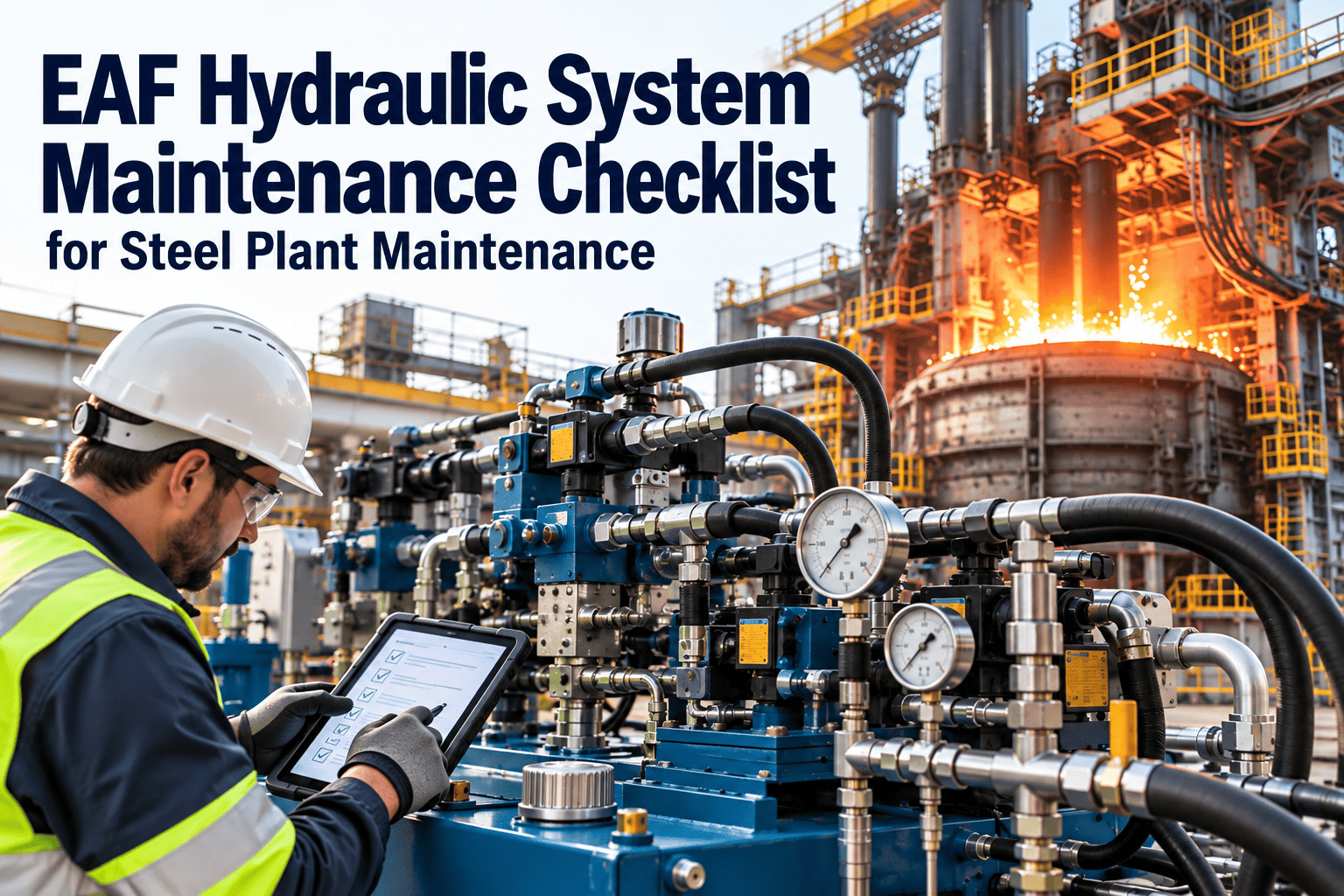
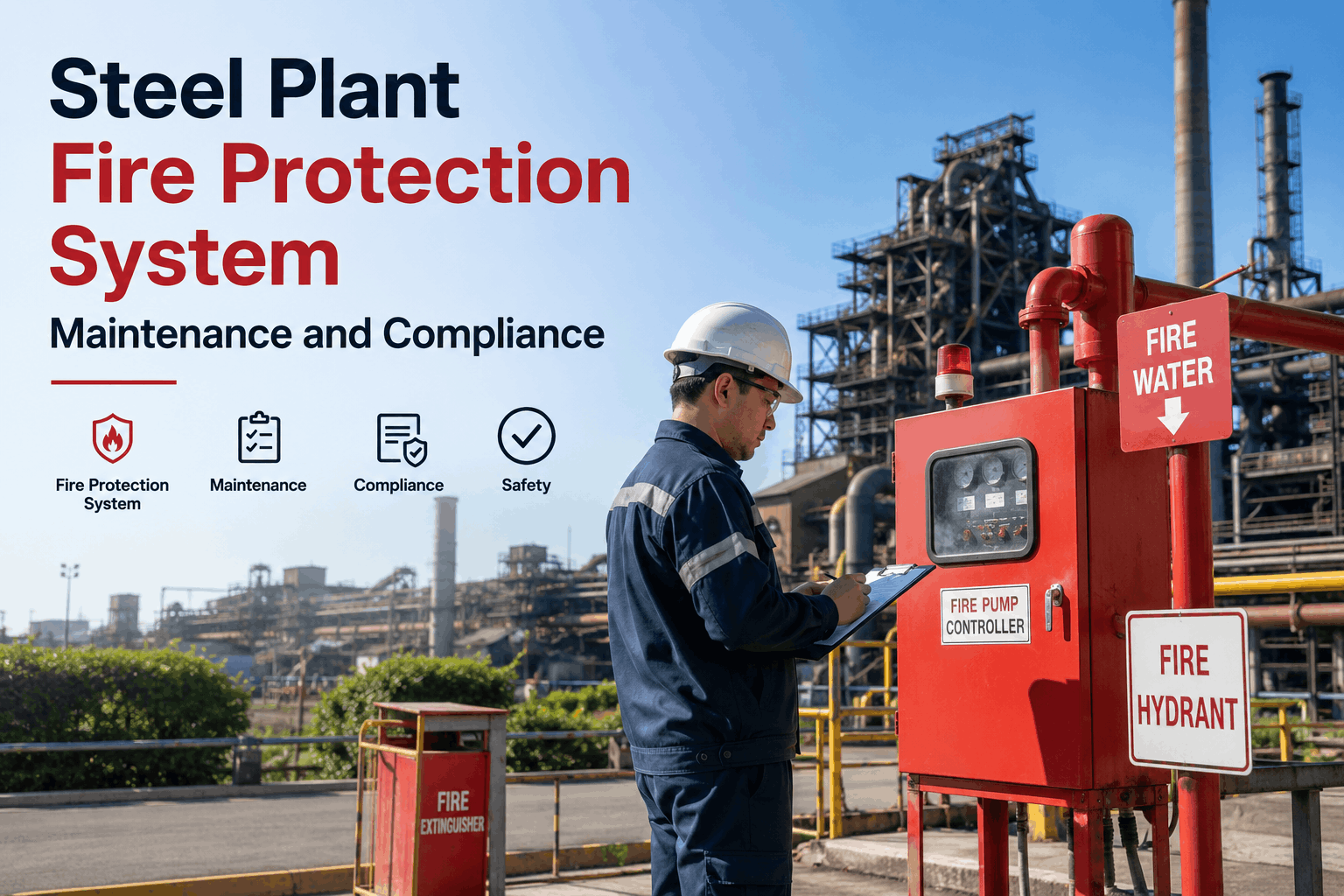
Steel plant fires are not accidents waiting to happen — they are predictable, preventable events that occur when fire detection equipment goes uninspected, hydraulic systems are not maintained, and emergency response plans exist on paper but not in practice. OxMaint's Fire Safety PM module gives safety and maintenance teams a single platform to schedule inspections, track equipment readiness, manage drills, and document every compliance action — so your fire protection programme works the shift it is needed, not just on audit day.
Steel Plant Fire Safety Management: Detection, Suppression & Emergency Response
Steel plants are among the highest fire-risk industrial environments on earth. Molten metal, hydraulic oils, fuel gases, cable tunnels, and electrical systems all coexist within a single boundary. This guide covers every layer of an effective fire safety programme — from risk zones to CMMS-driven PM.
Steel Plant Fire Risk Zones: Where Fires Start and Why
Every zone in a steel plant carries fire risk, but not equally. Understanding which areas are most vulnerable — and why — is the foundation of an effective fire protection strategy. The consequence of fire in a steel plant can be very serious, severe, and even disastrous since it can be accompanied with explosions and the release of poisonous gases.
Hydraulic Rooms & Oil Cellars
Pressurised hydraulic systems operate at 200–10,000 psi. A ruptured hose or pipe joint causes fluid atomisation — creating a torch fire that develops instantly. Mineral oil is combustible at any volume.
Cable Tunnels & MCCs
Cable insulation fires spread rapidly in confined tunnel geometries. Motor Control Centres contain high-voltage equipment with electrical ignition sources operating continuously across all shifts.
Transformer Rooms
Oil-filled transformers represent a concentrated fire load. A transformer fire generates intense heat and oil spill propagation risks. NFPA requires specific deluge and drainage design for transformer bays.
Blast Furnace Casthouse
Open metal tapping, molten iron splatter, and proximity of casthouse cranes and hydraulic equipment create a persistent combined ignition and fuel risk every cast cycle.
Fuel Gas Networks
BFG, COG, and natural gas pipelines traverse the entire plant. Flange leaks, valve packing failures, and condensate accumulations all create gas-air mixture ignition risks near hot surfaces.
Rolling Mill Oil Cellars
Lubricating oil systems in hot strip mills and cold rolling mills operate at high temperature and pressure. Oil leaks onto hot mill tables or rolls create immediate ignition conditions.
Conveyor Belt Galleries
Rubber conveyor belts are combustible and carry coal, coke, and hot sinter over long distances through enclosed galleries. A belt jam or hot material spillage can initiate a belt fire.
Control Rooms
Control rooms contain electronic equipment running continuously. Electrical overload, cable routing issues, or air conditioning failures create smouldering fire risks that grow undetected without smoke detection.
Hydraulic Oil Fire Prevention: The Highest-Probability Risk in Steel Plants
All hydraulic fluids in common use today are combustible. The fire hazard is as severe for a small system containing 38 litres of fluid as for a large central system containing 3,800 litres. Any amount of pressurised fluid escaping through a ruptured hose, gasket or pipe joint may atomise — and if it reaches an ignition source, a serious torch fire develops immediately.
Water-glycol and water-oil emulsion fluids are specifically recommended for fire-sensitive environments like steel mills due to their very low flammability. Converting to fire-resistant hydraulic fluid is the single highest-impact hydraulic fire prevention measure.
Water-glycol or synthetic ester fluids in zones adjacent to hot surfaces, furnaces, or open metal. Consult OEM before conversion regarding seal, gasket, and component compatibility.
Hose abrasion against machinery, repeated flexing, and inadequate anchorage are the leading causes of hydraulic hose failure. Monthly inspection routes with condition-based replacement criteria.
Locate hydraulic systems in cutoff areas with drainage to a safe location or curbed containment. Prevents pool fire formation from spill events.
Fixed foam-water deluge systems for oil cellars and hydraulic reservoirs per NFPA 11. Discharge rates designed for cooling and shutdown to prevent re-ignition.
Lack of adequate supports or anchorage causing vibration-induced pipe movement is a documented failure mode. Inspect all pipe clamps and supports on quarterly PM routes.
Hot work permits required for any cutting, grinding, or welding within defined exclusion zones around hydraulic equipment and pipework.
Fire Detection Systems: Matching Technology to Zone Risk
Not every detector type works in every steel plant environment. Blast furnace casting areas generate smoke, dust, and heat that would trigger conventional smoke detectors continuously. Control rooms need smoke sensitivity that industrial areas do not. Matching the right detection technology to each zone is as important as installing detection at all.
Smoke Detectors
Ionisation and photoelectric detectors for control rooms, electrical panel rooms, cable tunnels, and enclosed offices. Not suitable for dusty production areas — use beam detectors in high-bay areas with smoke obscuration risk.
Heat Detectors
Fixed temperature and rate-of-rise heat detectors for areas where smoke detectors would false alarm. Appropriate for hydraulic rooms, oil cellars, and areas with ambient heat that would desensitize smoke detectors.
Flame Detectors
UV/IR flame detectors for outdoor or open areas where smoke and heat detectors are ineffective — casthouse, torch cutting areas, gas piping manifolds. Respond to radiant energy from flame rather than combustion products.
Combustible Gas Detectors
Catalytic bead or infrared gas detectors for BFG, COG, and natural gas accumulation monitoring in enclosed spaces — boiler houses, gas holder areas, and any confined space adjacent to fuel gas networks.
Linear Heat Detection
Heat-sensitive cable run along conveyor belts, cable trays, and tunnel ceilings for continuous temperature monitoring across long runs. Activates a zoned alarm based on the position of the temperature exceedance.
Manual Call Points
Break-glass call points at all escape routes, emergency exits, and strategic locations throughout the plant. Must be tested quarterly per NFPA 72 and included in PM routes. Travel distance to nearest call point must not exceed 30 metres.
Suppression Systems: Matching Agent to Hazard
The wrong suppression agent on the wrong fire class makes a bad situation worse. Water on a hydraulic oil fire spreads burning liquid. CO2 on an electrical fire in an occupied space is a personnel hazard without evacuation. Steel plants require multiple suppression system types deployed in the right zones with the right design parameters.
Automatic Sprinkler Systems
Wet pipe systems for general industrial buildings, warehouses, and areas without freezing risk. Dry pipe for outdoor or cold areas. Designed per NFPA 13 — occupancy classification determines density and coverage requirements.
Foam-Water Deluge Systems
Required for oil cellars, hydraulic fluid rooms, and rolling mill lubricating oil systems. Foam creates a blanket over burning oil, excluding oxygen and suppressing re-ignition. NFPA 11 governs foam system design and maintenance.
Clean Agent Systems
Inert gas (IG-541, IG-55) or chemical agents for control rooms, cable tunnels, and electrical rooms where water would destroy equipment. Designed to reduce oxygen concentration below 12–14% by volume — the threshold below which most fuels do not support flaming combustion.
Water Spray Systems
Fixed water spray deluge for transformer protection, cable tunnel cooling, and structural steel protection. NFPA 15 governs water spray system design. Must include adequate drainage to prevent water accumulation causing additional hazards.
Hydrant and Hose Reel Network
Plant-wide ring main fire water network with hydrants at spacing appropriate to risk zone. Jockey pump maintains pressure. Fire pump delivers design flow rate per NFPA 20. All hydrant valves and hose reels on quarterly PM inspection routes.
Dry Chemical Systems
Fixed or semi-fixed dry chemical systems for specific hazards where foam or water are unsuitable — magnesium processing areas, certain chemical storage zones, or flammable liquid spill areas requiring rapid knockdown.
Fire Extinguisher PM Programme: What NFPA 10 Requires and How CMMS Enforces It
Portable fire extinguishers are the first line of defence for small, contained fires. NFPA 10 sets monthly visual inspection, annual maintenance, and hydrostatic testing requirements. In a steel plant with hundreds of extinguishers across multiple buildings, manual tracking is a compliance failure waiting to happen. A CMMS turns inspection data into operational intelligence about recurring failure patterns.
Extinguisher in designated location, accessible, no obstructions, pressure gauge in operable range, tamper seal intact, no visible damage or corrosion
Certified technician internal inspection, agent condition check, valve and discharge mechanism function test, hose and nozzle inspection, service label updated
Dry chemical extinguishers require internal examination every 6 years — complete disassembly, inspection of all components, recharge with fresh agent
Hydrostatic testing at intervals specified by NFPA 10 based on extinguisher type — typically 5–12 years. Required to verify cylinder integrity under full operating pressure
Emergency Response Planning: From Paper Plan to Practiced Response
An emergency response plan that exists only in a binder and has never been practiced is not a plan — it is a liability. Steel plants require documented emergency response plans for each fire scenario, with assigned responsibilities, communication protocols, and practiced drills that confirm the plan works under real conditions.
Fire Scenario Mapping
Develop specific response scenarios for each high-risk zone: hydraulic room fire, cable tunnel fire, transformer explosion, conveyor belt fire, gas leak ignition. Each scenario has a different initial response, suppression method, and evacuation route.
Evacuation Routes and Assembly Points
Posted evacuation maps at all entry points and work areas. Assembly points designated and marked with clearly visible signage. Routes account for process area interdependencies — a BF casthouse fire may block access to standard exit routes.
Fire Brigade Training and Competency
Internal fire brigade members trained on specific plant hazards: hydraulic oil fires, electrical fires, gas fires, and metal fires. Refresher training documented annually. Competency records maintained in CMMS for all trained personnel.
Communication and Notification Chain
Defined notification chain: first responder to shift supervisor to plant emergency coordinator to external fire brigade. Contact lists current and available at all control points. Emergency numbers posted at every telephone.
Fire Drill Programme
Minimum one full evacuation drill per year per area — more for high-risk zones. Drills documented with date, zone, participants, response time, and findings. Findings tracked to corrective actions before next drill date.
Post-Incident Review Process
Every fire event, near-miss, and failed equipment response triggers a structured review: timeline reconstruction, root cause identification, corrective actions assigned, and plan updated before the zone returns to normal operation.
How OxMaint Manages Fire Safety as a Continuous Programme, Not an Annual Audit
Fire safety management fails when it is treated as a compliance exercise rather than an operational discipline. OxMaint's Fire Safety PM module brings every inspection, maintenance task, drill, and corrective action into a single tracked system — visible to safety managers and maintenance teams in real time.
Fire Asset Registry
Every detector, extinguisher, suppression system, hydrant, hose reel, and call point registered as an individual asset with location, type, installation date, and full service history.
Automated PM Scheduling
Monthly extinguisher routes, quarterly detector tests, annual suppression system inspections — all auto-generated on schedule. No inspection goes overdue without a work order already open and assigned.
Mobile Inspection Checklists
Technicians complete fire safety inspections on mobile devices — with photo capture for gauge readings, damage records, and condition evidence. No paper, no transcription, no lost records.
Corrective Action Tracking
Every deficiency found during inspection automatically creates a corrective work order, assigned to the right team with a due date. Follow-through is tracked — not assumed.
Drill and Training Records
Fire drills documented in the system with date, participants, response time, and findings. Training completion records for all fire brigade members — accessible instantly for regulatory audit.
Compliance Dashboard
Real-time view of what percentage of fire safety assets are in valid inspection status — by zone, by type, by building. Audit-ready evidence available without any manual report compilation.
Build a Fire Safety Programme That Works on the Shift It Is Needed
OxMaint's Fire Safety PM module gives your team automated inspection scheduling, mobile checklists, deficiency tracking, and compliance reporting — across every fire safety asset in the plant, in real time.