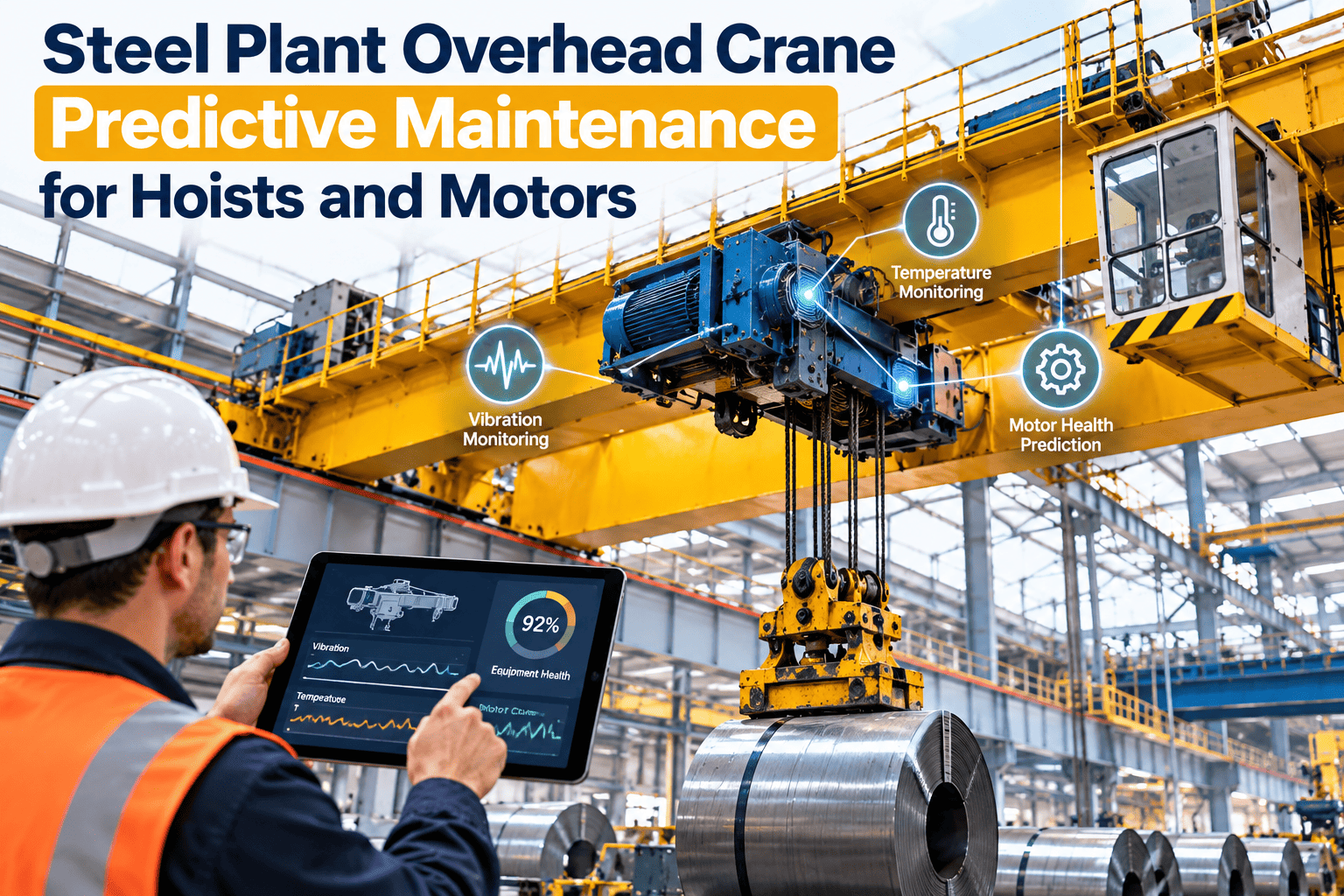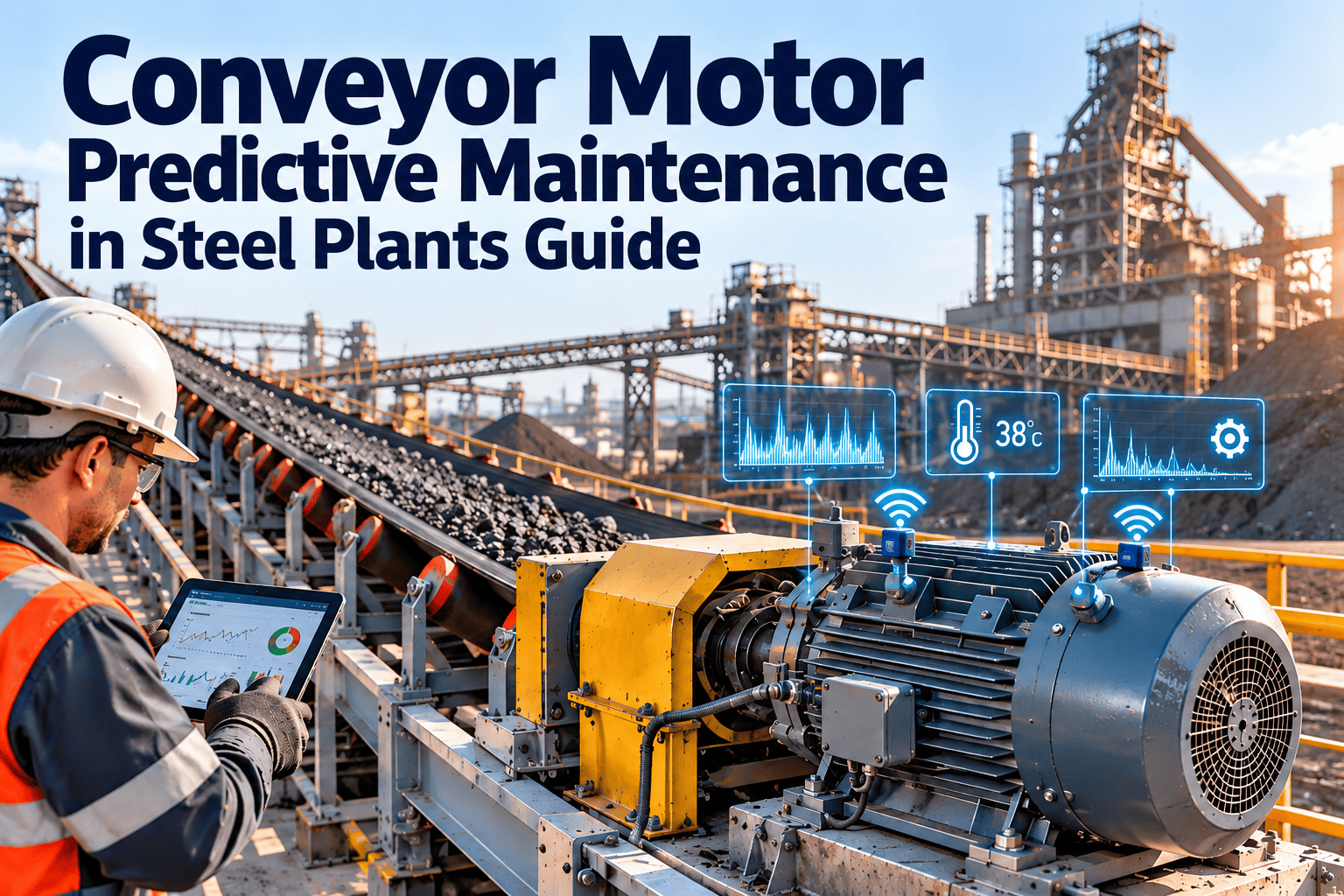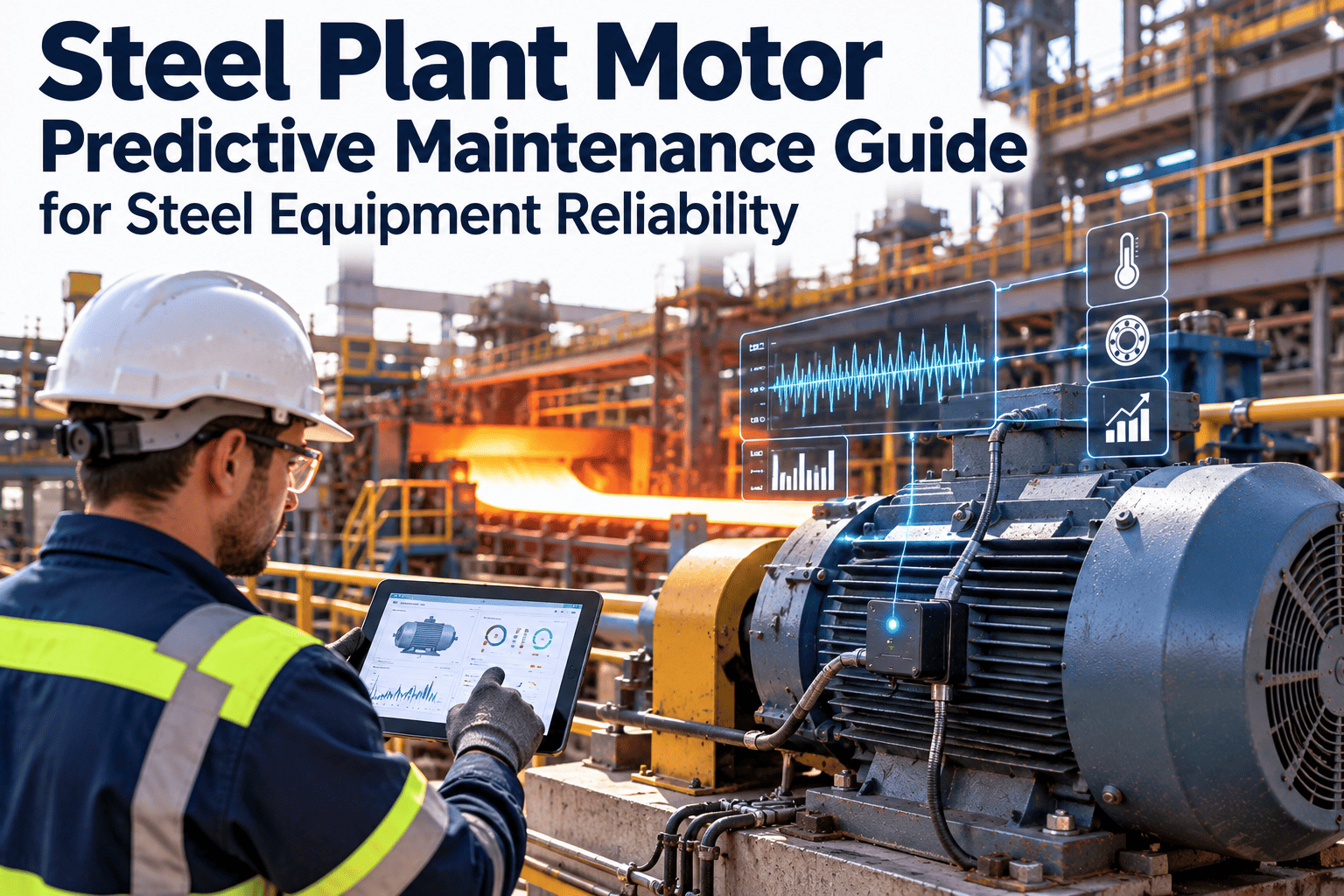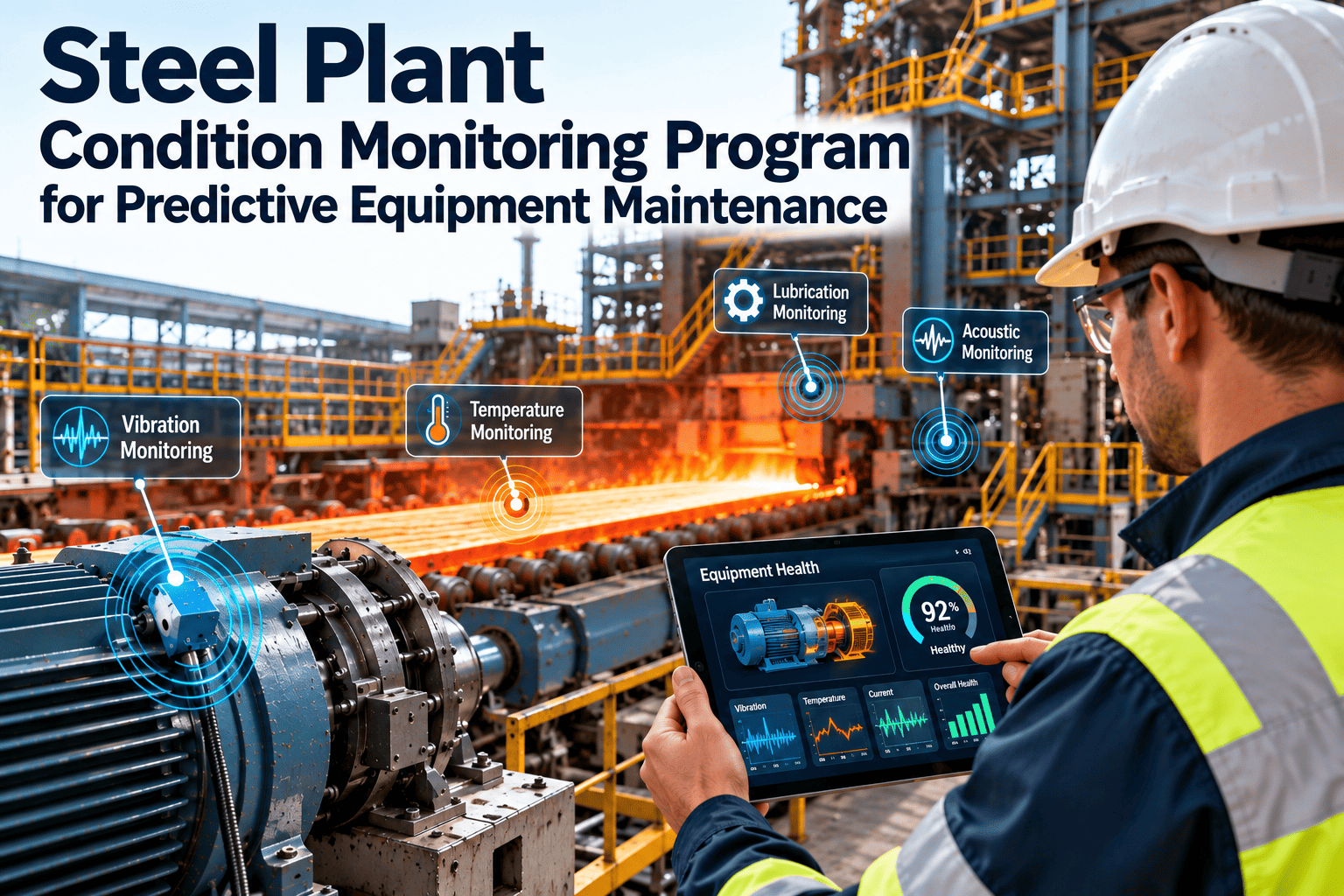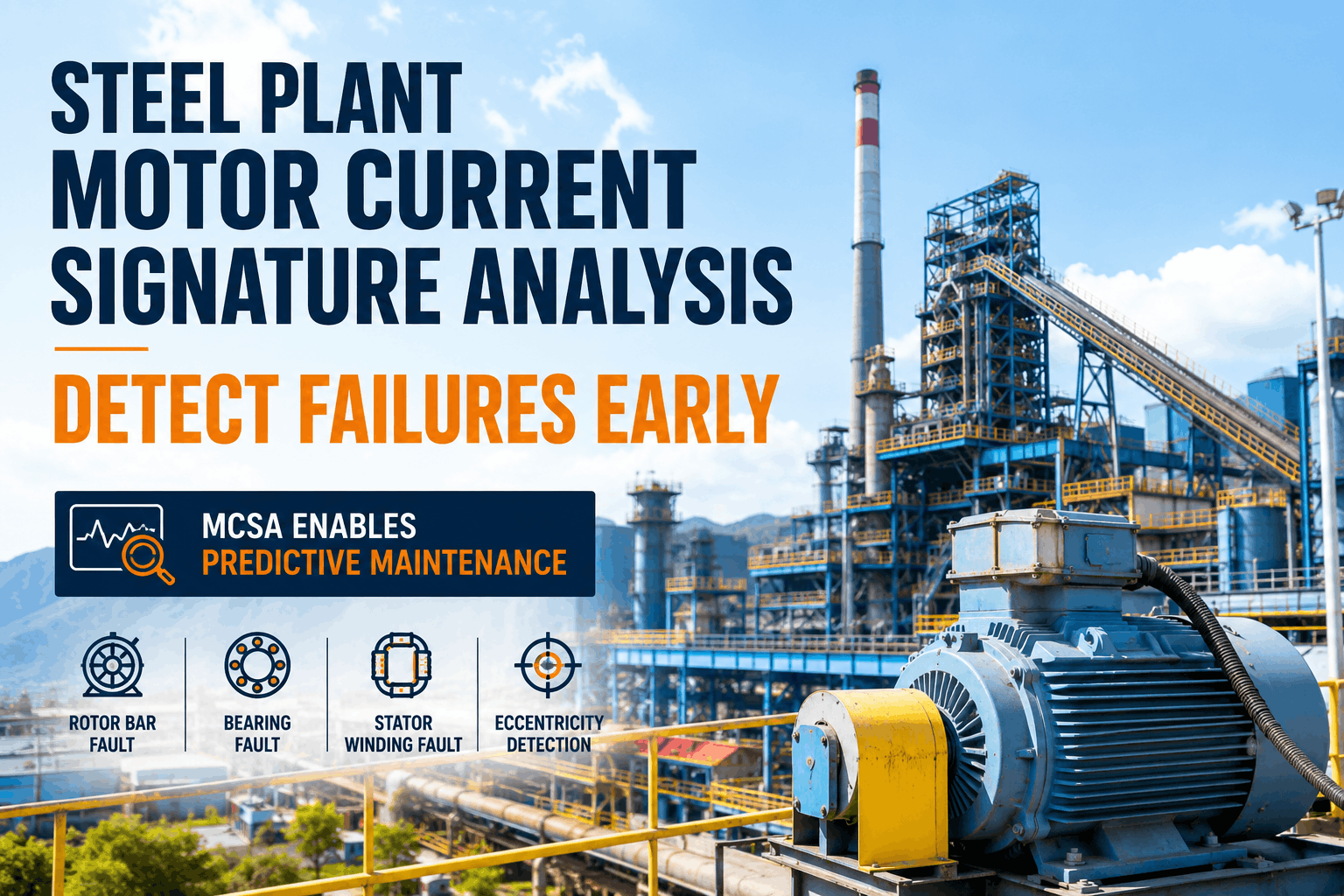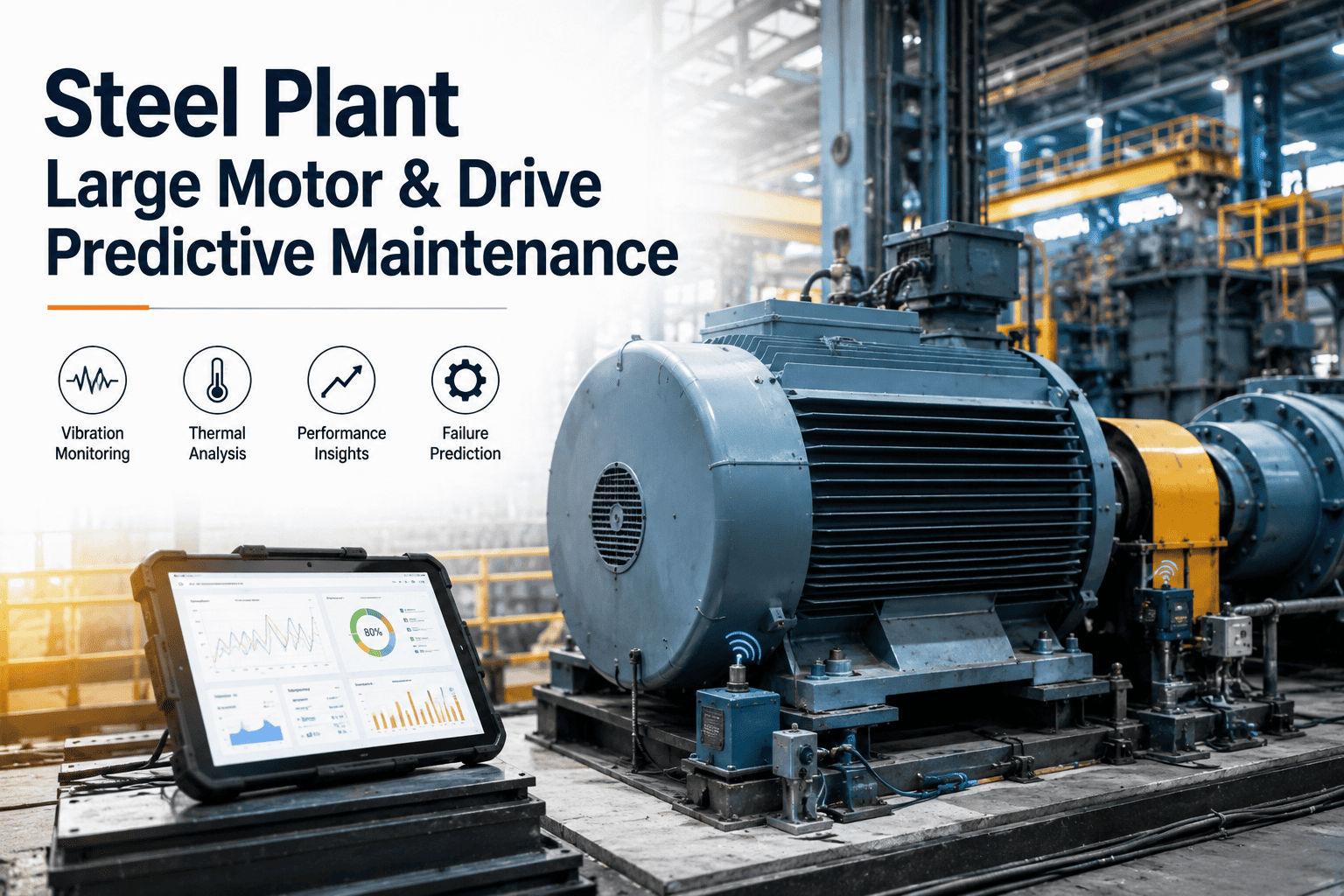
Large motors and drives — rolling mill main drives, blower motors, ID fans, and ladle turret motors — are the highest-consequence electrical assets in any steel plant, and disciplined steel plant motor predictive maintenance is what keeps them running. When a multi-megawatt mill motor fails unexpectedly, the cost isn't just the repair bill; it's lost production tonnage, scrapped material, and downstream delays that can exceed $50,000 per hour. This guide breaks down how reliability teams use insulation resistance trending, partial discharge monitoring, motor current signature analysis (MCSA), and bearing vibration analysis to protect these critical assets — and how OxMaint's AI-powered CMMS turns that condition data into automatic work orders before failure strikes. Ready to modernize your motor health program? You can Start Free Trial or book a personalized walkthrough.
Steel Plant Motor Predictive Maintenance
What does a single 12 MW rolling mill motor failure cost your steel plant?
For most integrated mills, the answer is $200K–$800K in lost production per incident — plus 5–14 days of rebuild time. Predictive maintenance for large motors and drives slashes that risk by catching insulation breakdown, bearing wear, and electrical faults weeks before catastrophic failure. OxMaint makes that discipline systematic.
Critical Assets
Which large motors and drives demand predictive maintenance in a steel plant?
Not every motor warrants full condition monitoring — but five asset categories account for over 80% of motor-driven downtime in steel manufacturing. These are the machines where steel plant drive maintenance programs must concentrate their PdM budget.
5–15 MW synchronous & DC drives
The single highest-consequence motor asset. A sudden failure stops the entire rolling line. Insulation trending, PD monitoring, and MCSA are non-negotiable — repair lead times on stator rewinds run 3–6 weeks.
ID fans, forced draft, combustion air
High-vibration environments with thermal cycling. Bearing vibration analysis and thermal imaging catch rotor imbalance, misalignment, and lubrication breakdown before fan blades destruct.
Continuous caster drive systems
Intermittent heavy-torque duty with frequent starts. Motor current signature analysis detects broken rotor bars and stator winding faults early; insulation resistance trending prevents ground faults during molten metal handling.
Large induction motors 500–2000 HP
Continuous duty in humid, corrosive environments. Thermal imaging identifies hot connections; vibration analysis flags bearing degradation from moisture-ingressed lubricant.
Condition Monitoring Methods
Steel motor condition monitoring: the 5 PdM techniques that prevent catastrophic failure
A mature motor condition steel plant program layers multiple inspection technologies — each catches a different failure mode. Here is what reliability teams track, and the warning thresholds that trigger action.
Polarization Index & IR testing per IEEE 43
Megger testing at 500–5000V DC tracks insulation health over time. A polarization index below 2.0 or a 25%+ drop in insulation resistance between quarterly readings signals moisture absorption, contamination, or thermal aging — well before a ground fault shuts the motor down. Trending matters more than any single reading.
Online PD detection for MV & HV stator windings
For motors rated 6.6 kV and above, partial discharge is the leading indicator of stator winding insulation deterioration. Continuous PD sensors detect slot discharge, end-winding corona, and delamination in epoxy mica insulation — problems that IR testing alone cannot see. PD trend spikes of 50%+ over baseline warrant immediate outage planning.
MCSA detects broken rotor bars & stator faults
Motor current steel plant analysis uses FFT decomposition of the stator current to identify sideband frequencies characteristic of broken rotor bars, eccentricity, and stator winding shorts. MCSA catches mechanical faults through the electrical signal — no shutdown required. A sideband amplitude within 45 dB of the fundamental indicates early rotor damage.
ISO 10816 velocity & acceleration trending
Drive motor vibration steel programs track bearing condition through velocity (4–10 mm/s RMS alarm) and acceleration (enveloped acceleration for early bearing defect detection). SKF/ISO 10816 thresholds classify severity; a spike in non-synchronous frequencies points to bearing cage, ball, or race defects — the precursor to 40% of motor failures.
IR thermography for connections, bearings & cooling
Thermal motor steel inspections using handheld or fixed IR cameras identify hot joints in connection boxes, overloaded bearings, blocked cooling ducts, and stator core hot spots. A 15°C rise above identical phase connections under same load flags a loose or corroded joint — fixable in minutes if caught, catastrophic if ignored.
Failure Cost Analysis
How much does unplanned large motor downtime cost a steel plant?
Reliability teams need to quantify risk to justify PdM investment. The formula below models the true cost of a single motor failure — including production loss, emergency repair premiums, and downstream impact. Most plants underestimate this by 2–3x because they only count the repair invoice.
A 6-day stator rewind at an integrated steel mill
A motor condition monitoring program that catches this fault 4 weeks early — scheduling the rewind during a planned outage — reduces the total cost by 70–85% and eliminates emergency premiums. OxMaint automates the workflow from anomaly detection to scheduled work order.
OxMaint Solution
How OxMaint CMMS powers steel plant motor predictive maintenance
OxMaint is an AI-powered CMMS and EAM platform built for maintenance and reliability teams. It connects condition monitoring data from your sensors, portable testers, and IR cameras to automated work orders, asset histories, and spare-parts inventory — so motor health steel programs run on autopilot instead of spreadsheets.
AI-Driven Anomaly Detection
OxMaint ingests vibration, current, temperature, and PD data streams. Its AI engine baselines each motor's signature and auto-generates work orders when readings deviate — cutting unplanned motor downtime 30–50%.
Automated Work Order Generation
When insulation resistance drops below your IEEE 43 threshold or vibration crosses ISO 10816 alarm, OxMaint creates a prioritized work order with checklists, parts, and history — no manual entry, no delayed response.
Asset & Spare Parts Tracking
Every large motor, drive, bearing, and rewind kit is tracked with full lifecycle history. OxMaint flags spare bearings and stator coils before they hit minimum stock — so the part you need is always on the shelf when PdM says action is due.
Maintenance Analytics & KPIs
Dashboards track MTBF, MTTR, PdM compliance, and cost-per-asset across every motor in the plant. Audit-ready reports for ISO 55000 and corporate reliability reviews are one click away — no more spreadsheet archaeology.
Inspection Cadence
Steel plant motor maintenance: recommended PdM inspection schedule
Consistency beats intensity. The schedule below reflects best practices across integrated mills and mini-mills for large motor steel assets. OxMaint enforces these cadences automatically — sending reminders, generating work orders, and escalating missed inspections.
| Technique | Asset Type | Frequency | Alarm Threshold | Action on Alarm |
|---|---|---|---|---|
| Insulation Resistance (Megger) | All motors >440V | Quarterly | PI < 2.0 or 25% drop | Clean, dry, re-test; plan outage if trend continues |
| Partial Discharge | MV/HV motors 6.6 kV+ | Continuous online | 50% above baseline | Schedule stator inspection within 30 days |
| MCSA | Mill main drives, caster motors | Monthly | Sideband within 45 dB of fundamental | Confirm with vibration; plan rotor inspection |
| Vibration Analysis | All motors >100 HP | Bi-weekly route; continuous on critical | ISO 10816 Zone C/D boundary | Bearing inspection; replace if confirmed |
| Thermal Imaging (IR) | All motor connections & bearings | Monthly route | 15°C above same-load reference | Immediate tightening or cleaning work order |
| Oil Analysis (if applicable) | Sleeve-bearing motors | Monthly | ISO 4406 cleanliness > 21/18/15 | Filtration or oil change; check seals |
Take Control of Motor Reliability
See OxMaint protect your steel plant's largest motors — book a 30-min demo
Walk through a live motor PdM workflow: anomaly detection, automatic work order generation, spare-parts reservation, and audit-ready reporting — all on your asset hierarchy.
FAQ
Steel plant large motor predictive maintenance — your questions answered
What is the best predictive maintenance technique for large motors in steel plants?
No single technique covers all failure modes. The most effective steel plant motor programs combine insulation resistance trending (for winding health), partial discharge monitoring (for MV/HV stator insulation), MCSA (for rotor bars and stator faults), vibration analysis (for bearings), and thermal imaging (for connections and cooling). OxMaint integrates all five data streams into one automated workflow so nothing falls through the cracks.
How often should steel plant large motors be inspected?
For critical motors (mill main drives, caster motors, ID fans), vibration routes should run bi-weekly with continuous monitoring where feasible; insulation resistance testing quarterly; MCSA monthly; thermal imaging monthly; and PD monitoring continuously for motors rated 6.6 kV and above. OxMaint auto-schedules each cadence and escalates missed inspections to supervisors.
How does a CMMS improve motor predictive maintenance in a steel plant?
A CMMS like OxMaint connects condition monitoring data directly to work orders, asset history, and spare-parts inventory. When a vibration sensor flags a bearing fault, the system automatically creates a prioritized work order, reserves the correct replacement bearing, and attaches the motor's full maintenance history — eliminating the lag between detection and action that costs plants millions. You can Start Free Trial to see this workflow in action.
What is the ROI of motor predictive maintenance in steel manufacturing?
Typical ROI is 300–500% in the first year. A single avoided 8 MW mill motor failure saves $2–7M in production loss and emergency repair costs. Most plants implementing motor condition monitoring with OxMaint see 30–50% reduction in unplanned motor downtime and payback within 4–8 months, driven by avoided production losses rather than maintenance budget cuts.
Can OxMaint integrate with existing vibration and PD monitoring sensors?
Yes. OxMaint connects with major condition monitoring systems — SKF, Emerson CSI, Pruftechnik, and online PD monitors — via API and data connectors. Existing sensor data flows into OxMaint dashboards, where the AI engine baselines each motor and triggers automated work orders when readings cross your configured alarm thresholds. Book a demo at calendly.com/oxmaintapp/30min to discuss your current sensor stack.
Start Predictive Motor Maintenance Today
Stop reacting to motor failures. Start predicting them.
Join the steel plants using OxMaint to catch motor faults weeks early, automate PdM work orders, and protect multi-megawatt assets from catastrophic failure.
Free 14-day trial · No credit card