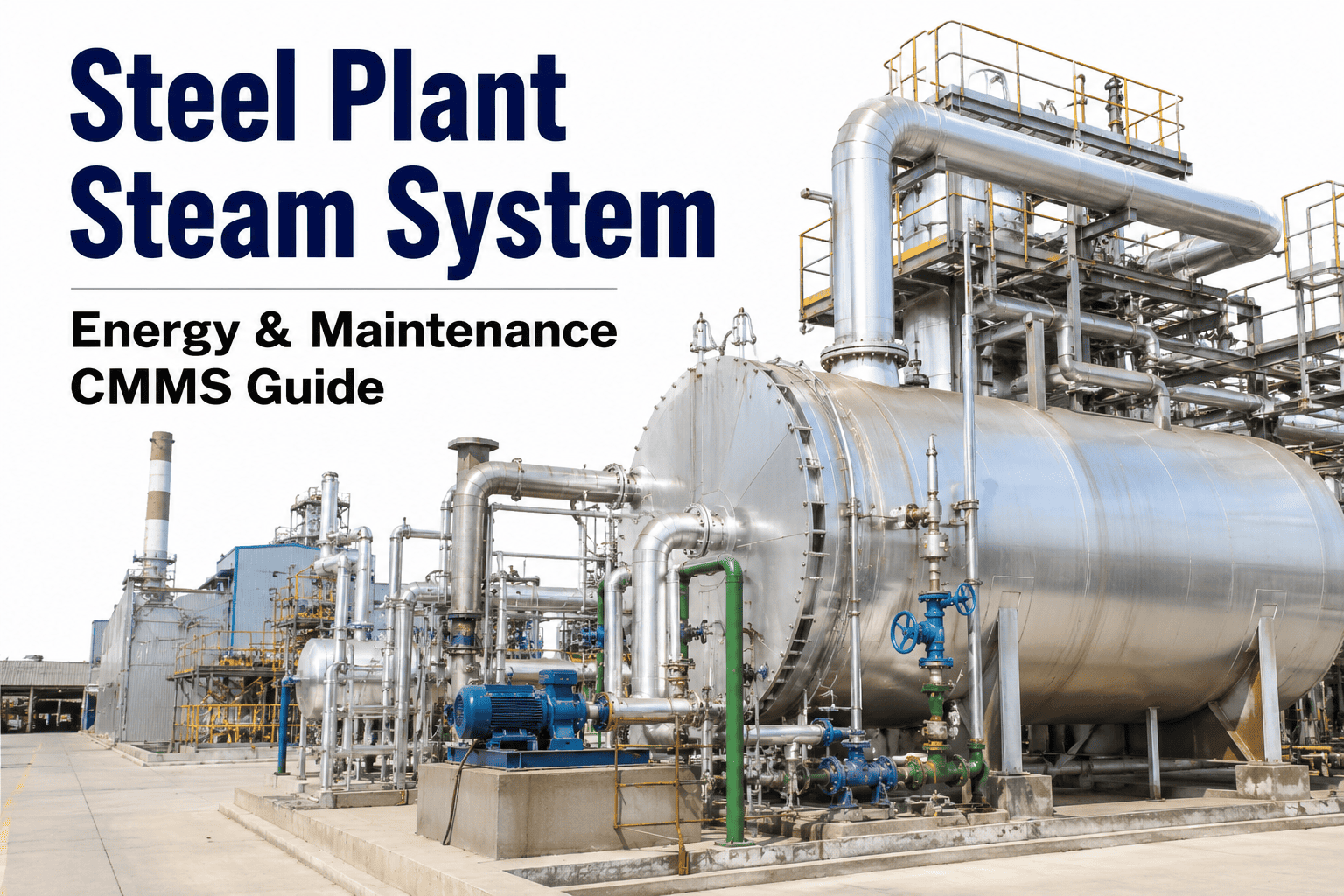
Steam systems quietly move more recoverable energy through a steel plant than almost any other utility, carrying process heat, power-generation steam, and waste-heat recovery gains to dozens of connected users on every shift. Without a disciplined steam trap survey and condensate return program, mills typically lose 15% to 30% of their installed steam traps to silent failure within three to five years, and that waste rarely trips an alarm — it just shows up later as a rising fuel bill. This guide breaks down exactly how steel plants track steam trap health, condensate reliability, insulation condition, and boiler PM inside one system, so nothing slips through between audits. You can start logging your own steam assets by opening a Start Free Trial of Oxmaint.
How much fuel is your mill burning just to cover for leaking steam traps?
A structured steam trap survey and condensate reliability program typically cuts steam-related energy waste by half within the first year. The playbook below shows exactly what to inspect, how often, and how to track it in one place.
Where steel plant steam systems quietly lose money
Steam waste rarely announces itself. It builds up across dozens of small failures spread across the melt shop, rolling mill, and boiler house until it shows up as a fuel bill nobody can explain.
Left unmanaged for three to five years, 15% to 30% of a plant's steam traps typically fail — most failing open and venting live steam straight into the condensate system.
Every pound of condensate that doesn't return to the boiler has to be replaced with treated makeup water, stacking chemical and reheating costs on top of the energy already lost.
Bare flanges, valves, and pipe runs radiate heat around the clock. One missing jacket on a high-pressure line can waste more energy a year than a dozen minor trap leaks combined.
Fouled tubes, blowdown imbalance, and combustion drift shave efficiency down gradually. Without trending, a few points of lost efficiency can go unnoticed for a full budget cycle.
Pressure-reducing stations and back-pressure turbines absorb constant load swings from furnace and rolling demand, wearing seats and seals faster than in a steady process line.
Many plants can't say exactly how many traps they run or where they sit. An incomplete registry means surveys miss traps year after year, letting failures quietly compound.
The steam trap failure benchmark every plant should know
Industry-wide data on steam trap performance is remarkably consistent, and it draws a clear line between plants that survey on a schedule and plants that don't.
Facilities with no proactive trap program commonly lose close to one-fifth of the steam leaving the boiler through failed traps alone. A single stuck-open trap on a mid-pressure line can waste enough steam to cost thousands of dollars a year in fuel — multiply that across a few hundred traps and the number stops being small.
| Program Type | Typical Failure Rate | Steam Loss vs Output | Time To Detect A Failure |
|---|---|---|---|
| No scheduled surveys | 20% – 30% | ~20% | Months to years |
| Basic annual survey | 10% – 15% | ~10% | Up to 12 months |
| Structured quarterly program | Under 5% | Under 3% | Weeks |
A multi-site steam program tracking roughly 170,000 traps found a 25% failure rate on its first survey. After four years of quarterly surveys with every repair logged and closed out, that number fell to under 10% — without adding headcount, simply by making sure every failed trap found actually got fixed and recorded.
A 12-month steam system maintenance timeline
Steam maintenance works best as a tiered rhythm — quick daily checks that catch the obvious, layered with deeper surveys that catch what the eye and ear miss.
Log steam pressure, drum level, feedwater temperature, and stack readings against baseline, and visually check valves and flanges for leaks.
Walk the highest-traffic steam runs for missing or wet insulation, and confirm condensate receiver levels and pump cycling look normal.
Ultrasonic and thermal spot-checks on the highest-value and highest-risk traps flagged from the last full survey.
Ultrasonic and thermal imaging survey of the entire trap population, with every trap logged as pass, fail-open, fail-closed, or blocked.
Condensate pump performance test, strainer cleaning, and pressure-reducing valve seat and packing inspection.
Combustion tuning and efficiency test, boiler tube inspection, and a full thermal-imaging insulation audit across all distribution lines.
The steel plant steam system daily checklist
Print it, laminate it, hand it to every boiler operator. These checkpoints cover the minimum viable steam program for a mill of any size.
- Verify drum level and feedwater temperature are within range
- Confirm blowdown schedule was followed and logged
- Inspect burner flame and stack temperature trend
- Check safety valve and low-water cutoff test dates
- Inspect insulation jackets for gaps or moisture
- Check expansion joints and pipe supports for movement
- Scan high-priority traps for pass or fail signatures
- Confirm steam pressure at point of use matches setpoint
- Verify condensate tank level and pump cycling
- Check strainers for debris and pressure drop
- Inspect flash tank vent for excessive venting
- Confirm condensate return temperature trend
- Confirm PRV set pressure and relief valve tags are current
- Verify trap survey tags match the asset registry
- Check insulation condition on older line sections
- Log all readings before the shift ends
What a steam program actually returns
A structured survey program costs a fraction of what a single quarter of undetected trap failures burns through in fuel.
A steel mill running roughly 600 steam traps across its melt shop and rolling mill found a 22% failure rate on its first quarterly survey. Repairing the worst 40 traps cut fuel consumption enough to pay back the entire survey program in under four months, with every repair logged as a trackable savings line.
Ready to put your steam program on a schedule?
Oxmaint gives steel plants one place to run steam trap surveys, condensate reliability checks, insulation audits, and boiler PM — with every reading trended and every repair tracked automatically.
Steam system maintenance — answers plant managers actually need
A full ultrasonic and thermal survey every quarter is the standard for high-value steam systems, with monthly spot-checks on your highest-priority traps in between. You can build automated survey reminders with a Start Free Trial of Oxmaint.
Without a scheduled program, 15% to 30% of traps typically fail within three to five years. A well-run quarterly survey program should keep that number under 5% of the total population at any point in time.
A quarter-inch orifice trap stuck open can waste tens of thousands of dollars in fuel a year on its own. First-time surveys commonly uncover $50,000 to $250,000 in combined annual losses at one site.
Yes — mainly by making sure every failed trap found in a survey actually gets repaired and tracked instead of sitting on a spreadsheet. See the workflow in a Book a Demo.
Treating the annual survey as the finish line instead of the starting point. Failures build up silently between surveys, so the lowest-loss plants track every trap's repair history continuously, not once a year.
Stop losing steam to failures you can't see
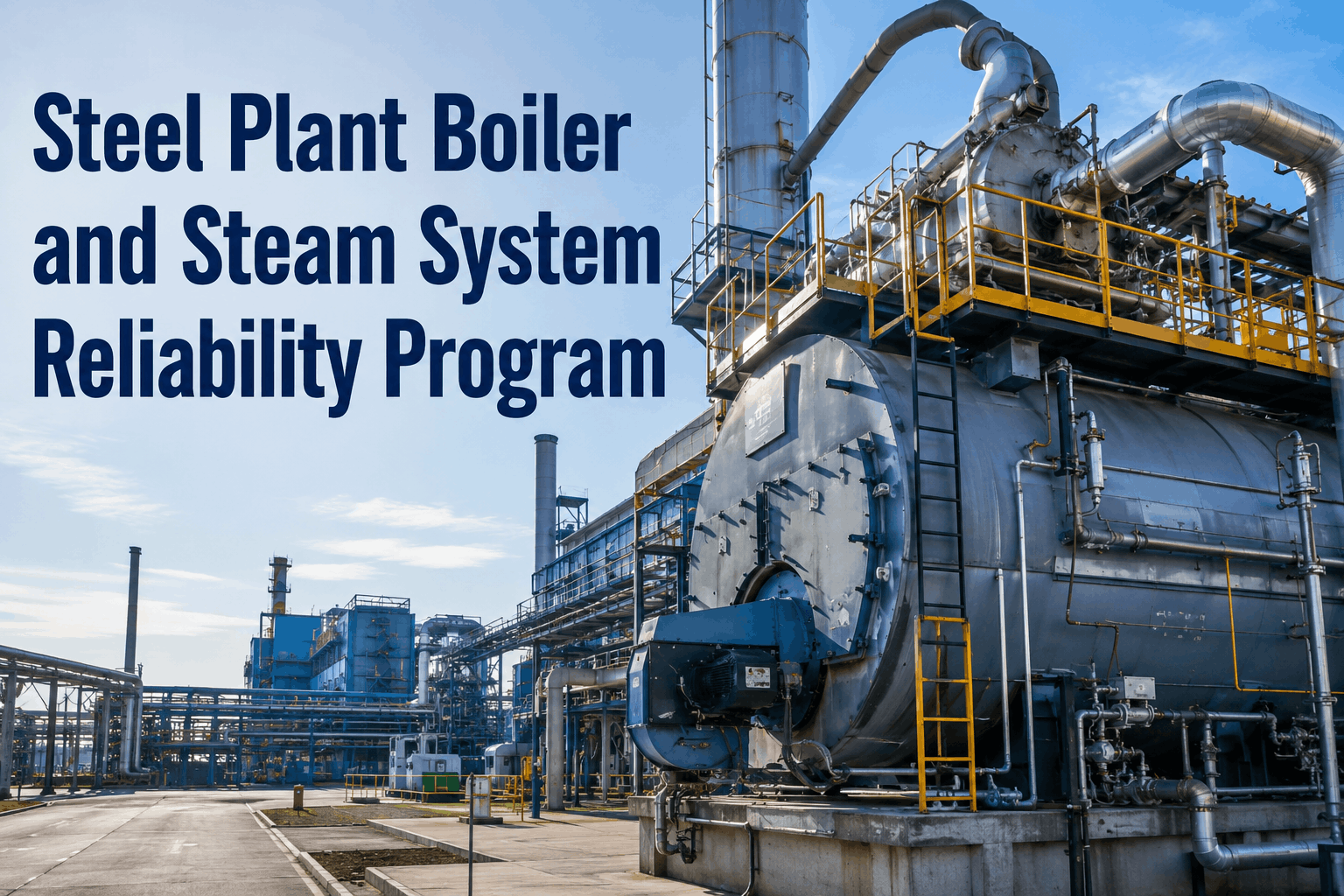
Join the steel plants using Oxmaint to track steam trap surveys, condensate reliability, insulation condition, and boiler PM in one connected system. Set up your steam asset registry in under an hour.
Free 14-day trial · No credit card





-programs.png)
