Steel plants run some of the largest industrial water networks on earth, and cooling water touches almost every hot process on site — blast furnace staves, caster molds, rolling mill rolls, and coke ovens all depend on it. Pumping and rejecting that heat is one of the biggest electricity loads on a mill's meter, and the moment scale, fouling, or a worn impeller creeps into a circuit, the same tonnage of steel starts costing more in kilowatts. Most mills only catch the loss after a trip, a near-miss, or a jump in the power bill forces a closer look. Start a free trial of Oxmaint to track pump efficiency, fouling, and cooling tower performance before they turn into downtime.
COOLING WATER ENERGY · PUMP EFFICIENCY · FOULING CONTROL · CMMS MAINTENANCE
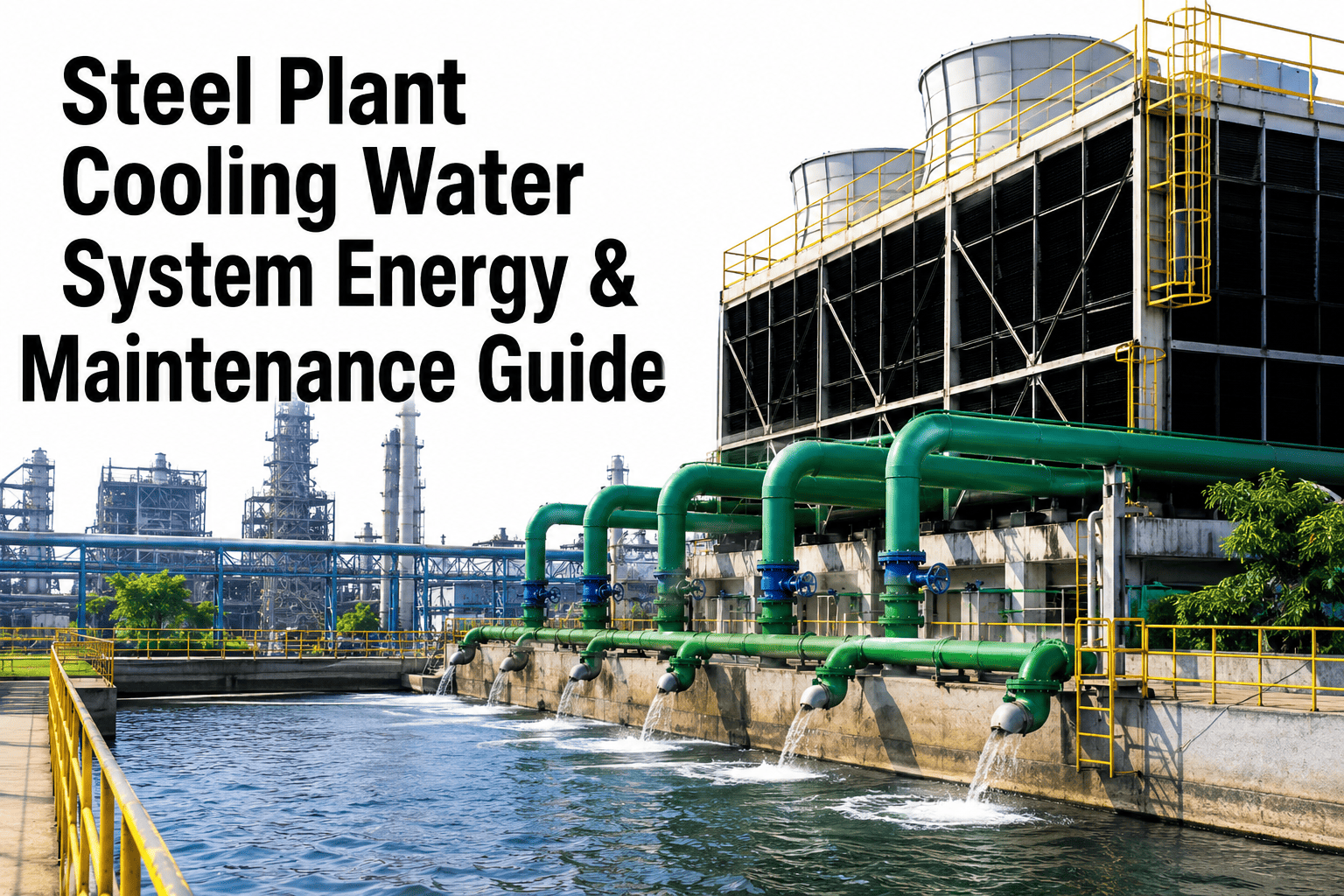
Steel Plant Cooling Water System Energy & Maintenance Guide
Cooling water reliability and energy intensity are the same problem wearing two names. See how mills track pump efficiency, heat exchanger fouling, cooling tower performance, and water treatment discipline through one CMMS-driven program.
15–30%Extra pumping and fan energy consumed once heat exchangers and cooling towers foul, often before anyone notices the drop in output
68%Of unplanned cooling-system shutdowns trace back to preventable water chemistry failures, scale, or biological fouling
6%Rise in cooling energy cost for every 2°F increase in circuit return temperature caused by a degraded exchanger or tower
10–15%Efficiency gained from disciplined pump, exchanger, and cooling tower maintenance, before any capital replacement
Why Cooling Water Reliability Is Really an Energy Problem
A cooling water circuit is a mechanical system doing constant work — pumps push flow against head, fans pull air across fill, and every one of those motors is metered. When a heat exchanger fouls or a pump impeller wears, the circuit does not simply stop working, it keeps running while drawing more current to move the same water and reject the same heat. That gap between design performance and actual performance shows up first as a higher power bill, then as reduced cooling margin, and eventually as a forced outage when a furnace stave, caster mold, or roll bearing runs hotter than its design allows. Oxmaint's cooling water module tracks pump amperage, differential pressure, and return water temperature against baseline so fouling and wear are caught as an efficiency trend, not a shutdown.
The Four Cooling Water Circuits Every Steel Plant Runs
01
Blast Furnace Stave & Tuyere Cooling
Keeps the furnace shell and tuyere noses below refractory failure temperature through a closed, pressurized loop.
Energy risk: scaled tubes raise pump head, so the same flow rate draws more kW every hour of the campaign.
Undetected flow loss risks stave burn-through and an unplanned reline.
02
Continuous Caster Mold & Spray Cooling
Controls shell solidification rate through the mold and secondary spray zones during casting.
Energy risk: fouled spray nozzles need higher header pressure to hold the same cooling pattern, pushing pump load up.
Uneven cooling raises breakout risk and surface defect rates.
03
Rolling Mill Roll & Bearing Cooling
Prevents roll surface thermal cracking and keeps bearing temperatures within design limits during rolling.
Energy risk: fouled headers reduce flow uniformity, so motors compensate by running harder on fewer active nozzles.
Roll spalling and bearing seizure follow sustained overheating.
04
Cooling Tower & Heat Exchanger Loop
Rejects the plant's accumulated heat load to atmosphere and returns cooled water to every connected circuit.
Energy risk: scale on tubes and fouled fill cut heat transfer, so fans and pumps run longer and harder to hold setpoint.
A rising return temperature here cascades into every downstream circuit at once.
These four circuits usually share the same makeup water and treatment chemistry, which means a chemistry failure in one rarely stays isolated to one.
Where the Energy Actually Leaks Out of a Cooling System
Three mechanisms account for most of the avoidable energy loss in steel plant cooling water: scale and biological fouling on heat transfer surfaces, mechanical wear in pumps and fans, and poorly controlled cycles of concentration that force more makeup water and chemical dosing than necessary. None of these fail suddenly — they drift for weeks or months, quietly raising the kilowatt-hours needed per ton of steel, until a trip or an energy audit forces the question of when it started.
Scale & Biological Fouling
Cause: hard water minerals and biofilm build up on tube walls and fill media faster than blowdown removes them.
Impact: heat transfer drops, so towers and exchangers need longer run time to reject the same heat load.
Pump & Fan Wear
Cause: impeller erosion, bearing wear, and cavitation reduce wire-to-water efficiency below design.
Impact: an 11% efficiency drop can raise the power cost of the same duty by close to 18%.
Poor Cycles of Concentration Control
Cause: running towers at low cycles wastes makeup water; running too high without chemistry support accelerates scaling.
Impact: either extra pumping of makeup water or accelerated fouling — both raise energy per ton.
Neglected Drift Eliminators & Fill
Cause: damaged fill and worn drift eliminators reduce the tower's effective air-water contact area.
Impact: fans run at higher speed to hold the same approach temperature, raising electrical draw.
Turn Cooling Water Data Into an Energy Program
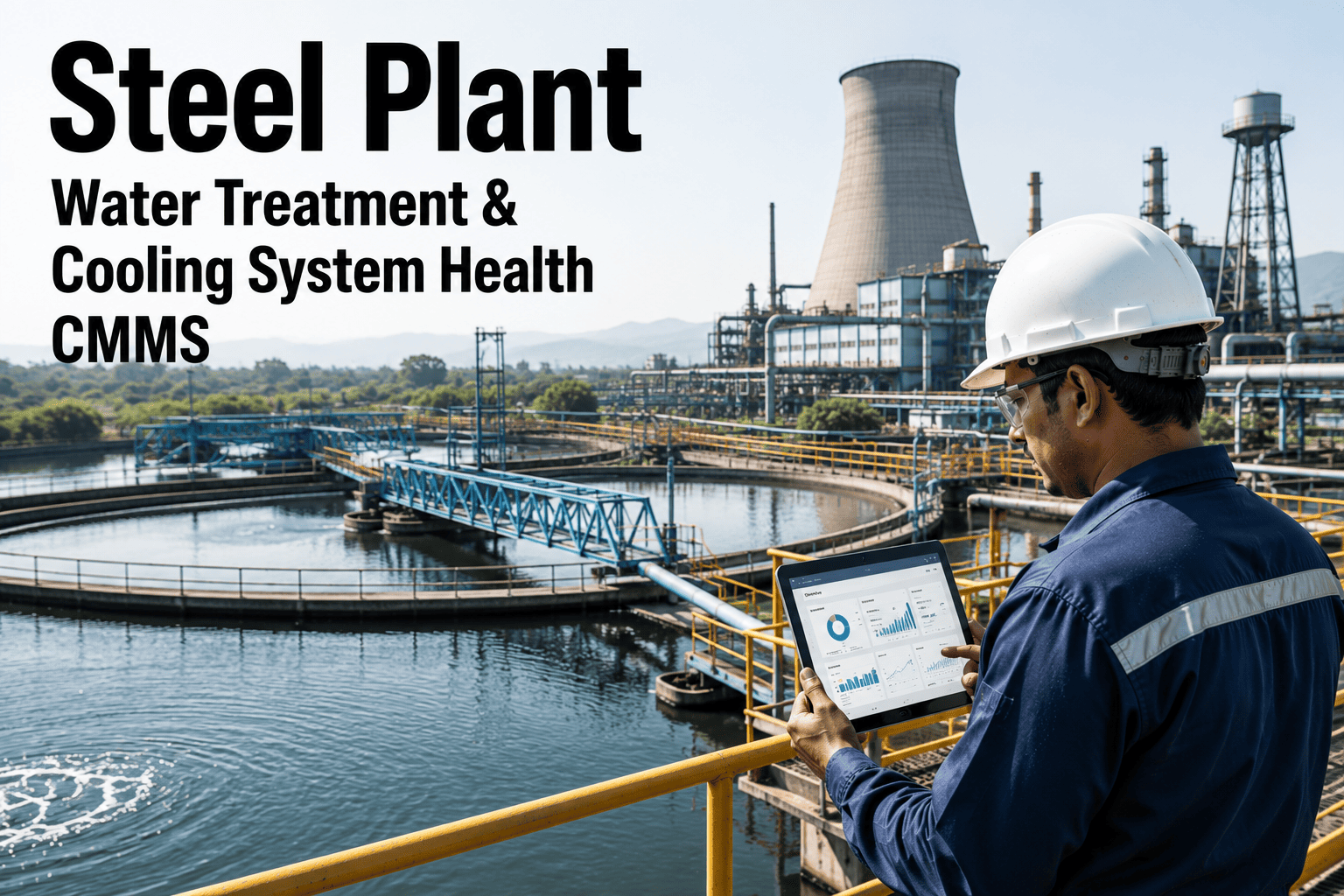
Track pump amperage, exchanger fouling, and cooling tower approach temperature against baseline, so drift shows up as a trend line instead of a trip.
A Maintenance Program That Protects Uptime and Energy Together
Cooling water maintenance is often split across mechanical, water treatment, and instrumentation teams, which is exactly why energy loss goes unnoticed — no single team owns the full picture. A structured program brings pump performance, exchanger cleaning, tower mechanical condition, and water chemistry onto one schedule with one set of baselines.
Pump Performance Testing
Periodic flow, head, and amperage readings compared to the pump's design curve to catch wire-to-water efficiency drift early.
Heat Exchanger & Tube Cleaning
Scheduled mechanical or chemical cleaning based on fouling factor trends rather than a fixed calendar date, so cleaning happens when it is actually needed.
Cooling Tower Mechanical Inspection
Fill condition, drift eliminator integrity, fan and gearbox vibration, and basin sediment checked on a fixed interval.
Water Chemistry & Biocide Control
pH, conductivity, hardness, and biocide residual logged per circuit with automatic alerts when readings drift out of range.
Basin & Fill Cleaning
Annual sediment removal and disinfection to control Legionella risk and restore full fill surface area for heat transfer.
Blowdown & Cycles of Concentration Management
Running each circuit at the highest safe concentration cuts makeup water and chemical cost without risking scale.
Energy & Reliability Performance Thresholds
These are the benchmarks steel plant maintenance and energy teams typically track per cooling water circuit. Falling into the poor band on more than one metric is usually the earliest reliable signal of a fouling or wear problem, well ahead of any process disruption.
| Metric | Poor | Acceptable | Excellent |
| Pump Wire-to-Water Efficiency |
Below 60% |
60–75% |
Above 75% |
| Heat Exchanger Fouling Factor |
High, frequent cleaning needed |
Moderate, on schedule |
Low, extended cleaning interval |
| Cooling Tower Approach Temperature |
Above design +5°F |
Design +2 to +5°F |
Within design +2°F |
| Unplanned Cooling-Related Downtime |
More than 4 events/year |
1–3 events/year |
0–1 event/year |
Frequently Asked Questions
How much energy does cooling water fouling actually waste?
Fouled exchangers and towers commonly waste 15–30% of the pumping and fan energy tied to that circuit before the loss is visible on production reports. The earliest sign is a rising return water temperature at the same flow rate.
What is wire-to-water efficiency and why does it matter?
It is the combined efficiency of the pump and motor together, calculated from measured flow, head, and power draw. A drop of just 11% in this efficiency can raise the power cost of the same pumping duty by close to 18%.
How often should cooling tower basins be cleaned?
Annually at minimum, combined with disinfection to control Legionella risk. Basins in circuits with high dust or scale loading may need cleaning twice a year to protect both water quality and heat transfer.
What cycles of concentration should a steel plant cooling tower run at?
Most towers can safely run higher cycles than they currently do if treatment chemistry is dosed correctly, cutting makeup water without increasing scale risk.
Book a demo to see how cycle and chemistry tracking are combined in one dashboard.
Can a CMMS actually reduce cooling water energy cost?
Yes — by turning pump amperage, fouling factor, and approach temperature into tracked trends instead of one-off readings.
Oxmaint's cooling water tracking flags drift early enough for cleaning or repair to happen before energy cost climbs further.
Protect Both Uptime and Energy Cost
Bring pump performance, exchanger cleaning, tower inspections, and water chemistry onto one CMMS-driven cooling water program.