-programs.png)
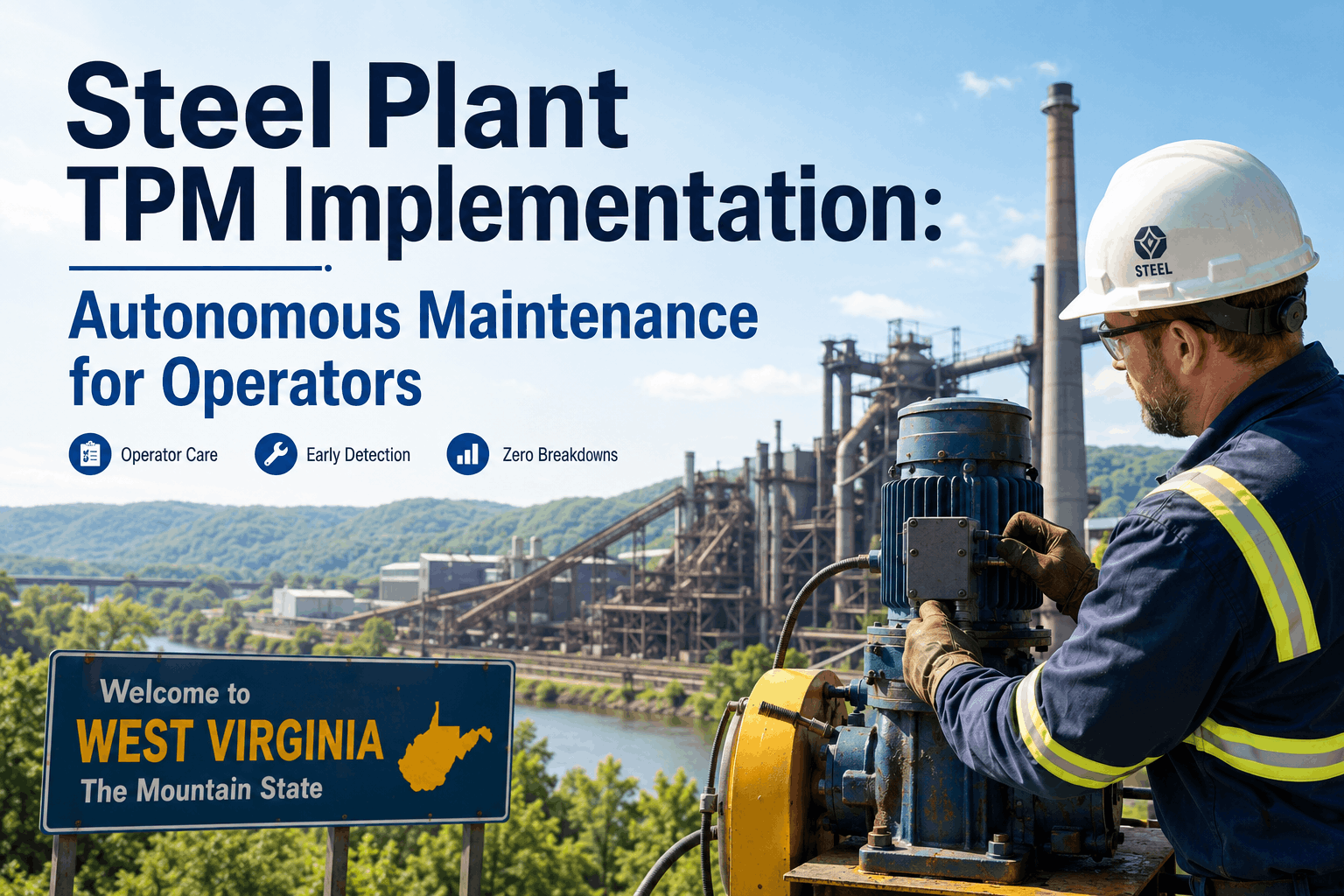
In the high-stakes environment of North American steel manufacturing, the transition from traditional maintenance to a culture of **Total Productive Maintenance (TPM)** is the definitive marker of a world-class facility. While many plants struggle with the "Maintenance vs. Operations" silo, leaders in the Great Lakes and Southern regions are leveraging Autonomous Maintenance (AM) to turn machine operators into the first line of defense against equipment failure. By implementing standardized **CILT (Clean, Inspect, Lubricate, Tighten)** programs and the **5S Methodology**, steel mills can eliminate the "Six Big Losses" and achieve a state of zero breakdowns. However, the biggest barrier to TPM success is often the paperwork—manual logs that are difficult to track and impossible to audit. In 2026, the gap between mobile-first and desktop CMMS platforms has never mattered more to manufacturing plants. As technicians spend 80% of their shift on the floor — not at a desk — the best CMMS mobile app for manufacturing is no longer a convenience but a competitive differentiator. This guide breaks down real-world performance differences between mobile CMMS and desktop CMMS for plant maintenance teams, covering technician adoption rates, offline capability, work order speed, and measurable ROI. Whether you manage a single facility or a multi-site operation, choosing the right CMMS mobile app in 2026 could directly reduce downtime, cut repair costs, and keep your compliance records audit-ready. Sign Up Free and see how a mobile-first CMMS transforms plant maintenance from day one.
Steel Plant TPM, 5S, and Autonomous Maintenance (CILT) Programs
Operator-Driven Reliability (ODR) · Digital CILT Checklists · 5S Audit Sustenance · Focused Improvement (Kaizen) · Early Equipment Management · Planned Maintenance Synergy · Zero-Breakdown Culture
Why Manufacturing Plants Are Going Mobile-First in 2026
The Shift from Desktop to Mobile CMMS in Industrial Maintenance
CMMS Mobile App vs Desktop: Head-to-Head Comparison
Feature-by-Feature Breakdown for Manufacturing Plant Maintenance Teams
| Capability | Mobile CMMS App | Desktop CMMS | Impact for Manufacturing |
|---|---|---|---|
| Work Order Creation Speed | On-floor, real-time | Office/terminal-bound | Mobile reduces lag from fault detection to repair start |
| Offline Functionality | Full offline mode | Requires network connection | Critical for basement plant rooms and signal-dead zones |
| Technician Adoption Rate | High — familiar UX | Moderate — training required | Faster rollout, lower resistance from floor-level staff |
| Photo/Video Documentation | Instant capture | Manual upload only | Richer fault records; faster root cause analysis |
| QR Code Asset Scanning | Native camera scan | Not practical | Eliminates manual asset ID errors at point of service |
| Push Notifications / Alerts | Instant delivery | Email / dashboard only | Reduces response time for critical machine faults |
| Dashboard & Reporting | Summary view | Full analytics suite | Desktop preferred for management KPI reviews |
| Multi-Site Portfolio View | Available on leading platforms | Standard | Desktop preferred for portfolio-level oversight |
The 8 Pillars of TPM: A Foundation for Steel Reliability
Total Productive Maintenance is more than a set of tools; it is a cultural transformation that focuses on maximizing the overall effectiveness of equipment (OEE). By adopting the 8 pillars of TPM, steel plants can move beyond a "Fix-it-when-it-breaks" mentality to a proactive environment where every employee is a guardian of asset health. OxMaint provides the digital interface to track and sustain each of these critical pillars across the mill floor. Choosing the right CMMS mobile app in 2026 could directly reduce downtime, cut repair costs, and keep your compliance records audit-ready.
Autonomous Maintenance (AM)
Empower machine operators to perform daily **CILT** (Clean, Inspect, Lubricate, Tighten) routines. This "ownership" reduces minor defects before they escalate.
Focused Improvement (Kaizen)
Systematic elimination of the "Six Big Losses" through cross-functional teams targeting specific bottleneck assets like the Caster or Hot Strip Mill.
Planned Maintenance
Synchronize operator-led AM with professional maintenance PMs. Use the CMMS to coordinate downtime windows and spare parts for zero-failure execution.
Quality Maintenance
Focus on "Zero Defect" equipment performance. Track asset parameters that directly affect steel quality (e.g., roller alignment or cooling nozzle flow).
Key CMMS Mobile App Features Manufacturing Plants Need in 2026
What Separates a Functional Mobile CMMS from a Floor-Ready Maintenance Platform
CILT: The Core of Autonomous Maintenance
The **CILT (Clean, Inspect, Lubricate, Tighten)** program is the practical "engine room" of TPM. By standardizing these four actions, mills ensure that basic equipment conditions are maintained daily. OxMaint replaces paper CILT logs with digital, photo-rich checklists that technicians and operators can complete in seconds on a mobile device. Sign Up Free and see how a mobile-first CMMS transforms plant maintenance from day one.
Cleaning is inspection. By removing dust, scale, and grease, operators can see leaks, cracks, and loose components that were hidden.
Systematic checking of wear parts, sensor alignment, and fluid levels against a "Standard Condition" defined in the CMMS.
Ensuring the right lubricant is applied to the right point in the right quantity. Prevents 70% of premature bearing and gearbox failures.
Securing fasteners and connections that loosen due to mill vibration. Eliminates the #1 cause of minor stops and "phantom" electrical faults.
When Desktop CMMS Still Wins: Use Cases Where Screen Size Matters
The Right Tool for Planning, Analytics, and Portfolio Management
Sustaining 5S Excellence: A Digital Audit Roadmap
5S (Sort, Set in Order, Shine, Standardize, Sustain) is often the first step in a TPM journey. However, most 5S programs fail at the "Sustain" phase due to a lack of accountability. OxMaint provides the digital auditing tools to make 5S a permanent part of the mill's DNA. The verdict for most manufacturing plants is not mobile vs desktop — it is mobile-led with desktop for strategy.
Sort & Set: Standardize Your Workspace
Identify and remove unneeded tools and materials. Define a dedicated home for every maintenance asset. Capture "Before" photos in OxMaint to set the baseline.
Shine: Implement Daily Cleaning Routes
Deploy daily mobile checklists for zone cleaning. Operators use the OxMaint app to log their "Shine" tasks and report any equipment abnormalities discovered.
Standardize: Define Visual Workplaces
Attach SOPs and "One-Point Lessons" (OPLs) directly to assets via QR codes. Ensure every operator follows the exact same 5S standard across every shift.
Sustain: Schedule Automated 5S Audits
Automate weekly 5S audits. Supervisors receive a push notification to perform a 5-minute audit, scoring the zone and documenting deviations with photos.
Review: Track Kaizen Progress
Analyze 5S score trends and Kaizen event results in the TPM dashboard. Use the data to reward high-performing teams and target improvement zones. Book a Demo to see how OxMaint bridges both workflows.
CMMS Mobile App ROI: What Manufacturing Plants Measure
Quantifying the Financial Return of Mobile Maintenance Management
Functional Roles Matrix: Operations vs. Maintenance Synergy
TPM success relies on a clear division of labor that maximizes the technical skills of the maintenance team while leveraging the equipment proximity of the operators. This synergy is the "Secret Sauce" of high-OEE steel production. The best platforms in 2026 deliver a responsive experience across both mobile and desktop.
| Functional Task | Operator (AM) Role | Maintenance (PM) Role | Reliability Impact |
|---|---|---|---|
| Daily Care | CILT Routines & Minor Adjustments | Audit of AM Quality | 70% Fewer Minor Stops |
| Inspections | Sensory Checks (Visual, Sound, Smell) | Technical PdM (Vibration, Infrared) | Early Failure Detection |
| Lubrication | Simple Points & Grease Fittings | Complex Systems & Oil Analysis | Precision Asset Care |
| Housekeeping | Daily 5S & Workplace Organization | Major Zone De-Scaling & Cleanup | Safer Work Environment |
| Kaizen | Submitting Ideas & Minor Improvements | Engineering Major Design Changes | Continuous OEE Gain |
| Documentation | Mobile Log of ODR Activity | Detailed Technical RCA Logs | Audit-Ready Data Trail |
Choosing the Best Mobile CMMS for Manufacturing in 2026
Evaluation Criteria That Separate Tier-1 Platforms from Generic Apps
Stop Fighting Fires. Start Sustaining Gains.
Eliminate the paperwork barrier to TPM success. OxMaint provides the mobile-first platform that makes Autonomous Maintenance, 5S Audits, and CILT routines easy for operators to follow and impossible for managers to ignore. Build a zero-breakdown culture starting today. Your first digital CILT route takes under 15 minutes to deploy.
TPM Economics: The ROI of Operator-Driven Reliability
The financial impact of a successful TPM program is measured in the elimination of the "Six Big Losses": Unplanned Downtime, Setup/Adjustments, Idling/Minor Stops, Reduced Speed, Quality Defects, and Startup Losses. For a high-speed steel mill, these gains translate into millions in annual EBITDA. Plants switching to mobile-first platforms typically report 20–55% reductions in work order backlog.
"For years, our 5S program was just a 'flavor of the month.' We'd clean the shop for an audit and then it would fall apart in a week. Transitioning to OxMaint for our Autonomous Maintenance and 5S audits changed everything. By putting the checklists on the operators' tablets, we made it part of the job, not an extra task. Our Caster OEE is up by 12% because we're catching loose fasteners and lubrication issues before they cause a shutdown. The transparency is incredible—I can see the 5S score for every mill zone in real-time. It's the first time in 20 years I've seen a TPM program actually stick and deliver measurable results on the bottom line."
Frequently Asked Questions
What is a CMMS mobile app and how does it differ from desktop CMMS?
A CMMS mobile app is a smartphone or tablet-based maintenance tool that allows technicians to create, update, and close work orders directly on the plant floor.
Desktop CMMS is browser-based, requiring a workstation; mobile CMMS enables real-time data capture at the point of work, significantly improving data accuracy.
Can a CMMS mobile app work without internet in a manufacturing plant?
Leading mobile CMMS platforms in 2026 include true offline mode, allowing technicians to complete work orders and checklists without a network connection.
Data syncs automatically when connectivity is restored, which is critical for steel mill environments with basement equipment rooms or Wi-Fi dead zones.
How long does it take technicians to adopt a mobile CMMS?
Most technicians become proficient with a well-designed mobile CMMS in one to three days of active floor use through intuitive UX.
Platforms with QR scan-to-asset functionality reduce onboarding time significantly compared to legacy systems that require formal, lengthy classroom training programs.
Is mobile CMMS suitable for large multi-site manufacturing operations?
Yes — enterprise-grade mobile CMMS platforms support multi-site hierarchies with role-based access, site-level dashboards, and cross-facility reliability reporting.
Operations directors see consolidated portfolio performance on desktop, while plant managers manage their specific site views via the same unified platform.
What ROI can manufacturing plants expect from switching to mobile CMMS?
Plants switching to mobile-first platforms typically report 20–55% reductions in backlog, 40–60% improvements in PM completion, and 15–30% reductions in emergency spend.
ROI timeline varies by facility size and adoption speed, but most North American plants see significant gains within the first six months of deployment.
Does OxMaint support both iOS and Android for manufacturing teams?
Yes — OxMaint delivers full feature parity across iOS and Android, ensuring consistent experiences for mixed-device steel mill environments.
Offline work order management, QR asset scanning, photo documentation, and push notifications are available across both platforms without any functional capability gaps.