Steel manufacturing is one of the most water-intensive industrial processes in existence — a conventional integrated steel plant consumes between 3 and 20 cubic metres of water per tonne of steel produced depending on process configuration, recycling efficiency, and cooling system design. India's CPCB and MoEFCC are progressively tightening Zero Liquid Discharge obligations for steel plants, and the plants that cannot demonstrate systematic water consumption monitoring, treatment system maintenance, and effluent quality compliance are accumulating consent conditions that constrain future production capacity. Start managing steel plant water systems, treatment plant maintenance, and ZLD compliance with Oxmaint — free trial, no credit card required.
Steel Plant Water Management: ZLD, Treatment Systems & Consumption Optimisation
Zero Liquid Discharge compliance. Effluent treatment plant maintenance. Cooling water quality monitoring. RO and demineralisation plant PM scheduling. Water consumption tracking by process unit. CPCB consent parameter monitoring. Oxmaint connects every water management data stream — from inlet flowmeter to treated effluent discharge quality — into one auditable environmental compliance platform.
Six Water Management Systems Every Steel Plant Operates — and Must Maintain
Steel plant water management is not a single system — it is six interconnected treatment, recycling, and monitoring domains, each with its own maintenance schedule, quality parameters, and regulatory compliance requirements. Failure in any one domain cascades into consent violations, process disruptions, and production constraints. Oxmaint manages all six simultaneously.
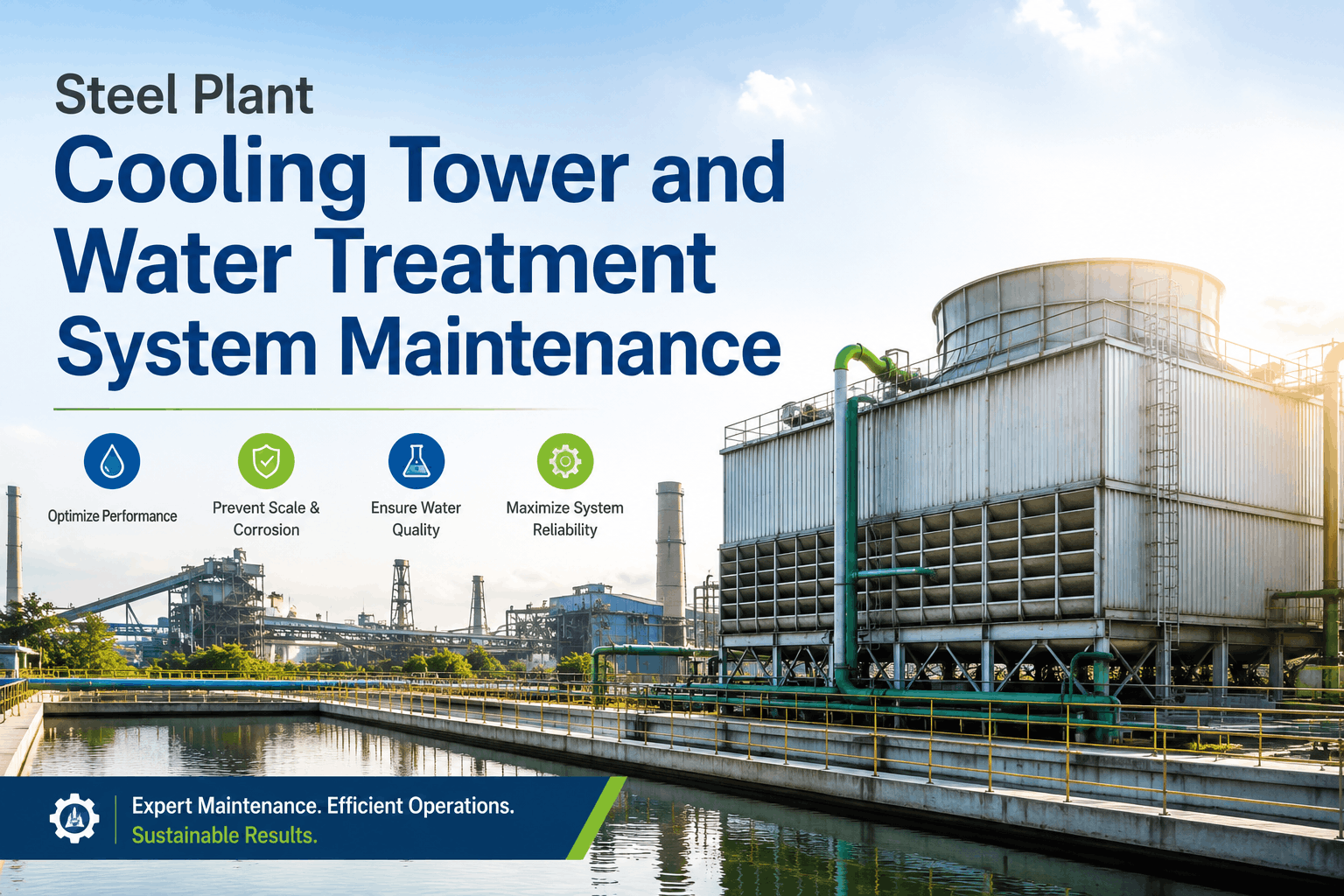
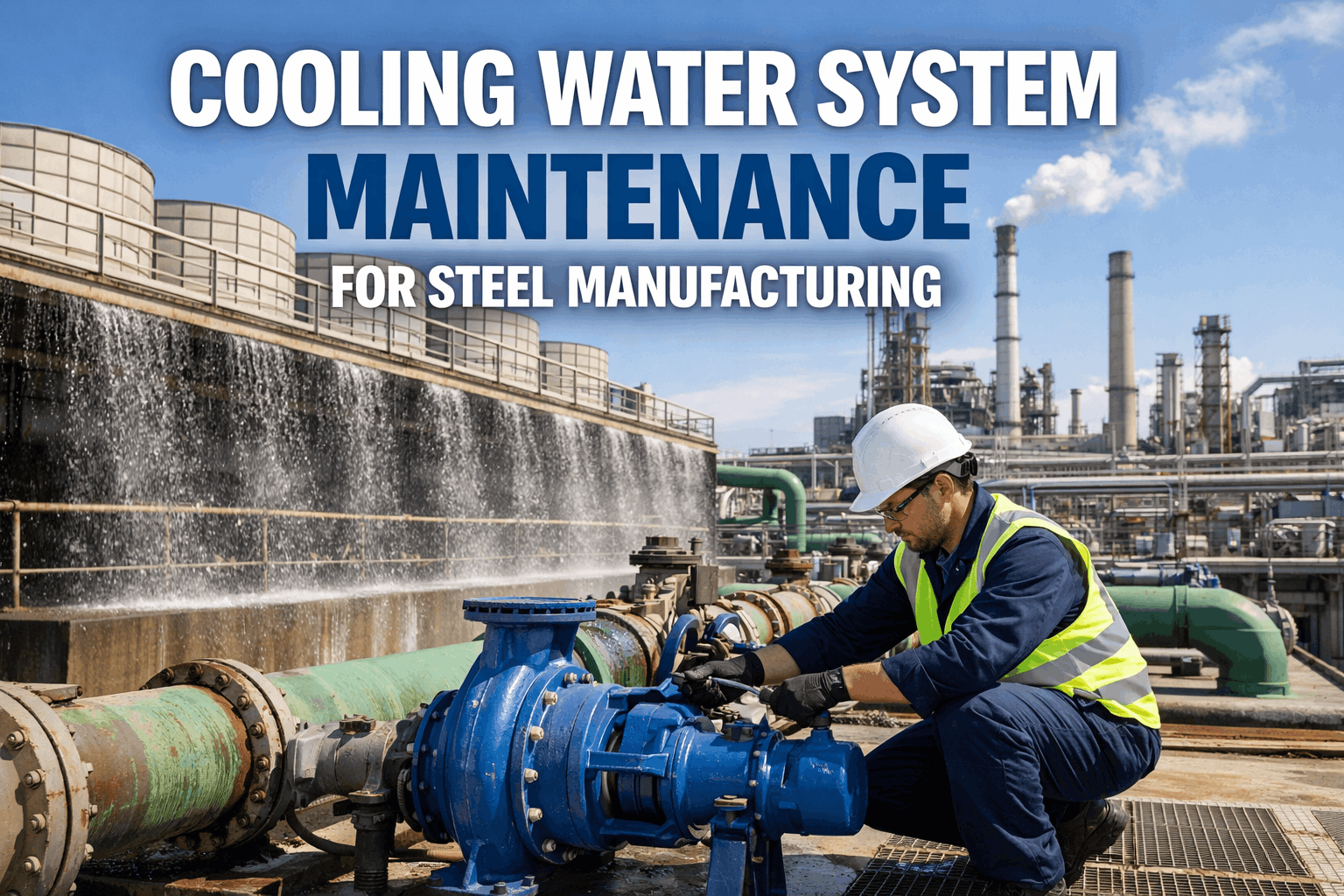
Cooling water systems — open recirculating cooling towers, once-through systems, and closed loop circuits for furnaces and process equipment — are the largest water consumers and the largest heat rejection infrastructure in the steel plant. Blowdown management, chemical dosing control, microbiological monitoring, and heat exchanger fouling are the primary maintenance and quality challenges. Oxmaint schedules cooling tower inspection, chemical dosing equipment PM, and water quality sampling — linking test results to the system record for trend analysis and CPCB blowdown quality compliance. Sign in to configure cooling water system maintenance and quality monitoring.
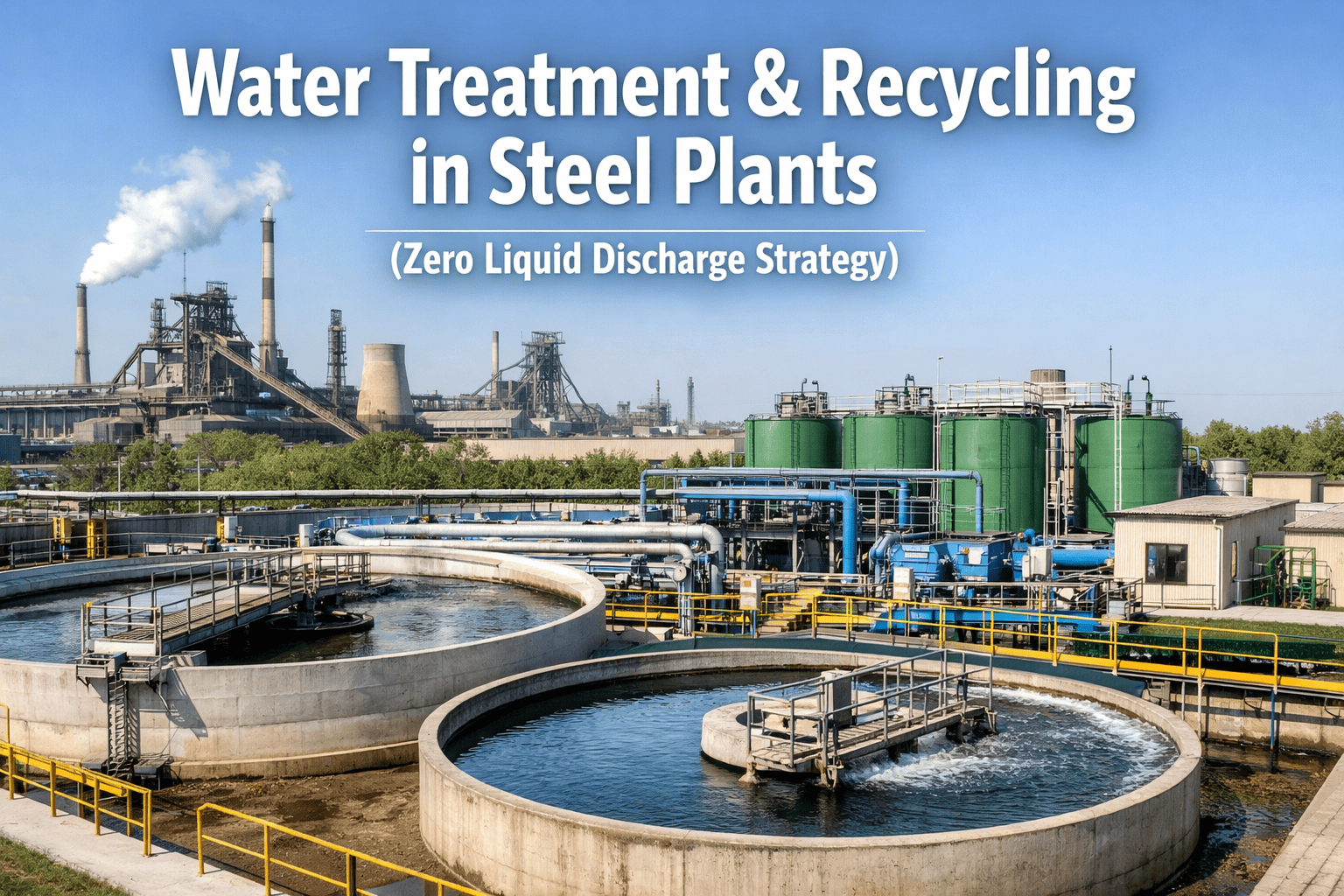
Effluent treatment plants in steel mills handle process wastewater streams from rolling mill descaling, pickling and acid regeneration, blast furnace gas washing, coke oven effluent, and general plant drainage. Multi-stage treatment — primary settling, secondary biological treatment, and tertiary polishing — must be maintained to produce treated effluent meeting CPCB consent discharge standards. Oxmaint manages PM schedules for all ETP equipment (clarifiers, activated sludge aeration, filters, chemical dosing) and logs treated water quality test results against CPCB consent parameters automatically. Book a demo to see ETP maintenance and compliance tracking.
Zero Liquid Discharge systems — multiple effect evaporators (MEE), mechanical vapour recompression (MVR) units, agitated thin film dryers, and crystallisers — are the highest capital cost, highest operational complexity water management assets in the steel plant. Steam consumption, energy efficiency, scaling control, and equipment downtime directly determine whether the plant meets its ZLD consent obligation. Oxmaint schedules ZLD system PM, tracks descaling and cleaning cycles, monitors performance parameters, and generates the ZLD compliance evidence that CPCB and SPCB inspectors require. Sign in to activate ZLD system PM scheduling and compliance tracking.
Raw water treatment, reverse osmosis, and demineralisation systems produce the high-purity water required for boiler feed, process cooling, and chemical preparation in the steel plant. Membrane fouling, resin exhaustion, chemical dosing system failures, and media filter breakthrough are the primary failure modes that interrupt production water supply. Oxmaint manages membrane replacement cycles, resin regeneration schedules, and chemical dosing equipment PM — with water quality test results logged against the system record for performance trend analysis. Book a demo to see RO and DM plant maintenance management.
Rolling mill descaling systems use high-pressure water to remove mill scale from steel surfaces before rolling — generating high-volume wastewater containing mill scale particles, rolling oil, and heat. Scale pit sedimentation, magnetic separation, and oil-water separator maintenance are critical to maintaining the recycled descale water quality that prevents nozzle blockage and surface defects on rolled products. Oxmaint manages scale pit cleanout schedules, separator maintenance, and descale water quality monitoring against quality parameters that affect both product surface quality and water recycling efficiency. Sign in to configure descaling water system maintenance scheduling.
Water consumption monitoring by process unit — blast furnace, sinter plant, coke ovens, BOF/EAF, rolling mills, and utilities — is the foundational data layer for water efficiency improvement, specific water consumption tracking for ESG reporting, and identification of leak events or abnormal consumption that indicate equipment failure. Oxmaint integrates with plant flowmeter networks, stores consumption data by process unit and shift, calculates specific water consumption per tonne of product, and generates the water audit data that CPCB, SPCB, and environmental management system auditors require. Book a demo to see water consumption monitoring and analytics in Oxmaint.
Six Water Management Failures That Generate CPCB Notices and Production Constraints
Water management compliance failures in steel plants almost never result from a lack of treatment infrastructure. They result from inadequate maintenance of existing systems, fragmented monitoring data, and the absence of a structured link between equipment condition and regulatory compliance status. These are the six patterns that generate consent conditions and regulatory action.
From Flowmeter to Compliance Certificate — How Oxmaint Manages Steel Plant Water Systems
Indian Steel Plant Water Discharge Standards — CPCB / MoEFCC Reference
| Wastewater Stream | Key Parameters | CPCB / Consent Limit (indicative) | Monitoring Frequency | Oxmaint Tracking |
|---|---|---|---|---|
| Treated Effluent — Final Discharge | pH · BOD · COD · TSS · Oil & Grease | pH: 6–9 · BOD: 30 mg/L · COD: 250 mg/L · TSS: 100 mg/L · O&G: 10 mg/L | Daily composite sample + online pH/TSS monitor | Test result log + threshold alerts + monthly report |
| Coke Oven Effluent (after treatment) | Phenol · Ammonia · Cyanide · BOD · COD | Phenol: 1 mg/L · NH₃: 50 mg/L · Cyanide: 0.2 mg/L · BOD: 30 mg/L | Daily — consent condition specific | Parameter-by-parameter consent tracking |
| Cooling Tower Blowdown | TDS · Conductivity · Chlorides · pH | TDS: 2100 mg/L (indicative) · pH: 6–9 · Chlorides: 600 mg/L | Weekly or as per consent | Quality log + conductivity trend |
| ZLD — Nil Liquid Discharge Verification | Discharge volume: nil · Condensate quality | Zero external discharge · Condensate TDS within specification | Continuous flow monitoring + periodic quality | ZLD compliance status + throughput tracking |
| Pickling / Acid Regeneration Effluent | pH · Iron · Free acid · Heavy metals | pH: 6–9 · Fe: 3 mg/L · Heavy metals: consent-specific | Twice daily during operation | Neutralisation system PM + quality log |
| Stormwater / Surface Runoff | TSS · pH · Oil & Grease | Site-specific consent condition — no untreated discharge | Event-based sampling per SPCB condition | Stormwater inspection records + diversion log |
Reference: MoEFCC Environment (Protection) Rules Schedule VI, CPCB General Standards for Discharge, and applicable SPCB consent conditions. Specific limits are consent-condition-dependent and vary by plant, capacity, and state. Book a demo to configure Oxmaint with your plant's specific discharge consent parameters.
What Oxmaint Delivers for Steel Plant Water Management Teams
Manual Water Management vs Oxmaint — The Environmental Team's Operational Gap
| Water Management Activity | Without Structured Platform | With Oxmaint |
|---|---|---|
| Effluent quality monitoring | Lab register — results not trended or compared to consent limits | Every result trended against consent limit with automatic threshold alerts |
| ZLD system maintenance | Reactive — MEE descaled when performance visible drops | Scheduled PM linked to ZLD consent — throughput vs capacity tracked continuously |
| ETP equipment maintenance | Breakdown-driven — connected to effluent quality only after violation | Preventive — equipment condition linked to treated water quality risk |
| Water consumption tracking | Monthly plant total only — no process-unit or specific consumption visibility | Process-unit consumption with specific m³/tonne calculated continuously |
| RO membrane management | Calendar-based replacement — actual performance not monitored | Performance-based replacement alert from pressure differential and recovery ratio trend |
| CPCB inspection readiness | 2–3 days manual record compilation for each inspection | Complete 12-month quality history generated in minutes — no preparation required |
| ESG water intensity reporting | Annual calculation from manual data — limited comparability period-to-period | Continuously maintained specific water consumption per tonne — audit-ready for ESG |