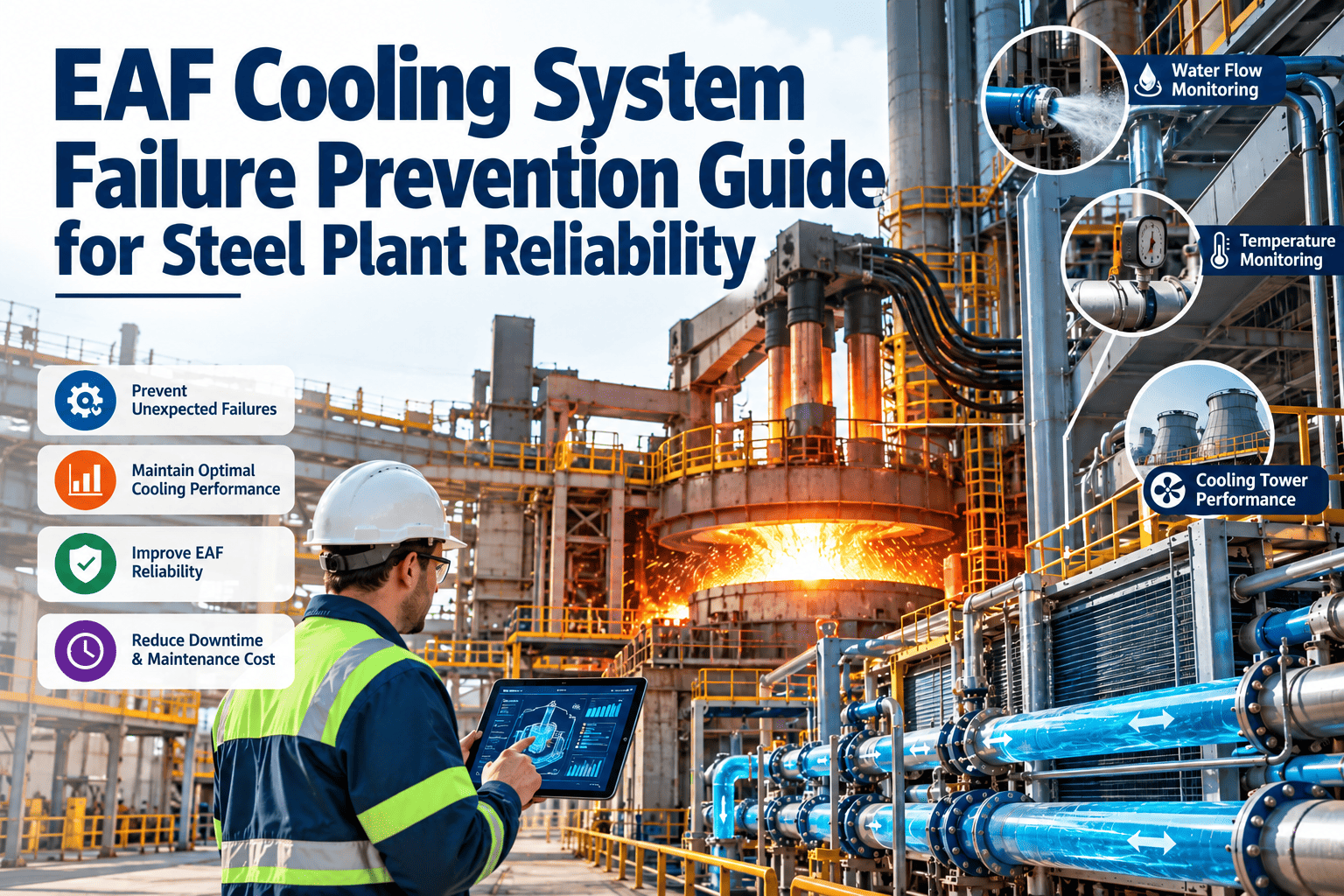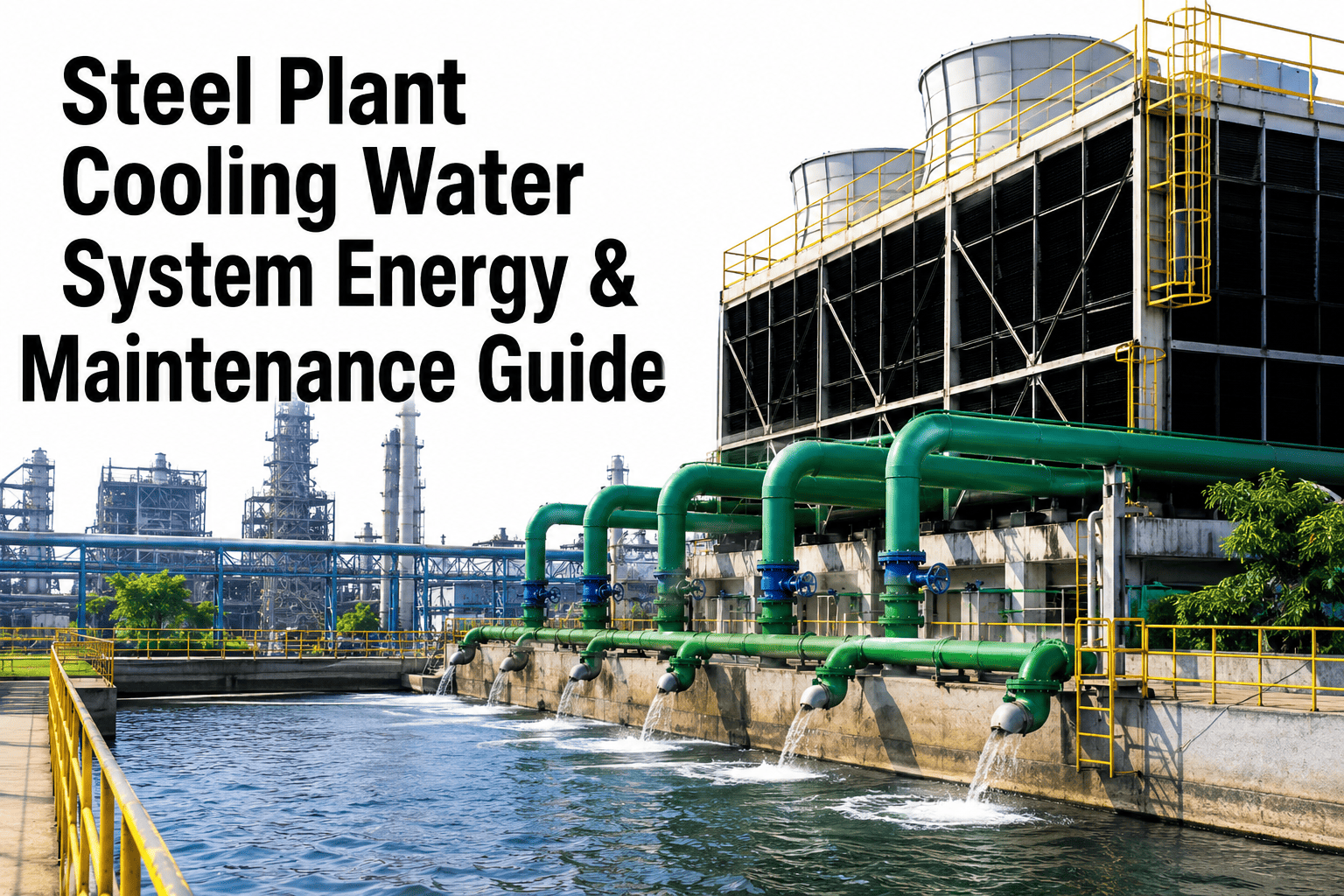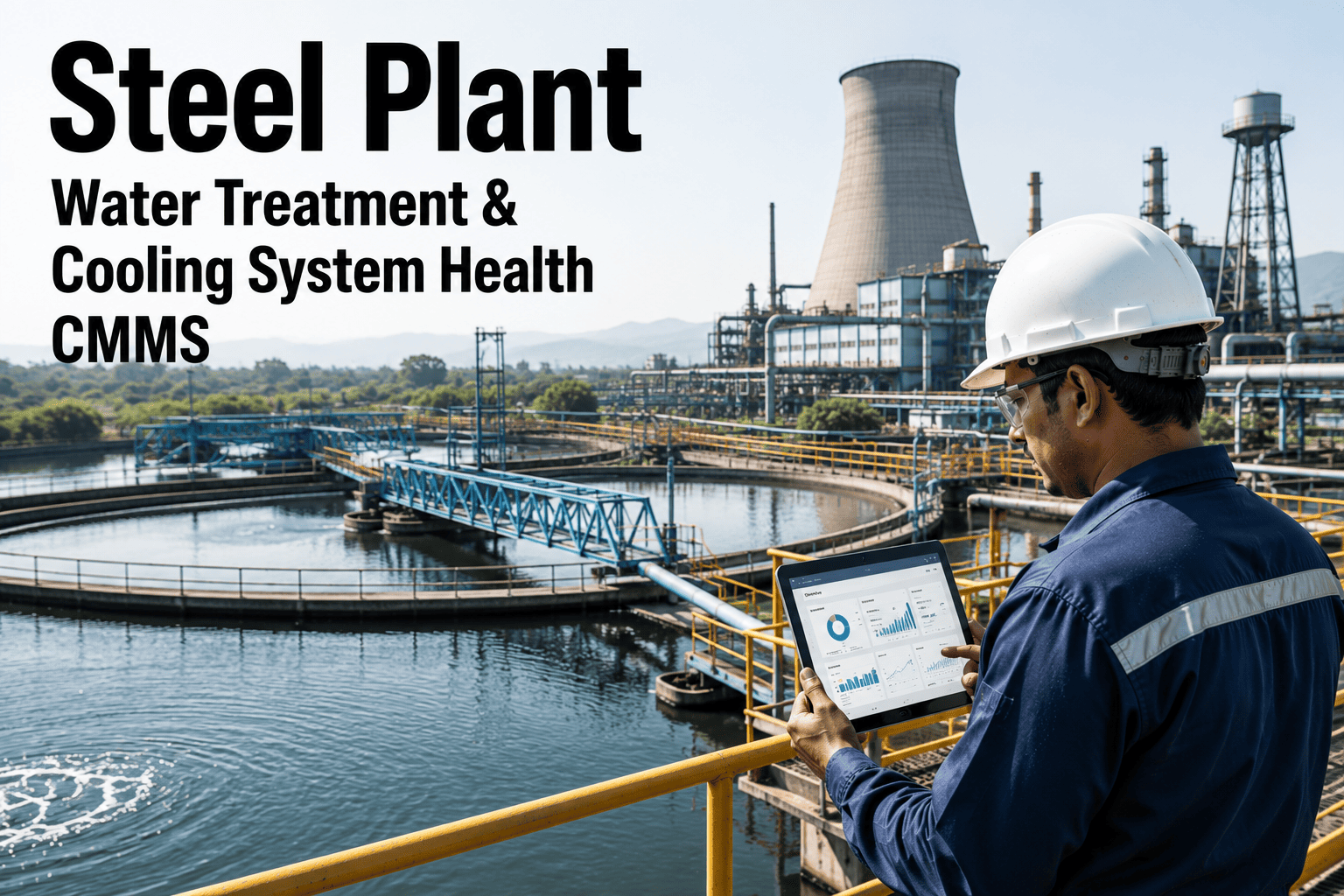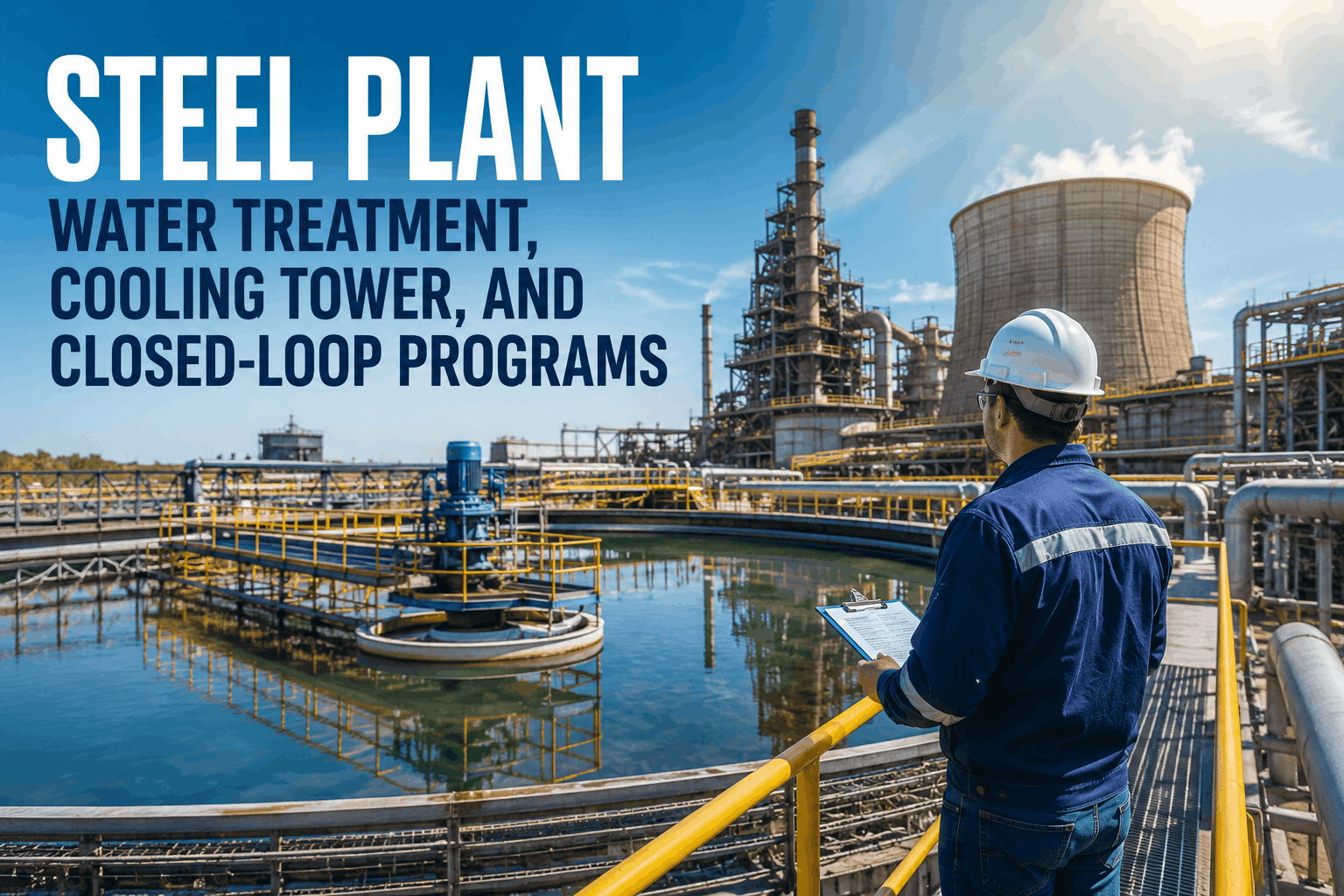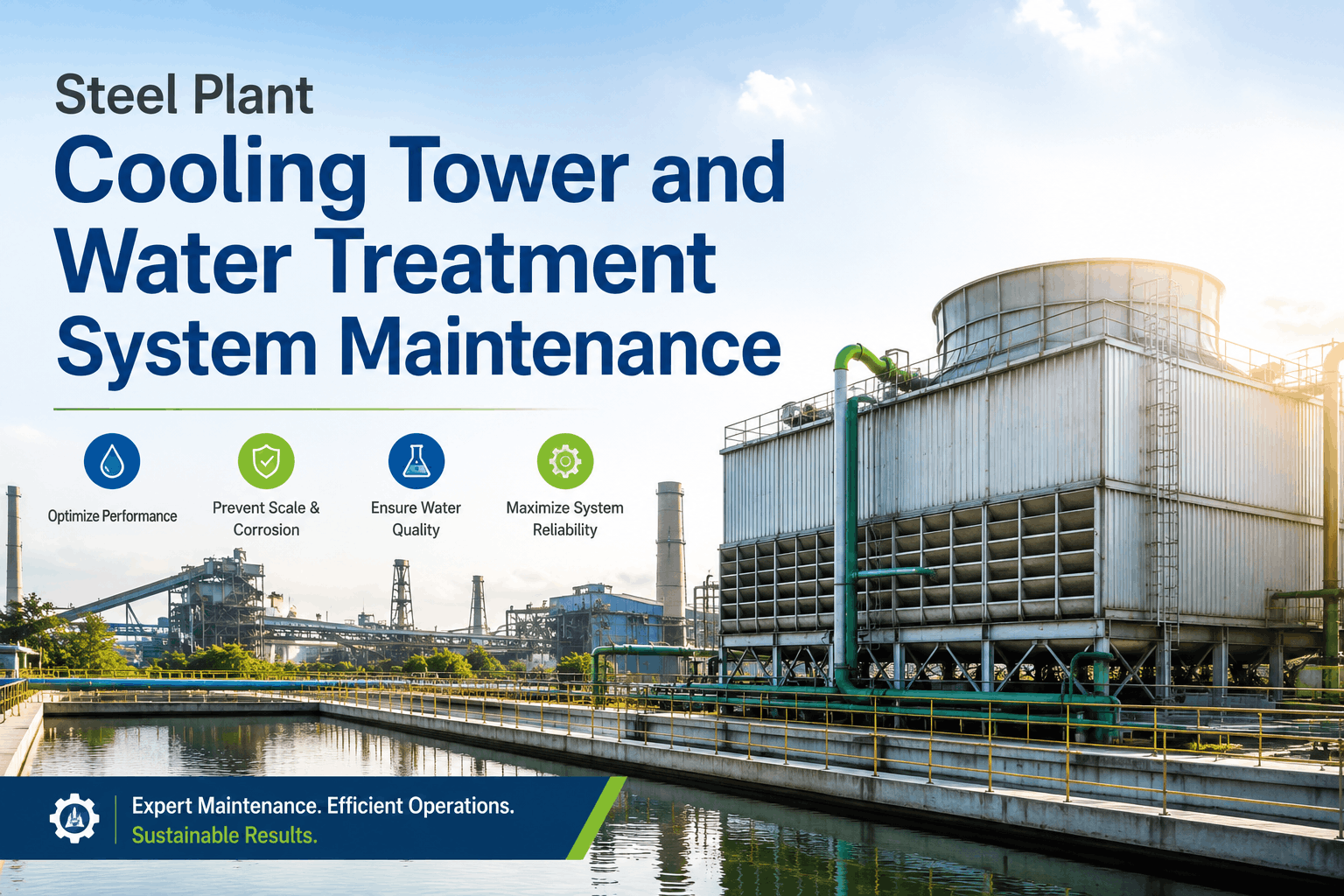
Cooling towers at integrated steel mills handle 80–150 million gallons daily—supporting blast furnace cooling staves, basic oxygen furnace tuyere systems, continuous caster spray circuits, and rolling mill coolers operating at extreme thermal loads. Yet cooling tower failures rarely announce themselves with alarms. They accumulate silently through water chemistry drift, biological growth, mechanical degradation, and structural corrosion until production shuts down or environmental regulators issue discharge violations. A single fouled condenser tube pack reduces heat rejection by 20–35%, forcing compressors into emergency operation at 30–50% above normal load, spiking energy costs and triggering failures in related equipment. OxMaint centralizes cooling tower performance monitoring, water chemistry logging, biological risk management, and Legionella compliance tracking—so your water treatment program operates as a unified discipline rather than a disconnected collection of chemical dosing schedules and manual inspection records.
Master Cooling Tower Performance Before Fouling Costs You $500K+ in Emergency Repairs
Cooling tower failures cost 3–6 weeks of downtime and millions in collateral damage. Track water chemistry, biological risk, and mechanical condition in real-time so fouling is detected weeks before production impact and Legionella exposure is prevented before regulators intervene.
The Four Cooling Tower Failure Modes That Stop Steel Mills
Each failure mode has a distinct prevention strategy, but all require continuous monitoring and data-driven maintenance scheduling. Steel plants that track all four parameters simultaneously achieve 95%+ cooling system uptime compared to industry average of 72% for plants with manual inspection schedules.
Scale Formation and Condenser Tube Fouling
Dissolved minerals accumulate as cooling water evaporates, forming crystalline scale deposits on heat exchanger surfaces. Fouled tubes reduce heat transfer coefficient by 20–35% within weeks, forcing coolers into emergency operation. Prevention requires pH control (6.8–7.6), conductivity management (1,500–2,500 μS/cm), and alkalinity buffering (100–200 ppm as CaCO3). OxMaint logs daily pH and conductivity measurements, alerting operators before drift accelerates scale formation.
Legionella Growth and Biological Contamination
Cooling towers provide ideal growth conditions for Legionella pneumophila—warm water (25–45°C), biofilm, and aerosol dispersal. Regulatory exposure is severe: facility shutdown, multi-million-dollar site investigation, and potential prosecution. Prevention requires biocide treatment schedule (oxidizing or non-oxidizing based on system design), documented risk assessments, and weekly microbiological testing. OxMaint schedules biocide dosing, logs treatment records, and auto-generates compliance reports meeting ASHRAE 188 and Legionella control legislation in USA, EU, and Australia.
Corrosion and Metal Loss in Distribution Piping
Galvanic corrosion accelerates when different metals (mild steel, copper, aluminum) contact in aerobic recirculating water. Pitting on tube sheets and piping leads to failure within months if water treatment fails. Prevention requires inhibitor dosing (typically silica-based at 50–150 ppm SiO2) to protect all metal surfaces and maintain cathodic/anodic balance. OxMaint tracks inhibitor residual levels weekly and adjusts dosing automatically so corrosion rate stays below 3 mpy (mils per year) specification.
Mechanical Degradation of Fill and Components
Cooling tower fill media degrades under UV, chemical attack, and thermal cycling, reducing surface area and air-water contact. Deteriorated fill drops heat transfer efficiency by 15–25%, requiring replacement every 10–15 years depending on water quality. Drift eliminators clogging prevents adequate water removal, causing re-entrainment and reduced cooling. OxMaint tracks thermal performance (approach temperature trending), schedules fill inspection based on age, and monitors approach temperature slope to predict replacement timing before emergency failure.
Water Chemistry Parameters, Frequency, and OxMaint Monitoring Integration
Successful cooling tower operation depends on continuous measurement and adjustment of 6–8 key parameters. OxMaint automates logging, alerts, and compliance documentation so your water treatment team focuses on decision-making rather than manual record-keeping across disconnected spreadsheets.
Cooling Tower Maintenance and Testing Schedule Reference
Use this table to define your baseline maintenance frequency and integrate it into OxMaint so every task auto-escalates when overdue. Cooling systems maintained to this schedule achieve 99%+ uptime; plants with manual scheduling typically miss 15–25% of planned maintenance due to staff turnover and competing priorities.
| System Component or Task | Maintenance or Testing Activity | Recommended Frequency |
|---|---|---|
| pH and Conductivity Monitoring | Daily measurement with calibrated instruments and OxMaint logging of results | Daily |
| Alkalinity and Chloride Testing | Lab analysis of water sample from tower discharge | Weekly or monthly |
| Biocide Dosing | Oxidizing biocide (chlorine) or non-oxidizing (glutaraldehyde, isothiazolin) per treatment program | Per program schedule (typically 2–4 weeks) |
| Corrosion Inhibitor Dosing | Silica-based inhibitor residual check and dose adjustment to maintain 50–150 ppm SiO2 | Weekly |
| Tower Basin Cleaning | Remove settled sediment, algae, and biological debris; inspect for structural corrosion or cracks | Semi-annually or as needed |
| Fill Media Inspection | Visual inspection for UV degradation, fouling, or collapse; pressure drop measurement | Annually |
| Drift Eliminator Inspection and Cleaning | Check for clogging; clean with low-pressure water if fouled; verify water drainage | Annually |
| Legionella Testing (Microbiological) | Lab culture for CFU/mL; ATP rapid test; recorded per ASHRAE 188 risk assessment requirements | Monthly (minimum) |
| Cooler Approach Temperature Trending | Daily measurement during peak load; compare actual to design baseline | Daily during operating season |
| Fan Bearing Lubrication | Bearing pack lubrication and temperature check; replace if exceeding 180°F under rated load | Semi-annually |
Make Cooling Tower Reliability Predictable and Auditable
OxMaint centralizes water chemistry logging, biocide scheduling, Legionella documentation, and thermal performance monitoring into one platform. Every daily measurement, weekly test, and maintenance action creates a permanent audit trail that proves compliance and enables predictive insights into fouling risk weeks before cooler performance degrades.
Three Early Warning Signs of Cooling Tower Failure
Fouling, biological growth, and corrosion accumulate slowly over weeks and months, not suddenly. These signals indicate deterioration that will cause production shutdown within 2–6 weeks if left unaddressed. Early detection enables planned maintenance during scheduled downtime rather than emergency shutdowns during peak production.
If approach temperature at rated load is increasing gradually, fouling on heat exchanger tubes is reducing surface area. Schedule a cooler inspection and chemical cleaning within 2 weeks. If fouling is fouling is confirmed, plan fill replacement during next planned maintenance window.
If pH drifts above 8.2 or conductivity exceeds 2,500 μS/cm despite blowdown, water chemistry control has failed. Increase chemical feed rate, verify analyzer calibration, and check blowdown valve operation. Unaddressed pH excursions accelerate both scale formation and corrosion.
Any confirmed Legionella detection requires immediate tower shutdown, full disinfection (95°C for 30 minutes or 20 ppm free chlorine for 2 hours), and comprehensive risk assessment. Notify facility management, occupational health, and regulatory agencies immediately. Restart only after repeat testing confirms clearance.
Cooling Tower and Water Treatment Frequently Asked Questions
What is the difference between oxidizing and non-oxidizing biocide treatment programs?
How do we prevent Legionella growth without using chemicals?
What is blowdown and how does it connect to water chemistry control?
How often should analyzer instruments be calibrated to ensure accurate water chemistry data?
Can we reduce water usage by operating cooling towers at higher cycles of concentration?
What triggers mandatory cooling tower shutdown for Legionella decontamination?
Is USA cooling tower maintenance subject to federal OSHA or EPA regulations?
How do we measure cooling tower efficiency and when should we plan replacement?
Water Treatment Compliance and Documentation Features
Regulatory agencies increasingly scrutinize cooling tower management, especially for Legionella control. OxMaint creates audit-ready compliance documentation automatically so your team can focus on water quality decisions rather than assembling records from fragmented spreadsheets.
Daily Water Chemistry Logging and Trending
OxMaint automatically captures pH, conductivity, and temperature readings from instrument interfaces. Charts display 30-day and 12-month trends so operators see patterns and respond to drift before thresholds are crossed. Every measurement timestamp-locked and auditable for regulatory inspections.
Biocide and Inhibitor Dosing Schedule Management
OxMaint schedules biocide and inhibitor treatments and auto-escalates work orders when doses are due. Chemical application logs record date, time, product used, concentration, and technician responsible. Verifiable dosing history supports compliance with ASHRAE 188 and Legionella control program documentation.
Legionella Testing Documentation and Risk Assessment
OxMaint logs all monthly Legionella lab results (culture and rapid ATP tests) with automatic risk assessment updates per ASHRAE 188. If results exceed thresholds, system automatically notifies management and generates decontamination requirements. Inspection history and testing records combine into one audit-ready compliance file.
Cooler Performance and Approach Temperature Monitoring
OxMaint tracks daily cooler approach temperature and compares to design baseline. Increasing approach triggers alerts so fouling can be addressed before capacity loss forces emergency operation. Performance degradation curve allows predictive scheduling of fill replacement or cooler chemical cleaning 2–4 weeks in advance.
Case Study: Integrated Steel Mill Prevents Legionella Outbreak and Saves $2.3M
A 2.6-million-ton-per-year mill in the Great Lakes region discovered significant Legionella risk during routine survey and discovered their cooling tower water treatment program lacked documented risk assessment and biocide testing records.
"Our environmental compliance officer discovered that we hadn't performed Legionella testing in 18 months and had no documented risk assessment meeting ASHRAE 188 requirements. A routine survey found ATP levels in the cooling tower water suggesting Legionella colonization. Without OxMaint, assembling three years of water chemistry records would have taken weeks of spreadsheet archaeology. With OxMaint, we had complete traceability of every pH measurement, biocide dose, and maintenance action within seconds. We performed immediate disinfection and eliminated the Legionella risk. More importantly, OxMaint now schedules monthly Legionella testing automatically, logs every biocide treatment, and generates compliance reports for regulatory agencies. Over the next year, we avoided an estimated $2.3 million in regulatory penalties, mandatory facility shutdown, and emergency response costs. The value isn't just regulatory compliance—it's operational reliability. Our cooling tower approach temperature increased 1.5°C from fouling, but our maintenance team detected it from the trending data and scheduled fill cleaning during planned maintenance instead of dealing with emergency cooling loss during peak production."
— Environmental Manager, Integrated Steel Mill, Great Lakes Region, USA
Master Cooling Tower Reliability and Regulatory Compliance
OxMaint centralizes water chemistry, biological risk management, and equipment monitoring into one auditable platform. Every measurement, every biocide dose, every maintenance action connects to compliance documentation and predictive reliability analytics. Schedule a demo to see how OxMaint transforms your cooling tower from a silent risk into a controlled, continuously optimized system.