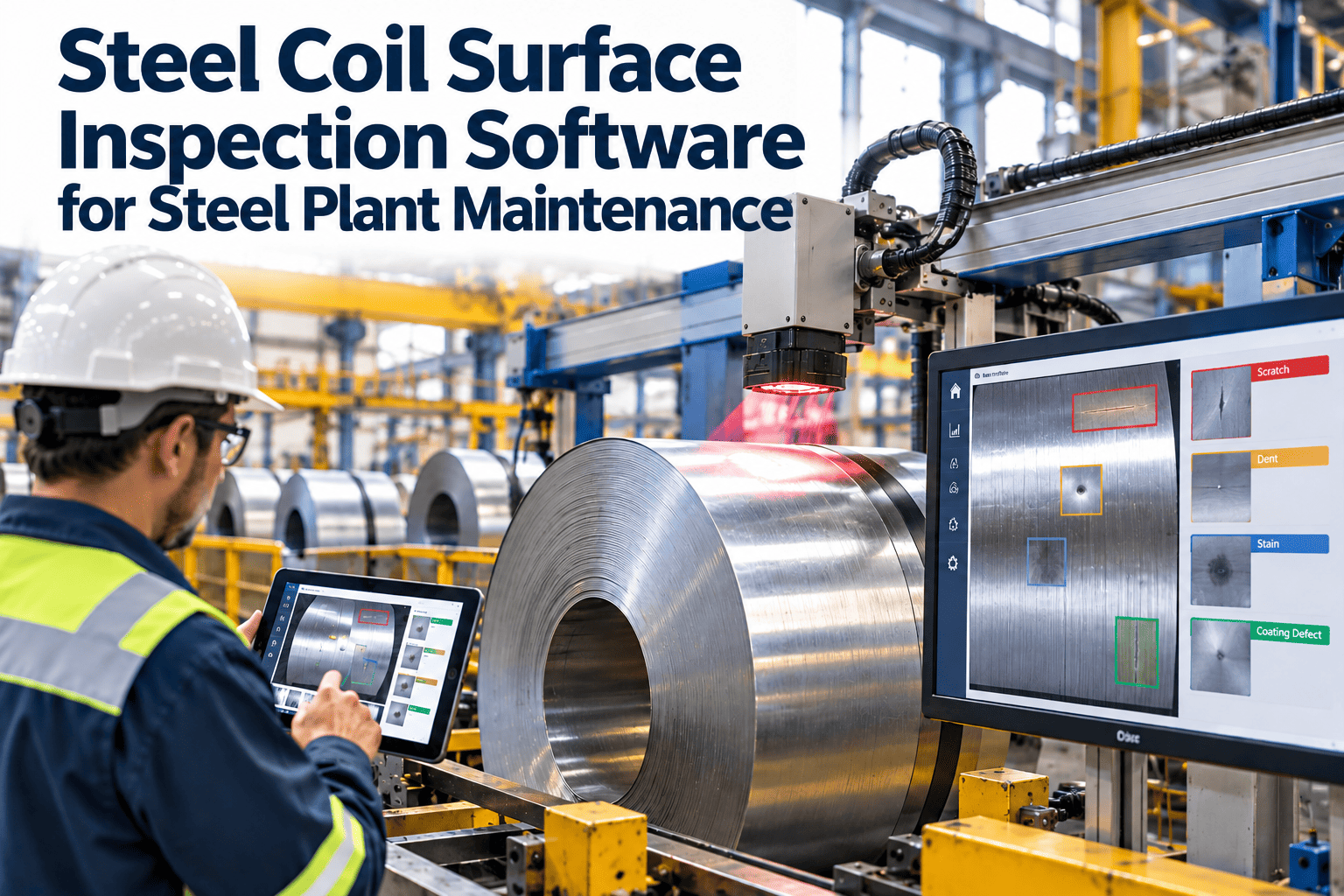
Every scratch, crack, and inclusion on a steel surface tells a story of process deviation. In an industry where surface quality directly impacts structural integrity and customer satisfaction, catching defects early isn't just about quality—it's about safety, reputation, and profitability. When combined with smart maintenance management, defect detection becomes part of a holistic quality strategy.
Modern steel surface defect management software combines AI-powered vision systems with comprehensive tracking and analytics to transform how mills identify, classify, and prevent quality issues. The result: fewer customer complaints, reduced scrap rates, and continuous process improvement driven by data.
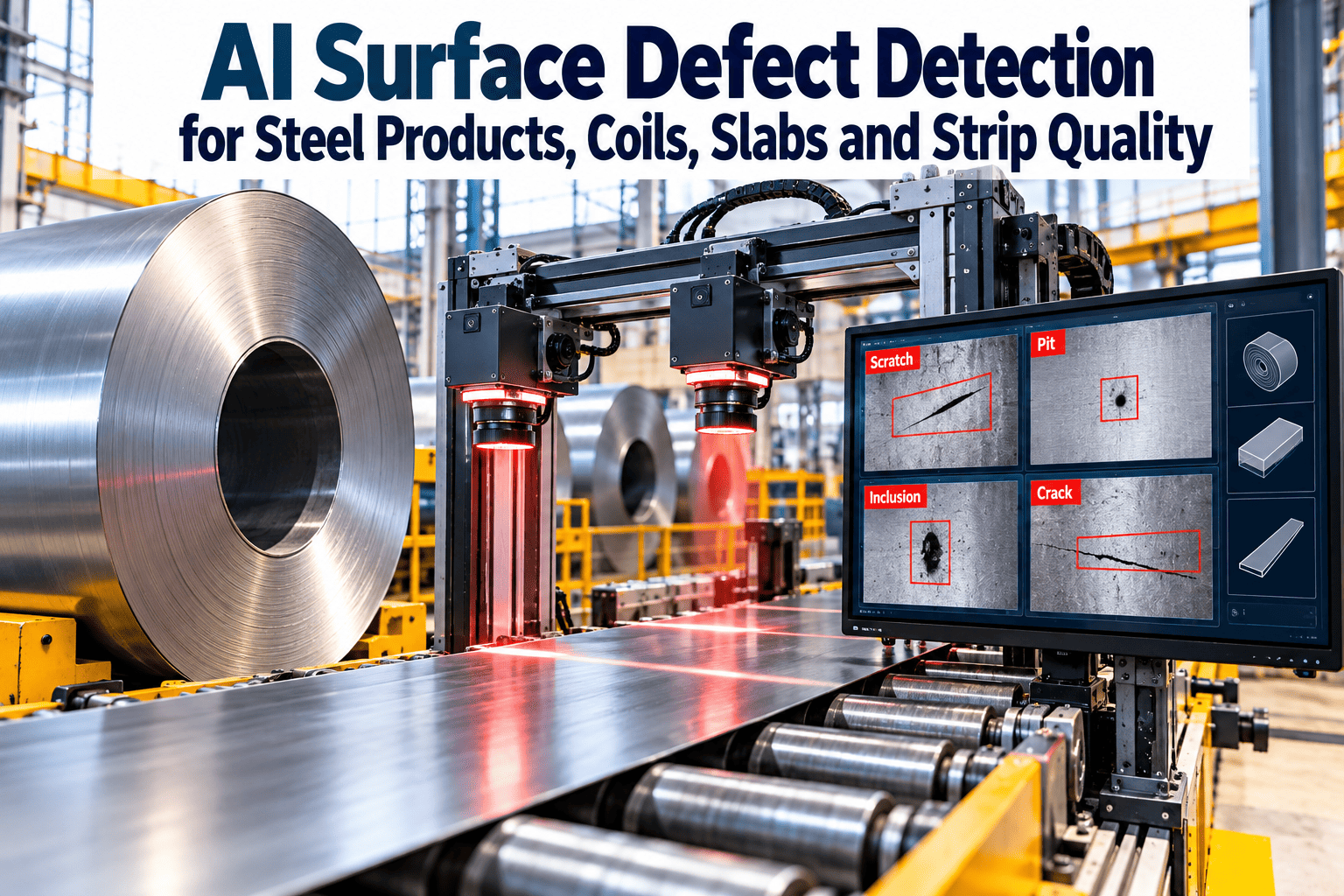
Common Steel Surface Defects
Steel surfaces can develop various defects during production—from melting through rolling to finishing. Effective management software must detect and classify all defect types accurately to enable proper disposition and root cause analysis. Integrating defect data with your maintenance planning system helps correlate equipment issues with quality problems.
Scratches
Linear marks from contact with foreign objects during processing or handling
Inclusions
Non-metallic particles trapped in steel from slag or refractory materials
Pitted Surface
Small depressions caused by impurities, air pockets, or acid pickling issues
Patches
Irregular discolored areas from uneven cooling or surface contamination
Rolled-in Scale
Oxide scale pressed into surface during hot rolling operations
Crazing
Network of fine cracks from thermal stress or coating failures
See Defect Detection in Action
Watch how AI-powered inspection catches defects that human inspectors miss—in real-time, at production speed.
How AI-Powered Detection Works
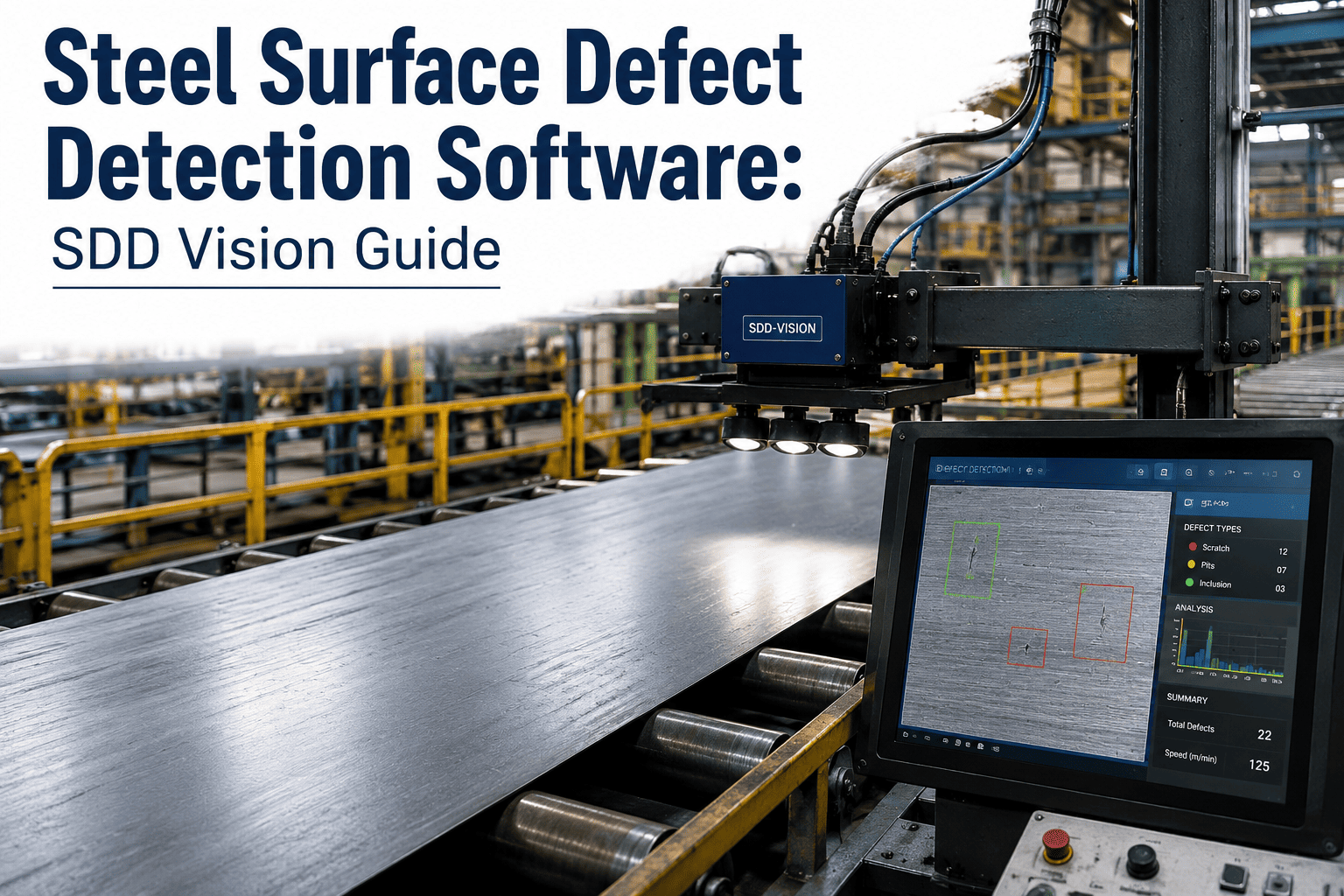
Modern defect detection combines high-speed cameras, advanced lighting, and deep learning algorithms to inspect every square centimeter of steel surface at production speeds up to 40 meters per minute.
Image Capture
High-resolution line-scan cameras capture surface images at 4K+ resolution with specialized lighting to reveal all defect types
AI Analysis
Deep learning models trained on millions of defect images classify and localize anomalies in under 50 milliseconds
Classification
Each defect is categorized by type, severity, size, and location with confidence scores for quality decisions
Action
Real-time alerts trigger automatic marking, sorting, or process adjustments based on defect rules
Key Software Capabilities
Effective defect management goes beyond detection. Complete solutions provide the tools needed for disposition, tracking, analysis, and continuous improvement. Schedule a consultation to see how these capabilities can transform your quality operations.
Real-Time Detection
Continuous inspection at full production speed with instant defect identification and alerting
Defect Classification
AI automatically categorizes defects by type with 99%+ accuracy across all standard classifications
Digital Records
Complete defect history for every coil with images, measurements, and disposition records
Trend Analytics
Identify patterns across shifts, lines, and time periods to pinpoint root causes
Quality Alerts
Configurable thresholds trigger immediate notifications when defect rates exceed limits
Customer Specs
Map defect tolerances to specific customer requirements for automatic pass/fail decisions
Detection Accuracy Comparison
AI-powered inspection dramatically outperforms traditional methods, especially for subtle defects and high-speed production lines.
Manual Inspection
TraditionalAI-Powered Inspection
OxmaintUpgrade Your Quality Inspection
See how AI-powered defect management can transform your quality operations with a personalized demo of your production scenarios.
Integration Architecture
Defect management software must connect seamlessly with existing plant systems to enable automated workflows and comprehensive data analysis. Oxmaint's platform provides native integrations with leading MES, ERP, and quality systems.
ROI Impact Analysis
Steel mills implementing AI-powered defect management see rapid payback through reduced claims, lower scrap, and improved customer satisfaction. Book a demo to get a customized ROI projection for your facility.
Typical ROI Timeline
Calculate Your Savings Potential
Get a customized ROI analysis based on your production volumes, current quality costs, and specific defect challenges.
Frequently Asked Questions
What types of steel surfaces can the software inspect?
Our system handles all common steel products including hot-rolled coils, cold-rolled sheets, galvanized surfaces, stainless steel, and plate. The AI models adapt to different surface finishes and reflectivity levels with specialized lighting configurations for each product type.
How does the system handle new or unusual defect types?
The AI uses anomaly detection to flag unusual patterns even without prior training. When new defect types are identified, the system can be retrained with your specific examples—typically requiring only 50-100 labeled images to achieve high accuracy on new categories.
Can the software integrate with our existing quality systems?
Yes. Oxmaint provides standard APIs and connectors for common MES, ERP, and quality management systems. Defect data flows automatically into your existing workflows for disposition tracking, customer reporting, and process control feedback.
What hardware is required for implementation?
The system requires line-scan cameras, industrial lighting, and edge computing hardware installed at inspection points. We work with your team to design the optimal configuration for your line speeds, product widths, and environmental conditions. Most installations complete in 2-4 weeks.
How do operators interact with the system?
Operators use an intuitive dashboard showing real-time defect feeds, coil-level quality scores, and trend charts. One-click defect review allows quick validation of AI decisions. Mobile alerts keep supervisors informed even when away from the control room.
Transform Your Steel Quality Management
Join leading steel producers using AI-powered defect management to reduce claims, cut scrap, and delight customers with consistent quality.