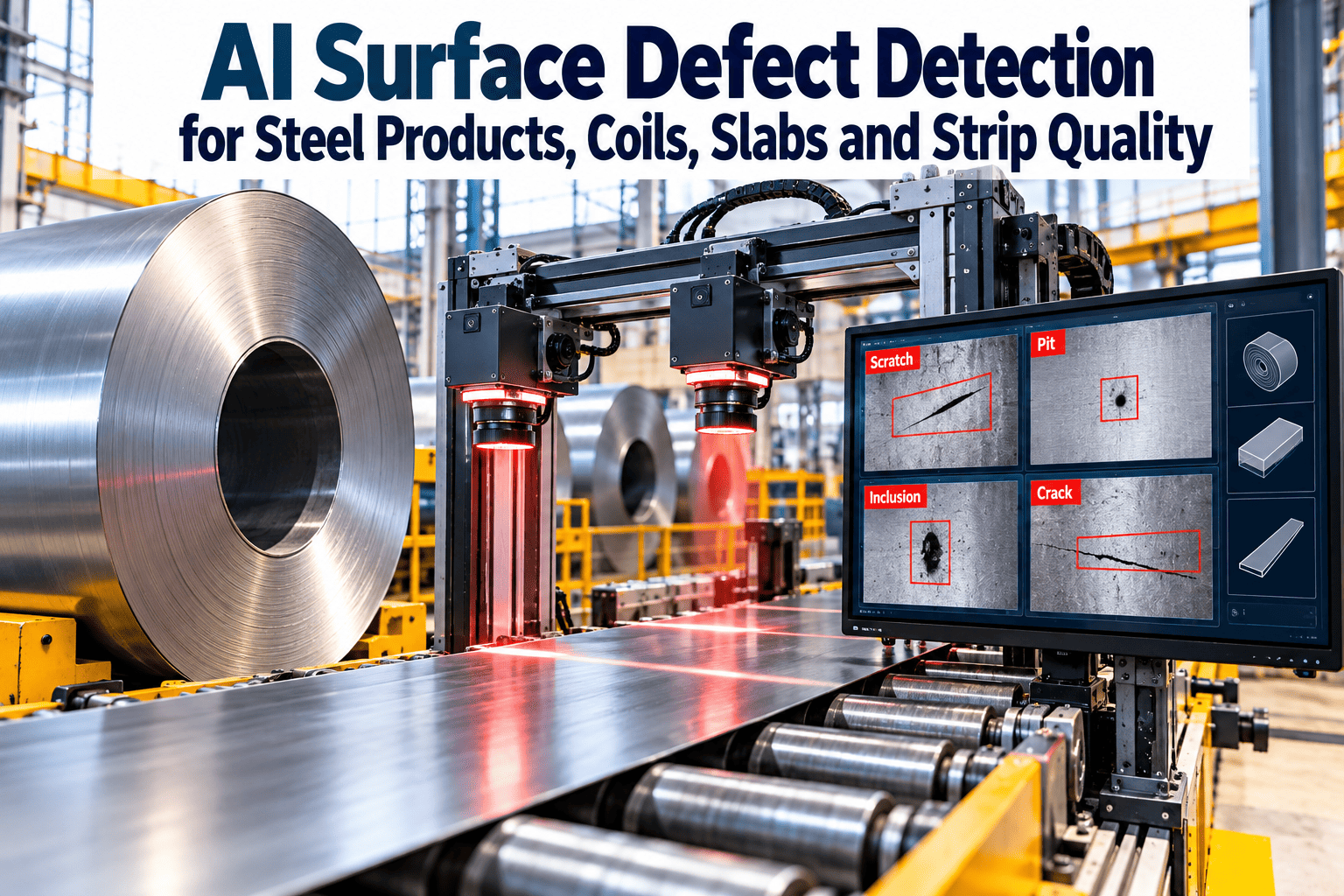
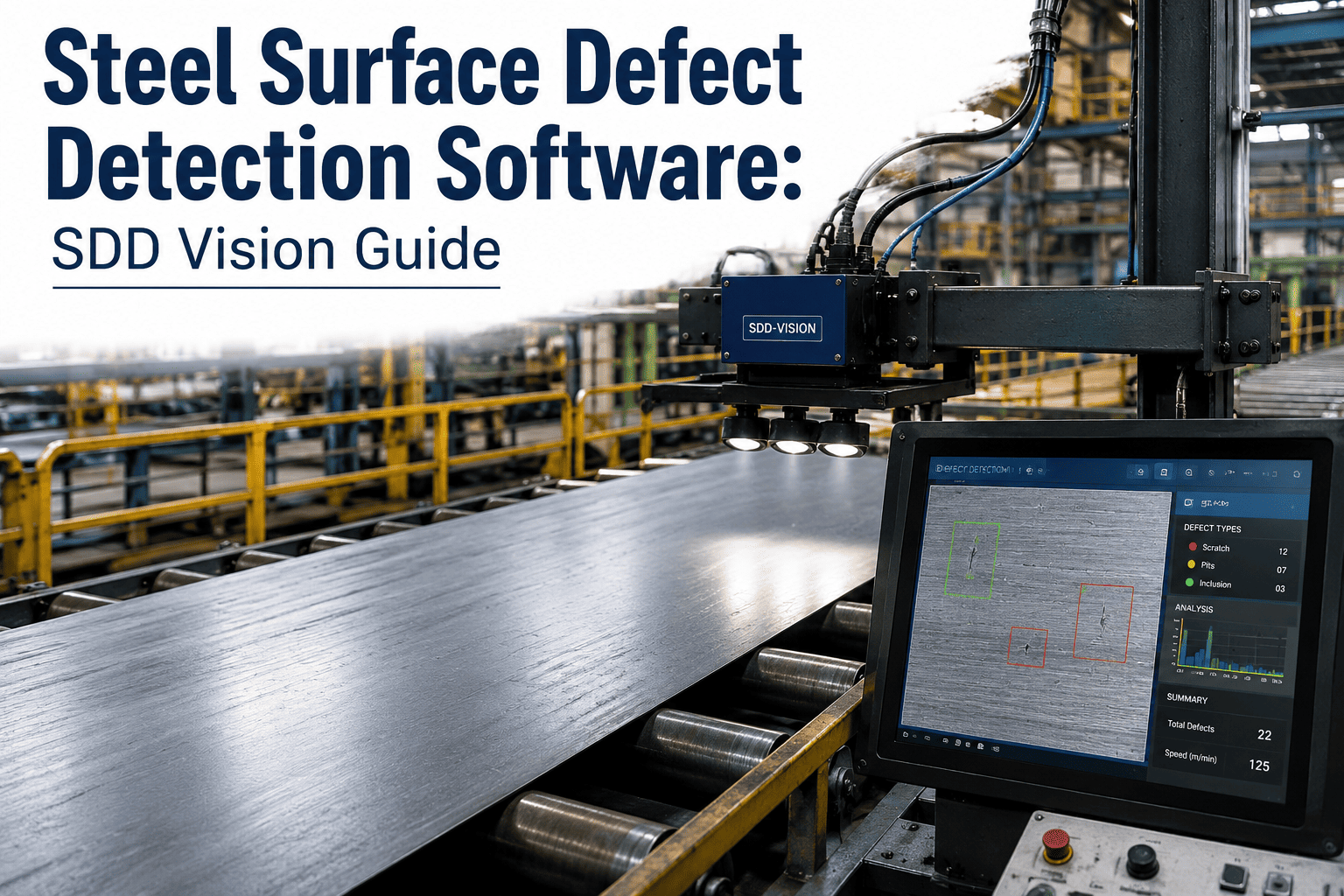
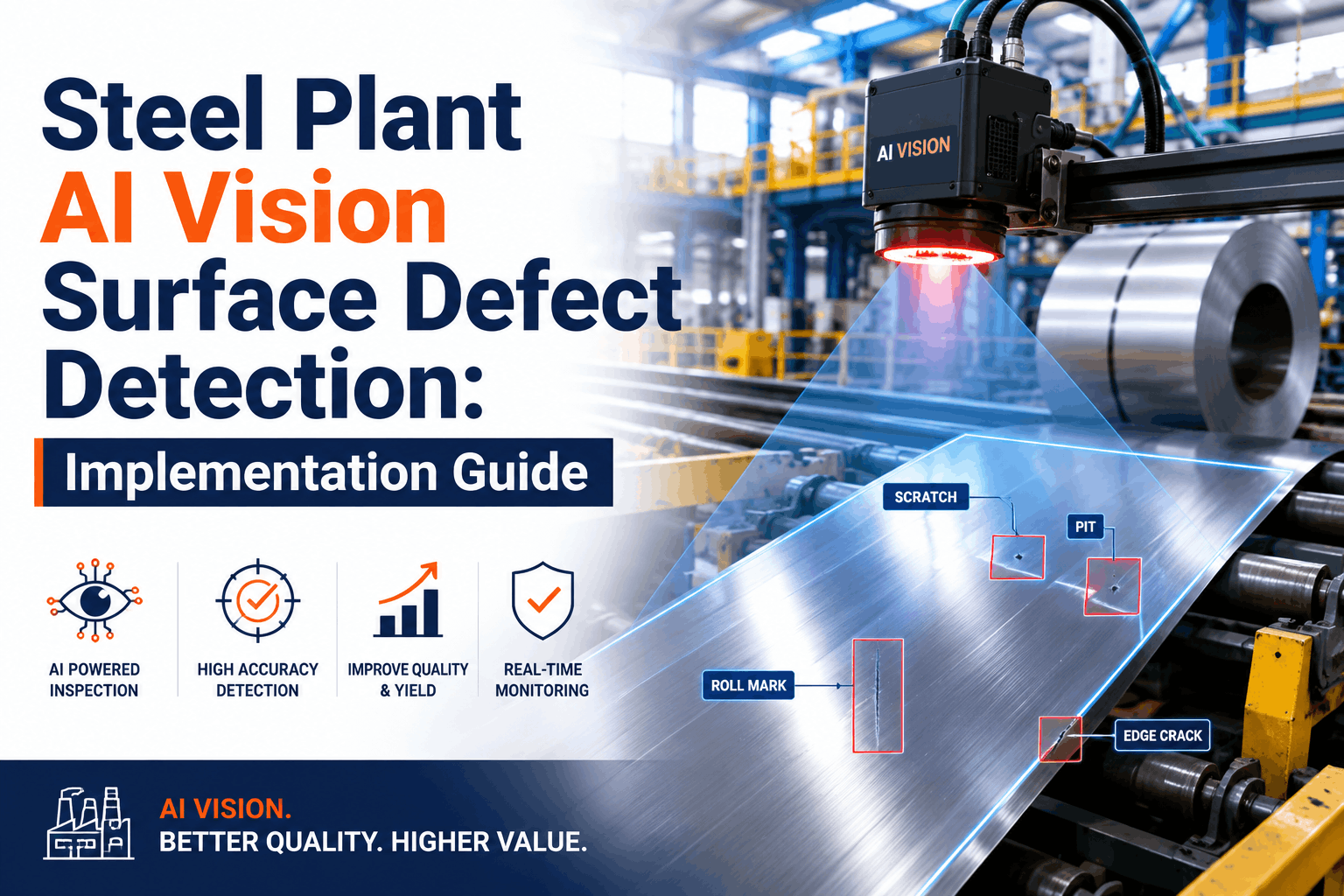
Your quality inspector stares at a steel sheet for 8 seconds. Scratch or acceptable variation? The answer changes depending on who's inspecting, what shift it is, and how many sheets they've already reviewed today. This inconsistency costs steel manufacturers millions annually in false rejects and missed defects. AI-based surface defect classification eliminates this guesswork—automatically categorizing cracks, scratches, pits, inclusions, and scale with over 98% accuracy in under 200 milliseconds, ensuring every quality decision follows the same standard regardless of time, shift, or inspector fatigue. Schedule a consultation to explore how AI classification can transform quality control at your facility.
Ready to standardize your defect classification across every shift?Start Free Trial
Why AI Classification for Steel Surface Defects
Steel manufacturers face mounting pressure from quality standards, customer requirements, and operational efficiency demands. Manual classification methods miss the granular patterns and inconsistencies that drive quality escapes, leaving significant improvement opportunities undiscovered.
The Case for AI-Powered Defect Classification
$2.1M
Average annual cost of classification errors from false rejects and missed defects reaching customers
200ms
Average classification speed per defect—enabling real-time quality decisions at full production speed
34%
Inspector disagreement rate on borderline defects—eliminated with consistent AI classification
98%+
Classification accuracy versus 70-80% human accuracy—consistent across all shifts and conditions
Ready to eliminate classification inconsistencies? Join steel manufacturers using AI classification to reduce costs and improve quality outcomes.
AI classification goes beyond simple defect detection. After a camera captures a surface anomaly, deep learning models analyze the defect's visual characteristics—shape, texture, depth patterns, edge definition—and compare them against millions of labeled examples. The system outputs a specific defect class along with severity grade, dimensional measurements, and recommended action.
AI Classification PipelineFrom raw image to actionable quality decision
01
Image Capture
High-resolution cameras detect anomaly regions on steel surfaces. Industrial cameras capture images at production line speeds with consistent lighting and resolution for optimal defect visibility.
02
Feature Extraction
Convolutional neural networks extract shape, texture, and edge patterns from defect images. The AI analyzes visual characteristics that distinguish scratches from pits, cracks from inclusions.
03
Neural Network Classification
Deep learning models trained on millions of labeled examples classify the defect type with confidence scores. The system identifies subtle variations invisible to human inspectors.
04
Classification Output
The system outputs defect type, severity grade, dimensional measurements, and recommended action—pass, downgrade, rework, or reject—in under 200 milliseconds.
05
CMMS Integration
Classification data feeds directly into maintenance workflows. When defect patterns indicate equipment issues, the system automatically generates work orders. Sign up for Oxmaint to centralize defect analytics across your operation.
Defect Classes and Severity Grading
Effective AI classification requires a well-defined defect taxonomy. The system recognizes primary defect classes, each with severity levels determining the appropriate quality action. This standardized framework ensures consistent decisions whether the defect appears on day shift, night shift, or weekend crew.
Steel Surface Defect Classes
Scratches
Linear surface abrasions from mechanical contact. AI measures depth, length, and orientation to determine severity and appropriate action—pass, downgrade, or reject.
Pits
Surface depressions from corrosion or mechanical damage. Classification considers pit density, depth, and distribution pattern to assess surface integrity impact.
Cracks
Structural fractures indicating material stress or processing issues. AI detects crack propagation patterns and recommends immediate action for safety-critical applications.
Inclusions
Embedded foreign material from steelmaking process. Classification identifies inclusion type, size, and location to determine impact on material properties.
Scale/Oxide
Surface oxidation layers from heat treatment or rolling. AI evaluates thickness and coverage to determine if cleaning or rework can restore acceptable surface quality.
Patches
Uneven surface areas from rolling or coating inconsistencies. Classification measures patch boundaries and surface variation to assess cosmetic and functional impact.
See AI classification accuracy on your defect types. Book a demo and we'll show you real-time classification for your specific steel products.
Understanding the capabilities difference between traditional inspection and AI classification reveals why steel manufacturers are transitioning to intelligent quality control systems.
Classification Approach Comparison
Manual Classification
X
Subjective decisions varying between inspectors
Accuracy drops 20-30% after continuous inspection
34% disagreement on borderline defects
Limited to visible defects only
No standardization across shifts
70-80%typical classification accuracy
AI-Powered Classification
Y
Consistent decisions following defined standards
No degradation from fatigue or shift duration
Objective classification with confidence scores
Detects subtle defects invisible to human eye
Identical standards across all shifts
98%+consistent classification accuracy
ROI of AI Defect Classification
Improved classification accuracy translates directly to bottom-line savings. False rejects waste good product, missed defects damage customer relationships, and classification disputes slow production. AI eliminates all three.
Documented Classification BenefitsBased on steel plant deployment data
94%
Reduction in false reject rate
89%
Fewer defects escaping to customers
67%
Faster quality decisions
45%
Reduction in repeat defects
Calculate your potential savings. Create a free Oxmaint account and our team will help model the ROI for your specific operation.
Classification data becomes truly valuable when it triggers automated responses. Oxmaint connects AI classification directly to maintenance workflows—when defect patterns indicate equipment issues, the system automatically generates work orders, assigns technicians, and schedules corrective maintenance.
Defect Pattern to Maintenance Action
Defect Pattern
Likely Root Cause
Automated Action
Increasing scratch rate
Roll wear or debris accumulation
Schedule roll inspection, generate PM work order
Rising pit density
Lubricant degradation or contamination
Alert maintenance, trigger lubricant analysis
Crack pattern emergence
Temperature or stress variations
Immediate equipment inspection, halt production if critical
Inclusion frequency increase
Upstream steelmaking process issue
Notify metallurgy team, trace to batch origin
Scale coverage expansion
Furnace atmosphere or cooling issues
Schedule furnace maintenance, adjust process parameters
Automated maintenance triggers reduce repeat defects by 45% compared to classification-only systems.
Implementation Timeline
AI classification systems deploy faster than traditional quality software because they learn from your existing defect examples rather than requiring extensive rule programming. Most steel plants achieve full production deployment within 45-60 days.
Typical Deployment Roadmap
Week 1-2
Data Collection
Gather labeled defect imagesDefine classification taxonomyMap severity to actions
Week 3-4
Model Training
Train AI on your defect typesValidate accuracy thresholdsTune classification confidence
Week 5-6
Integration Setup
Connect to existing systemsConfigure CMMS integrationSet up automated workflows
Week 7+
Production Rollout
Deploy to production lineTeam training completedPerformance monitoring active
Start your AI classification journey today. Get a detailed project plan customized for your facility's specific requirements.
In steel manufacturing, quality decisions happen thousands of times per shift. Yet most plants rely on human judgment that varies by inspector, time of day, and shift duration. AI classification doesn't just improve accuracy—it creates a single standard that applies consistently to every sheet, every shift, every day.
— Steel Quality Management Director
Transform Quality Control with AI Classification
Oxmaint connects AI defect classification directly to your maintenance workflows—centralizing quality data, defect analytics, and automated maintenance triggers while delivering consistent classification accuracy across every shift and production line.
How many labeled examples does AI need to classify our specific defect types?
AI classification systems come pre-trained on millions of steel defect images, requiring only 200-500 labeled examples per defect class for plant-specific fine-tuning. Most facilities have sufficient historical data in existing quality databases. For rare defect types, transfer learning achieves high accuracy with fewer examples. Schedule a consultation to discuss your specific defect types.
What happens when the AI encounters a defect type it hasn't seen before?
The system flags low-confidence classifications for human review rather than guessing. When confidence drops below threshold, the defect is routed to a quality engineer with the AI's best estimate and supporting data. These human decisions become training data, continuously improving the model.
Can the classification rules be customized for different customer specifications?
Yes. The system supports multiple classification profiles—the same defect can trigger different actions based on the customer order. A scratch that passes for construction-grade steel might require downgrading for automotive applications. Sign up for a free account to see how customer-specific rules work.
How does AI classification integrate with existing quality management systems?
Standard APIs enable integration with major QMS platforms, Level 2 automation, and MES systems. Classification results export in standard formats with full traceability—defect images, measurements, confidence scores, and recommended actions for quality certifications and customer documentation.
What is the typical ROI timeline for AI defect classification?
Most steel plants identify significant savings within the first 30 days of deployment. Quick wins from eliminating false rejects and catching missed defects often pay for the system within 4-8 months, with ongoing annual savings compounding as the AI learns your operation's patterns. Book a demo to review expected ROI for your facility.