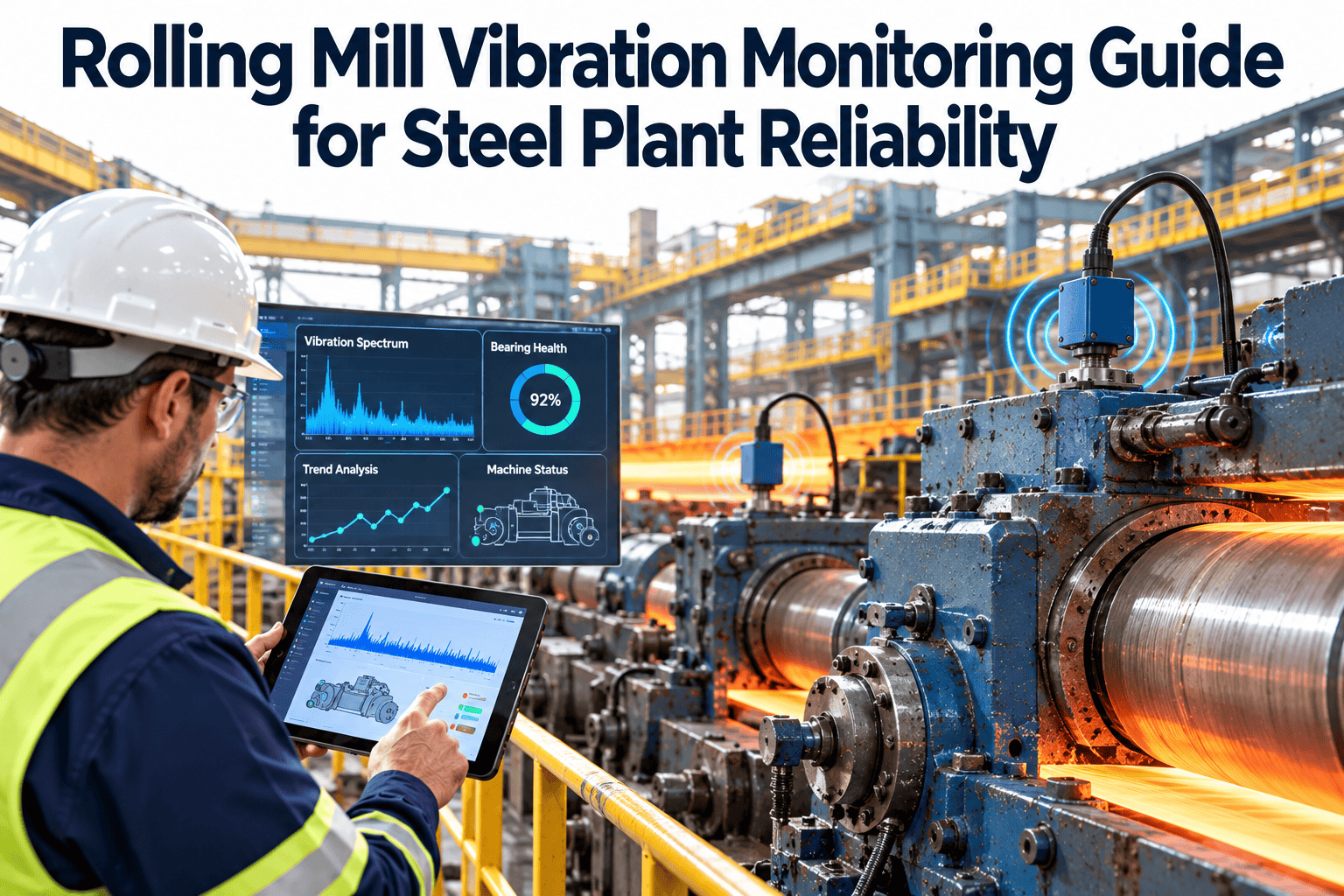
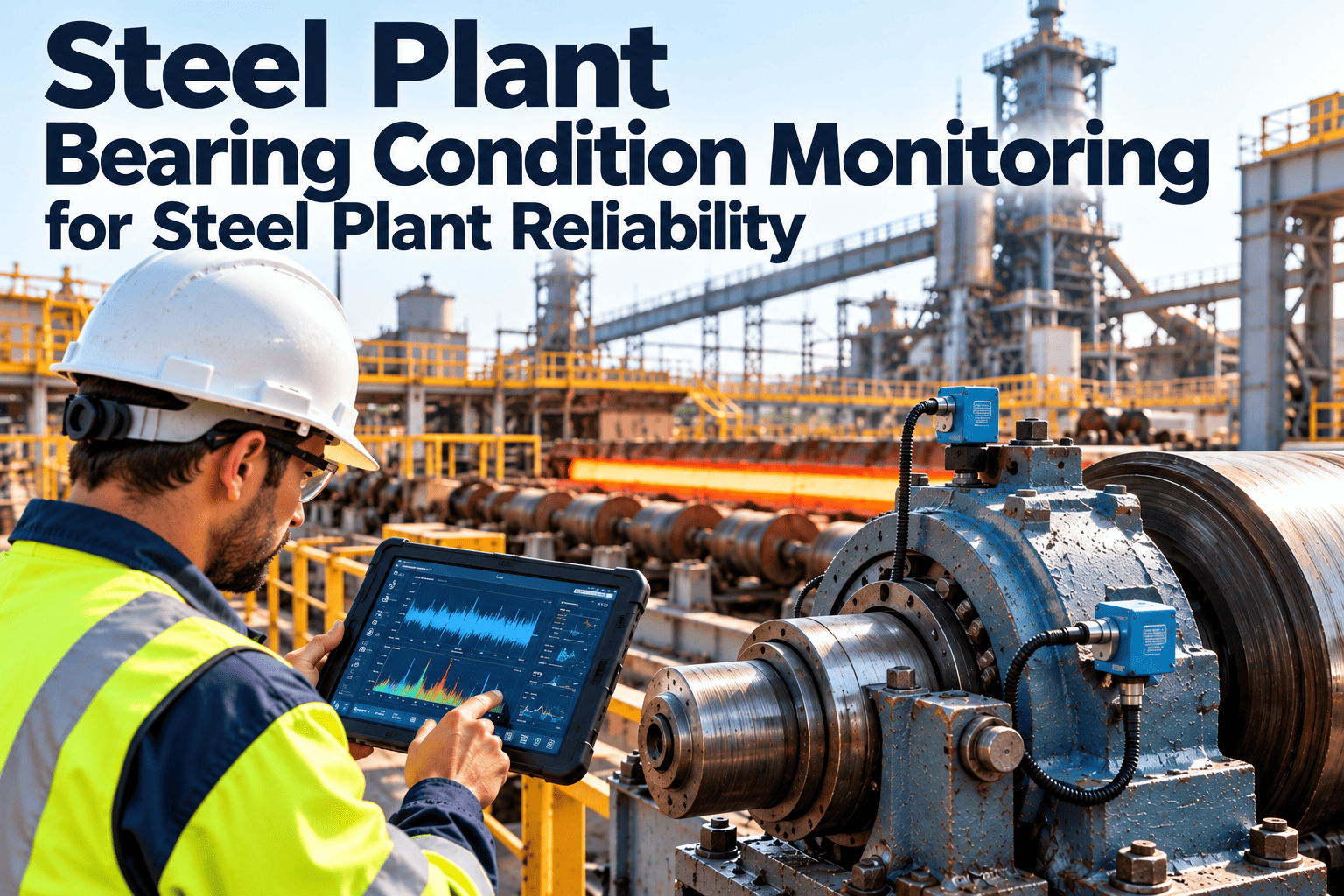
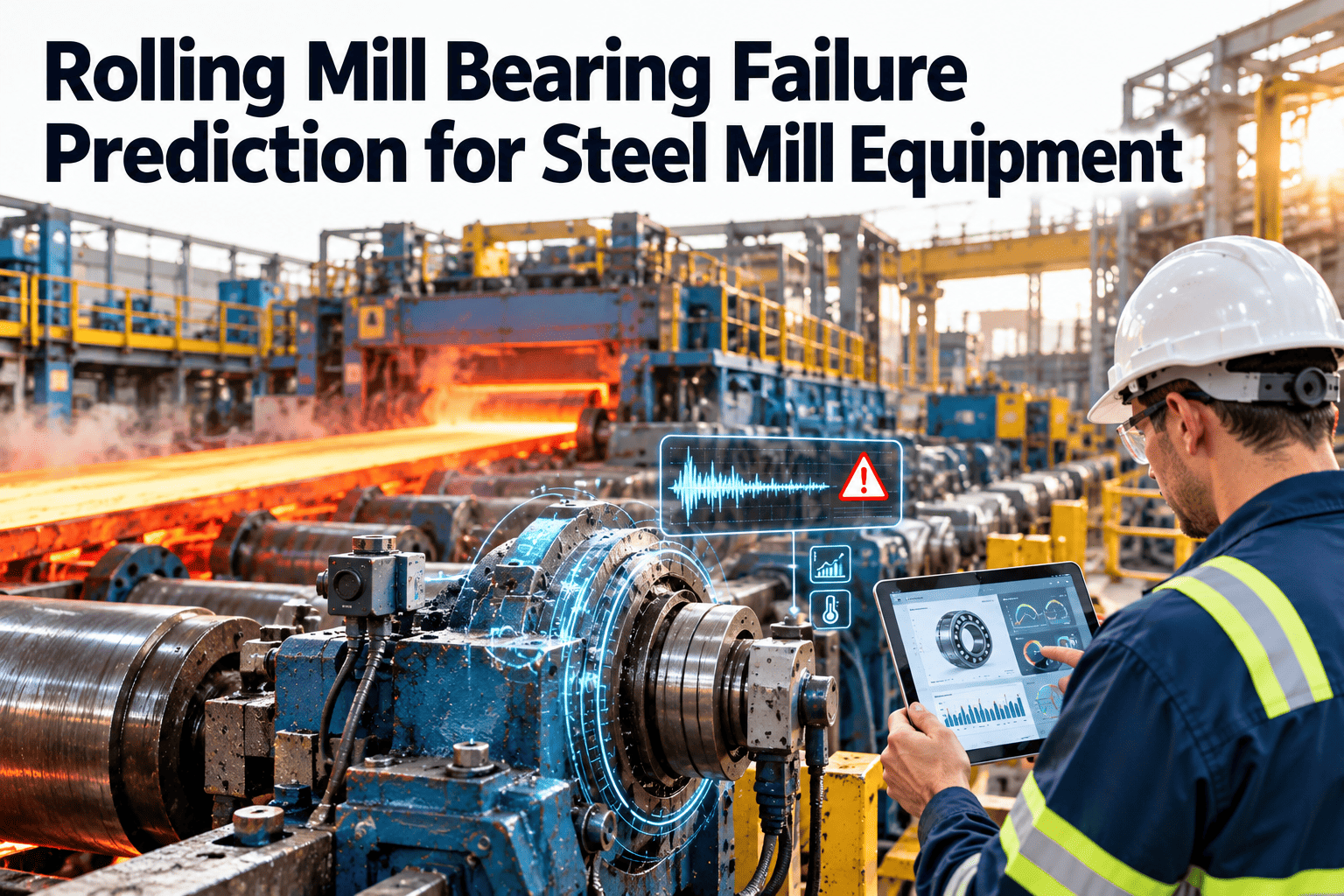
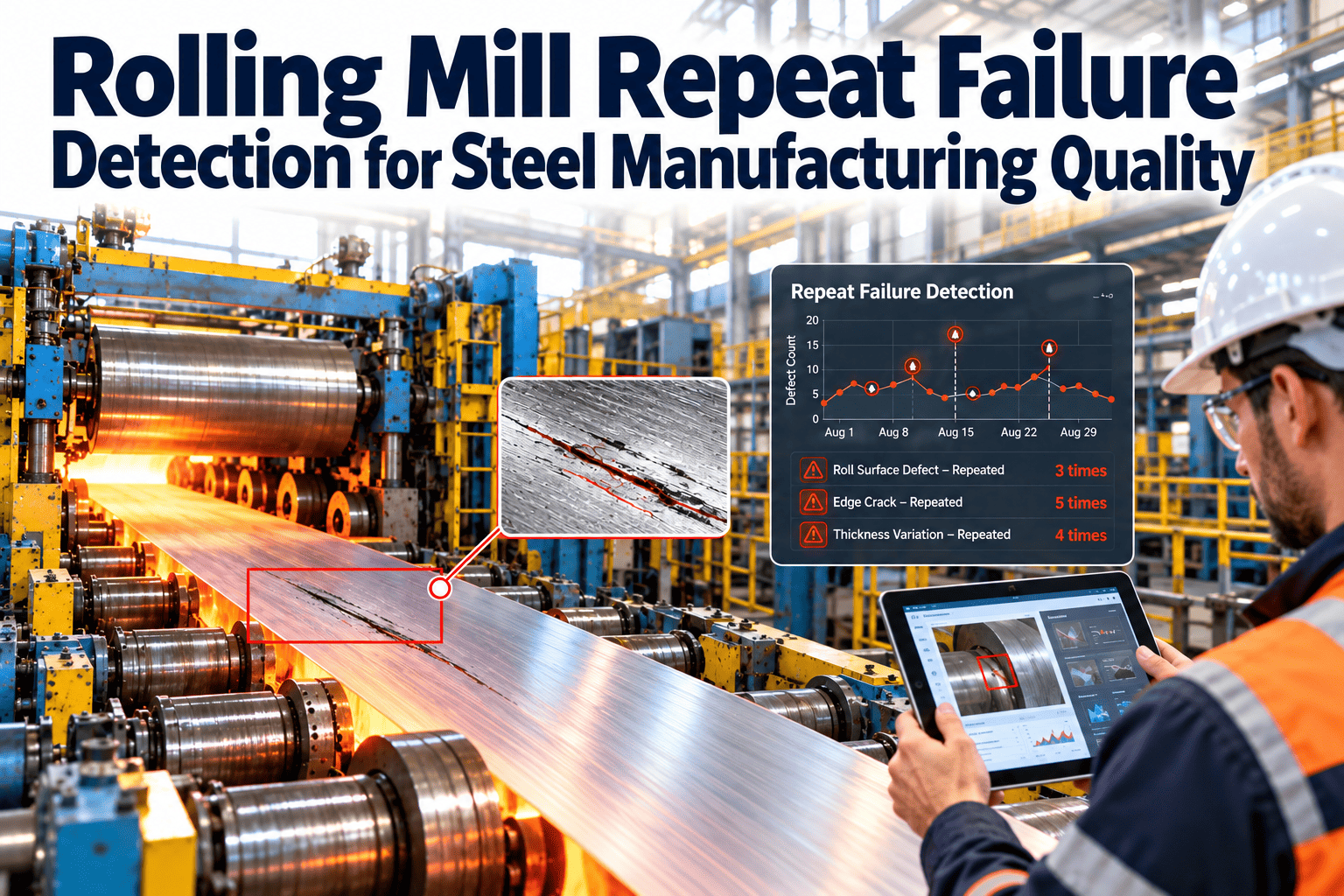
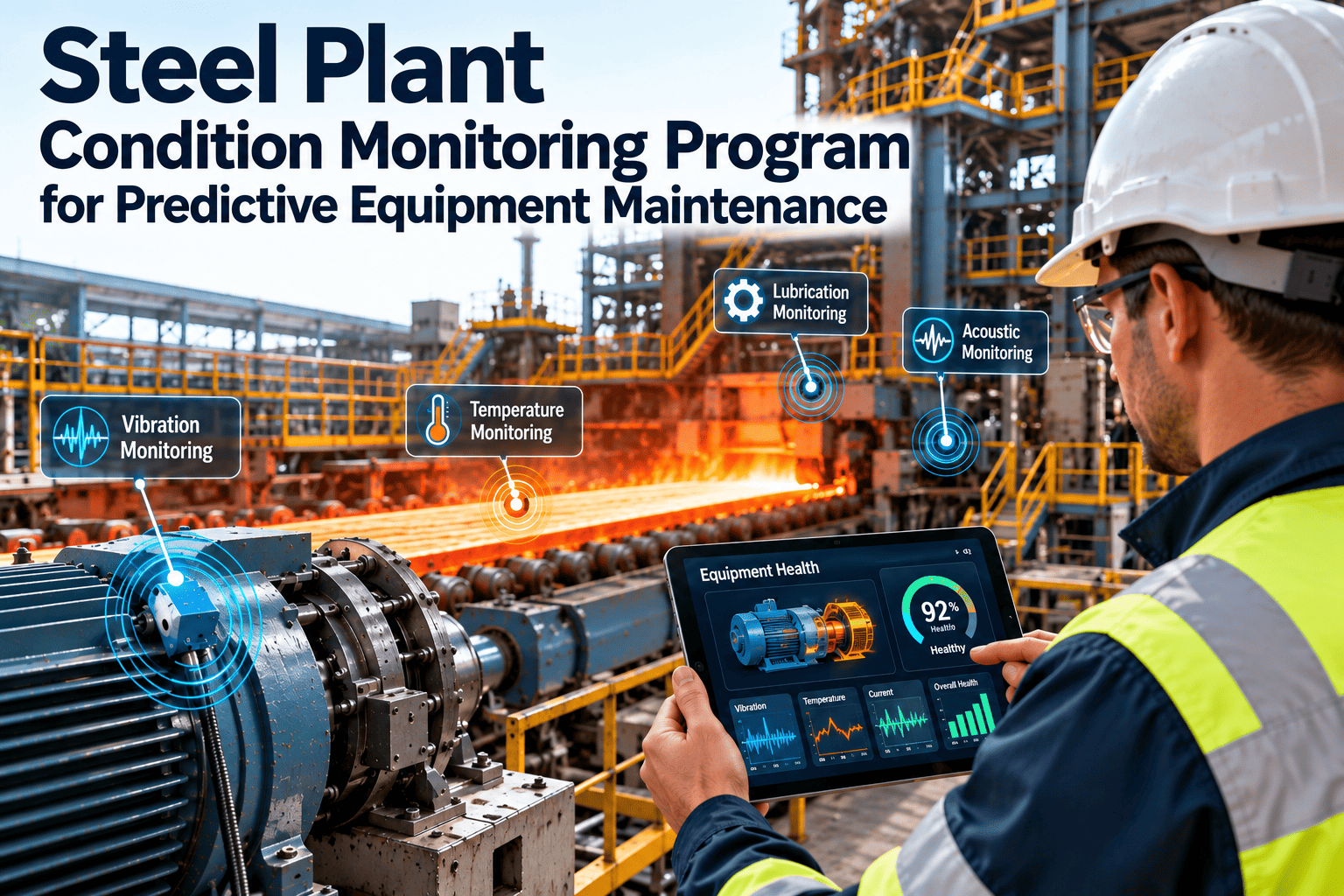
Steel mills operate some of the most demanding machinery in industrial manufacturing—rolling mills processing thousands of tons daily, furnaces running at extreme temperatures, and gearboxes transferring massive torque loads around the clock. When critical equipment fails unexpectedly, the financial impact is staggering: unplanned downtime costs steel operations $125,000 to $260,000 per hour, with catastrophic failures potentially reaching millions in lost production, emergency repairs, and damaged materials.
Vibration monitoring transforms steel mill maintenance from reactive firefighting into precision condition analysis. By detecting subtle changes in vibration patterns—often months before failure—predictive maintenance platforms enable maintenance teams to schedule repairs during planned outages, optimize spare parts inventory, and extend equipment life by 25-40%. In an industry where every minute of uptime translates to revenue, condition-based monitoring isn't optional—it's essential for competitive survival.
Why Vibration Monitoring is Critical for Steel Mills
Steel production equipment operates under extreme conditions that accelerate wear and increase failure risk. Heavy loads, high temperatures, continuous operation, and abrasive materials create the perfect storm for equipment degradation—often invisible until catastrophic failure occurs.
20% Revenue Loss
Unplanned downtime can slash steel mill profitability by up to 20% annually through lost production and emergency repairs.
800 Hours/Year
Average manufacturing facility loses 800 hours annually to unplanned equipment maintenance and downtime.
3-5x Cost
Emergency repairs cost 3-5 times more than planned maintenance due to rush parts, overtime labor, and expedited shipping.
Critical Steel Mill Equipment for Vibration Monitoring
Rolling Mills
Critical AssetRolling mills process steel slabs under extreme pressure and temperature. Bearing failures, roll imbalance, and gearbox issues can halt entire production lines.
- Work roll bearings (inner/outer race defects)
- Backup roll bearings and chocks
- Main drive gearbox vibration
- Spindle universal joints
- Mill stand alignment and looseness
Motors & Drives
High PriorityLarge AC/DC motors driving rolling mills, conveyors, and pumps. Rotor imbalance, bearing wear, and electrical faults generate distinctive vibration signatures.
- Motor bearing condition (DE/NDE)
- Rotor bar condition and eccentricity
- Shaft alignment and coupling wear
- Foundation looseness
- Electrical frequency anomalies
Gearboxes
High PriorityHeavy-duty gearboxes transmitting massive torque loads. Gear mesh frequencies, bearing defects, and lubrication issues are detectable through vibration analysis.
- Input/output shaft bearings
- Gear mesh frequencies and sidebands
- Intermediate shaft condition
- Oil whirl and lubrication adequacy
- Housing resonance and looseness
Pumps & Fans
ImportantHydraulic pumps, cooling water pumps, and process fans. Cavitation, impeller damage, and bearing wear create identifiable vibration patterns.
- Pump bearing condition
- Impeller/vane pass frequencies
- Cavitation detection
- Fan blade imbalance
- Belt drive condition
Monitor Your Steel Mill Equipment in Real-Time
Deploy wireless vibration sensors across critical assets. Get instant alerts, trend analysis, and AI-powered fault detection on any device.
Vibration Analysis Techniques for Steel Mills
Effective condition monitoring requires multiple analysis techniques to detect different fault types. A comprehensive vibration monitoring system combines these methods for complete equipment health assessment.
Overall Vibration Level
Measures total vibration amplitude (velocity in mm/s or in/s). Quick health indicator comparing against ISO standards and baseline measurements. Effective for trending but limited diagnostic capability.
FFT Spectrum Analysis
Transforms time-domain signals into frequency components. Identifies specific fault frequencies for imbalance (1x), misalignment (2x), bearing defects (BPFO, BPFI, BSF), and gear mesh problems.
Envelope Analysis
Demodulates high-frequency signals to detect early-stage bearing faults. Isolates repetitive impacts from rolling element defects often masked in standard spectra. Industry gold standard for bearing diagnostics.
Time Waveform Analysis
Examines raw vibration signal over time. Reveals impacts, looseness, and intermittent faults not visible in frequency domain. Essential for detecting mechanical looseness and impacting.
Phase Analysis
Measures timing relationship between vibration signals at different points. Distinguishes between imbalance and misalignment with similar amplitude readings. Critical for precision balancing.
AI/ML Pattern Recognition
Machine learning algorithms identify complex fault patterns across multiple parameters. Detects anomalies invisible to traditional analysis. Continuously improves accuracy with operational data.
Bearing Fault Progression Stages
Understanding bearing failure stages helps prioritize maintenance actions. Vibration monitoring detects faults at Stage 1-2, providing weeks to months of warning before catastrophic failure.
Subsurface Fatigue
Microscopic cracks forming below race surface. Detectable only with ultrasonic or high-frequency envelope analysis (250kHz+). Overall vibration levels normal.
Microscopic Spalling
Small pits appearing on race surfaces. Bearing fault frequencies visible in envelope spectrum. Slight increase in high-frequency energy. Overall levels may still be acceptable.
Visible Defect Growth
Bearing fault frequencies with harmonics and sidebands in standard FFT spectrum. Noticeable increase in overall vibration. Defect audible with ultrasonic probe.
Advanced Degradation
High overall vibration with broadband noise floor rise. Multiple fault frequencies with sidebands. Bearing running hot with audible noise. Random high-frequency spikes.
Vibration Severity Guidelines
| Severity Level | Velocity (mm/s RMS) | Velocity (in/s Peak) | Machine Class | Recommended Action |
|---|---|---|---|---|
| Good | 0 - 2.8 | 0 - 0.15 | All Classes | Continue normal monitoring |
| Satisfactory | 2.8 - 7.1 | 0.15 - 0.39 | Large Machines | Monitor for trends, investigate if rising |
| Unsatisfactory | 7.1 - 18.0 | 0.39 - 1.0 | Rolling Mills | Plan corrective maintenance, identify root cause |
| Unacceptable | > 18.0 | > 1.0 | All Equipment | Immediate action required, risk of damage |
*Based on ISO 10816-3 for large machines with rigid foundations. Steel mill equipment may require site-specific baselines.
Common Fault Signatures in Steel Mill Equipment
Each mechanical fault produces characteristic vibration patterns. Train your maintenance team to recognize these signatures, or use automated diagnostic systems for instant fault identification.
Imbalance
Frequency: 1x running speed (dominant)
Characteristics: High radial vibration, proportional to speed squared, steady amplitude
Causes: Mass eccentricity, broken fan blade, buildup on rolls, coupling key
Misalignment
Frequency: 2x running speed (dominant), with 1x and 3x
Characteristics: High axial vibration, 180° phase shift across coupling
Causes: Angular or offset misalignment, thermal growth, soft foot
Bearing Defects
Frequency: BPFO, BPFI, BSF, FTF (non-synchronous)
Characteristics: Harmonics with sidebands at cage frequency, increasing with severity
Causes: Fatigue spalling, contamination, lubrication failure, overload
Gear Mesh Faults
Frequency: GMF = teeth × RPM, with sidebands
Characteristics: Sidebands spaced at shaft speed indicate worn/broken teeth
Causes: Tooth wear, pitting, cracking, inadequate lubrication
Mechanical Looseness
Frequency: Multiple harmonics (1x, 2x, 3x... up to 10x+)
Characteristics: Truncated or clipped waveform, sub-harmonics (0.5x)
Causes: Loose bolts, bearing clearance, cracked structure, worn fits
Pump Cavitation
Frequency: Broadband high-frequency noise (>5 kHz)
Characteristics: Random, crackling noise; vane pass frequency modulation
Causes: Insufficient NPSH, blocked suction, air entrainment
ROI of Vibration Monitoring in Steel Mills
Investment Costs
Potential Savings
Implementation Best Practices
Successful vibration monitoring programs follow a structured implementation approach. Modern condition monitoring platforms simplify deployment with wireless sensors, cloud analytics, and mobile accessibility.
Asset Criticality Assessment
Rank equipment by production impact, replacement cost, and failure consequences. Focus initial deployment on assets where failure causes maximum downtime or safety risk.
Baseline Data Collection
Establish normal vibration signatures for each asset in good operating condition. Document machine configurations, speeds, loads, and bearing specifications.
Sensor Installation
Mount sensors at bearing housings in radial (H/V) and axial directions. Use proper mounting techniques—stud mount for permanent, magnet for portable routes.
Alert Configuration
Set alarm thresholds based on ISO standards and baseline data. Configure escalation paths for different severity levels and equipment criticality.
Analysis Protocol
Define response procedures for alarms. Establish expertise levels—automatic alerts for obvious faults, analyst review for complex diagnoses.
Continuous Improvement
Track program KPIs: predictions made, confirmed saves, false alarms. Refine thresholds based on operational experience and failure data.
Start Monitoring Your Steel Mill Equipment Today
Join leading steel manufacturers using Oxmaint for real-time vibration monitoring, predictive analytics, and maintenance optimization. Reduce unplanned downtime by up to 40%.