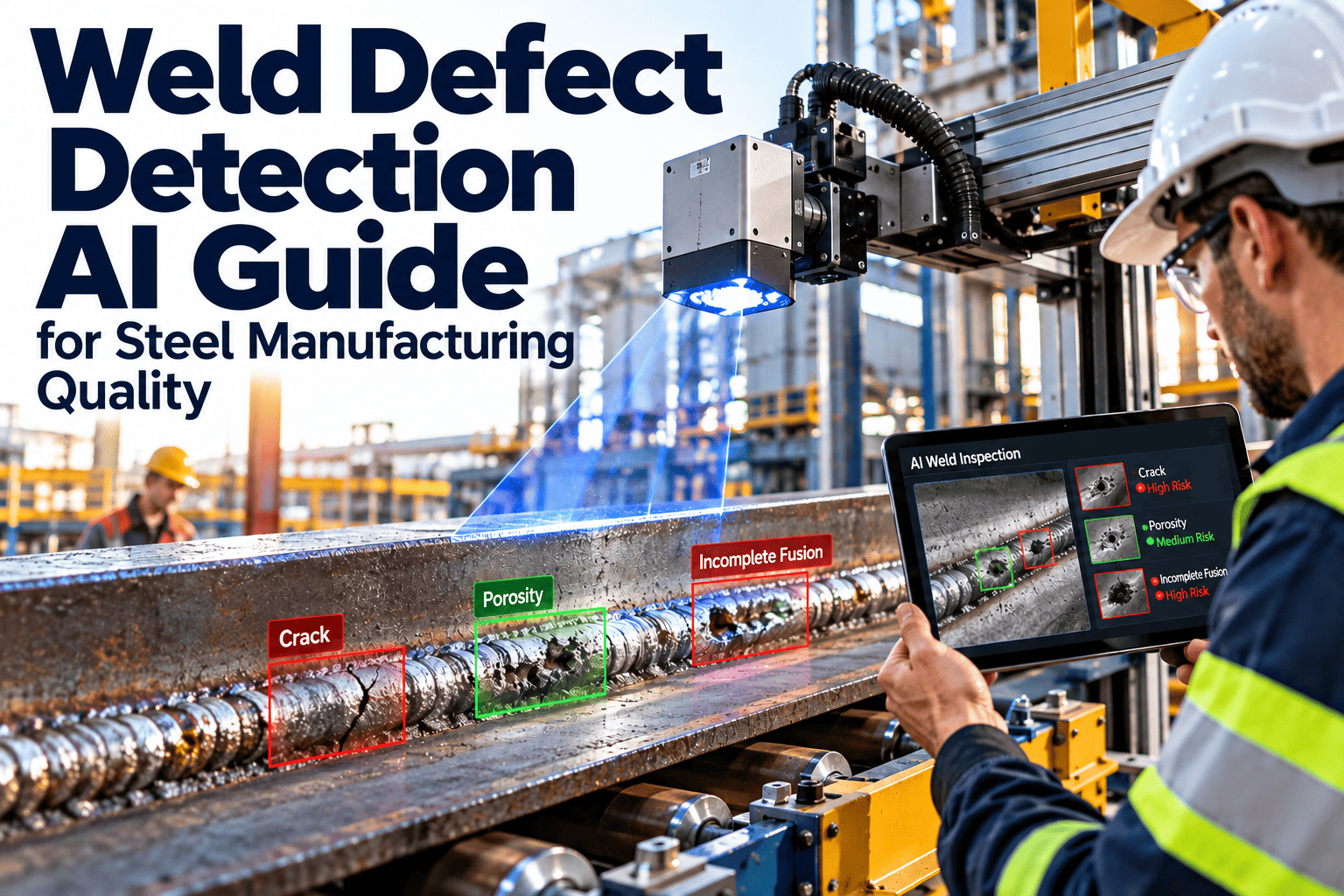
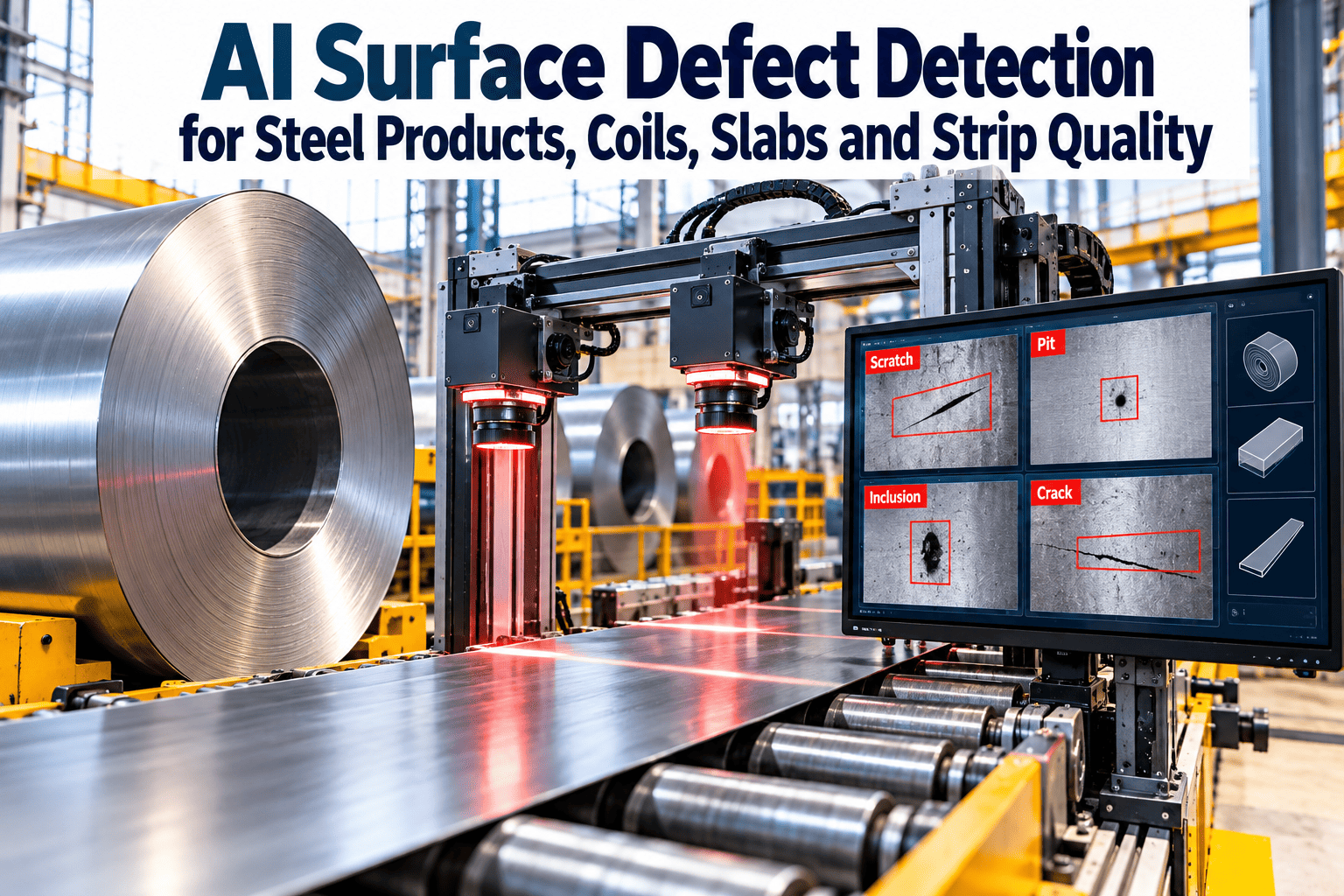
A major steel producer in India was losing ₹15 crore annually to undetected surface defects—cracks, inclusions, and scratches that human inspectors missed on hot-rolled coils moving at 20 meters per second. After deploying AI-powered vision systems at three critical inspection points, defect detection accuracy jumped from 70% to 98.5%. Customer complaints dropped by 65%, and the system paid for itself in just 7 months. This isn't a future possibility—it's happening now in steel mills worldwide. Vision AI is transforming quality control from a bottleneck into a competitive advantage, catching microscopic flaws that human eyes simply cannot see at production speeds.
98%+
Defect Detection Accuracy Achieved with Vision AI
Steel manufacturers using AI vision systems report 40-70% reduction in quality escapes and ROI payback in under 12 months
The global AI visual inspection market is projected to reach $89.7 billion by 2033, growing at 19.6% annually. Steel manufacturing sits at the forefront of this transformation—where high-speed production lines meet zero-tolerance quality requirements. Schedule a consultation to discover how Vision AI integration with your maintenance systems can eliminate quality escapes and reduce inspection costs.
The Challenge: Why Traditional Inspection Falls Short
Steel production moves fast—coils traveling at 1,200 meters per minute, billets cycling every 45 seconds, and continuous casting running 24/7. Human inspectors, no matter how skilled, simply cannot match these speeds while maintaining consistent accuracy.
Speed Limitations
0.3 Seconds per Inspection
At production speeds, inspectors have fractions of a second to evaluate surfaces. Fatigue sets in after 30-45 minutes, and accuracy drops by 20-30% during extended shifts.
Subjectivity
70-80% Baseline Accuracy
Different inspectors classify the same defect differently. Industry studies show manual inspection accuracy averages only 70-80%—meaning 1 in 4 defects potentially escapes.
Microscopic Defects
Sub-millimeter Flaws Missed
Micro-cracks, hairline scratches, and subsurface inclusions are invisible to the naked eye. These defects cause downstream failures and costly customer returns.
Coverage Gaps
Only 5-10% Actually Inspected
Sampling-based inspection catches only a fraction of defects. Full surface inspection at production speeds is physically impossible without automation.
The Cost of Quality Escapes
Every defective coil that reaches a customer costs 10-50x more than catching it in-plant. A single automotive recall traced to steel defects can exceed $100 million—not counting reputation damage that takes years to repair.
Case Study: Hot Strip Mill Surface Inspection
A leading integrated steel manufacturer in Asia faced chronic quality complaints from automotive customers. Their manual inspection process was catching only 72% of surface defects on hot-rolled coils—well below the 95%+ required by demanding end-users.
Before Vision AI ImplementationAnnual quality-related losses at 2 million ton/year facility
Customer Returns & Claims
$4.2M - $6.8MRejected coils, freight costs, replacement production
$1.8M - $2.4M24/7 inspection staffing across multiple lines
Premium Customer Loss
$2.1M - $3.2MLost contracts due to quality reputation
Total Annual Quality Cost$10.9M - $16.9M
The Vision AI Solution
The manufacturer deployed a comprehensive AI vision system across three hot strip mill inspection stations. High-speed line-scan cameras capture 100% of the coil surface at full production speeds, while deep learning algorithms classify defects in real-time.
Detection
Surface Defect Classification
Types6 Categories Identified
AI models trained to detect crazing, inclusions, rolled-in scale, pitted surfaces, scratches, and patches—classifying severity and location for targeted disposition.
Speed
Real-Time Processing
Latency<100ms Inference
Edge computing processes images directly on camera hardware—no network latency or cloud dependency. Defects flagged before the coil exits the inspection zone.
Coverage
100% Surface Inspection
Resolution0.1mm Defect Detection
Line-scan cameras at 16,000 pixels capture every square millimeter of both top and bottom surfaces. Nothing escapes—even sub-millimeter flaws are detected.
Integration
CMMS Connectivity
AutomationAuto Work Orders
Defect patterns linked to equipment health automatically trigger maintenance work orders—connecting quality events to root cause equipment issues.
Learning
Continuous Improvement
TrainingWeekly Model Updates
Quality engineers review edge cases and retrain models with new defect examples. Detection accuracy improves continuously without production interruption.
Reporting
Quality Analytics
VisibilityReal-Time Dashboards
Live quality metrics by shift, product, and equipment. Trend analysis identifies process drift before it causes quality excursions.
Want to see how Vision AI integrates with maintenance systems? Our engineers will assess your inspection points and recommend optimal camera placement.
The transformation from manual to AI-powered inspection isn't incremental—it's a fundamental shift in what's possible for steel quality control.
Inspection Approach Comparison
Manual Inspection
⚠️
5-10% surface coverage maximum
70-80% detection accuracy
Subjective defect classification
Fatigue degrades performance
No data for root cause analysis
2-3%typical quality escape rate
Vision AI Inspection
✅
100% surface coverage guaranteed
98%+ detection accuracy
Consistent, objective classification
24/7 operation without degradation
Full traceability and analytics
<0.5%quality escape rate achievable
Documented Results
After 18 months of operation, the Vision AI system delivered results that exceeded initial projections across every metric.
Case Study Outcomes
98.5%
Defect detection accuracy (up from 72%)
65%
Reduction in customer quality complaints
$2.1M
Annual savings from reduced quality costs
7mo
Full ROI payback period
"
Before Vision AI, we were playing defense—reacting to customer complaints and scrambling to contain damage. Now we catch defects before they leave the mill and, more importantly, the system shows us which equipment is causing them. We've shifted from quality control to quality prevention.
— Quality Director, Integrated Steel Manufacturer
Additional Applications in Steel Manufacturing
Surface inspection on hot strip mills represents just one application. Vision AI is transforming quality control across the entire steel production chain.
✓
Slab & Billet Inspection
Detect surface cracks, corner cracks, and oscillation marks on continuous casting output. Early detection prevents defects from propagating through rolling operations.
✓
Cold Rolling Quality
Monitor surface finish, detect scratches, and identify roll marks in real-time. Vision AI maintains premium quality standards required for automotive and appliance applications.
✓
Coating Inspection
Verify galvanizing and painting uniformity, detect bare spots, measure coating thickness consistency. Critical for corrosion protection guarantees.
✓
Safety Monitoring
Detect PPE compliance, restricted zone intrusions, and unsafe conditions. Computer vision provides continuous safety surveillance in hazardous mill environments.
✓
Equipment Health Monitoring
Thermal imaging detects ladle refractory wear, identifies bearing hot spots, and monitors roller conditions. Predictive insights prevent catastrophic failures.
When Vision AI connects to your CMMS, defect patterns become maintenance signals. A sudden increase in surface scratches might indicate worn work rolls; recurring inclusion defects could point to mold issues in casting. Create your free Oxmaint account to see how integrated vision data transforms reactive quality control into proactive maintenance.
Implementation Roadmap
Deploying Vision AI in steel manufacturing requires careful planning to minimize production disruption while maximizing detection coverage.
1
Assessment & Prioritization
Week 1-2
Analyze historical quality data to identify highest-impact inspection points
Evaluate existing camera infrastructure and network capabilities
Define defect taxonomy and classification requirements
2
Pilot Installation
Week 3-6
Install cameras and edge computing hardware at primary inspection point
Collect training images covering full range of defect types
Train and validate initial AI models against known defect samples
3
Production Integration
Week 7-10
Connect vision system to production tracking and quality databases
Integrate with CMMS for automated work order generation
Train quality and maintenance teams on system operation
4
Scale & Optimize
Ongoing
Expand to additional inspection points across production lines
Continuously improve models with new defect examples
Develop predictive quality analytics linking defects to process variables
Ready to explore Vision AI for your steel plant? Our team will assess your quality challenges and recommend the highest-impact starting point.
How long does it take to train Vision AI models for steel defects?
Initial model training typically requires 2-4 weeks of image collection covering the full range of defect types and production conditions. Modern AI platforms can achieve production-ready accuracy with as few as 50-100 images per defect class. Continuous improvement happens in the background as quality engineers validate edge cases. Schedule a demo to see how fast deployment works.
What's the typical ROI timeline for Vision AI in steel manufacturing?
Most steel manufacturers achieve full ROI within 6-12 months. A major steel producer documented $2.1 million annual savings with 7-month payback. ROI comes from reduced customer claims, lower scrap rates, decreased inspection labor, and premium customer retention enabled by superior quality.
Can Vision AI work in harsh steel mill environments?
Yes. Industrial vision systems are designed for extreme conditions—high temperatures, dust, vibration, and moisture. Cameras use protective housings with air purge systems, and edge computing eliminates dependence on network connectivity or cloud services. Systems routinely operate in environments exceeding 60°C ambient temperature.
How does Vision AI integrate with existing quality and maintenance systems?
Vision AI systems connect via standard protocols (OPC-UA, REST APIs, database connections) to MES, quality management, and CMMS platforms. When integrated with Oxmaint, defect patterns automatically trigger maintenance work orders—connecting quality events directly to equipment health. Sign up for free to explore integration capabilities.
Transform Steel Quality with Vision AI
Oxmaint connects Vision AI inspection data with your entire maintenance operation—turning defect detection into predictive maintenance insights and documented quality improvement.